Water Eyes in Dogs: The Science Behind Canine Tears
Explore the science of water eyes in dogs — why dogs tear up, the physiology of canine lacrimal systems, and when watery eyes signal health issues.
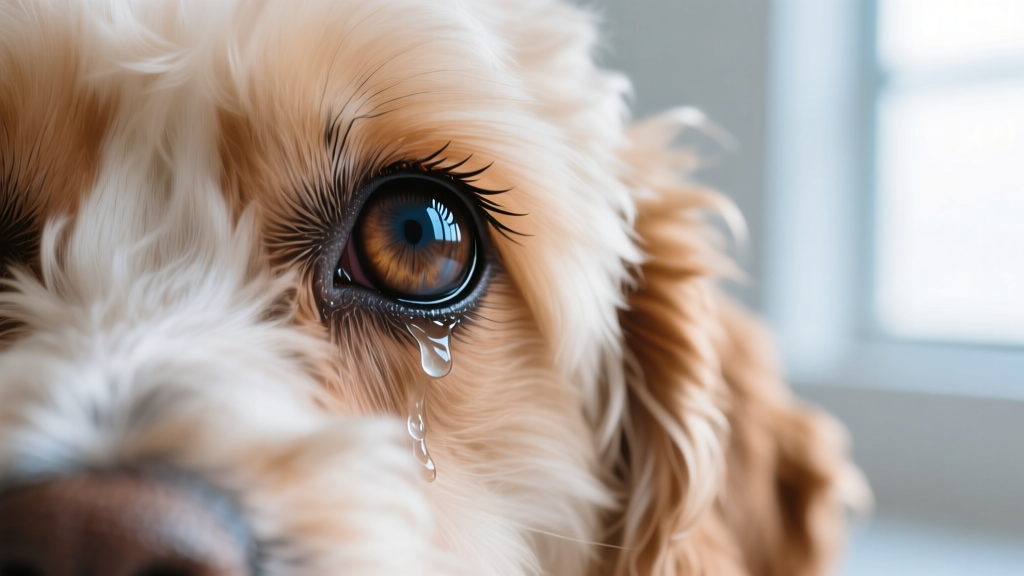
Why Do Dogs Have Water Eyes? The Short Answer
Dogs do produce tears, but unlike humans, they don't cry emotional tears. Water eyes in dogs — that familiar look of wet, glistening eyes — result from the physiological function of the lacrimal system, which keeps the cornea lubricated, flushes away debris, and protects against infection. Basal (baseline) tears are constantly produced, while reflex tears surge when the eye encounters irritants like dust, wind, or allergens. If your dog's eyes are persistently streaming or producing thick discharge, it may signal an underlying medical condition such as epiphora, blocked tear ducts, conjunctivitis, or corneal ulcers — warranting a veterinary exam.
The Physiology of Canine Tear Production
Understanding water eyes in dogs starts with the lacrimal apparatus — the anatomical system responsible for producing and draining tears. Dogs possess two primary tear-producing glands:
- Lacrimal gland: Located above the outer corner of the eye, this gland produces the aqueous (watery) layer of the tear film.
- Nictitans gland (third eyelid gland): Situated within the third eyelid (nictitating membrane), it contributes roughly 30–50% of total tear volume, according to data from the Merck Veterinary Manual.
The Three-Layer Tear Film
A dog's tear film is not simply "water." It's a precisely engineered trilaminar structure:
| Layer | Composition | Function | Produced By |
|---|---|---|---|
| Outer lipid layer | Oils (meibum) | Prevents evaporation; smooths optical surface | Meibomian glands (eyelid margins) |
| Middle aqueous layer | Water, proteins, electrolytes, lysozyme, immunoglobulins | Nourishes cornea; flushes debris; antimicrobial defense | Lacrimal and nictitans glands |
| Inner mucin layer | Glycoproteins (mucins) | Anchors tears to the hydrophobic corneal surface | Conjunctival goblet cells |
Disruption to any layer — insufficient lipid (meibomian gland dysfunction), low aqueous production (keratoconjunctivitis sicca, or "dry eye"), or mucin deficiency — destabilizes the tear film. Paradoxically, a deficient tear film can trigger excessive reflex tearing as the eye attempts to compensate, resulting in the very "water eyes" owners notice.
Tear Drainage: Where Do Canine Tears Go?
In a healthy system, tears drain through two tiny openings called puncta — one on the inner upper lid and one on the inner lower lid — into the nasolacrimal duct, which empties into the nasal cavity. This is why your dog's nose is often wet: tear fluid contributes to nasal moisture. When this drainage pathway is obstructed (congenitally absent puncta, inflammation, or foreign material), tears overflow onto the face — a condition called epiphora.
Evolutionary Context: Why Dogs Evolved a Robust Lacrimal System
Wolves and ancestral canids relied heavily on visual acuity for predation — detecting movement at distance, tracking prey through brush, and navigating dim-light conditions during dawn and dusk hunts. A well-lubricated, debris-free cornea was essential for survival.
The nictitating membrane (third eyelid), more prominent in dogs than in humans, acts as a windshield: it sweeps across the cornea during running through undergrowth, distributing tears and clearing particulate matter without requiring the animal to fully close its eyes. This adaptation persists in domestic dogs even though most no longer hunt through dense vegetation.
Additionally, the antimicrobial components of canine tears — lysozyme, lactoferrin, and secretory IgA — evolved as a frontline defense against environmental pathogens encountered during scavenging and social contact with pack members. Tears were never "for crying" in canids; they were an ocular immune barrier.
Emotional Tears in Dogs: What the Research Actually Shows
The question of whether dogs cry emotional tears has generated significant public interest and scientific inquiry. A 2022 study published in Current Biology by Takefumi Kikusui and colleagues at Azabu University in Japan found that dogs reunited with their owners showed elevated tear volume compared to reunions with familiar non-owner humans. The researchers linked this to oxytocin release and proposed that emotional tearing may have evolved to elicit caregiving responses from humans.
However, this research remains preliminary and debated within the veterinary ophthalmology community. Key limitations include:
- Small sample size (18 dogs in the primary experiment)
- Tear volume measured via Schirmer tear test strips, which can be influenced by stress, excitement, and physical activity — not exclusively emotion
- No measurement of tear composition differences (human emotional tears contain elevated prolactin, ACTH, and enkephalin; no equivalent canine tear proteomics study has confirmed similar biomarkers)
As of 2026, the scientific consensus remains that dogs do not produce tears primarily as an emotional response the way humans do. Water eyes in dogs are overwhelmingly physiological — driven by lubrication needs, irritant response, or underlying pathology.
When Water Eyes Signal a Problem: Medical Conditions to Watch
Occasional tearing after a windy walk or dusty play session is normal. Persistent, unilateral (one-sided), or thickly discolored discharge is not. Here's what different presentations can indicate:
| Presentation | Possible Causes | Urgency |
|---|---|---|
| Clear, bilateral watery discharge; occasional | Environmental irritants (dust, pollen, wind); mild allergic conjunctivitis | Low — monitor; try flushing with sterile saline |
| Clear, chronic overflow staining fur below inner eye corner | Epiphora; nasolacrimal duct obstruction; shallow eye sockets (brachycephalic breeds) | Moderate — schedule vet visit within 1–2 weeks |
| Yellow or green thick discharge; redness; squinting | Bacterial or viral conjunctivitis; corneal ulcer; uveitis | High — see vet within 24–48 hours |
| Sudden profuse tearing; pawing at eye; eye held closed | Corneal abrasion/ulcer; foreign body (grass awn, seed); glaucoma | Emergency — see vet immediately |
| Cloudy or blue-tinged cornea with tearing | Corneal edema; glaucoma; anterior uveitis | Emergency — vision-threatening |
- Your dog is holding one eye shut or blinking excessively (blepharospasm)
- The cornea appears cloudy, blue, or has a visible scratch/divot
- Blood is visible in the eye or surrounding tissue
- The eye appears bulging or significantly larger than the other
- Your dog is lethargic, not eating, or showing systemic illness alongside eye symptoms
Always consult your veterinarian for persistent eye symptoms. Corneal ulcers can progress to perforation within 24–48 hours if untreated.
Breed Variations: Which Dogs Are Prone to Water Eyes?
Anatomy plays a major role in tear overflow. Brachycephalic (short-faced) breeds are disproportionately affected due to shallow orbits, prominent globes, and medial lower eyelid entropion or kinking that disrupts normal tear drainage.
| Breed Type | Examples | Common Tear-Related Issues |
|---|---|---|
| Brachycephalic | Shih Tzu, Pekingese, Pug, Bulldog, Boston Terrier | Shallow orbits → poor tear drainage; medial entropion; trichiasis (hair rubbing cornea) |
| Breeds with prominent medial canthal pockets | Cocker Spaniel, Basset Hound, Bloodhound | Loose lower lids → tear pooling and staining |
| Breeds prone to absent/imperforate puncta | Poodle, Cocker Spaniel, Samoyed, Bichon Frise | Congenital nasolacrimal duct obstruction |
| Small/toy breeds | Maltese, Toy Poodle, Bichon Frise | Porphyrin staining (iron-containing tear pigment oxidizes to reddish-brown on light fur) |
The reddish-brown staining beneath the eyes of many small white breeds is caused by porphyrins — iron-containing molecules excreted in tears and saliva. When porphyrins sit on fur and are exposed to air and light, they oxidize into a rust-colored compound. This is cosmetic but indicates chronic tear overflow that deserves veterinary evaluation to rule out correctable causes.
Common Misconceptions About Dog Tears
| Myth | Fact |
|---|---|
| "My dog is crying because he's sad." | Emotional tearing is not established in dogs. Tears are physiological — investigate irritants, allergies, or anatomical issues first. |
| "Watery eyes mean my dog has allergies." | Allergies are one cause, but so are blocked ducts, infections, corneal damage, glaucoma, and anatomical breed traits. |
| "I can use human eye drops on my dog." | Many human eye drops (especially decongestant "get-the-red-out" drops containing tetrahydrozoline or naphazoline) are not safe for dogs. Only use veterinary-prescribed ophthalmic medications. |
| "Tear staining is just cosmetic." | Staining indicates chronic moisture, which predisposes skin to bacterial and yeast (Malassezia) dermatitis in the facial folds. |
| "Dogs don't produce tears at all." | Dogs absolutely produce tears — basal tears constantly, reflex tears in response to irritants. They simply don't cry emotional tears like humans. |
Practical Takeaways for Dog Owners
Daily Eye Care Routine
- Inspect daily: Gently pull down the lower lid and look for redness, discharge color, or foreign material. Healthy conjunctiva is pale pink, not beefy red.
- Wipe gently: Use a soft, lint-free cloth or pre-moistened veterinary eye wipe (e.g., Vetericyn Eye Wash or Nutri-Vet Eye Rinse, typically $6–$12 per bottle) to clear debris from the inner canthus. Wipe from inner corner outward.
- Trim periocular hair: For breeds with long facial hair, keep hair trimmed short around the eyes to prevent wicking tears onto the face and hair tips from scratching the cornea. Professional grooming every 4–6 weeks ($40–$75/session) is recommended for high-maintenance breeds.
- Manage stains: For porphyrin staining, daily wiping is essential. Some owners use a dilute boric acid solution or commercial stain removers (e.g., Eye Envy, ~$15–$20 for a kit). Avoid hydrogen peroxide near the eyes — it causes corneal damage if splashed.
When to Escalate to Your Veterinarian
If daily care doesn't resolve chronic tearing within 1–2 weeks, your vet may perform:
- Schirmer Tear Test (STT): Measures aqueous tear production. Normal: 15–25 mm/min. Below 10 mm/min suggests keratoconjunctivitis sicca (KCS/dry eye). Cost: $30–$60.
- Fluorescein staining: An orange dye that highlights corneal abrasions/ulcers under blue light. Cost: $25–$50.
- Nasolacrimal duct flush: Saline is forced through the puncta to check for obstruction. May require sedation. Cost: $75–$200 depending on complexity.
- Tonometry: Measures intraocular pressure to rule out glaucoma (normal canine IOP: 10–25 mmHg). Cost: $40–$80.
Diagnostic costs for a comprehensive ophthalmic exam typically range from $100–$350 at a general practice and $250–$600 at a veterinary ophthalmology specialist (DACVO).
How Is Canine Tearing Different From Humans?
Humans are unusual among mammals in producing copious emotional (psychic) tears linked to limbic system activation. Human emotional tears contain distinct hormonal profiles (elevated prolactin, manganese, and stress hormones like ACTH) compared to basal or reflex tears. Dogs share the basal and reflex tear pathways but lack demonstrated psychic tear production.
Additionally, humans lack a functional nictitating membrane — ours is vestigial (the plica semilunaris in the inner eye corner). Dogs' active third eyelid provides superior mechanical protection during physical activity but makes them prone to "cherry eye" (prolapse of the nictitans gland), particularly in Bulldogs, Beagles, and Cocker Spaniels.
Related Canine Sensory and Communicative Behaviors
While dogs don't cry emotionally, they have other channels for expressing distress and eliciting human caregiving:
- Vocalization: Whining, whimpering, and howling serve as primary distress signals. Research shows dogs whine more when separated from attachment figures.
- "Puppy dog eyes": Dogs have evolved a specific facial muscle (levator anguli oculi medialis, or LAOM) that raises the inner eyebrow, making their eyes appear larger and more infant-like. This muscle is absent or rudimentary in wolves. A 2019 study in PNAS linked this muscle to increased human caregiving responses and shelter adoption rates.
- Tear-adjacent scent marking: Porphyrins and other tear components may carry scent information relevant to canine social communication, though this remains understudied.
Frequently Asked Questions
Is it normal for my dog to have watery eyes all the time?
Occasional tearing is normal; chronic daily overflow is not. Persistent epiphora warrants veterinary investigation to identify treatable causes like blocked ducts, allergies, or eyelid abnormalities. Brachycephalic breeds may have baseline increased tearing due to anatomy, but even they should be evaluated to rule out painful conditions.
Can dogs cry tears of joy or sadness?
Current evidence does not support emotional tear production in dogs. The 2022 Azabu University study found increased tear volume during owner reunions, but the mechanism may involve excitement-driven autonomic nervous system activation rather than emotion-specific lacrimation. Dogs express joy and sadness through body language, vocalization, and behavior — not tears.
What does it mean when my dog's eyes water after eating?
Tearing during or after eating can indicate a condition called gustatory lacrimation (sometimes called "crocodile tears"), where nerve signals intended for salivary glands are misdirected to lacrimal glands. It can also result from dental disease — tooth root abscesses in the upper jaw can irritate the nearby nasolacrimal duct. A veterinary dental exam is warranted.
How do dogs process eye irritation compared to humans?
Dogs have a higher density of corneal nerve endings than many mammals, making them quite sensitive to ocular pain — despite the myth that "dogs don't feel pain the way we do." They cannot verbally report discomfort, so squinting, pawing, excessive blinking, and avoidance of bright light are your primary indicators. Never assume a dog's eye isn't bothering them just because they're not vocalizing.
Is tear staining harmful to my dog?
The staining itself is cosmetic, but the chronic moisture that causes it creates an environment for bacterial and Malassezia yeast overgrowth in facial skin folds. This can lead to facial fold pyoderma — red, smelly, itchy skin that requires medicated treatment. Daily cleaning and addressing the root cause of tear overflow prevents secondary infections.
Sources & Further Reading
- Merck Veterinary Manual — Overview of the Eye
- AVMA — Dog Eye Care
- Kikusui, T. et al. (2022). "Dogs shed tears of joy during reunions with owners." Current Biology, 32(16).
- Kaminski, J. et al. (2019). "Evolution of facial muscle anatomy in dogs." PNAS, 116(29).
Robin Maitland
All our authors care for dogs every day — read more of their work on the authors page.


