Can I Use Triple Antibiotic Ointment on My Dog?
Can I use triple antibiotic ointment on my dog? Learn what the science says about Neosporin safety, risks of ingestion, and veterinary-approved wound care.
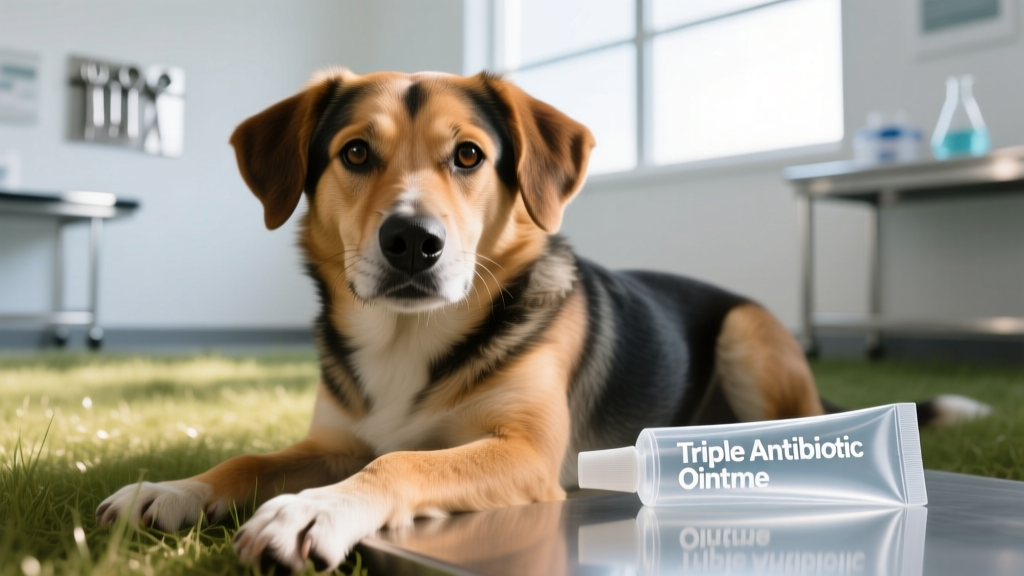
If you've ever watched your dog come in from the yard with a fresh scrape on their leg, your first instinct might be to reach for the same Neosporin tube you keep in your bathroom cabinet. But canine skin physiology, wound-healing mechanisms, and the unavoidable reality that dogs lick everything make this a more complex question than it first appears.
This guide breaks down the pharmacology, evolutionary biology, and practical realities of using triple antibiotic ointment on dogs — so you can make an informed decision backed by science rather than guesswork.
What Triple Antibiotic Ointment Actually Contains
Triple antibiotic ointment (TAO) is a topical preparation combining three antimicrobial agents, each targeting different classes of bacteria:
| Active Ingredient | Concentration (typical) | Targets | Mechanism |
|---|---|---|---|
| Bacitracin zinc | 400 units/g | Gram-positive bacteria (Staphylococcus, Streptococcus) | Disrupts bacterial cell wall synthesis by interfering with lipid carrier cycling |
| Neomycin sulfate | 5 mg/g (equivalent to 3.5 mg neomycin base) | Gram-negative bacteria (E. coli, Proteus, some Pseudomonas) | Binds to 30S ribosomal subunit, causing misreading of mRNA |
| Polymyxin B sulfate | 5,000 units/g | Gram-negative bacteria (Pseudomonas, Klebsiella) | Disrupts bacterial cell membrane by binding to lipopolysaccharides |
The base is typically white petrolatum (petroleum jelly), which serves as an occlusive barrier to keep the wound moist — a condition that actually promotes faster re-epithelialization compared to dry wound healing, according to research published in the Journal of the American Veterinary Medical Association.
The Science of Canine Wound Healing vs. Human Wound Healing
Canine skin differs from human skin in several physiologically significant ways:
- Epidermal thickness: Dog epidermis is only 3-5 cell layers thick compared to 10-20 layers in humans, making topical absorption more efficient and irritation more likely.
- pH difference: Canine skin pH ranges from 6.2 to 7.4 (near neutral), while human skin pH is 5.2 to 5.8 (acidic). Products formulated for the human acid mantle may disrupt the canine skin barrier.
- Healing timeline: Dogs typically re-epithelialize superficial wounds in 7-10 days, similar to humans, but their inflammatory phase is more intense, producing more exudate.
- Collagen composition: Canine dermal collagen has a higher Type III to Type I ratio than human skin, which affects scar formation and tensile strength during healing.
These differences mean that while the active ingredients in triple antibiotic ointment work through the same pharmacological mechanisms in dogs as in humans, the delivery environment is fundamentally different. The thinner epidermis means neomycin — an aminoglycoside with known sensitization potential — has a shorter path to systemic absorption through compromised skin.
When Triple Antibiotic Ointment Is Appropriate for Dogs
According to guidance consistent with the Merck Veterinary Manual's wound management protocols, topical antibiotics are indicated for:
- Superficial abrasions (epidermis only, no dermal exposure)
- Minor lacerations less than 1 cm in length with clean edges
- Small puncture wounds after thorough flushing (e.g., from a thorn or small stick)
- Post-surgical incision sites only if specifically directed by your veterinarian
- Hot spots (acute moist dermatitis) in early stages, as an adjunct to clipping and drying
- Flush the wound with sterile saline (0.9% NaCl) or clean lukewarm water for 30-60 seconds to remove debris. Do not use hydrogen peroxide — it damages healthy tissue and delays healing.
- Pat dry gently with a clean gauze pad.
- Apply a thin layer of plain triple antibiotic ointment (no added pain relievers or steroids) — approximately a pea-sized amount for a 2-inch wound area.
- Prevent licking using an Elizabethan collar (E-collar), a recovery suit, or a light bandage. This is non-negotiable. Without lick prevention, the ointment is removed within minutes and the wound is re-contaminated with oral bacteria.
- Reapply 2-3 times daily for no more than 5-7 days. If the wound hasn't improved in 48 hours, see your vet.
The Real Risks: What Can Go Wrong
| Risk | Mechanism | Severity | What to Watch For |
|---|---|---|---|
| Ingestion from licking | Neomycin is poorly absorbed orally but can cause GI upset; polymyxin B can cause nausea at ingested doses | Low-Moderate | Vomiting, diarrhea, drooling within 1-4 hours of application |
| Neomycin contact dermatitis | Type IV hypersensitivity reaction; estimated 5-10% of dogs are sensitized | Moderate | Increased redness, swelling, or itching at application site after 24-72 hours |
| Masking deeper infection | Surface ointment cannot penetrate to subcutaneous abscesses or infected deep tissue | High | Wound appears to heal on surface but swelling, heat, or discharge persists underneath |
| Pramoxine/hydrocortisone toxicity | Added analgesics or steroids in "plus" formulations can cause systemic effects if ingested in quantity | Moderate-High | Lethargy, increased thirst/urination, vomiting — especially in small dogs under 20 lb (9 kg) |
| Antibiotic resistance selection | Sub-therapeutic exposure promotes resistant bacterial populations on skin | Long-term concern | Recurring infections that don't respond to previously effective treatments |
Common Misconceptions About Using Neosporin on Dogs
| Myth | Fact |
|---|---|
| "Neosporin is completely safe for dogs — I've used it for years." | Plain TAO is generally safe for minor wounds, but neomycin sensitization is a documented contact allergen in dogs. Past tolerance doesn't guarantee future tolerance — sensitization develops after repeated exposures. |
| "My dog's saliva will heal the wound naturally, so I don't need ointment." | While canine saliva contains antibacterial compounds (lysozyme, IgA), it also harbors Pasteurella multocida and Capnocytophaga canimorsus. Uncontrolled licking causes maceration and introduces pathogens — it delays healing rather than promoting it. |
| "I should use the extra-strength version with pain relief for better results." | Products labeled "Pain Relief" (pramoxine HCl 1%) or "Maximum Strength" (often with hydrocortisone) add ingredients that carry higher ingestion risk. Plain triple antibiotic is the safer choice for dogs. |
| "If it works for humans, it works for dogs." | Canine skin is thinner, has a different pH, and dogs lick treated areas — a factor that doesn't apply to most human wound care. The pharmacokinetics of topical absorption differ significantly. |
| "I can put Neosporin in my dog's eye for conjunctivitis." | Never apply TAO to the eye. The petrolatum base can cause lipid keratopathy, and neomycin is irritating to corneal tissue. Ophthalmic-specific preparations (e.g., erythromycin ophthalmic ointment) are required — these are prescription-only. |
Breed and Size Considerations for Topical Antibiotic Use
Not all dogs face the same risk profile when it comes to topical antibiotic application:
- Small breeds under 15 lb (7 kg) — Chihuahuas, Yorkshire Terriers, Pomeranians — have a higher surface-area-to-body-mass ratio. This means a "pea-sized" amount represents a proportionally larger dose if ingested through licking. Use the minimum effective amount and prioritize E-collar use.
- Brachycephalic breeds — Bulldogs, Pugs, Boston Terriers — are prone to skin fold dermatitis in facial folds. Applying TAO into deep skin folds can trap moisture and worsen infection. These areas often require veterinary-prescribed chlorhexidine-based products instead.
- Double-coated breeds — Huskies, German Shepherds, Malamutes — present a practical challenge: ointment mats the undercoat and is nearly impossible to apply directly to skin without clipping the area first.
- Sighthounds — Greyhounds, Whippets — have notably thin skin and low body fat. Their dermis is more delicate, making them slightly more prone to contact irritation from neomycin.
- Immunocompromised dogs — those on chemotherapy, long-term corticosteroids, or with conditions like Cushing's disease — have impaired wound healing and should always be evaluated by a veterinarian rather than treated with OTC products.
When to Skip the Ointment and Call Your Vet
- Wound is deeper than ¼ inch or exposes muscle/fat tissue
- Laceration longer than 1 inch (2.5 cm) — may require sutures within 6-8 hours
- Animal bite wounds (especially cat bites) — high infection risk with Pasteurella species that penetrate deeply
- Wounds on the face, near eyes, or inside the ear canal
- Any wound with visible foreign material you cannot flush out
- Wounds showing purulent (thick yellow/green) discharge after 24 hours
- Wounds accompanied by fever (rectal temperature over 103°F / 39.4°C), lethargy, or loss of appetite
- Puncture wounds from nails, sticks, or wire — these create deep narrow tracts where surface ointment cannot reach
- Any wound on a dog that is not current on rabies vaccination
If you're unsure whether a wound is minor, err on the side of a veterinary visit. A typical wound assessment and cleaning at a general practice clinic ranges from $50-$150, while treating a wound abscess that was neglected at home can cost $300-$800 or more with surgical drainage and systemic antibiotics.
Veterinary-Approved Alternatives to Triple Antibiotic Ointment
If you're looking for options your veterinarian may recommend instead of — or alongside — TAO, here's what's commonly used in clinical practice:
| Product/Ingredient | Type | Best For | Approximate Cost | Notes |
|---|---|---|---|---|
| Silver sulfadiazine cream (1%) | Prescription topical | Burns, deep abrasions, infected wounds | $15-$35 per tube | Broad-spectrum; commonly used in veterinary ER settings |
| Chlorhexidine solution (2%) | OTC antiseptic | Wound flushing, skin fold cleaning | $8-$18 per bottle | Dilute to 0.05% for wound irrigation (1 part solution to 40 parts sterile water) |
| Medical-grade Manuka honey | OTC wound dressing | Chronic wounds, sloughing tissue | $12-$25 per tube | Osmotic action draws out bacteria; must use medical-grade (not grocery store honey) |
| Vetericyn Plus Wound & Skin Care | OTC hypochlorous acid spray | Hot spots, minor abrasions, post-grooming irritation | $14-$22 per bottle | Non-toxic if licked; no antibiotic resistance concern |
| Mupirocin ointment (2%) | Prescription topical | Staphylococcal skin infections, resistant bacteria | $20-$45 per tube | Effective against MRSP (methicillin-resistant Staph pseudintermedius) |
Frequently Asked Questions
Can I use triple antibiotic ointment on my dog's hot spot?
You can apply a thin layer of plain TAO to a hot spot after clipping the hair away and cleaning the area with a dilute chlorhexidine solution. However, hot spots (acute moist dermatitis) are primarily driven by underlying allergies, moisture, and self-trauma — not bacterial infection alone. The ointment's petrolatum base can actually trap moisture against the skin and worsen the condition. Most veterinarians prefer a drying spray (aluminum acetate solution, like Domeboro) combined with an E-collar and addressing the root cause (fleas, environmental allergies, ear infection).
Is Neosporin toxic to dogs if they lick it?
Small amounts ingested from licking a thin application are unlikely to cause serious toxicity — you may see mild gastrointestinal signs like drooling, vomiting, or soft stool. However, if a small dog (under 20 lb / 9 kg) licks off a generous application, the neomycin dose could cause more significant GI upset. If your dog has ingested a large amount of ointment (e.g., chewed into the tube), contact the ASPCA Animal Poison Control Center at (888) 426-4435 (24/7, consultation fee applies) or the Pet Poison Helpline at (855) 764-7661.
How is triple antibiotic ointment different from what my vet prescribes?
Veterinary-prescribed topicals like silver sulfadiazine or mupirocin are selected based on wound type, suspected bacterial species, and the individual dog's health status. They are often paired with systemic antibiotics (oral cephalexin or amoxicillin-clavulanate) for deeper infections. OTC triple antibiotic ointment is a broad-spectrum "first aid" product — appropriate for the initial 24-48 hours of a minor wound but not a substitute for culture-directed therapy in established infections.
What does it mean when my dog's wound isn't healing after a week of Neosporin?
A wound that fails to improve after 5-7 days of appropriate topical care likely has an underlying issue: retained foreign body, deeper infection requiring systemic antibiotics, neomycin contact dermatitis (the ointment itself is causing inflammation), or an immune-mediated condition. This is a clear signal to stop home treatment and schedule a veterinary exam. Your vet may perform a wound culture (typical cost: $80-$150) to identify the specific bacteria and select a targeted antibiotic.
Can I use triple antibiotic ointment on my dog after surgery?
Do not apply any topical product to a surgical incision unless your veterinarian specifically instructs you to. Most surgical sites are closed with internal sutures and skin staples or external sutures, and the incision is intentionally kept clean and dry. Applying ointment can soften the incision line, trap bacteria under the petrolatum layer, and interfere with the healing process. If the incision looks red, swollen, or is discharging, call your surgeon rather than self-treating.
Disclaimer: This article provides educational information based on current veterinary science. It does not replace professional veterinary advice. Always consult your veterinarian before applying any medication to your dog, especially for wounds that are deep, contaminated, or not improving. For toxic ingestion emergencies, contact the ASPCA Animal Poison Control Center at (888) 426-4435.
Dr. Hannah Wickes
All our authors care for dogs every day — read more of their work on the authors page.


