The Tall Dog: Biomechanics, Health, and Giant Breed Care
Explore the canine science behind tall dog breeds — from skeletal biomechanics and growth physiology to evidence-based care for giant breeds.
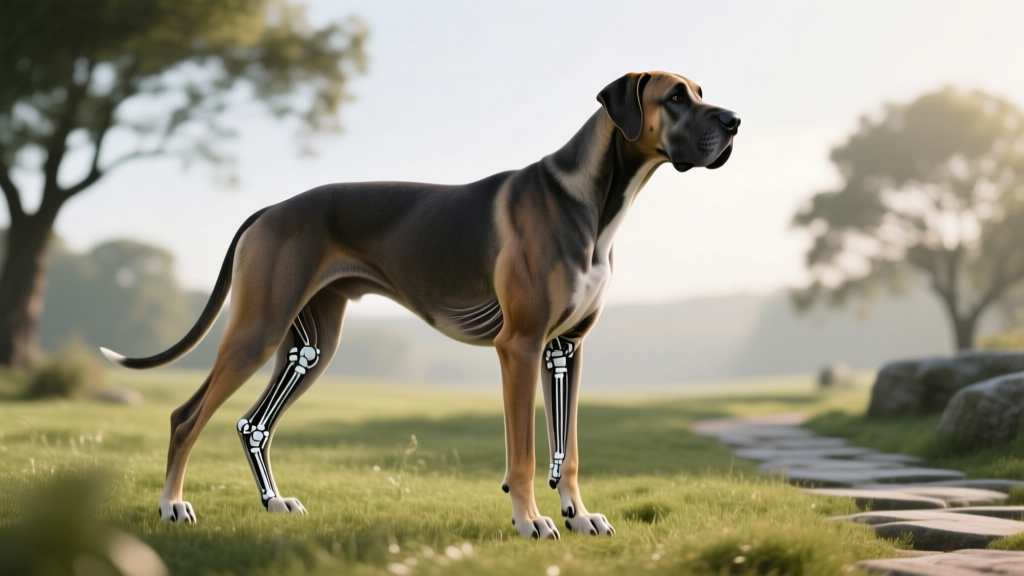
What defines a "tall dog"? In canine science, a tall dog is generally any breed whose average shoulder height (withers) exceeds 27 inches (68.5 cm) and whose adult weight surpasses 90 lb (41 kg). Breeds like the Great Dane, Irish Wolfhound, and English Mastiff fall into this category. Their size is the result of selective breeding acting on growth hormone pathways — specifically the IGF-1 (insulin-like growth factor 1) gene — combined with extended growth plate closure timelines that can stretch to 18–24 months. While impressive, this rapid skeletal growth carries distinct biomechanical and metabolic costs that every giant-breed owner must understand.
The Evolutionary Roots of Large Canid Size
From wolf to giant breed: The gray wolf (Canis lupus) typically stands 26–32 inches at the shoulder and weighs 70–145 lb depending on subspecies and geography. This means many domestic tall dogs actually exceed their wild ancestors in mass — sometimes dramatically. Bergmann's Rule, an ecogeographical principle, predicts that larger body sizes evolve in colder climates to reduce surface-area-to-volume ratio and conserve heat. While wolves follow this pattern across latitudes, domestic tall breeds were shaped less by climate and more by human functional demands: guarding livestock against predators, hunting large game like wolves and elk, and pulling heavy loads.
The Irish Wolfhound, for instance, was bred to hunt wolves in Ireland — a task requiring both the speed to chase and the mass to overpower. The AKC breed standard calls for a minimum height of 32 inches for males, making them among the tallest dogs on Earth. Meanwhile, Mastiff-type breeds were selected for sheer mass as war dogs and estate guardians. These divergent selection pressures — height for coursing, bulk for grappling — explain why "tall" can mean a lean 120 lb Greyhound-type or a stocky 200 lb Mastiff-type.
Genetically, large body size in dogs maps to several loci. A landmark study published in PLoS Biology (Sutter et al., 2007) identified a variant near the IGF-1 gene as a major determinant of small body size in dogs. Conversely, large and giant breeds tend to carry the ancestral (wild-type) allele at this locus, along with variants at the IGF-1 receptor (IGF1R) and growth hormone receptor (GHR) genes that promote extended skeletal growth. A 2010 study in BMC Biology further identified the SMAD2 gene as associated with large body size in breeds like the Great Dane and Saint Bernard.
Physiological Mechanisms: How a Tall Dog's Body Works
Growth Plate Dynamics
In small-breed puppies, growth plates (epiphyseal plates) typically close by 8–12 months. In giant breeds, these cartilage zones remain open for 18–24 months, sometimes longer. During this window, the long bones — particularly the femur, tibia, and humerus — undergo rapid endochondral ossification. This extended growth period means giant-breed puppies are essentially growing at an accelerated rate for nearly two years, placing enormous metabolic demands on their developing skeletons.
Cardiovascular Load
A taller dog means a greater vertical distance between the heart and the brain. The Great Dane's heart must generate sufficient blood pressure to perfuse a brain that may sit 3 feet above the left ventricle. This partly explains why dilated cardiomyopathy (DCM) is disproportionately prevalent in giant breeds — the cardiac muscle is under constant hemodynamic stress. Studies estimate DCM prevalence in Great Danes at approximately 10–15%, compared to under 1% in the general dog population.
Metabolic Paradox
Counterintuitively, giant-breed puppies grow faster but have a lower metabolic rate per unit of body mass than small breeds. A Chihuahua burns roughly twice the calories per pound compared to a Great Dane at rest. This is why giant-breed puppy foods are formulated with lower caloric density and controlled calcium-to-phosphorus ratios (typically 1.1:1 to 1.4:1) — the goal is to slow growth, not accelerate it.
Biomechanics of Height: Joint Stress and Structural Trade-Offs
Height amplifies mechanical forces. Basic physics dictates that joint loading scales with body mass multiplied by limb length. When a 150 lb Great Dane trots, the peak vertical ground reaction force on each limb can reach 1.1–1.3 times body weight — meaning each carpus (wrist) and stifle (knee) absorbs roughly 165–195 lb of force per stride. Over thousands of daily steps, this cumulative loading explains the high prevalence of orthopedic disease in tall dogs.
| Condition | Giant Breeds (Est. Prevalence) | All Dogs (Est. Prevalence) | Primary Risk Factor |
|---|---|---|---|
| Hip Dysplasia | 20–50% (breed-dependent) | ~15% overall (OFA data) | Rapid growth + genetic predisposition |
| Elbow Dysplasia | 10–20% | ~5–8% | Asynchronous bone growth in forearm |
| Osteosarcoma | ~8–10% lifetime risk | ~2–3% | Higher cell divisions in longer bones |
| Cranial Cruciate Ligament Tear | 5–10% | ~2–5% | Tibial plateau angle + body mass |
| Wobbler Syndrome (CVM) | ~5% (Great Danes, Dobermans) | <0.5% | Cervical vertebral malformation |
Osteosarcoma deserves special attention. This malignant bone tumor arises most commonly in the metaphyseal regions of long bones — the distal radius, proximal humerus, distal femur, and proximal tibia. The mechanism is believed to involve the high number of cell divisions required to build and maintain longer bones, increasing the probability of oncogenic mutations. A study in the Journal of Veterinary Internal Medicine found that dogs weighing over 88 lb (40 kg) had a 27-fold increased risk of osteosarcoma compared to dogs under 22 lb (10 kg). For tall dog owners, this means being alert to persistent limb lameness, swelling near joints, and reluctance to bear weight — and pursuing radiographs promptly if these appear.
Practical Implications: Living With a Tall Dog
Nutrition
- Feed a large-breed puppy formula from weaning to at least 18 months. Look for the AAFCO statement: "growth/all life stages including growth of large-size dogs." Brands like Royal Canin Giant Puppy, Hill's Science Diet Large Breed Puppy, and Purina Pro Plan Large Breed Puppy all meet this standard.
- Target a body condition score (BCS) of 4–5/9 throughout growth. Overfeeding accelerates growth rate and increases orthopedic risk. A 6-month-old Great Dane puppy should typically eat 5–7 cups of large-breed kibble daily, split across 2–3 meals — but this varies by formula caloric density.
- Adult maintenance: A 140 lb adult Great Dane may consume 6–10 cups of kibble daily (~2,500–3,500 kcal). Budget $80–$150/month for quality food alone.
Exercise During Growth
- The 5-minute rule: Limit structured walks to 5 minutes per month of age, twice daily. A 4-month-old puppy gets 20-minute walks maximum. Free play on soft surfaces (grass, dirt) is acceptable but avoid forced running, jumping from heights, or slippery floors.
- After growth plate closure (confirmed by radiograph at 18–24 months): Gradually increase to 45–90 minutes of daily exercise. Avoid high-impact activities like repetitive fetch on hard surfaces or agility until skeletal maturity is confirmed.
Home Environment
- Countertop height: A 34-inch-tall dog standing on hind legs can reach counters 5–6 feet high. Secure all food, medications, and toxic items (chocolate, xylitol, grapes) in closed cabinets — not just on elevated surfaces.
- Bedding: Orthopedic foam beds rated for 150+ lb (such as the Big Barker 7" Orthopedic Dog Bed, ~$250–$400) help prevent pressure sores and calluses on bony prominences like the elbows and hocks.
- Vehicle transport: Standard SUV cargo areas may not accommodate a standing Great Dane. Measure your vehicle's cargo height (most mid-size SUVs offer 32–36 inches) before purchasing a crate. Expect to spend $300–$600 on an extra-large crash-tested crate like the Gunner G1 XL or Impact Dog Crate XXL.
Gastric Dilatation-Volvulus (Bloat) Prevention
Bloat is the single most urgent medical risk for tall, deep-chested breeds. The stomach fills with gas and can rotate (volvulus), cutting off blood supply — a true surgical emergency with mortality rates of 15–30% even with treatment. Preventive measures include:
- Feed 2–3 smaller meals rather than one large meal
- Avoid vigorous exercise 1 hour before and 2 hours after eating
- Use a slow-feeder bowl to reduce air swallowing
- Discuss prophylactic gastropexy (surgical tacking of the stomach) with your veterinarian — this procedure, often done during spay/neuter, reduces volvulus risk by over 90% and typically costs $300–$800 when performed alongside another procedure
Common Misconceptions About Tall Dogs
| Myth | Scientific Fact |
|---|---|
| "Giant breeds need tons of exercise" | Most giant breeds are moderate-energy. A Great Dane typically needs 30–60 minutes of walking daily — less than a Border Collie. Over-exercising a growing giant breed actually damages developing joints. |
| "Big dogs are aggressive guard dogs" | Temperament is breed-specific, not size-dependent. Great Danes and Irish Wolfhounds consistently score well on temperament tests. The AKC describes the Great Dane as "friendly, patient, and dependable." |
| "Feeding more makes them grow bigger and healthier" | Overfeeding giant-breed puppies increases growth rate, which elevates the risk of hip dysplasia, osteochondrosis, and hypertrophic osteodystrophy. Controlled, slower growth produces healthier adult skeletons. |
| "Tall dogs don't do well in apartments" | Many giant breeds are surprisingly good apartment dogs due to their low indoor energy. The limiting factor is usually building weight restrictions (often 50–80 lb caps), not the dog's actual behavior. |
| "Giant breeds live as long as small dogs" | The longevity gap is significant. While a Chihuahua may live 14–18 years, giant breeds average 6–10 years. A 2013 study in the Journal of Veterinary Internal Medicine found that for every 4.4 lb (2 kg) increase in body weight, lifespan decreased by approximately one month. |
Breed Variations Among Tall Dogs
Not all tall dogs are built alike. Here's how several popular giant breeds compare across key metrics:
| Breed | Height at Withers | Weight Range | Lifespan | Primary Health Concerns |
|---|---|---|---|---|
| Great Dane | 30–34 in / 76–86 cm | 120–180 lb / 54–82 kg | 7–10 years | DCM, bloat, osteosarcoma, Wobbler syndrome |
| Irish Wolfhound | 32–36 in / 81–91 cm | 120–155 lb / 54–70 kg | 6–8 years | Osteosarcoma, DCM, liver shunt |
| English Mastiff | 27.5–32 in / 70–81 cm | 160–230 lb / 73–104 kg | 6–10 years | Hip dysplasia, bloat, cystinuria |
| Leonberger | 26–31.5 in / 66–80 cm | 100–170 lb / 45–77 kg | 8–10 years | Leonberger polyneuropathy, hip dysplasia, bloat |
| Scottish Deerhound | 28–32 in / 71–81 cm | 85–110 lb / 39–50 kg | 8–11 years | Osteosarcoma, cystinuria, cardiomyopathy |
Note that the Scottish Deerhound, while very tall, is significantly lighter than the Mastiff. This lean build (similar to the Greyhound body plan) places less absolute load on joints but does not eliminate osteosarcoma risk, which correlates more with bone length than body mass.
When Height-Related Traits Signal a Problem
Consult your veterinarian promptly if your tall dog exhibits any of the following:
- Sudden, unexplained lameness lasting more than 48 hours — especially in dogs under 24 months (possible panosteitis, osteochondrosis, or hypertrophic osteodystrophy) or over 7 years (possible osteosarcoma)
- Rapidly progressive abdominal distension with retching, drooling, or restlessness — this is a bloat emergency. Call your nearest emergency veterinary hospital immediately
- Coughing, exercise intolerance, or fainting — potential signs of dilated cardiomyopathy, which requires echocardiographic diagnosis
- Hind limb weakness or dragging with a scuffing gait — could indicate Wobbler syndrome (cervical vertebral malformation) or degenerative myelopathy
- Visible swelling near a long-bone joint (above the wrist, below the shoulder, above the ankle) — warrants radiographs to rule out bone tumors
For giant breeds, establishing a relationship with your veterinarian early and scheduling biannual wellness exams (rather than annual) is strongly recommended. Early cardiac screening via echocardiogram starting at age 3–4 years can detect DCM before clinical signs appear. Many veterinary cardiologists recommend annual Holter monitoring and echocardiograms for breeds like the Great Dane and Irish Wolfhound from age 2 onward. Expect to pay $300–$600 per cardiac screening session.
Frequently Asked Questions
Why do some dog breeds grow so tall?
Giant size in domestic dogs results from selective breeding acting on growth-regulating genes — primarily IGF-1, IGF1R, GHR, and SMAD2. Humans selected for tall stature for specific working roles: coursing large prey, guarding against predators, and intimidation. Unlike natural selection, which balances size against resource availability, artificial selection can push body size beyond what would be sustainable in the wild.
Can dogs be too tall for their own health?
Yes. Breeds at the extreme upper end of canine height face disproportionate orthopedic, cardiac, and oncologic risks. The Irish Wolfhound, the tallest breed, has one of the shortest lifespans of any dog — averaging just 6–8 years. This reflects a biological trade-off: the cellular machinery required to build and maintain a massive body accumulates damage faster, and the mechanical stresses of large size accelerate joint degeneration. Responsible breeders use health testing (OFA hip/elbow scores, cardiac clearances) to minimize — but never eliminate — these risks.
How do tall dogs process exercise differently from small dogs?
Tall dogs have longer stride lengths, meaning they cover more ground per step at lower stride frequencies. This makes them efficient walkers and trotters. However, their longer lever arms (limb bones) generate greater torque at joints during sudden turns, jumps, or stops. This is why agility and high-impact sports carry higher injury risk for giant breeds compared to medium-sized athletic breeds like the Belgian Malinois. Growth plate vulnerability during the extended puppy period (up to 24 months) further limits safe exercise intensity.
What does it mean when my tall dog leans against me?
Leaning is a common behavior in giant breeds — particularly Great Danes, who are sometimes called "the world's biggest lap dogs." Behaviorally, leaning serves multiple functions: it's a contact-seeking behavior that reinforces social bonding, it can be a learned behavior (the dog leans, the human pets them, the behavior is reinforced), and in some cases it may indicate mild anxiety or a desire for reassurance. It is not a dominance behavior — the dominance hierarchy model has been largely discredited in modern canine behavioral science. If the leaning is accompanied by trembling, whale eye, or lip licking, it may signal stress rather than affection.
Is it normal for my giant-breed puppy to seem clumsy?
Yes. Giant-breed puppies go through prolonged periods where their brain's proprioceptive maps haven't caught up with their rapidly changing body dimensions. A 6-month-old Great Dane may be 4 inches taller than it was 6 weeks ago — its nervous system is literally recalibrating. This "puppy klutziness" typically improves as growth rate slows after 12–14 months. However, persistent incoordination, scuffing of the hind paws, or a consistently abnormal gait warrants veterinary evaluation for conditions like Wobbler syndrome or cerebellar abnormalities.
How is a tall dog's physiology different from a human's?
Despite both being mammals, tall dogs and humans diverge significantly. Dogs have a faster resting heart rate (60–100 bpm for giant breeds vs. 60–100 bpm for humans, but proportionally higher for their metabolic demands), a higher normal body temperature (101–102.5°F / 38.3–39.2°C vs. 98.6°F / 37°C), and a digitigrade stance (walking on toes) that concentrates ground reaction forces on smaller joint surfaces. Their spines are oriented horizontally, meaning vertebral loading patterns differ fundamentally from bipedal humans — this is why intervertebral disc disease (IVDD) presents differently in dogs. Additionally, dogs lack a functional sweat gland system over most of their body, making heat dissipation during exercise less efficient — a critical consideration for giant breeds exercising in warm weather.
Key References:
- Sutter NB, et al. "A single IGF1 allele is a major determinant of small size in dogs." Science, 2007. PubMed
- Rimbault M, et al. "Genomic response to artificial selection in dogs." BMC Biology, 2010.
- Gough A, Thomas A, O'Neill D. Breed Predispositions to Disease in Dogs and Cats. Wiley-Blackwell, 2018.
- Orthopedic Foundation for Animals (OFA) breed-specific hip dysplasia statistics. ofa.org
- Merck Veterinary Manual — Dilated Cardiomyopathy in Dogs
Priya Sutaria
All our authors care for dogs every day — read more of their work on the authors page.


