Swimmer's Tail for Dogs: The Canine Science Behind Limp Tail Syndrome
What causes swimmer's tail for dogs? Explore the veterinary science, physiology, breed risks, treatment timelines, and prevention strategies for acute caudal myopathy.
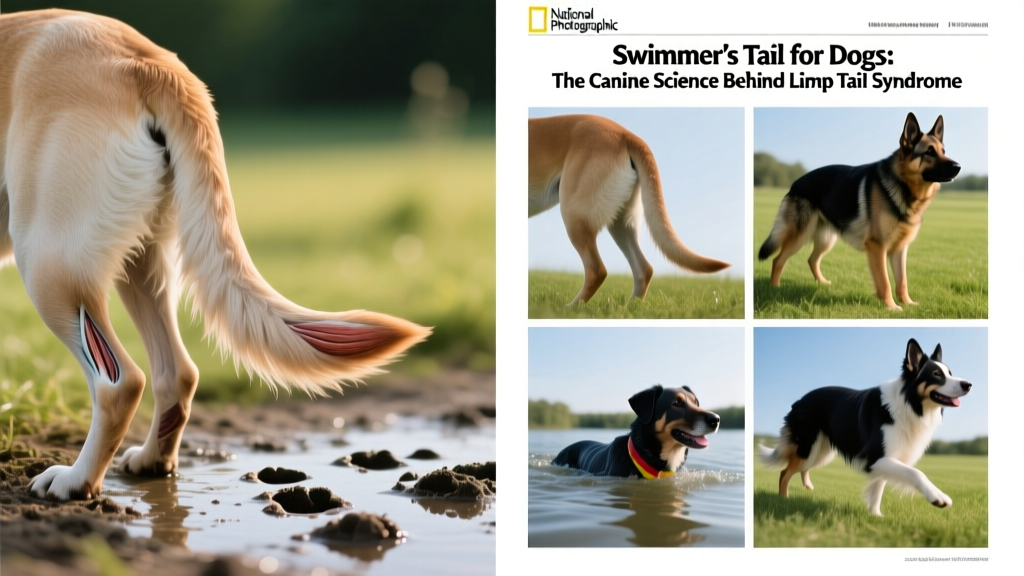
Quick Answer: Swimmer's tail for dogs — clinically known as acute caudal myopathy — is a painful muscle condition where a dog's tail goes limp, often held slightly away from the body before drooping completely. It's caused by overexertion or strain of the coccygeal (tail) muscles, most commonly after swimming in cold water, intense exercise, or prolonged crating. The good news: it's not a spinal injury or broken bone, and most dogs recover fully within 2 to 7 days with rest and anti-inflammatory treatment. If your dog's tail has suddenly gone limp, consult your veterinarian to rule out more serious spinal or neurological conditions.
If you've ever watched your normally exuberant retriever or pointer suddenly carry their tail like a wet noodle after a day at the lake, you've witnessed one of the most recognizable — and misunderstood — conditions in canine sports medicine. Swimmer's tail, also called limp tail, dead tail, rudder tail, or cold tail, has been documented in veterinary literature for decades, yet many dog owners still panic when they see it, assuming their dog has suffered a catastrophic spinal injury.
The reality is both simpler and more scientifically interesting than most people assume. Understanding the physiology behind acute caudal myopathy reveals a great deal about how canine muscle tissue responds to stress, why certain breeds are predisposed, and what you can do to prevent it.
What Exactly Is Swimmer's Tail for Dogs? The Physiological Mechanism
The Muscle Groups Involved
A dog's tail is controlled by a complex arrangement of muscles anchored to the caudal vertebrae (the bones extending from the sacrum). The primary muscles affected in swimmer's tail are the coccygeus muscles and the levator ani muscles, which work together to elevate, wag, and laterally move the tail. These muscles also play a secondary role in pelvic floor support and defecation mechanics.
According to the Merck Veterinary Manual, acute caudal myopathy involves a temporary failure of these muscle fibers — specifically, a combination of muscle fatigue, localized inflammation, and possible compartment syndrome within the fascial sheath surrounding the tail base.
What Happens at the Cellular Level
When the tail muscles are overworked — particularly in cold conditions — several physiological events occur in sequence:
- Eccentric muscle contractions: During swimming, the tail acts as a rudder, performing constant stabilizing contractions against water resistance. These eccentric (lengthening-while-contracting) movements cause micro-tears in muscle fibers.
- Vasoconstriction from cold: Cold water (typically below 65°F / 18°C) triggers peripheral vasoconstriction, reducing blood flow to the tail muscles. This limits oxygen delivery and waste removal at the exact moment the muscles need it most.
- Lactic acid accumulation: Reduced circulation combined with sustained exertion leads to anaerobic metabolism and lactic acid buildup within the muscle tissue.
- Inflammatory cascade: The damaged muscle fibers trigger a localized inflammatory response, causing swelling within the tight fascial compartment at the tail base. This swelling further restricts blood flow, creating a feedback loop of pain and dysfunction.
- Muscle spasm and guarding: The dog reflexively holds the tail in a slightly abducted position (about 3-5 inches from the body base) before it drops completely limp, as the muscles can no longer sustain contraction.
This mechanism is remarkably similar to exertional rhabdomyolysis ("tying up") in horses and delayed onset muscle soreness (DOMS) in human athletes — just localized to a much smaller muscle group that happens to be externally visible.
The Evolutionary Context: Why Dogs Have Vulnerable Tail Muscles
Evolutionary Perspective: In ancestral wolves, the tail serves critical functions in pack communication, balance during high-speed pursuit, and scent dispersal from the anal glands. Wolf tails are typically carried in a neutral-to-low position and are used for broad, deliberate signaling rather than the rapid, sustained wagging seen in domestic dogs.
Domestication selected heavily for exaggerated tail carriage and wagging behavior — traits that signal friendliness and submissiveness to humans. Breeds like Labrador Retrievers, English Pointers, and English Setters were further selected for tails that function as rudders during swimming or balance beams during field work. This selective breeding created tails that are asked to perform intense, sustained mechanical work — far beyond what ancestral wolf tails typically endure.
The result: modern sporting and working breeds carry tails with high muscular demand but relatively limited vascular supply at the base, making them susceptible to exactly this kind of overuse injury when pushed hard in challenging conditions.
Which Breeds Are Most at Risk? Understanding Breed Variations
Swimmer's tail for dogs is overwhelmingly a condition of sporting and working breeds. A study published in the Journal of the American Veterinary Medical Association found that the condition appears most frequently in dogs that combine high-drive exercise behavior with tails used actively for balance or propulsion. Here's the risk breakdown:
| Breed | Risk Level | Primary Trigger Activity | Why They're Susceptible |
|---|---|---|---|
| Labrador Retriever | Very High | Swimming, dock diving, waterfowl hunting | Otter-like tail used as rudder; extreme water drive |
| English Pointer | Very High | Field trials, pointing, sustained tail carriage | Tail held rigid during pointing stance for extended periods |
| English Setter | High | Field work, hunting, swimming | Heavy feathered tail; high-energy field work |
| Golden Retriever | High | Swimming, retrieving, dock sports | Thick muscular tail; strong retrieving instinct |
| Chesapeake Bay Retriever | High | Cold-water retrieving | Bred specifically for icy water work |
| German Shorthaired Pointer | Moderate-High | Hunting, field trials, agility | Versatile sporting dog; high tail carriage |
| Beagle | Moderate | Sustained tracking, pack hunting | Tail held upright during tracking; endurance hunter |
| Mixed breeds / other | Low | Unusual exertion, prolonged crating | Can occur in any dog under right conditions |
The common thread: breeds that use their tails as functional tools during intense, sustained exercise — especially in cold or wet conditions — are the most vulnerable. However, any dog of any breed can develop swimmer's tail under the right circumstances, including prolonged confinement in a crate where the tail is pressed against the sides.
Recognizing the Symptoms: What Does Swimmer's Tail Look Like?
The onset of swimmer's tail for dogs is typically rapid, appearing within 1 to 24 hours after the triggering activity. Some dogs show symptoms immediately upon exiting the water; others develop the limp tail overnight after a day of heavy exercise.
Symptom Checklist: Acute Caudal Myopathy
- Tail hanging completely limp from the base, or held out 3-5 inches (8-13 cm) from the body then drooping straight down
- Inability to wag — the dog may attempt to wag but only the base moves slightly
- Pain at the tail base when touched — the dog may flinch, yelp, or turn to look at the area
- Reluctance to sit or difficulty getting comfortable when lying down
- Swelling or warmth at the tail base (in some cases, not always visible)
- Whimpering or restlessness — the dog is clearly uncomfortable but may still eat and drink normally
- Hair raised along the tail base (piloerection) due to pain response
How Is This Different From Humans? And Common Misconceptions
Because dogs can't verbalize their pain, swimmer's tail is often misinterpreted by well-meaning owners. Let's separate fact from fiction:
| Myth | Fact | The Science |
|---|---|---|
| "My dog broke their tail" | Very unlikely | Caudal vertebral fractures require significant blunt-force trauma (car accident, door slam). Swimmer's tail is a soft-tissue muscle injury, not a bone injury. Your vet may take X-rays to confirm. |
| "It's a spinal cord problem" | Usually not | Intervertebral disc disease (IVDD) or cauda equina syndrome can cause tail paralysis, but these typically present with additional neurological deficits: hind limb weakness, incontinence, or loss of deep pain sensation. Swimmer's tail is isolated to tail muscles. |
| "Only dogs that swim get it" | False | The name is misleading. Prolonged crating, intense play, excessive wagging, cold weather exposure, and even vigorous grooming sessions have all been documented as triggers. |
| "It will never heal on its own" | Incorrect | Most cases resolve within 2-7 days with rest alone. NSAID treatment from your vet can shorten recovery to 24-48 hours in mild cases. |
| "If it happened once, it won't happen again" | Wrong — recurrence is common | Dogs that have had one episode of acute caudal myopathy are significantly more likely to experience recurrence. The muscle tissue may develop a susceptibility after the initial injury. |
How this differs from humans: Humans don't have functional tail muscles, so there's no direct equivalent. The closest comparison is a severe muscle strain in a small, confined muscle group — think of a severe calf cramp that lasts for days rather than minutes, combined with the restricted compartment pressure seen in shin splints. In human sports medicine, we'd classify this as a Grade II muscle strain with secondary compartment inflammation.
Diagnosis and Treatment: What to Expect at the Vet
When you bring your dog in for a suspected swimmer's tail, here's what the diagnostic and treatment process typically looks like:
Diagnostic Process
Step 1 — Physical examination: Your vet will palpate the tail base, checking for swelling, heat, and pain response. They'll also assess tail tone (can the dog voluntarily move the tail at all?) and perform a neurological exam to rule out spinal involvement.
Step 2 — History review: Recent swimming, intense exercise, crating duration, and cold exposure will all be discussed. This history is often enough to make a presumptive diagnosis.
Step 3 — Imaging (if needed): X-rays of the caudal spine may be taken to rule out fractures, luxations, or disc disease. In most straightforward cases, imaging isn't necessary, but it's a prudent precaution, especially in older dogs or dogs with no clear exercise trigger.
Step 4 — Bloodwork (rare): In severe cases or cases that don't resolve within a week, a creatine kinase (CK) blood test may be ordered. Elevated CK levels confirm muscle damage and help quantify severity. Normal canine CK ranges from 10-200 U/L; values above 500 U/L suggest significant muscle injury.
Treatment Protocol
Treatment is straightforward and generally inexpensive:
- Rest: Strict exercise restriction for 2-7 days. No swimming, no running, minimal stair climbing.
- NSAIDs: Your veterinarian will likely prescribe a non-steroidal anti-inflammatory drug such as carprofen (Rimadyl) at 2 mg/lb (4.4 mg/kg) once daily, or meloxicam (Metacam) at a loading dose of 0.09 mg/lb (0.2 mg/kg) followed by 0.045 mg/lb (0.1 mg/kg) daily. Typical prescription cost: $25-$60 for a short course.
- Warm compresses: Applying a warm (not hot) compress to the tail base for 5-10 minutes, 2-3 times daily, can improve circulation and reduce discomfort. Use a towel soaked in warm water at approximately 100-105°F (38-41°C).
- Follow-up: If the tail hasn't shown improvement within 5-7 days, a recheck visit is warranted to reassess the diagnosis.
Total cost for a swimmer's tail vet visit, including exam and medication, typically ranges from $75 to $200 depending on your region and whether X-rays are performed.
🚨 When to Call the Vet Immediately
While swimmer's tail is usually benign, these symptoms suggest something more serious:
- Hind limb weakness, wobbling, or collapse
- Loss of bladder or bowel control
- Tail completely numb to touch (no pain response when pinched gently)
- History of recent trauma (hit by car, fell from height, tail caught in door)
- No improvement after 7 days of rest and treatment
- Fever above 103.5°F (39.7°C) or loss of appetite lasting more than 24 hours
These signs could indicate cauda equina syndrome, intervertebral disc disease, or a caudal vertebral fracture — all of which require urgent veterinary intervention.
Prevention Strategies: Keeping Your Dog's Tail Healthy
Given that recurrence is common once a dog has experienced swimmer's tail, prevention is essential — especially for owners of sporting breeds who participate in hunting, dock diving, or field trials.
Evidence-Based Prevention Framework
1. Water Temperature Awareness
Limit swimming sessions when water temperature is below 65°F (18°C). If your dog must work in cold water (hunting scenarios), keep sessions under 15-20 minutes with mandatory warm-up breaks on shore.
2. Gradual Conditioning
Just as you wouldn't run a marathon without training, don't let your dog swim for an hour on the first warm day of spring. Build swimming duration gradually over 3-4 weeks, starting with 5-minute sessions.
3. Crate Sizing
Ensure your dog's crate is large enough for them to lie with their tail in a natural, relaxed position without pressing against the crate wall. For a 65-lb (29-kg) Labrador, this typically means a 42-inch (107-cm) crate minimum.
4. Post-Exercise Tail Care
After intense exercise or swimming, gently towel-dry the tail and massage the base for 1-2 minutes to promote circulation. Some field trial handlers apply a warm compress prophylactically after cold-water work.
5. Warm-Up Routines for Sport Dogs
Canine sports medicine specialists recommend a 10-15 minute warm-up before intense activity: brisk walking, gentle tail mobilization (slowly moving the tail through its range of motion), and light jogging. This increases blood flow to the caudal muscles before they're asked to perform.
6. Avoid Sudden Intensity Spikes
The highest risk occurs when a weekend warrior dog goes from minimal exercise to intense activity. Maintain consistent baseline fitness year-round, even during off-seasons.
Related Conditions and Cross-References
Understanding swimmer's tail in context helps you recognize when a tail problem might be something else entirely:
- Tail fold dermatitis: Common in bulldogs and other breeds with corkscrew tails. Presents as redness, odor, and discharge in the skin fold beneath the tail — a skin infection, not a muscle problem.
- Happy tail syndrome: The opposite extreme — dogs (especially Great Danes, Greyhounds, and other large short-haired breeds) that wag their tails so forcefully they repeatedly split the tip open against walls and furniture. This is a wound management issue, not a muscle condition.
- Caudal vertebral malformation: A congenital condition, primarily in bulldogs and Boston Terriers, where the tail vertebrae develop abnormally. Present from puppyhood, not sudden onset.
- Anal gland impaction: Can cause a dog to hold their tail oddly or resist tail elevation. Accompanied by scooting, licking at the rear, and a characteristic fishy odor.
Frequently Asked Questions
Is swimmer's tail for dogs normal, or should I be worried?
It's a common, well-documented condition in sporting breeds and is generally not a cause for serious worry. However, because the symptoms overlap with more serious spinal conditions, a veterinary exam is always recommended for a first-time episode. Once your vet has confirmed the diagnosis, you'll know what to look for if it recurs.
Why do dogs get swimmer's tail from swimming but not from running?
Running uses the tail primarily for balance — brief, intermittent corrections. Swimming requires the tail to act as a continuous rudder against the dense resistance of water (water is approximately 784 times denser than air). This sustained, high-resistance demand, combined with cold-water vasoconstriction, creates the perfect conditions for muscle fatigue and strain.
Can dogs permanently lose tail function from swimmer's tail?
Permanent damage from acute caudal myopathy is extremely rare. The vast majority of dogs recover full tail function within a week. However, recurrent episodes may lead to mild chronic changes in the muscle tissue, potentially resulting in a slightly altered tail carriage long-term. This is cosmetic rather than functional.
How do dogs use their tails differently than wolves?
Wolves use their tails primarily for deliberate social signaling within the pack — position and movement communicate rank, mood, and intent. Domestic dogs have been selected for more frequent, more vigorous tail movement (wagging as an appeasement signal to humans), and sporting breeds use their tails as active mechanical tools during work. This increased functional demand is what predisposes them to overuse injuries.
What does it mean when my dog's tail is limp but they seem otherwise fine?
If your dog is eating, drinking, moving normally on all four legs, and shows no neurological deficits, a limp tail is most likely acute caudal myopathy or a mild tail strain. The fact that they seem "otherwise fine" is actually a good sign — it helps differentiate a localized muscle problem from a systemic or neurological issue. Still, have your vet confirm the diagnosis.
Can I give my dog ibuprofen or aspirin for swimmer's tail?
No. Never give human NSAIDs (ibuprofen, naproxen, aspirin) to dogs without explicit veterinary direction. Ibuprofen is toxic to dogs at relatively low doses and can cause gastric ulceration, kidney failure, and liver damage. Your vet will prescribe a canine-specific NSAID like carprofen or meloxicam that is safe at the correct dosage.
How long does swimmer's tail last in dogs?
Most cases resolve within 2 to 7 days. With veterinary-prescribed NSAID treatment, many dogs show significant improvement within 24-48 hours. Cases that persist beyond 7-10 days should be re-evaluated to rule out alternative diagnoses such as disc disease or a tail fracture.
References and Further Reading
- Merck Veterinary Manual — Myopathies in Small Animals: Comprehensive reference on canine muscle disorders including acute caudal myopathy.
- American Kennel Club — Swimmer's Tail in Dogs: Breed-focused guidance on recognition and prevention for sporting dog owners.
- Steiss, J.E. et al. "Acute caudal myopathy in working dogs." Journal of the American Veterinary Medical Association. Key research documenting the condition's prevalence in field trial and hunting dog populations.
Disclaimer: This article is for educational purposes only. Always consult your veterinarian for diagnosis and treatment of any canine health condition. If you suspect your dog has ingested a toxic substance, contact the ASPCA Animal Poison Control Center at (888) 426-4435 (24/7, consultation fee applies).
Robin Maitland
All our authors care for dogs every day — read more of their work on the authors page.


