Smile Dog Smile: The Science Behind Your Dog's Grin Explained
What does a smile dog smile really mean? Explore the canine science, evolutionary roots, and breed variations behind your dog's grin — and when it signals trouble.
The Quick Answer: Do Dogs Actually Smile?
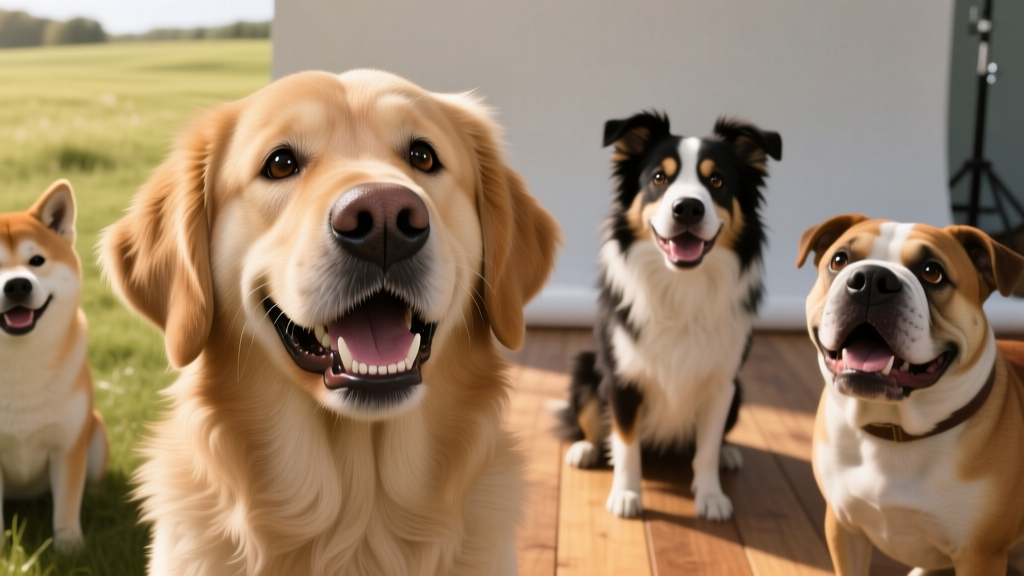
Yes — but a "smile dog smile" is not the same as a human smile. When your dog pulls back their lips to show teeth in a relaxed, open-mouthed expression, behaviorists call this a "submissive grin" or "play face." Research published in Behavioural Processes (2017) and observations documented by the American Kennel Club confirm that dogs produce facial expressions in response to social cues — particularly from their owners. However, a teeth-baring expression with a stiff body, wrinkled muzzle, and fixed gaze is not a smile; it is a threat display. The context, body language, and accompanying vocalizations determine whether your dog is genuinely expressing contentment or communicating stress.
The Neuroscience of a Smile Dog Smile
How the Canine Brain Produces Facial Expressions
Dogs possess approximately 18 independent facial muscles — fewer than humans (who have around 42), but significantly more than wolves, who have roughly 14. A landmark 2019 study published in the Proceedings of the National Academy of Sciences (PNAS) by Julinski Kaminski and colleagues found that domestic dogs evolved a specific muscle called the levator anguli oculi medialis (LAOM), which raises the inner eyebrow. This muscle is absent or rudimentary in wolves.
The same research demonstrated that dogs also use the zygomaticus major muscle to pull the corners of the mouth backward and upward — the anatomical basis of what we perceive as a "smile dog smile." This muscle activation is controlled by the facial nerve (cranial nerve VII), which receives input from the limbic system, particularly the amygdala and hypothalamus, when the dog experiences positive emotional states such as anticipation of play, food rewards, or social bonding.
Neurochemically, smiling behavior in dogs correlates with elevated oxytocin levels. A 2015 study from Azabu University in Japan (published in Science) showed that mutual gazing between dogs and owners increased urinary oxytocin by 130% in dogs and 300% in owners. This oxytocin feedback loop is the same neurochemical pathway that drives human smiling during positive social interactions.
Evolutionary Roots: From Wolf Ancestors to the Smile Dog Smile
Why Did Dogs Evolve to "Smile"?
The submissive grin has deep evolutionary roots in wolf social behavior. In wild canid packs, subordinate wolves display a "submissive grin" — pulling the lips back horizontally to expose teeth in a non-threatening gesture that signals deference to higher-ranking pack members. This behavior reduces conflict and maintains social cohesion.
During the estimated 15,000–40,000 years of dog domestication, this ancestral signal was co-opted and modified. Dogs that displayed friendlier, more human-readable facial expressions received more food, shelter, and social attention from early human companions. This created a selection pressure favoring dogs with enhanced facial musculature and the tendency to produce expressions humans interpreted as smiles.
The PNAS study confirmed this by comparing facial muscles in domestic dog cadavers versus wolf cadavers. Dogs consistently showed more developed muscles around the eyes and mouth — muscles specifically tuned to produce expressions that trigger human caregiving responses. In essence, the "smile dog smile" is a product of convergent social evolution: dogs evolved to communicate with us using a facial vocabulary that bridges species.
Decoding the Smile: What Different Expressions Mean
Not every open-mouthed expression is a smile. Here is how to distinguish between the major canine facial expressions that owners commonly misread:
| Expression | Mouth Position | Body Language | Meaning |
|---|---|---|---|
| Play Face / Relaxed Grin | Mouth open, lips pulled back loosely, tongue visible | Loose, wiggly body; play bow; soft eyes; tail wagging broadly | Contentment, play invitation, social bonding |
| Submissive Grin | Lips pulled back horizontally showing front teeth, mouth mostly closed | Lowered body, ears back, squinting eyes, sometimes lip licking | Appeasement, deference, "please don't hurt me" |
| Aggressive Threat Display | Lips curled vertically exposing teeth and gums, muzzle wrinkled | Stiff body, forward lean, hard stare, raised hackles, low growl | Warning, resource guarding, defensive aggression |
| Panting / Thermoregulation | Mouth wide open, tongue extended, rapid breathing | Varies — may be relaxed or stressed depending on context | Cooling down, or stress panting if not hot |
| Flehmen Response | Upper lip curled back, mouth slightly open, head tilted up | Still body, focused sniffing, often after smelling urine or strong scent | Processing pheromones via vomeronasal organ |
Common Myths About the Smile Dog Smile — Debunked
| Myth | Fact |
|---|---|
| "My dog smiles because they understand humor." | Dogs do not process humor the way humans do. Their "smile" is a social signal rooted in emotional states like contentment or appeasement, not a cognitive response to something funny. |
| "Showing teeth always means aggression." | A submissive grin shows teeth but is fundamentally non-aggressive. The key differentiator is body language: loose, wiggly posture = friendly; stiff, forward posture = threat. |
| "Dogs smile only for their owners, not strangers." | A 2017 study in Behavioural Processes found that dogs produce more facial expressions when a human is watching them, regardless of familiarity. However, the expressions are more frequent and relaxed with bonded humans. |
| "If my dog grins at another dog, they're being friendly." | Dog-to-dog grins are typically submissive appeasement signals. While not aggressive, they indicate the grinning dog feels uncertain or is deferring — not that they want to play. |
| "All dogs smile the same way." | Breed anatomy dramatically affects smile visibility. Brachycephalic breeds (Pugs, Bulldogs) have different lip and jaw structures than dolichocephalic breeds (Collies, Greyhounds), making their expressions look very different. |
Breed Variations: Which Dogs Are Most Likely to "Smile"?
The visibility and frequency of a smile dog smile varies significantly by breed, driven by skull shape, lip structure, and temperament genetics. Here is a breakdown of how breed categories differ:
Dolichocephalic breeds (long-muzzled) — such as Dalmatians, Collies, Shetland Sheepdogs, and Greyhounds — tend to produce the most visually obvious "smiles" because their longer lip lines allow greater retraction. Dalmatians in particular are famous for a breed-typical "smile" that owners and breeders widely recognize. The AKC Dalmatian breed standard even references their characteristic friendly expression.
Mesocephalic breeds (medium-muzzled) — including Labrador Retrievers, Golden Retrievers, and Australian Shepherds — display moderate smile visibility. Their expressions are often accompanied by full-body wiggles, making the "happy face" easy to read in context.
Brachycephalic breeds (short-muzzled) — such as French Bulldogs, Pugs, and Shih Tzus — have compressed facial anatomy that limits lip retraction. Their "smiles" may look more like open-mouthed panting or slight lip curls. Owners of these breeds should be especially careful not to misread brachycephalic obstructive airway syndrome (BOAS) panting as a happy expression, since stress panting and heat distress are common in flat-faced breeds.
Spitz-type breeds — including Samoyeds, Siberian Huskies, and Akitas — are known for what appears to be a permanent smile due to their natural lip curvature. The Samoyed is so associated with this expression that the breed is nicknamed the "Sammy Smile." The upward-turned corners of their mouth are a structural feature, not a behavioral one, though these dogs do produce genuine play faces as well.
How the Smile Dog Smile Differs From Human Smiling
Understanding the gap between canine and human smiling prevents miscommunication that can lead to bites, especially with children:
- Voluntary control: Humans can produce deliberate, social smiles regardless of emotional state (polite smiles). Dogs cannot fake facial expressions — their grins are direct reflections of their current emotional or physiological state.
- Muscle anatomy: The human smile primarily involves the zygomaticus major pulling lip corners upward. In dogs, the same muscle pulls lips backward, not upward, because of different facial geometry. What looks like an "upturned smile" in dogs is often just the natural resting position of the lip.
- Social function: Human smiles serve as greetings, acknowledgments, and politeness signals. Dog smiles serve primarily as appeasement (reducing threat) or play solicitation. A dog will not "smile" to be polite in the human sense.
- Reciprocity: Humans smile back when smiled at. Dogs do not mirror smiles — but the PNAS research showed they produce more facial expressions when they can see a human face, suggesting they are actively trying to communicate rather than simply mirroring.
- Developmental timeline: Human infants begin social smiling at 6–8 weeks. Puppies begin producing submissive grins and play faces at approximately 3–5 weeks of age during litter play, before they have had significant human contact — confirming the behavior is innate, not purely learned.
Practical Implications: What the Smile Dog Smile Means for Daily Life
How to Use This Knowledge as a Dog Owner
1. Read the whole dog, not just the mouth. Before interpreting any facial expression, scan for at least three other body language signals: ear position, tail carriage, body tension, and eye shape. A smile with soft, squinting eyes and a loose body is genuine. A smile with whale eye (whites showing), stiff posture, and a tucked tail is stress.
2. Teach children the difference. Children are the most common victims of dog bites to the face because they lean in close to "smiling" dogs. Teach kids: "A dog showing teeth with a wiggly body is happy. A dog showing teeth with a still body needs space." Never let a child put their face near any dog's mouth, regardless of expression.
3. Use positive reinforcement to encourage genuine smiles. If your dog naturally produces a play face during certain activities (belly rubs, tug play, greeting you at the door), pair those moments with calm verbal praise and treats. Over time, your dog will associate those contexts with positive outcomes and produce the expression more readily. This is the science behind the "smile" trick — it is a captured behavior shaped through operant conditioning, not a dog learning to mimic human emotions.
4. Don't punish submissive grinning. If your dog grins when you approach them or when they've been scolded, they are saying "I acknowledge your authority, please don't escalate." Punishing this signal suppresses their communication and may lead to a dog that skips the warning and goes straight to defensive biting. Instead, use force-free, LIMA (Least Intrusive, Minimally Aversive) training methods to build confidence.
5. Monitor for changes in expression. A dog that previously smiled during greetings but suddenly stops may be experiencing pain, particularly dental disease, temporomandibular joint (TMJ) dysfunction, or facial nerve damage. Schedule a veterinary exam if your dog's facial expressions change abruptly.
When a "Smile" Signals a Medical or Behavioral Problem
Red Flags: When to Consult Your Veterinarian
While most smile dog smiles are harmless social signals, certain presentations require professional evaluation. Always consult your veterinarian if you observe any of the following:
- Unilateral lip retraction: If only one side of the mouth is pulled back, this may indicate facial nerve paralysis — a condition seen in breeds like Cocker Spaniels and Boxers. Your vet will perform a neurological exam and may recommend imaging (MRI, $1,500–$3,000 at specialty centers).
- Constant open-mouth posture with drooling: This can signal dental abscess, oral tumors, or a foreign body lodged in the palate. Diagnostic dental X-rays typically cost $200–$500.
- Stress panting disguised as a smile: If your dog's mouth is open but the tongue is narrow and pointed (not wide and relaxed), the lip commissures are pulled far back, and panting is rapid and shallow, your dog is likely stressed or overheating — not happy.
- Lip retraction with avoidance behavior: If your dog grins while simultaneously turning away, tucking the tail, and trying to leave, the grin is a distress signal. A certified veterinary behaviorist (DACVB) consultation runs $200–$450 and can help address underlying anxiety.
- Sudden behavioral changes: A previously friendly dog that begins snarling (vertical lip curl, not horizontal grin) may be experiencing pain-related aggression. According to the Merck Veterinary Manual, pain is one of the most common causes of new-onset aggression in adult dogs.
Related Canine Behaviors and Communication Signals
The smile dog smile does not exist in isolation. It is part of a broader canine communication repertoire that owners should learn to read holistically:
- Play bow: Front legs down, rear end up — the universal canine invitation to play. Often accompanies a relaxed play face.
- Eye squinting / "soft eyes": Relaxed eyelids that narrow the eye opening signal contentment and trust. Combined with a grin, this is the strongest indicator of a genuine happy expression.
- Tail wag direction: Research from the University of Trento (2013) showed that dogs wag more to the right when seeing their owner (positive emotion) and more to the left when seeing an unfamiliar, threatening dog. A "smiling" dog with a right-biased wag is genuinely happy.
- Ear position: Ears slightly back and relaxed (not pinned flat) typically accompany a friendly grin. Ears pinned flat against the skull with a grin indicate fear.
- Vocalizations: A soft, breathy "huff" or low "woo-woo" sound often accompanies a play face in breeds like Huskies and Malamutes. High-pitched whining with a grin suggests anxious appeasement.
Frequently Asked Questions
Why do dogs smile?
Dogs smile as a social communication signal rooted in ancestral wolf submissive behavior, modified through thousands of years of domestication to be more readable by humans. The behavior is driven by oxytocin release during positive social interactions and is controlled by facial muscles that dogs evolved specifically for human-directed communication.
Can dogs actually feel happiness when they smile?
Yes. Neuroimaging studies by Dr. Gregory Berns at Emory University using awake, trained dogs in fMRI scanners showed that the canine caudate nucleus (a reward-processing brain region) activates in response to their owner's scent and praise — the same region that lights up in humans during pleasurable experiences. When a dog produces a relaxed play face, they are experiencing a genuine positive emotional state, though it is not identical to human happiness.
How do dogs learn to smile on command?
Dogs learn to "smile" on command through a training technique called capturing. When the dog naturally produces the expression (typically during greetings or play), the trainer marks the behavior with a clicker or verbal marker ("yes!") and immediately rewards with a treat. After 20–40 repetitions across multiple sessions, the dog associates the expression with the reward and begins offering it voluntarily. A verbal cue like "smile" is then added just before the dog produces the expression, and after 2–3 weeks of consistent practice, most dogs will perform on cue.
What does it mean when my dog grins at me when I come home?
A greeting grin when you return home is typically a submissive appeasement signal combined with excitement. Your dog is communicating: "I acknowledge you, I am not a threat, and I am happy you are here." This is one of the most common contexts for the smile dog smile and is generally a sign of a healthy, bonded relationship.
Is it normal for my dog to show teeth when I pet them?
A relaxed, open-mouthed expression during petting is normal and indicates enjoyment — especially if accompanied by leaning into your hand, soft eyes, and a loose body. However, if the lip curl is vertical (exposing gums), the body stiffens, or the dog turns their head away while showing teeth, this is a request to stop. Respect the signal and consult a force-free certified trainer if this pattern persists.
How is a dog's smile different from a human smile?
A dog's smile involves pulling the lips backward (horizontal retraction) using the zygomaticus muscle, whereas humans pull lip corners upward. Dogs cannot voluntarily fake a smile — theirs is always tied to an emotional state. Additionally, human smiles serve complex social functions (politeness, sarcasm, masking) that dog smiles do not share.
Is the smile dog smile the same as the "submissive grin"?
They overlap but are not identical. A submissive grin is a specific type of teeth-showing behavior that signals deference and appeasement. The broader "smile dog smile" also includes the relaxed play face, which may not show teeth at all — just an open, relaxed mouth with a lolling tongue. Both are positive signals, but the submissive grin carries more uncertainty, while the play face carries more confidence.
Sources & Further Reading
- Kaminski, J. et al. (2019). "Evolution of facial muscle anatomy in dogs." Proceedings of the National Academy of Sciences, 116(29). — pnas.org
- Nagasawa, M. et al. (2015). "Oxytocin-gaze positive loop and the coevolution of human-dog bonds." Science, 348(6232), 333-336.
- Caeiro, C.C. et al. (2017). "Dogs' facial expressions in response to human social interaction." Behavioural Processes, 141, 222-228.
- American Kennel Club — Does Your Dog Smile?
- Merck Veterinary Manual — Normal Social Behavior in Dogs
Jonas Cole
All our authors care for dogs every day — read more of their work on the authors page.


