The Smallest Dog in the World: The Science Behind Tiny Breeds
Explore the science behind the smallest dog in the world — genetics, physiology, evolutionary history, and what tiny size means for health and daily care.
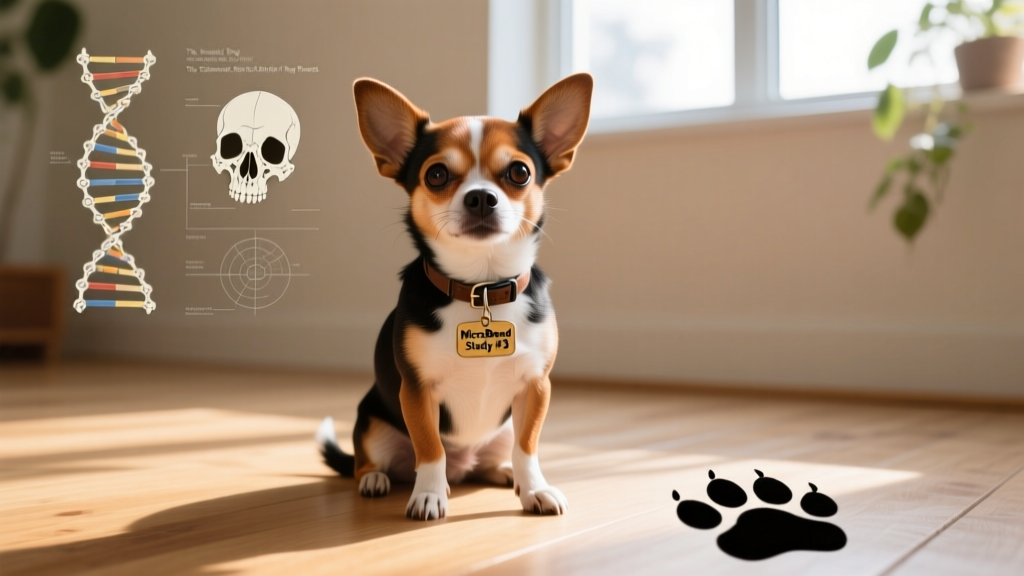
The smallest dog in the world by height is a Chihuahua named Miracle Milly, who measured just 3.8 inches (9.65 cm) tall at the shoulder, verified by Guinness World Records in 2013. By weight, the record belongs to a Chihuahua named Brandy, who weighed only 2 pounds (0.9 kg). These extreme miniatures represent the outer boundary of a genetic phenomenon driven primarily by a variant of the IGF1 (Insulin-like Growth Factor 1) gene — the same gene that controls body size variation across all domestic dogs.
When people search for "the smallest dog in the world," they usually find a cute photo and a fun fact. But the biology behind extreme canine miniaturization is genuinely fascinating — and it carries real implications for anyone living with or considering a toy-breed dog. Understanding the science helps you provide better care, recognize genuine health risks, and separate internet myths from veterinary reality.
The Genetics of Tiny Size: How Dogs Became the Smallest in the World
Key gene: A single variant of the IGF1 gene on canine chromosome 15 accounts for approximately 50% of body size variation across all dog breeds. Research published in Science (Sutter et al., 2007) demonstrated that nearly all small-breed dogs share an identical haplotype at this locus — a stretch of DNA inherited from a common ancestor.
Modifier genes: Additional genes including IGF1R (the receptor for IGF1), GHR (Growth Hormone Receptor), and SMAD2 fine-tune size further. A 2022 study in PLOS ONE identified variants in the GHR gene that contribute to the difference between a 6-pound Chihuahua and a 12-pound one.
The mechanism: IGF1 is a hormone produced primarily by the liver in response to growth hormone stimulation. It promotes cell proliferation and inhibits cell death during development. Dogs with the "small" variant of IGF1 produce less of this protein during fetal and juvenile growth phases, resulting in shorter bones, smaller organs, and reduced overall mass.
What makes this remarkable is the speed at which this diversity emerged. All domestic dogs — from 2-pound Chihuahuas to 200-pound English Mastiffs — descended from a common wolf ancestor within roughly 15,000 to 30,000 years. No other mammal on Earth displays this degree of size variation within a single species. The IGF1 small-variant haplotype likely arose early in domestication and was then intensely selected by humans who wanted compact companion dogs, ratters, and lap warmers.
Evolutionary Context: Why Would a Small Dog Ever Exist?
In the wild, small size is usually a disadvantage. Smaller animals have less strength, lower thermal mass (they lose heat faster), and reduced competitive ability. Wolves maintain a fairly narrow size range (typically 60–120 lb / 27–54 kg) because natural selection penalizes extremes.
Domestication changed the rules. Humans created ecological niches where small size was advantageous: living inside homes, fitting in laps, hunting rodents in grain stores, and requiring less food. Artificial selection overrode natural selection, allowing the IGF1 small variant to become fixed in toy breeds without the survival penalties it would carry in the wild.
This is a textbook example of how domestication unlocks phenotypic variation. The genetic potential for tiny size likely existed as rare mutations in ancestral wolf populations but was never expressed at scale because small pups would not survive. Human protection — shelter, consistent food, veterinary care — removed those selective pressures. The result: the Chihuahua, the Yorkshire Terrier, the Pomeranian, and other breeds that represent the smallest dogs in the world.
Physiological Realities of Being Extremely Small
Being the smallest dog in the world isn't just a matter of scale — it fundamentally changes how a dog's body functions. Toy and teacup breeds face physiological challenges that larger dogs simply don't encounter.
| Physiological Factor | Small Dogs (<10 lb / 4.5 kg) | Large Dogs (>50 lb / 23 kg) |
|---|---|---|
| Metabolic rate | ~100 kcal/kg/day (nearly double large breeds) | ~50–60 kcal/kg/day |
| Heart rate (resting) | 100–140 bpm | 60–100 bpm |
| Hypoglycemia risk | High — liver glycogen stores deplete in 4–8 hours | Low — can fast 12–24 hours safely |
| Thermoregulation | Poor — high surface-area-to-volume ratio causes rapid heat loss | Good — larger thermal mass retains heat |
| Bone fragility | High — bones as thin as pencils; fractures from minor falls | Low — robust skeletal structure |
| Lifespan | 12–18+ years (longer than large breeds) | 8–12 years |
The metabolic difference is the most practically important. A 3-pound (1.4 kg) Chihuahua burns through its energy reserves roughly twice as fast per kilogram as a Labrador Retriever. This means small dogs need to eat more frequently — typically 3 to 4 small meals per day for puppies, and at least 2 for adults — to prevent hypoglycemia, a potentially life-threatening drop in blood sugar that can cause seizures, collapse, and even death within hours if untreated.
Their high surface-area-to-volume ratio also means tiny dogs lose body heat rapidly. In environments below 60°F (15°C), a dog under 5 pounds (2.3 kg) may need a sweater or coat — not as a fashion statement, but as a physiological necessity. Breeds with single coats (like the Chinese Crested or hairless Chihuahua varieties) are especially vulnerable.
Breed Breakdown: The Contenders for Smallest Dog in the World
While the Chihuahua holds the official records, several breeds consistently produce the world's smallest dogs. Here's how they compare:
| Breed | Weight Range | Height Range | Lifespan | Key Health Concern |
|---|---|---|---|---|
| Chihuahua | 2–6 lb / 0.9–2.7 kg | 5–8 in / 13–20 cm | 14–18 years | Patellar luxation, hydrocephalus, tracheal collapse |
| Yorkshire Terrier | 4–7 lb / 1.8–3.2 kg | 7–8 in / 18–20 cm | 13–16 years | Portosystemic shunt, dental overcrowding |
| Pomeranian | 3–7 lb / 1.4–3.2 kg | 6–7 in / 15–18 cm | 12–16 years | Tracheal collapse, alopecia X |
| Toy Poodle | 4–6 lb / 1.8–2.7 kg | Under 10 in / 25 cm | 14–18 years | Progressive retinal atrophy, Legg-Calvé-Perthes |
| Russian Toy | 2–6 lb / 0.9–2.7 kg | 8–11 in / 20–28 cm | 12–14 years | Patellar luxation, dental disease |
According to the American Kennel Club breed standard, the Chihuahua should not exceed 6 pounds (2.7 kg), making it the lightest breed standard among AKC-recognized breeds. The "teacup" designation you see marketed online is not a recognized breed classification — it's a marketing term used by breeders (often puppy mills) to describe dogs that fall below the breed standard, frequently through intentional underfeeding or breeding runts. This practice carries serious welfare concerns.
Common Misconceptions About the Smallest Dogs
| Myth | Fact (Science-Based) |
|---|---|
| "Teacup" is a legitimate breed size category. | No major kennel club (AKC, UKC, FCI) recognizes "teacup" as a classification. It's a marketing term. Dogs below breed standard weight are often the product of unethical breeding practices. |
| Small dogs don't need exercise. | Toy breeds need 20–40 minutes of daily activity. Chihuahuas and Toy Poodles are surprisingly athletic and prone to obesity without regular movement. |
| Tiny dogs are fragile and can't be trained. | While physically delicate, toy breeds are fully trainable using positive reinforcement methods. Many excel at agility (modified for size), rally obedience, and trick training. |
| Small dogs live shorter lives. | The opposite is true. Research in The American Naturalist confirms that within dogs, larger breeds age faster and die younger. A Chihuahua typically outlives a Great Dane by 6–10 years. |
| A smaller dog is always healthier. | Dogs bred to be significantly below their breed standard face elevated risks of hypoglycemia, bone fractures, dental overcrowding, and congenital defects like hydrocephalus. |
Practical Implications: Daily Life With the Smallest Dogs
Nutrition & Feeding
- Caloric needs: A 4-pound (1.8 kg) adult Chihuahua needs approximately 150–200 kcal/day. That's roughly ⅓ to ½ cup of high-quality kibble formulated for small breeds (look for kibble pieces under ¼ inch diameter).
- Meal frequency: Feed at least 2 meals daily. Puppies under 6 months need 3–4 meals to prevent hypoglycemia.
- Emergency sugar: Keep Karo syrup or honey packets on hand. If your tiny dog becomes lethargic, wobbly, or unresponsive, rub a small amount on their gums and seek emergency veterinary care immediately.
Safety & Environment
- Fall prevention: A jump from a 3-foot (0.9 m) couch is the equivalent of a human jumping from a second-story window for a 3-pound dog. Use pet ramps (budget $25–$60 for a quality foam ramp) for furniture access.
- Door awareness: Dogs under 5 lb can slip through standard door gaps and are at genuine risk of being stepped on. Consider a small bell on their collar so you always know their location.
- Temperature control: Maintain indoor temperatures above 65°F (18°C). For outdoor walks below 50°F (10°C), use a fitted dog sweater — expect to spend $15–$35 for a well-insulated option.
Healthcare Costs
- Annual wellness: $400–$700/year including vaccinations, dental cleaning (critical for toy breeds due to dental overcrowding), and routine bloodwork.
- Dental care: Toy breeds often require professional dental cleanings starting at age 2–3 due to 42 adult teeth crammed into a tiny jaw. Budget $300–$800 per cleaning under anesthesia.
- Emergency fund: A fractured femur in a 3-pound dog can cost $2,000–$5,000 to repair. Pet insurance premiums for toy breeds run $30–$55/month — often worth it given their long lifespans and dental surgery needs.
When Small Size Signals a Problem
Not all tiny dogs are healthy small breeds. Some are abnormally small due to medical conditions that require veterinary attention.
Consult your veterinarian if your dog is significantly smaller than the breed standard, shows stunted growth compared to littermates, or displays any of the following:
- Dwarfism (chondrodysplasia): Disproportionately short limbs with a normal-sized trunk. Seen in some breed lines; may cause joint pain and mobility issues.
- Congenital hypothyroidism: Stunted growth combined with lethargy, mental dullness, and disproportionate body proportions. Diagnosed via thyroid panel ($80–$150).
- Portosystemic shunt (PSS): A vascular abnormality where blood bypasses the liver, causing stunted growth, "head pressing," disorientation after eating, and seizures. Common in Yorkshire Terriers. Diagnosis requires bile acids testing ($100–$200) and often advanced imaging. Surgical correction costs $3,000–$7,000.
- Growth hormone deficiency (pituitary dwarfism): Extremely rare; documented primarily in German Shepherds but theoretically possible in any breed. Puppies retain puppy coat and fail to grow normally after 2 months of age.
According to the Merck Veterinary Manual, pituitary dwarfism results from a failure of the anterior pituitary to produce adequate growth hormone, leading to proportionate small stature alongside other endocrine deficiencies. If you suspect a growth disorder, your veterinarian will typically run a CBC, chemistry panel, and IGF1 level test to begin the diagnostic process.
Frequently Asked Questions
Why do some dog breeds stay so small?
A specific variant of the IGF1 gene limits growth hormone signaling during development. This variant was selected by humans over thousands of years for companion dogs that could live in small spaces, require minimal food, and serve as lap warmers or ratters. The genetic mechanism reduces IGF1 protein production, resulting in shorter bones and smaller overall body size.
Can dogs be too small to be healthy?
Yes. Dogs bred to be significantly below their breed standard — marketed as "teacup" or "micro" — face elevated health risks including hypoglycemia, bone fractures from minor impacts, dental overcrowding (42 teeth in a jaw too small to accommodate them), congenital heart defects, and hydrocephalus. A responsible breeder will not intentionally produce dogs below the AKC breed standard weight range.
How do small dogs process food differently from large dogs?
Small dogs have a higher metabolic rate per kilogram of body weight — roughly double that of large breeds. Their smaller stomachs hold less food, and their limited liver glycogen stores deplete faster, making them susceptible to hypoglycemia if meals are skipped. They need calorie-dense, small-kibble diets fed more frequently throughout the day.
What does it mean when my tiny dog is shivering?
Shivering in toy breeds is often thermoregulatory — they're losing body heat faster than they can produce it due to their high surface-area-to-volume ratio. However, shivering can also indicate pain, anxiety, hypoglycemia, or illness. If shivering persists despite warmth, or is accompanied by lethargy, vomiting, or refusal to eat, consult your veterinarian promptly.
Is it normal for a Chihuahua to weigh only 2 pounds?
A 2-pound (0.9 kg) adult Chihuahua falls below the typical AKC breed standard range of 3–6 pounds (1.4–2.7 kg). While some healthy individuals exist at this weight, it's on the extreme end and warrants close veterinary monitoring for hypoglycemia, cardiac issues, and bone fragility. Dogs this small should never be bred.
How is extreme small size in dogs different from humans?
In humans, extreme short stature (dwarfism) is typically caused by mutations in the FGFR3 gene (achondroplasia) and occurs in roughly 1 in 25,000 births. In dogs, small size is a normal, selected trait controlled primarily by IGF1 — not a rare mutation. Dogs also display far greater size variation within one species than humans: the ratio between the smallest and largest dog breeds is roughly 1:100 by weight, compared to approximately 1:3 in humans.
Sources & Further Reading
- Sutter, N.B. et al. (2007). "A Single IGF1 Allele Is a Major Determinant of Small Size in Dogs." Science, 316(5821), 112–115.
- Greer, K.A. et al. (2022). "Genetic variants in GHR associated with body size in dogs." PLOS ONE.
- Kraus, C. et al. (2013). "Within-Species Size Variation and Aging in Dogs." The American Naturalist, 181(5).
- AKC Chihuahua Breed Standard
- Merck Veterinary Manual: Hypopituitarism in Dogs
Robin Maitland
All our authors care for dogs every day — read more of their work on the authors page.


