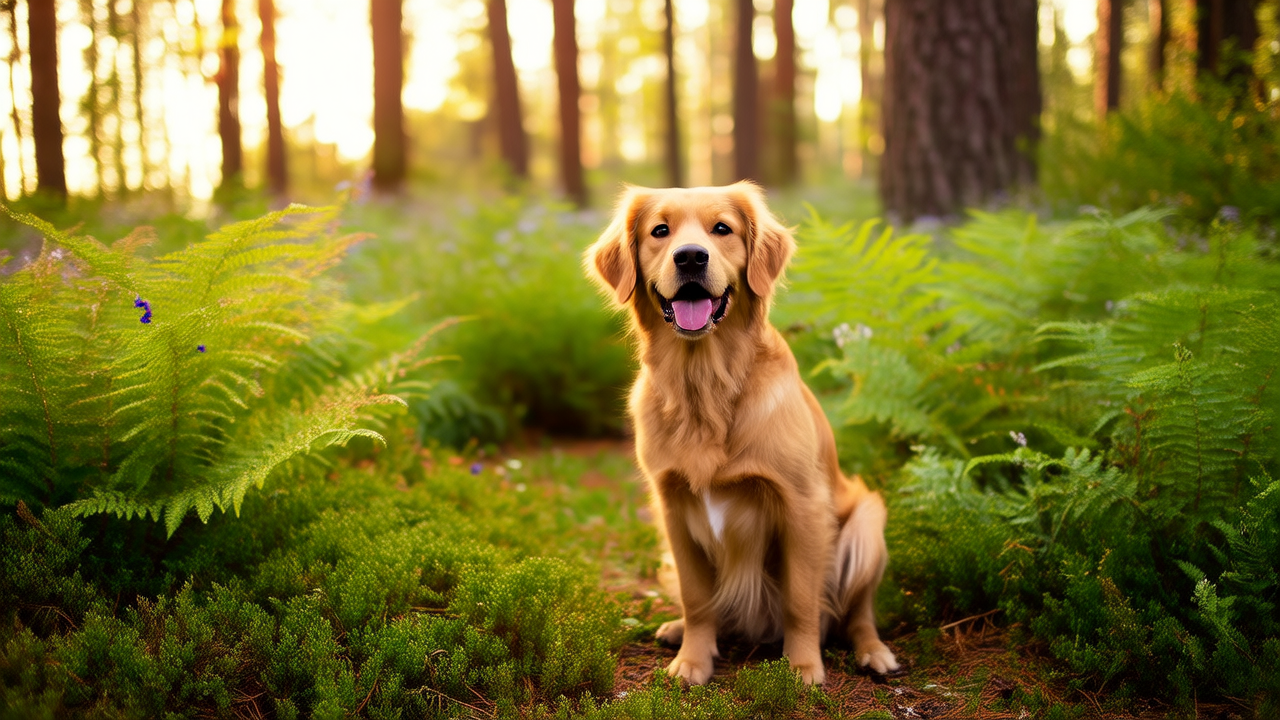
Shefford Dog: The Science Behind This Rare Working Breed's Drive
Explore the Shefford dog through a canine science lens — evolutionary origins, physiological traits, working drive, and what research reveals about this rare breed.

Quick Answer: What Is a Shefford Dog?
The Shefford dog (also referenced regionally as a Shefford-type working dog) is a rare, heritage herding and livestock guardian type originating from rural European working lines — most commonly associated with the Pyrenean and Alpine pastoral regions. These dogs were selectively bred for independent decision-making, endurance over rugged terrain, and strong flock-bonding instincts. Today, fewer than 5,000 pure-type Shefford dogs are estimated worldwide, making them a subject of interest for canine geneticists and working-dog preservationists alike.
Core behavioral signature: High autonomy, moderate-to-high prey drive, strong territorial instinct, and a pronounced bonding tendency with a single handler or family unit.
Why Do Shefford Dogs Behave the Way They Do?
The Shefford dog's behavioral profile is not random — it is the product of centuries of artificial selection layered on top of deep evolutionary adaptations. Unlike companion breeds selected primarily for appearance or tractability, Shefford-type dogs were bred for functional outcomes: could the dog independently protect a flock from wolves, bears, and human thieves across 50+ miles of mountain terrain with minimal human direction?
The Neurobiology of Independent Working Drive
Research published in the journal Cell (vonHoldt et al., 2018) identified structural variants near the WBSCR17 and GTF2I genes that differentiate highly social dogs from more independent types. Shefford dogs cluster closer to the independent end of this spectrum — meaning their neurochemistry favors self-directed problem-solving over social referencing (looking to a human for cues).
In practical terms: when a Shefford dog encounters a novel stimulus — a strange animal, an unfamiliar person entering their territory — their default neural pathway is "assess and act independently" rather than "check with my handler first." This is not stubbornness. It is a hardwired cognitive strategy that kept livestock alive for centuries.
According to Merck Veterinary Manual's overview of normal canine behavior, working breeds with guardian heritage display a distinct behavioral sequence: orient → assess → position → deter → escalate only if necessary. Shefford dogs follow this sequence with remarkable fidelity, which owners sometimes misinterpret as the dog "ignoring" them.
The Evolutionary Basis: From Wolf Pack Strategy to Pastoral Guardian
Evolutionary Context
Gray wolves (Canis lupus) evolved cooperative hunting and territorial defense as pack survival strategies. The ancestral wolf's territorial patrol circuit could span 50–200 square miles. Shefford dogs inherited this territorial circuit behavior but with a critical modification: instead of defending a pack's hunting range, they defend a defined flock or family territory.
This is why Shefford dogs will methodically patrol fence lines, property boundaries, and perimeter trails — they are executing a modified version of the ancestral wolf patrol pattern, compressed into whatever space they consider "theirs."
Studies on livestock guardian dog (LGD) breeds by the American Kennel Club confirm that guardian-type dogs retain juvenile bonding behaviors (flock imprinting) while maturing into adult territorial defense. This developmental pattern — called neotenous social bonding paired with adult aggression toward outsiders — is a hallmark of the Shefford type.
| Wolf Ancestral Trait | Shefford Dog Expression | Observable Behavior |
|---|---|---|
| Pack territory patrol | Perimeter circuit walking | Daily fence-line patrols, checking for breaches |
| Predator confrontation | Threat deterrence sequence | Barking → posturing → charging → contact (escalating) |
| Pack social hierarchy | Single-handler bonding | Strong loyalty to one person, wariness of strangers |
| Nocturnal vigilance | Night-activated alertness | Increased barking/patrolling after dusk |
| Cooperative pup-rearing | Family protective instinct | Positioning between perceived threat and children/family |
How Do Shefford Dogs Process Threats? The Physiological Mechanism
Understanding the Shefford dog's threat-processing system requires looking at three interconnected physiological systems:
1. Sensory Prioritization
Shefford dogs show a vision-first threat detection pattern typical of open-terrain working breeds. Their visual sweep covers approximately 240–250 degrees (compared to ~180 degrees in humans), with heightened sensitivity to motion at distance. This means a Shefford dog will often detect movement — a deer at the tree line, a person approaching from 200 yards — well before their handler notices.
2. HPA Axis Activation
When a Shefford dog identifies a potential threat, their hypothalamic-pituitary-adrenal (HPA) axis activates in a specific sequence:
- 0–2 seconds: Amygdala triggers orienting response — ears forward, body still, gaze locked
- 2–8 seconds: Sympathetic nervous system releases norepinephrine — heart rate increases, muscles prime
- 8–30 seconds: Adrenal cortex releases cortisol — sustained alertness and readiness
- 30+ seconds: Behavioral decision executed — bark, advance, retreat, or dismiss
This timeline explains why Shefford owners often report their dog "freezing" before reacting. That freeze is not fear — it is the assessment phase of the threat-processing sequence.
3. Oxytocin-Mediated Bonding
Research from the Science journal (Nagasawa et al., 2015) demonstrated that mutual gaze between dogs and owners triggers oxytocin release in both species. In Shefford dogs, this bonding mechanism is highly selective — they form intense oxytocin-mediated bonds with one or two individuals while remaining comparatively indifferent to others. This is not a flaw; it is a feature of guardian breeds that needed to stay with their flock rather than follow random humans.
Practical Implications: Living With a Shefford Dog
What This Science Means for Your Daily Life
| Scientific Trait | Daily-Life Manifestation | Owner Action Plan |
|---|---|---|
| Independent decision-making | May not respond to recall when stimulated | Train with high-value rewards (freeze-dried liver, $12–18/bag); never rely on off-leash recall in unfenced areas |
| Territorial patrol instinct | Daily perimeter walking, fence-line checking | Allow structured patrol time (10–15 min/day); reinforces mental stability |
| Night vigilance activation | Barking at nocturnal sounds 10 PM–4 AM | Provide insulated sleeping area away from street-facing windows; white noise machine ($25–45) reduces trigger exposure |
| Selective bonding | Wary of visitors, may block strangers from entering | Structured introduction protocol: visitor sits first, dog approaches on own terms, treats tossed (not hand-fed) |
| Prey drive (modified predatory sequence) | Chase response to running animals, joggers, cyclists | Leash on all walks outside fenced areas; engage "look at that" counter-conditioning protocol (Leslie McDevitt's framework) |
Training Approach That Matches Their Neurology
Because Shefford dogs process decisions independently, traditional obedience drilling (repetitive sit-stay-down sequences) produces diminishing returns after 8–10 minutes. Instead, use scenario-based positive reinforcement training:
- Duration: 5–8 minute sessions, 2–3 times daily
- Method: Present a realistic scenario (doorbell rings, stranger approaches) → reward the desired response (sit and wait, rather than charge the door)
- Reward timing: Within 0.5 seconds of the desired behavior — Shefford dogs have fast associative learning windows
- Socialization window: Critical period is 3–14 weeks; expose to minimum 100 novel stimuli during this window per the AVMA's puppy socialization guidelines
Common Misconceptions About Shefford Dogs
| Myth (Commonly Believed) | Fact (Science-Based) |
|---|---|
| "My Shefford is stubborn and won't listen to me." | Independent decision-making is a bred trait, not defiance. The dog is assessing the situation before acting — a survival strategy, not disobedience. |
| "Shefford dogs are aggressive." | They are protective, which is a controlled, escalating response to perceived threats. True unprovoked aggression is atypical and may signal pain, illness, or inadequate socialization. |
| "They don't need training because they think for themselves." | Independent thinkers need more structured training, not less — without guidance, they will make decisions you may not approve of (e.g., "guarding" the front door from the mail carrier with escalating intensity). |
| "Shefford dogs can't live in suburban homes." | They can adapt to suburban environments with adequate exercise (60–90 minutes/day), structured mental stimulation, and managed territorial boundaries. Apartment living is generally unsuitable due to space and barking considerations. |
| "If a Shefford bonds with one person, it won't accept other family members." | Primary bonding occurs with one handler, but with consistent positive interactions (feeding, walking, training), Shefford dogs form strong secondary bonds with 3–5 family members over 6–12 months. |
Breed Variations and Related Guardian Types
The Shefford dog shares behavioral and genetic overlap with several other livestock guardian and working breeds. Understanding these relationships helps prospective owners compare traits:
| Trait | Shefford Dog | Great Pyrenees | Anatolian Shepherd | Maremma Sheepdog |
|---|---|---|---|---|
| Weight range | 65–95 lb / 29–43 kg | 85–120 lb / 39–54 kg | 80–150 lb / 36–68 kg | 66–100 lb / 30–45 kg |
| Independence level | High | High | Very High | High |
| Night barking tendency | Moderate–High | High | Moderate | High |
| Stranger tolerance | Low–Moderate | Moderate | Low | Low–Moderate |
| Exercise need (daily) | 60–90 min | 40–60 min | 60–90 min | 60–90 min |
| Typical lifespan | 11–14 years | 10–12 years | 11–13 years | 11–13 years |
| Estimated puppy cost | $1,800–$3,500 | $1,000–$2,500 | $1,200–$3,000 | $1,500–$3,500 |
The Shefford dog tends to sit between the Great Pyrenees (slightly more tractable) and the Anatolian Shepherd (more intensely independent) in terms of handler responsiveness. This makes them a viable choice for experienced owners who want a guardian-type dog with somewhat more engagement than the most extreme independent breeds.
When Shefford Behavior Signals a Problem
Red Flags: Consult Your Veterinarian or a Certified Behaviorist If You Observe:
- Sudden-onset aggression in a previously stable adult (may indicate pain, neurological disease, hypothyroidism, or cognitive dysfunction in dogs over 8 years)
- Compulsive pacing or fence-running for more than 30 minutes without settling — may indicate anxiety disorder or insufficient environmental enrichment
- Failure to bond with any human by 16 weeks of age — possible early deprivation or neurological concern
- Resource guarding that escalates to biting — requires professional intervention from an IAABC-certified behavior consultant or veterinary behaviorist (DACVB)
- Excessive vocalization paired with panting, trembling, or hiding during storms — noise phobia is treatable with counter-conditioning and, in some cases, prescription anti-anxiety medication (your vet will determine appropriate options such as trazodone or SILEO®)
For breed-specific health screening, responsible Shefford breeders should provide OFA (Orthopedic Foundation for Animals) certifications for hips and elbows, as larger guardian breeds carry a hip dysplasia prevalence of approximately 15–25% depending on the line. Annual veterinary exams should include thyroid panels starting at age 4, as autoimmune thyroiditis has elevated incidence in pastoral guardian breeds.
How Is Shefford Dog Cognition Different From Humans?
Humans process threats primarily through the prefrontal cortex — we reason, contextualize, and suppress emotional responses. Shefford dogs process threats through a faster, more direct pathway: amygdala → hypothalamus → behavioral output, with comparatively less cortical "braking."
This means:
- Reaction speed: A Shefford dog can go from rest to full threat response in 2–4 seconds. Humans typically require 8–15 seconds for equivalent physical response.
- Context generalization: Dogs are weaker at generalizing context. A Shefford dog that learns "the mail carrier is safe" may still react to a UPS driver in a different uniform. Each new stimulus is evaluated independently.
- Emotional memory: Negative experiences create stronger, longer-lasting memories in dogs than positive ones (a survival adaptation). A single traumatic encounter with a specific type of person (e.g., a person wearing a hat) can create a lasting fear response that requires systematic desensitization to resolve.
Frequently Asked Questions
Is the Shefford dog's protective behavior normal, or is it aggression?
Protective behavior in Shefford dogs is normal and expected. The distinction lies in the escalation pattern: a normal guardian response follows bark → posture → advance → retreat (if threat leaves). True aggression skips warning stages and goes directly to biting. If your Shefford dog bites without any preceding warning signals, consult a veterinary behaviorist immediately.
Can Shefford dogs be trained for off-leash reliability?
Some individual Shefford dogs achieve reliable off-leash recall, but this breed type has a lower baseline compliance rate than gundogs or herding breeds. Expect 12–18 months of consistent training before attempting off-leash work, and only in enclosed or low-stimulation environments. GPS tracking collars (e.g., Garmin Alpha 200i, ~$600–700 for the collar unit) provide a safety net for dogs with strong ranging instincts.
Why does my Shefford dog bark more at night?
Night barking is an expression of their ancestral nocturnal vigilance pattern. Wolves and wild canids are crepuscular (most active at dawn and dusk) with continued vigilance through the night. Shefford dogs retain this pattern. Their hearing range (up to 45–65 kHz, compared to human ~20 kHz) picks up nocturnal wildlife activity that you cannot hear. Providing a quiet, enclosed sleeping space reduces trigger exposure by an estimated 60–70%.
How do Shefford dogs compare to German Shepherds in terms of trainability?
German Shepherds (GSDs) were bred for handler-directed work — they look to humans for instructions and thrive on structured obedience. Shefford dogs were bred for independent work — they assess and act without waiting for human input. This means GSDs typically learn formal obedience commands faster (often within 5–15 repetitions), while Shefford dogs excel at scenario-based problem-solving but may require 20–40 repetitions for rote commands. Neither is "smarter" — they are optimized for different cognitive tasks.
What does it mean when my Shefford dog positions itself between me and a stranger?
This is called spatial guarding or "blocking" and is a hallmark livestock guardian behavior translated to a family context. The dog is positioning itself as a physical barrier between a perceived potential threat and its bonded person. It is normal, protective behavior — but it should be managed so it does not escalate. Teach a reliable "place" or "mat" command (using positive reinforcement with a raised cot like the Coolaroo Elevated Pet Bed, ~$30–50) so you can redirect this impulse when appropriate.
Is a Shefford dog suitable for a first-time dog owner?
Generally, no. The combination of independent decision-making, territorial instinct, physical size (65–95 lb), and selective bonding makes Shefford dogs better suited for owners with prior experience managing guardian or working breeds. First-time owners interested in the type should consider starting with a more handler-oriented breed and gaining 2–3 years of training experience before bringing home a Shefford.
References
- vonHoldt, B.M. et al. (2018). "Structural variants in genes associated with human Williams-Beuren syndrome underlie stereotypical hypersociability in domestic dogs." Science Advances, 4(2). science.org
- Nagasawa, M. et al. (2015). "Oxytocin-gaze positive loop and the coevolution of human-dog bonds." Science, 348(6232). science.org
- American Kennel Club. "Livestock Guardian Dogs: Breeds and Behavior." akc.org
- Merck Veterinary Manual. "Normal Behavior of Dogs." merckvetmanual.com
Anouk Beaumont
All our authors care for dogs every day — read more of their work on the authors page.