Scottish Deerhound: The Science Behind the Gentle...
Explore the canine science behind the Scottish Deerhound's sighthound instincts, physiology, and behavior — from prey drive to temperament.
The Quick Answer: What Makes a Scottish Deerhound Tick?
Core Answer: The Scottish Deerhound is a sighthound — a dog whose brain, eyes, and body evolved to detect, chase, and capture fast-moving prey using vision rather than scent. Their hallmark behaviors (staring at movement, explosive sprinting, independence from human direction during chases, and deep resting states) are not quirks or disobedience. They are hardwired neurological and physiological adaptations shaped by thousands of years of selective breeding for coursing red deer across the Scottish Highlands.
If you've ever watched your Scottish Deerhound lock eyes on a squirrel 200 yards away and then explode into a 35-mph sprint with zero recall response, you've witnessed the sighthound predatory motor sequence in action. Understanding the science behind these behaviors transforms frustration into appreciation — and helps you manage a breed whose neurology differs meaningfully from the average retriever or herding dog.
Why Do Scottish Deerhounds Chase? The Sighthound Predatory Motor Sequence
Every dog inherits a predatory motor sequence from their wolf ancestors: orient → eye → stalk → chase → grab-bite → kill-bite → dissect → consume. In sighthounds like the Scottish Deerhound, selective breeding has amplified the middle stages — eye, stalk, and chase — while suppressing the final kill and consume stages. This is why your Deerhound will pursue a rabbit with breathtaking speed but often has no idea what to do once they catch it.
Research published in the Journal of Veterinary Behavior confirms that sighthound breeds exhibit significantly higher chase-drive scores compared to scent hounds and gundogs. The sequence is triggered specifically by rapid lateral movement — a deer bounding, a cat darting, a plastic bag tumbling in the wind. It is not triggered by stationary objects or slow movement, which is why your Deerhound may ignore a rabbit sitting still in your garden but will react instantly when it bolts.
The neurochemical driver is dopamine release in the nucleus accumbens — the brain's reward center. When a Scottish Deerhound spots moving prey, dopamine floods the system, creating an intensely rewarding experience that is self-reinforcing. This is why chase behavior is so difficult to train away: the behavior itself is the reward, not your treat or praise.
| Myth | Scientific Fact |
|---|---|
| "My Deerhound is disobedient when they ignore recall during a chase" | Their visual cortex and dopamine reward system override auditory processing during chase sequences — they literally cannot prioritize your voice |
| "Sighthounds are dumb because they're hard to train" | Scottish Deerhounds score average to above-average on canine intelligence tests; they simply prioritize independent decision-making over compliance, a trait selected for coursing at distances where handler direction was impossible |
| "They need hours of intense exercise daily" | Most adult Deerhounds are satisfied with one 20–30 minute off-leash sprint in a secure area plus a leisurely leash walk — they are famously low-energy indoors |
| "They're aggressive because they chase small animals" | Chase behavior is predatory sequence, not aggression — Deerhounds are among the least aggressive breeds toward humans and typically coexist peacefully with household cats when properly socialized |
The Evolutionary Basis: From Highland Coursing to Your Living Room
Ancestral Context: The Scottish Deerhound's ancestors were used by Scottish chieftains and nobility to hunt red deer (Cervus elaphus) — animals weighing 200–400 lb that could run 35–40 mph across rugged, rocky terrain. This was not casual pursuit; it was an extreme athletic endeavor requiring a dog that could:
- Detect prey visually at distances exceeding 1 kilometer across open moorland
- Accelerate to near-top speed within 3–4 strides
- Maintain speeds of 30–35 mph over distances of 1–2 miles
- Make independent decisions about pursuit angles without handler input
- Physically grapple with prey 5–8 times their own body weight
When deer-stalking declined in the 18th and 19th centuries (due to deforestation, firearms, and land-use changes), the breed nearly went extinct. Revival efforts by figures like Captain Graham McNeill in the 1860s saved the breed, but shifted selection pressure toward companionship and conformation showing. The result: a modern Scottish Deerhound that retains the chase neurology of a working coursing dog but carries the temperament of a gentle family companion.
According to the AKC breed standard, the Scottish Deerhound should be "gentle and friendly" with a "dignified, calm" demeanor — traits that reflect centuries of post-working selection for dogs that could live closely with families in Highland estates. This duality (explosive athlete outdoors, placid couch-dog indoors) is not contradictory; it reflects two distinct selection pressures operating on the same genome.
How Do Scottish Deerhounds See? The Sighthound Visual System
Understanding your Deerhound's chase behavior requires understanding their eyes — which differ from both human eyes and the eyes of non-sighthound breeds in measurable, scientifically documented ways.
Retinal Anatomy: The Visual Streak
Most dog breeds have a retinal feature called the visual streak — a horizontal band of concentrated photoreceptor cells (primarily rods, which detect motion and function in low light) across the retina. In sighthounds, this streak is significantly wider and denser than in brachycephalic breeds (like Pugs) or scent hounds (like Beagles). Research from the University of Wisconsin School of Veterinary Medicine found that sighthound retinas contain up to 80% rod photoreceptors compared to approximately 60% in mesocephalic breeds.
This means your Scottish Deerhound has:
- Superior motion detection: They can detect a moving object at 800–1,000 meters — roughly 4–5 times farther than the average human can track movement
- Wide panoramic vision: Their laterally placed eyes give them a field of view of approximately 250–270 degrees (compared to 180 degrees in humans and roughly 240 degrees in brachycephalic dogs)
- Reduced color discrimination: Like all dogs, they are dichromatic (blue-yellow color vision), but their rod-dominant retinas mean they prioritize movement and contrast over color detail
- Excellent low-light performance: The high rod density and well-developed tapetum lucidum (reflective layer behind the retina) give them functional vision in dawn/dusk conditions — precisely when deer are most active
How Is This Different from Humans?
Humans are foveate — we have a small central pit (the fovea) packed with cone cells for high-acuity color vision. We excel at identifying stationary objects, reading fine detail, and distinguishing colors. Scottish Deerhounds sacrifice all of this for one overriding capability: detecting and tracking motion across vast distances. When your Deerhound "stares into space," they are likely scanning the horizon for movement that is invisible to your foveate human eyes.
Physiology of Speed: The Deerhound Body as a Sprint Machine
The Scottish Deerhound's body is a case study in biomechanical specialization. Standing 30–32 inches at the shoulder (76–81 cm) for males and weighing 85–110 lb (39–50 kg), they are one of the tallest dog breeds in existence. But their size is not merely ornamental — every anatomical feature serves the sprint.
Cardiovascular Adaptations
Sighthounds possess hearts that are proportionally larger relative to body weight than non-sighthound breeds. Studies cited in the Merck Veterinary Manual note that Greyhound hearts (a closely related sighthound) can constitute up to 1.18% of total body weight, compared to 0.77% in mixed-breed dogs. While specific cardiac data for Scottish Deerhounds is less extensively published, the breed shares this sighthound cardiovascular phenotype: a large, efficient heart capable of rapid output increases during explosive exercise.
Their resting heart rate typically ranges from 60–80 bpm (lower than the 80–120 bpm average for most medium-to-large breeds), but can spike to 200+ bpm during a full-speed chase. This wide operating range is a hallmark of athletic sighthound physiology.
Musculoskeletal Design
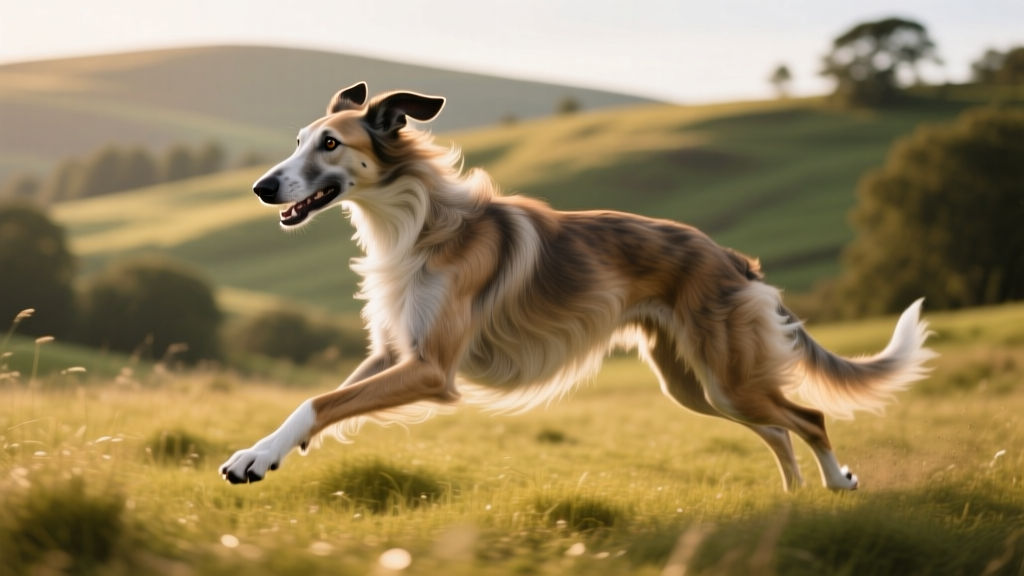
The Deerhound's deep chest (providing lung capacity), arched loin (acting as a spring-loaded power transfer zone), and long, powerful hindquarters generate the double-suspension gallop — a gait in which all four feet leave the ground twice per stride cycle. This is the same gait used by cheetahs and is the fastest form of canine locomotion.
Their skeletal frame is built for lightness and leverage rather than brute force. Bone density in sighthounds is typically lower than in similarly sized working breeds (like Rottweilers or Mastiffs), which makes them faster but also more susceptible to certain fractures under extreme stress.
What Does It Mean When My Deerhound Does That? Decoding Breed-Specific Behaviors
Living with a Scottish Deerhound means encountering behaviors that can puzzle owners accustomed to more biddable breeds. Here's what the science says about common Deerhound behaviors:
The "Deerhound Stare"
Behavior: Your dog freezes, body rigid, head elevated, eyes fixed on a distant point — sometimes for 30 seconds or more before either relaxing or launching into a chase.
Science: This is the "eye" stage of the predatory motor sequence. The Deerhound's visual system has detected motion at the edge of their detection range and is processing whether the stimulus constitutes prey. During this phase, dopamine is building in the reward centers. Interrupting the stare with a calm redirect (a treat tossed at their feet, a gentle hand on their shoulder) is far more effective than shouting their name, which they will likely filter out.
Indoor Lethargy
Behavior: Your Deerhound sleeps 14–18 hours per day at home, seeming almost lazy.
Science: This is entirely normal and adaptive. Sighthounds evolved for burst-energy expenditure, not endurance. Their muscle fiber composition is dominated by fast-twitch (Type II) fibers designed for short, intense effort followed by long recovery periods. A Deerhound that gets one good sprint per day has met its exercise needs and will spend the remaining hours in recovery. This is not depression or illness — it is efficient energy management.
Selective Hearing
Behavior: Your Deerhound responds perfectly to recall in the kitchen but appears deaf in the park.
Science: Auditory processing in sighthounds is not impaired — it is contextually overridden. When the visual chase sequence activates, the brain's attentional resources shift overwhelmingly toward the visual stimulus. This is documented in canine cognitive research as a form of attentional capture. The solution is not louder commands but managed environments: use secure, fenced areas (minimum 6-foot fencing — Deerhounds can jump 5-foot fences) for off-leash exercise, and practice recall in low-distraction settings with high-value rewards (real meat, not kibble).
Is This Normal? When Deerhound Behavior Signals a Problem
While most Deerhound behaviors are breed-typical, certain presentations warrant veterinary attention:
Red Flags: When to Consult Your Veterinarian
- Exercise intolerance: A Deerhound that consistently refuses to run or tires after 2–3 minutes of activity may have an underlying cardiac issue. Dilated cardiomyopathy (DCM) has been documented in the breed, and early detection via echocardiogram is critical.
- Excessive lethargy beyond normal resting: If your dog is difficult to rouse, shows no interest in sprinting even in stimulating environments, or sleeps more than 20 hours/day consistently, thyroid dysfunction (hypothyroidism) should be ruled out via blood panel.
- Sudden onset of fear-based reactivity: Scottish Deerhounds are typically confident, calm dogs. Sudden fearfulness, trembling, or avoidance behavior in a previously stable adult may indicate pain (often orthopedic — check for hip dysplasia or osteosarcoma, both documented in the breed).
- Obsessive fixation: If your Deerhound cannot disengage from staring at windows or fences even indoors, pacing compulsively, or showing signs of distress when prevented from chasing, this may indicate a compulsive behavioral disorder requiring veterinary behaviorist intervention.
Always consult your veterinarian if you notice sudden behavioral changes. Many behavioral shifts have underlying medical causes.
Practical Implications: Living with Sighthound Science
Understanding the science behind your Scottish Deerhound's brain and body translates directly into daily management decisions:
Environment Setup
- Fencing: Minimum 6-foot (1.8 m) secure fencing. Invisible/electric fences are completely ineffective — the chase drive will override pain from a collar shock. Expect to spend $3,500–$8,000 for professionally installed 6-foot wood or vinyl fencing for a typical suburban yard.
- Visual barriers: If your Deerhound spends hours staring at deer through a glass door, consider frosted window film ($15–$30 per roll) on lower panels to reduce chronic arousal.
- Leash protocol: Use a well-fitted harness (not a collar — sighthound necks are fragile relative to their pulling force) with a 6-foot leash for walks. Retractable leashes are dangerous with a breed that can hit 35 mph in 3 strides.
Exercise Framework
| Life Stage | Daily Exercise | Type | Notes |
|---|---|---|---|
| Puppy (2–12 months) | 5 minutes per month of age, twice daily | Free play on soft surfaces, short walks | Avoid forced running — growth plates are open and bones are vulnerable |
| Young Adult (1–3 years) | 30–45 minutes | One off-leash sprint session + one leash walk | Peak energy period; may need two sprint sessions |
| Adult (3–7 years) | 20–40 minutes | One off-leash sprint + leisurely walk | Most Deerhounds self-regulate well at this stage |
| Senior (7+ years) | 15–30 minutes | Gentle leash walks, short sprint opportunities if willing | Monitor for arthritis; reduce impact activities |
Training Approach
Scottish Deerhounds respond well to positive reinforcement methods — food rewards, play rewards, and access to chase opportunities as reinforcement for desired behaviors. Force-free training is not just ethically preferable; it is practically superior for a breed that was selected for independence and will simply shut down under pressure.
The most effective recall training protocol for Deerhounds uses a long-line (15–30 foot training lead) in progressively more distracting environments, rewarding every successful recall with something the dog values more than the distraction. For many Deerhounds, this means real chicken or beef — not commercial training treats. Budget $30–$50/month on high-value training proteins if you are serious about building reliable recall.
Common Misconceptions About Scottish Deerhounds
| Misconception | Reality |
|---|---|
| "They're too big for apartments" | Deerhounds are among the best apartment dogs among large breeds — their indoor energy is extremely low. The constraint is access to a secure sprint area, not square footage. |
| "They need a huge yard" | A yard is irrelevant if it's not securely fenced. A Deerhound with no yard but daily access to a fenced dog park is better exercised than one with an unfenced acre who can never be let off-leash. |
| "They're not smart" | They score well on problem-solving tasks but poorly on obedience-based intelligence rankings because they were bred for independent decision-making, not handler cooperation. |
| "They can't live with cats" | Many Deerhounds coexist peacefully with household cats when introduced properly as puppies. However, outdoor cats that run will likely trigger chase instinct — this is context-dependent, not a universal rule. |
| "They're aggressive hunters" | The Deerhound's chase sequence typically terminates at grab-bite or earlier. They were bred to hold deer for the human hunter, not to kill independently. Aggression toward humans is extremely rare and disqualifying in the breed standard. |
Frequently Asked Questions
Why do Scottish Deerhounds stare at nothing?
They are rarely staring at "nothing." Their visual system detects motion at distances far beyond human perception — a deer at the tree line 800 meters away, a bird in flight, or even shadows moving across grass. The "Deerhound stare" is the orient-eye phase of the predatory motor sequence. If the stare is accompanied by trembling, whining, or inability to redirect attention, consult your veterinarian to rule out compulsive behavioral disorders.
Can Scottish Deerhounds be trained off-leash reliably?
Some individuals can achieve reliable off-leash recall after 2–3 years of consistent positive reinforcement training, but many Deerhound owners and experienced trainers consider truly reliable off-leash recall unrealistic for the breed in unsecured areas. The visual chase trigger activates a neurological override that training cannot fully eliminate. The safest approach is to use secure, fenced areas for off-leash exercise and maintain leash discipline everywhere else.
How do Scottish Deerhounds process commands differently from other breeds?
Research on canine cognition suggests that sighthounds process handler cues with less automatic priority than breeds selected for close cooperation (like retrievers and herding dogs). A Border Collie's brain treats a handler's verbal cue as a primary stimulus; a Deerhound's brain treats it as one input among many, weighed against the visual environment. This is not defiance — it is a different cognitive architecture shaped by selection for independent work at great distances from the handler.
Is it normal for my Scottish Deerhound to sleep all day?
Yes. Sleeping 14–18 hours per day is normal for a healthy adult Scottish Deerhound that receives adequate daily sprint exercise. Their fast-twitch muscle physiology requires extended recovery periods after intense effort. If your dog is getting one good run per day and is alert, interested in food, and responsive during waking hours, their sleep pattern is healthy.
How is a Scottish Deerhound's chase drive different from a terrier's prey drive?
Terriers were bred to complete the full predatory motor sequence through kill-bite and dissection — they catch and kill prey independently. Scottish Deerhounds were bred to amplify the chase and grab-bite stages while leaving the final stages to the human hunter. This means a Deerhound is more likely to chase and then stand over or gently mouth a caught animal, while a terrier is more likely to shake and kill it. Both are prey drive, but the sequence terminates at different stages.
What does it mean when my Deerhound "bunny hops" during a run?
The "bunny hop" or double-suspension gallop — where all four feet are off the ground simultaneously in two distinct phases per stride — is the sighthound's maximum-speed gait. It is entirely normal and indicates your dog is running at full athletic capacity. If the gait appears asymmetrical or your dog favors one side, have them evaluated for orthopedic issues such as hip dysplasia or cruciate ligament injury.
Related Behaviors and Cross-References
The sighthound chase instinct in Scottish Deerhounds connects to several other canine science topics worth exploring:
- Leash reactivity in sighthounds: Many Deerhounds display leash frustration when they see prey they cannot pursue — this is barrier frustration, not aggression, and responds well to counter-conditioning protocols.
- Resource guarding: Uncommon in Deerhounds compared to some breeds, but can emerge around high-value food items. This is a separate behavioral system from prey drive.
- Canine vision science: The sighthound visual streak is just one variation in canine retinal anatomy — brachycephalic breeds have an "area centralis" (more like the human fovea), which changes their visual priorities entirely.
- Scent hound vs. sighthound neurology: While Deerhounds prioritize visual stimuli, scent hounds (like Bloodhounds) have an olfactory bulb that is proportionally 40 times larger relative to brain size, creating a fundamentally different sensory experience of the world.
Research References
- McGreevy, P.D. et al. (2013). "Prevalence, comorbidity, and heritability of fear and aggression in 35 dog breeds." Journal of Veterinary Behavior, 8(5), 318–328.
- American Kennel Club — Scottish Deerhound Breed Standard. AKC.org.
- Miller, P.E. & Murphy, C.J. (1995). "Vision in Dogs." Journal of the American Veterinary Medical Association, 207(12), 1623–1634.
- Merck Veterinary Manual — Heart and Circulation Disorders in Dogs.
Dr. Hannah Wickes
All our authors care for dogs every day — read more of their work on the authors page.