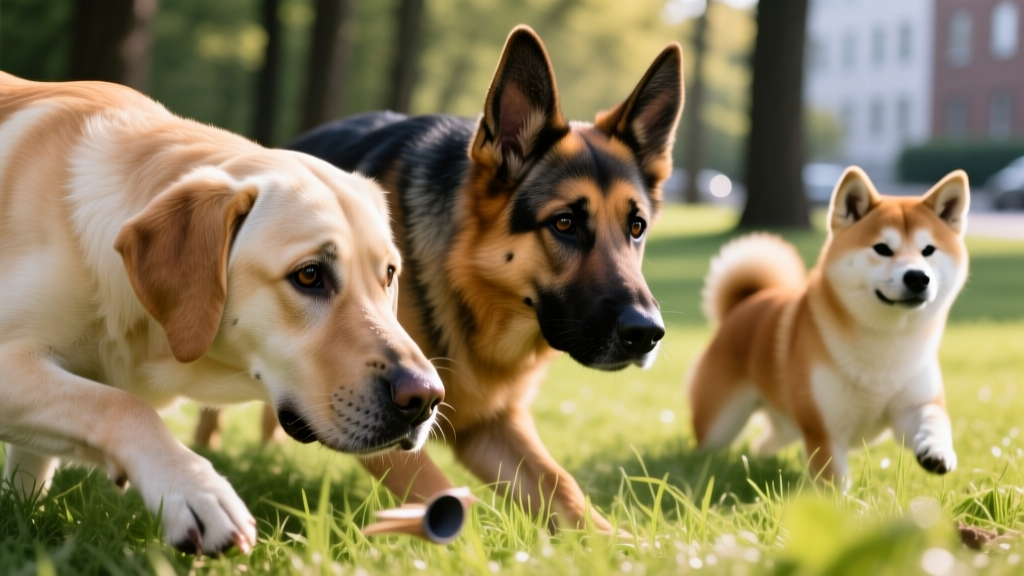
Understanding Dogs That Are Chill
Genetics, neurochemistry, and evolutionary biology behind dogs that are chill — plus breed rankings, temperament testing, and practical tips for calm-dog

Quick Answer: What Makes Some Dogs Naturally Chill?
Dogs that are chill owe their relaxed temperament to a combination of genetic variants (particularly in the WBSCR17 and GTF2I genes linked to hypersociability and low reactivity), lower baseline cortisol levels, and selective breeding over centuries for companionship and steady-nerve work like livestock guarding. Breeds such as the Greyhound, Basset Hound, Newfoundland, and Cavalier King Charles Spaniel consistently rank as the most relaxed, though individual variation within any breed is significant. A dog's "chillness" is measurable through heart rate variability (HRV), cortisol assays, and standardized temperament assessments like the C-BARQ.
The Neurochemistry of a Chill Dog
When we describe certain dogs as "chill," we're observing a measurable physiological state — not just a personality quirk. A relaxed dog's nervous system is governed by the interplay of several key neurochemical systems:
Key Neurochemical Players in Canine Calmness
- Serotonin (5-HT): Dogs with higher serotonin receptor density, particularly 5-HT1A and 5-HT2A subtypes, show lower reactivity to novel stimuli. A 2019 study published in Frontiers in Behavioral Neuroscience found that dogs scoring low on aggression and fear scales had significantly higher whole-blood serotonin concentrations than reactive counterparts.
- Cortisol: The primary stress hormone. Chill dogs maintain lower baseline salivary cortisol (typically 0.10–0.25 μg/dL at rest) compared to high-strung breeds, which may baseline at 0.35–0.60 μg/dL. Cortisol recovery time — how fast levels return to baseline after a stressor — is also faster in relaxed dogs, often within 15–20 minutes versus 45+ minutes in anxious dogs.
- Oxytocin: The "bonding hormone" that promotes affiliative behavior. Dogs bred for companionship show elevated oxytocin responses to human eye contact, which simultaneously dampens the hypothalamic-pituitary-adrenal (HPA) axis — the body's stress response system.
- GABA (Gamma-aminobutyric acid): The brain's primary inhibitory neurotransmitter. Higher GABA activity in the amygdala (the fear-processing center) results in a dog that literally cannot panic as easily. Some breeds appear to have naturally denser GABAergic signaling in threat-assessment pathways.
- Dopamine receptor DRD4: A specific polymorphism in the DRD4 gene (the "novelty-seeking gene") has been linked to calm versus excitable behavior in dogs. Dogs with certain DRD4 variants show less compulsive exploration and lower reactivity to environmental changes.
In practical terms, a chill dog's brain is structurally and chemically wired to interpret novel stimuli as neutral rather than threatening. Their amygdala fires less intensely, their prefrontal cortex (the "thinking" region) can override impulse reactions more efficiently, and their autonomic nervous system defaults toward parasympathetic ("rest and digest") dominance rather than sympathetic ("fight or flight") arousal.
Why Chillness Evolved: The Evolutionary Roots of a Laid-Back Dog
From Wolf to Couch Companion
The ancestor of every modern dog was a gray wolf (Canis lupus) — an animal with high vigilance, rapid threat assessment, and a hair-trigger flight-or-fight response. These traits were essential for survival in the wild. So how did we get from that to a Basset Hound that won't move off the couch?
The answer lies in self-domestication, a process that began roughly 20,000–40,000 years ago. The leading scientific model, supported by research from the American Kennel Club and numerous evolutionary biology studies, suggests that the least fearful wolves began scavenging near human settlements. These proto-dogs had a survival advantage: lower flight distances meant access to a reliable food source.
Over hundreds of generations, selection pressure favored animals with:
- Reduced adrenal gland size — producing less epinephrine (adrenaline) in response to stimuli
- Smaller skull and brain proportions relative to body size (domestic dogs have brains approximately 30% smaller than equivalent-sized wolves, with disproportionate reduction in the amygdala and olfactory bulb regions)
- Neoteny — retention of juvenile behavioral traits into adulthood, including playfulness, dependency, and reduced territorial aggression
- Pigmentation-linked temperament changes — the same neural crest cell pathways that produce white patches, floppy ears, and shorter muzzles (the "domestication syndrome" described by Darwin and later formalized by Belyaev's fox experiments) also reduce adrenaline production
Within this already-domesticated gene pool, humans further selected for specific temperaments. Livestock guardian breeds (Great Pyrenees, Newfoundland) were selected for calm vigilance — they needed to remain steady and non-reactive around flocks for hours. Sighthounds (Greyhounds, Whippets) were selected for explosive speed followed by immediate rest, creating a "sprint and crash" energy pattern. Companion breeds (Cavalier King Charles Spaniel, Pekingese) were selected purely for their ability to sit quietly with humans for extended periods.
The Genetics of Chill: What DNA Tells Us
A landmark 2017 study published in Scientific Advances by vonHoldt and colleagues identified structural variants in genes GTF2I and GTF2IRD1 that are associated with hypersociability in dogs — the same genes linked to Williams-Beuren syndrome in humans, a condition characterized by indiscriminate friendliness and low social anxiety. Dogs with these variants are not just friendly; they demonstrate a reduced threat-response across the board.
Additional genetic factors influencing calmness include:
| Gene / Marker | Function | Effect on Temperament |
|---|---|---|
| WBSCR17 | Williams syndrome critical region | Increased sociability, reduced fear of strangers |
| DRD4 exon III | Dopamine D4 receptor | Certain variants correlate with lower novelty-seeking and calmer demeanor |
| SLC6A4 (serotonin transporter) | Serotonin reuptake regulation | Variants linked to reduced aggression and anxiety |
| MAOA | Monoamine oxidase A (breaks down serotonin, dopamine) | Lower enzyme activity = more available serotonin = calmer mood |
| COMT | Catechol-O-methyltransferase (dopamine regulation) | Influences stress reactivity and emotional regulation |
It is critical to understand that no single gene determines whether a dog is chill. Temperament is polygenic — influenced by dozens of genes interacting with early-life environment, socialization windows (particularly weeks 3–14 of puppyhood), and ongoing management. A dog with "calm genetics" raised in a chaotic, under-socialized environment can still develop anxiety. Conversely, a genetically higher-energy dog with excellent early socialization and consistent training can learn to be remarkably settled.
Which Breeds Are Most Chill? A Data-Driven Ranking
The data below synthesizes findings from the C-BARQ (Canine Behavioral Assessment and Research Questionnaire, developed at the University of Pennsylvania), breed club health surveys, and temperament testing organizations. Scores reflect general breed tendencies — individual dogs will vary.
| Breed | Avg Weight (lb/kg) | Energy (hrs active/day) | Chill Factor | Why They're Chill |
|---|---|---|---|---|
| Greyhound | 60–70 lb / 27–32 kg | 1–2 hrs (sprint-based) | ★★★★★ | Sprint physiology; 18+ hrs sleep/day normal |
| Basset Hound | 40–65 lb / 18–29 kg | 1–1.5 hrs | ★★★★★ | Low metabolic rate; scent-hound patience |
| Newfoundland | 100–150 lb / 45–68 kg | 1.5–2 hrs | ★★★★★ | Bred for steady water-rescue work; low startle reflex |
| Cavalier King Charles Spaniel | 13–18 lb / 6–8 kg | 1.5–2 hrs | ★★★★☆ | Pure companion breeding; high oxytocin response |
| Great Pyrenees | 85–120 lb / 39–54 kg | 1–2 hrs | ★★★★☆ | Livestock guardian: calm vigilance for hours |
| Bulldog (English) | 40–50 lb / 18–23 kg | 0.5–1 hr | ★★★★☆ | Brachycephalic physiology limits sustained activity |
| Whippet | 25–40 lb / 11–18 kg | 1–1.5 hrs | ★★★★☆ | Similar to Greyhound; sprint-then-rest pattern |
| Bernese Mountain Dog | 70–115 lb / 32–52 kg | 1.5–2.5 hrs | ★★★★☆ | Draft-dog heritage: steady, unhurried pace |
| Shih Tzu | 9–16 lb / 4–7 kg | 1–1.5 hrs | ★★★☆☆ | Palace companion breed; low exercise drive |
| Clumber Spaniel | 55–85 lb / 25–39 kg | 1–1.5 hrs | ★★★★☆ | Slow, methodical hunting style; rare but exceptionally calm |
Important context: Mixed-breed dogs can be just as chill as purebreds. Shelter temperament assessments (such as the SAFER test or the ASPCA's Meet Your Match program) evaluate individual dogs regardless of breed. Many adult mixed-breed dogs in shelters score as low-energy and highly adoptable. Adopting an adult dog (age 3+) whose temperament is already established is often the most reliable way to get a chill companion.
Practical Implications: Living With (and Raising) a Chill Dog
What This Means for Your Daily Life
If you're choosing a chill dog:
- Request C-BARQ or temperament test results from breeders. Reputable breeders using Puppy Aptitude Testing (PAT) or the Volhard test can provide standardized scores at 7 weeks.
- For shelter dogs, ask for behavioral evaluation notes. Look for terms like "low arousal," "quick recovery from startle," and "soft body posture."
- Consider adult dogs (3+ years) over puppies. Temperament stabilizes significantly by age 2–3, and what you see is largely what you get.
- Budget $50–$150 for a professional temperament assessment if adopting from a private rescue without formal behavioral screening.
If you already have a chill dog:
- Don't mistake calmness for low needs. Chill dogs still require daily mental enrichment (15–20 minutes of sniffing games, puzzle feeders, or training sessions), even if their physical exercise needs are modest.
- Watch for weight gain. Low-energy breeds are at higher obesity risk. Maintain a Body Condition Score (BCS) of 4–5 on the 9-point Purina scale. For a 60 lb Greyhound, that typically means 1,200–1,400 kcal/day; for a 50 lb Basset Hound, 900–1,100 kcal/day.
- Chill dogs can mask pain more effectively than reactive dogs. A Newfoundland with hip dysplasia may simply move less rather than vocalize. Schedule veterinary orthopedic exams annually for large, calm breeds starting at age 4.
If you want to help a non-chill dog become calmer:
- Implement structured decompression: 30-minute "sniffari" walks on a long line (15–25 ft) in low-traffic areas, 3–4x per week. Research shows sniffing lowers canine heart rate by an average of 8–12 bpm.
- Use positive reinforcement training (force-free, LIMA-based methods only) to build impulse control. A solid "settle" cue trained on a mat takes 4–8 weeks of daily 5-minute sessions.
- Consider veterinary-recommended calming supplements: L-theanine (22 mg/kg body weight), casein-derived Zylkene (75 mg for dogs under 22 lb, 225 mg for 22–66 lb, 450 mg for over 66 lb), or Adaptil pheromone diffusers ($25–$35 per unit, lasting approximately 30 days).
- Consult a veterinarian about whether your dog's reactivity warrants anti-anxiety medication. SSRIs like fluoxetine (typically 1–2 mg/kg once daily) or situational medications like trazodone (3–5 mg/kg as needed) can be appropriate — but only your vet can make this determination.
Common Misconceptions About Chill Dogs — Debunked
| Myth | Fact |
|---|---|
| "A chill dog is lazy and doesn't need exercise." | Every dog needs a minimum of 30 minutes of physical activity daily, even low-energy breeds. Without it, they develop musculoskeletal problems, obesity, and pent-up frustration that can manifest as destructive behavior. A Greyhound still needs a 20-minute sprint opportunity 2–3x per week. |
| "Calm dogs are less intelligent." | Temperament and intelligence are independent traits. A Basset Hound's unhurried response to commands reflects scent-hound independence and low obedience motivation, not cognitive deficit. Stanley Coren's intelligence rankings measure trainability, not raw problem-solving ability. |
| "Small dogs can't be chill." | The Cavalier King Charles Spaniel, Bichon Frise, and Japanese Chin are all small breeds consistently rated as calm. High-energy stereotypes about small dogs come from breeds like Jack Russell Terriers, which were selected for relentless vermin-hunting drive — not size itself. |
| "Senior dogs are always chill." | While energy does decline with age (typically noticeable from age 7–8), canine cognitive dysfunction (CCD) affects an estimated 14–35% of dogs over age 11 and can cause nighttime restlessness, pacing, and anxiety in previously calm dogs. |
| "Mixed breeds are automatically calmer due to hybrid vigor." | Hybrid vigor (heterosis) primarily applies to recessive genetic diseases, not temperament. A Lab–Border Collie mix inherits energy genes from both working breeds and may be more intense than either purebred parent. Temperament in mixed breeds is highly individual and unpredictable. |
When a Chill Dog Isn't Actually Fine: Medical and Behavioral Red Flags
Sometimes what looks like a "chill" dog is actually a dog experiencing a medical or psychological problem. Distinguishing genuine relaxation from concerning lethargy or shutdown behavior is critical.
When to Consult Your Veterinarian
Contact your vet promptly if your previously active dog becomes suddenly "chill" — especially if accompanied by any of these signs:
- Sleeping more than 18–20 hours per day (a change from their baseline)
- Reluctance to climb stairs, jump onto furniture, or go on walks they previously enjoyed
- Loss of appetite or water intake changes
- "Zoning out" or unresponsiveness to stimuli that normally engage them
- Weight gain or loss of more than 10% body weight within 30 days
- Stiffness upon rising, limping, or altered gait
These can signal hypothyroidism (affecting roughly 0.2–0.8% of the general dog population, with higher rates in Dobermans, Golden Retrievers, and Cocker Spaniels), chronic pain from osteoarthritis, heart disease, or depression secondary to environmental changes.
Similarly, a dog that appears "chill" but displays learned helplessness — a state where the dog has stopped attempting to avoid unpleasant stimuli because prior attempts failed — is not relaxed. Signs include flattened body posture, whale eye (showing whites of eyes), lip licking without food present, and a rigid, frozen stillness rather than loose, relaxed muscles. This requires intervention by a certified behaviorist (CAAB or DACVB credentialed) working alongside your veterinarian.
Frequently Asked Questions
Why do some dogs seem impossible to excite?
Dogs with high parasympathetic tone and low amygdala reactivity literally process stimuli differently. Their brains classify most environmental events as "non-threatening" and therefore not worth a strong reaction. This is partly genetic (DRD4 and GTF2I variants) and partly shaped by early-life experiences during the 3–14 week socialization window. Dogs exposed to varied, positive experiences during this window develop broader "safe" categories and react to fewer triggers throughout life.
Can dogs be trained to be more chill?
Yes, within genetic limits. You cannot turn a high-drive Belgian Malinois into a Basset Hound, but you can teach any dog a reliable "settle" behavior using positive reinforcement. The protocol involves capturing calmness: reward your dog with treats placed between their front paws whenever they voluntarily lie down and relax. Over 4–8 weeks, this builds a habit of defaulting to calm behavior. Mat training (teaching the dog that a specific mat or bed predicts relaxation and rewards) is one of the most effective methods, supported by veterinary behaviorists.
How do dogs process calmness differently from humans?
Dogs lack the prefrontal cortex capacity for cognitive reappraisal — the human ability to consciously reframe a stressful situation. A human can think "this loud noise is just construction, I'm safe." A dog cannot perform this mental gymnastics. Instead, canine calmness is primarily subcortical: their lower brain structures simply generate weaker threat signals. This is why environmental management (reducing triggers) is more effective for dogs than expecting them to "think their way" to calmness.
Is it normal for a puppy to be extremely chill?
Puppies typically sleep 18–20 hours per day, which can appear as extreme calmness. However, awake puppies should show curiosity, playfulness, and engagement. A puppy that is consistently limp, unresponsive, or fails to engage with littermates or humans during waking hours should be evaluated by a veterinarian. This can indicate congenital conditions, infections, or neurological issues. Normal puppy "chill" looks like: enthusiastic play bursts of 10–15 minutes followed by sudden, deep sleep — often mid-action.
What does it mean when my dog is only chill at home but reactive outside?
This is extremely common and reflects context-dependent behavior. Your home is your dog's "safe base" where cortisol is lowest. Outside, novel stimuli (other dogs, traffic, unfamiliar smells) trigger arousal. This doesn't mean your dog isn't genuinely chill — it means their threshold for reactivity is being exceeded in high-stimulation environments. Counter-conditioning and desensitization protocols, implemented with force-free methods, can gradually raise that threshold. A certified professional dog trainer (CPDT-KA or CPDT-KSA credentialed) can design a customized plan.
How is canine chillness different from human relaxation?
Humans can achieve relaxation through cognitive strategies: meditation, reframing thoughts, planning. Dogs live in a state of more immediate sensory processing. A chill dog's relaxation is not a practiced skill — it is their baseline neurological state. They do not "choose" to be calm; their nervous system simply does not escalate. This is why medication and environmental management are often more effective for anxious dogs than training alone — you are working with neurochemistry, not cognition.
Sources Referenced
- vonHoldt, B.M. et al. (2017). "Structural variants in genes associated with human Williams-Beuren syndrome underlie stereotypical hypersociability in domestic dogs." Science Advances, 3(7). NIH/PMC
- Rosado, B. et al. (2019). "Serotonergic Profile in Canine Aggression." Frontiers in Behavioral Neuroscience. NIH/PMC
- Merck Veterinary Manual — Overview of Behavioral Medicine for Dogs
- Hsu, Y. & Serpell, J.A. (2003). "Development and validation of a psychometric tool for assessing impulsivity in the domestic dog." C-BARQ, University of Pennsylvania.
Dr. Hannah Wickes
All our authors care for dogs every day — read more of their work on the authors page.