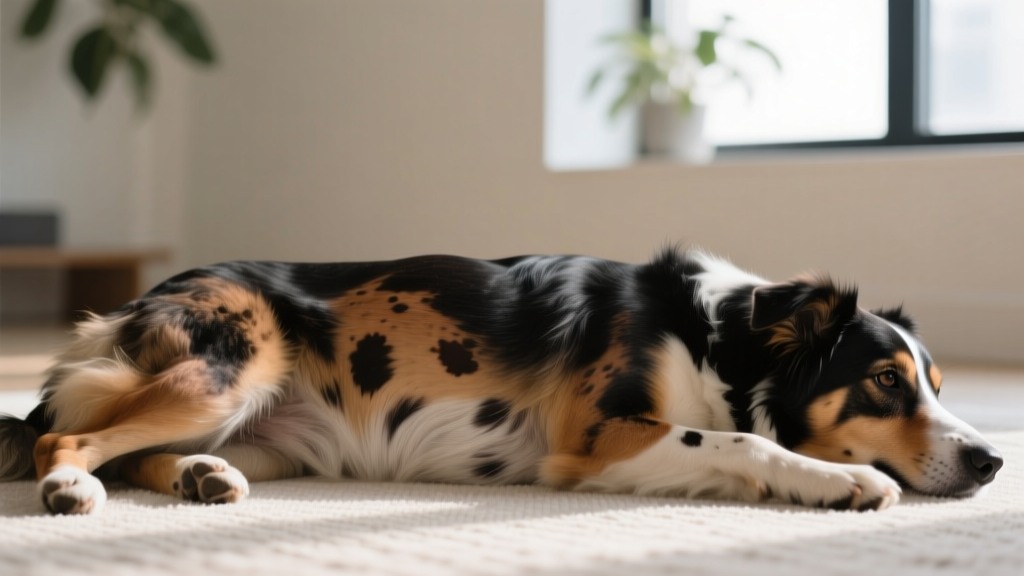
New Guinea Singing Dog: Vocalization Science & Evolutionary Origins
Explore the science behind the New Guinea Singing Dog's unique vocalizations, evolutionary history, physiology, and what makes this rare canid extraordinary.

What Is a New Guinea Singing Dog and Why Does It "Sing"?
The New Guinea Singing Dog (Canis lupus hallstromi) is a rare, semi-domesticated canid native to the highlands of Papua New Guinea, with an estimated 200–300 individuals remaining in captivity worldwide as of 2025. Its signature "song" is a complex, modulated howl that rises and falls in pitch — acoustically distinct from any other canid vocalization. Unlike domestic dog howling, the singing dog's vocalization involves rapid frequency modulation across a 400–1,200 Hz range, producing harmonics that resemble whale song or human yodeling. This trait likely evolved as an adaptation to dense montane forest environments where visual communication is limited and acoustic signals must travel through thick vegetation at altitudes of 6,500–15,000 feet.
The Evolutionary Context: An Ancient Lineage Isolated for Millennia
Key evolutionary fact: Genetic analysis published in Proceedings of the National Academy of Sciences (PNAS, 2020) confirmed that New Guinea Singing Dogs diverged from other canids approximately 8,000–10,000 years ago, making them one of the most basal (ancient) dog lineages on Earth — closely related to the Australian Dingo.
The New Guinea Singing Dog's ancestors likely arrived on the island of New Guinea with early human seafarers during the Neolithic period. Once isolated in the rugged highlands — separated from other canid populations by ocean barriers and mountainous terrain — these dogs evolved under unique selective pressures:
- Dense cloud forests with limited visibility beyond 10–15 meters favored acoustic over visual communication
- Absence of competing large predators meant vocal signaling carried lower risk of attracting threats
- Small, scattered prey populations (tree kangaroos, cuscus, rodents) required cooperative hunting signals that could coordinate group members across wide areas
- High-altitude environments with cooler temperatures selected for a compact body (20–30 lb / 9–14 kg) with efficient thermoregulation
This isolation produced what evolutionary biologists call allopatric speciation — a population diverging into a distinct form due to geographic separation. The singing vocalization likely began as a variant of the ancestral wolf howl, but was amplified by sexual selection and environmental adaptation over thousands of generations.
The Physiology of the Song: How the Vocal Apparatus Produces This Sound
Vocal Mechanism Breakdown
The singing dog's unique sound production involves three key anatomical features:
- Laryngeal structure: The larynx (voice box) is positioned higher in the throat compared to most domestic dogs, allowing greater control over vocal fold tension. This is similar to the anatomical difference between human and non-human primate larynx positioning.
- Vocal fold elasticity: Research from the Merck Veterinary Manual notes that canid vocal fold composition varies by species. Singing dogs appear to have more elastic vocal fold tissue, enabling rapid pitch modulation — shifting frequency up to 6 times per second within a single vocalization.
- Resonating chamber: The relatively short, broad skull (mesocephalic morphology) creates a compact oral cavity that acts as a resonating chamber, amplifying harmonics in the 800–1,000 Hz range where the "singing" quality is most pronounced.
Spectrographic analysis of singing dog vocalizations reveals a structure fundamentally different from domestic dog howling:
| Feature | NG Singing Dog | Domestic Dog (Husky Howl) | Gray Wolf |
|---|---|---|---|
| Frequency range | 400–1,200 Hz | 300–800 Hz | 150–780 Hz |
| Pitch modulation rate | 4–6 shifts/second | 1–2 shifts/second | 1–3 shifts/second |
| Harmonic complexity | 3–5 simultaneous harmonics | 1–2 harmonics | 2–3 harmonics |
| Typical duration | 5–20 seconds | 3–15 seconds | 5–35 seconds |
| Chorus synchronization | High — individuals harmonize at intervals | Low — overlapping but uncoordinated | Moderate — staggered entry |
The chorus singing behavior — where multiple dogs begin with distinct pitches that gradually converge into harmonic intervals — suggests a neurological capacity for vocal learning and real-time auditory feedback processing. This is exceptionally rare among canids and more commonly observed in cetaceans (whales, dolphins) and certain bird species.
Why Do New Guinea Singing Dogs Sing? Behavioral Drivers
Singing in these dogs is not a trained behavior or a response to music (a common misconception). It is a spontaneous, intrinsically motivated vocalization triggered by specific contexts:
- Social contact calling: The primary trigger. When separated from pack members or human handlers, singing dogs produce their signature vocalization at intervals of 3–8 minutes, continuing for up to 45 minutes.
- Dawn/dusk chorusing: Peak singing occurs during crepuscular hours (approximately 5:30–7:00 AM and 5:00–6:30 PM), aligning with ancestral hunting schedules.
- Environmental stimulation: Certain high-frequency sounds — including sirens, musical instruments (particularly woodwinds and brass), and human singing — can trigger responsive singing, though the dog is not "singing along" in the human sense. Rather, these sounds stimulate the same neural pathways involved in social contact calling.
- Novel environment exploration: When introduced to unfamiliar territory, singing dogs vocalize at 2–3× their baseline rate, likely as a form of acoustic mapping and self-location signaling.
Can Dogs Develop This Vocalization? Breed and Individual Variation
The singing vocalization is genetically encoded, not learned. Domestic dogs cannot be trained to produce it, though certain breeds exhibit partial analogues:
| Species/Breed | Vocalization Type | Pitch Modulation | Genetic Basis |
|---|---|---|---|
| New Guinea Singing Dog | Complex modulated howl ("song") | High (4–6 Hz shifts/sec) | Species-level trait — all individuals |
| Basenji | Yodel/baroo (unique laryngeal shape) | Moderate | Breed-level trait |
| Siberian Husky | Prolonged howling with "talking" | Low-moderate | Breed tendency, variable expression |
| Dingo | Short howl, limited modulation | Low | Species-level trait |
| Domestic Dog (general) | Bark-dominant, occasional howl | Very low | Individual variation |
The Basenji's "baroo" and the Husky's vocal tendencies share a distant common ancestor with the New Guinea Singing Dog — all belong to ancient/basal lineages. However, the full singing phenotype has only been documented in Canis lupus hallstromi.
Myths vs. Facts: Common Misconceptions Debunked
| Myth | Fact (Science-Based) |
|---|---|
| "They're singing because they enjoy music" | Singing is a social contact call triggered by acoustic stimulation of neural pathways. The dog is not processing music emotionally — it is responding to frequency patterns that mimic conspecific (same-species) vocalizations. |
| "They're just a feral dog breed" | Genomic analysis confirms they represent a distinct taxonomic lineage that diverged before most modern dog breeds existed. They are classified as Canis lupus hallstromi, a subspecies-level distinction. |
| "Any dog can learn to sing if trained" | The vocal apparatus anatomy and neurological wiring for rapid pitch modulation are genetically determined. No amount of training will produce this vocalization in domestic dogs. |
| "They sing when they're in pain or distressed" | Singing is primarily a affiliative (social bonding) behavior. Distress vocalizations in singing dogs are acoustically distinct — higher pitched, shorter, and lacking harmonic complexity. |
| "They make good pets for families" | Singing dogs retain strong wild-type behaviors: extreme prey drive, escape artist tendencies, wariness of strangers, and difficulty with traditional obedience training. They require specialized containment (6-foot fencing with dig guards) and experienced handlers. |
Practical Implications: What This Means for Canid Science and Conservation
Key Takeaways for Dog Owners and Enthusiasts
- Vocal communication in your own dog is more complex than it appears. While domestic dogs lack the singing dog's frequency modulation range, research shows that individual dogs produce distinct vocal "signatures" — your dog's bark or whine is acoustically unique, and other dogs can recognize it.
- Environmental acoustics shape behavior. If your dog howls at sirens or instruments, this reflects an ancestral acoustic-stimulation response. It is not distress — it is a vestigial social contact call. You can use this knowledge to desensitize reactive dogs by playing recorded trigger sounds at low volume paired with treats (counter-conditioning).
- Ancient breed vocalizations signal genetic heritage. If you own a Basenji, Shiba Inu, Husky, or other basal breed, expect higher-than-average vocalization. This is not a training failure — it is a breed-level trait. Force-free management (providing appropriate outlets, white noise machines, enrichment) is more effective than suppression.
- Conservation context: The New Guinea Singing Dog is classified as critically rare. If you encounter claims of "singing dog puppies for sale," exercise extreme caution. Legitimate conservation breeding programs (such as those coordinated through the New Guinea Singing Dog Conservation Society) do not sell to the general public. Most available "singing dogs" are either misidentified mixed breeds or products of unregulated breeding.
When Vocalization Changes Signal a Problem
While the singing dog's vocalization is a normal species-typical behavior, any sudden change in your own dog's vocal patterns warrants veterinary attention. Specifically:
- New-onset howling in a previously quiet dog — may indicate cognitive decline (canine cognitive dysfunction syndrome), pain, or anxiety
- Hoarseness or voice change lasting more than 48 hours — could indicate laryngeal paralysis, kennel cough, or a throat mass
- Excessive vocalization paired with pacing, panting, or withdrawal — possible pain signaling or neurological issue
- Silent attempts to vocalize (mouth open, diaphragm movement, no sound) — emergency: possible laryngeal collapse or airway obstruction
When to consult your veterinarian: If your dog's vocalization pattern changes abruptly, lasts more than 3 days, or accompanies any other behavioral shift, schedule a veterinary exam. Laryngeal and respiratory conditions can progress rapidly in dogs, and early diagnosis improves prognosis significantly.
Related Behaviors and Cross-References
The singing dog's vocalization connects to several broader topics in canine science:
- Howling in domestic dogs: Triggered by similar social isolation mechanisms but lacking the frequency modulation of singing dogs. See our guide on why dogs howl at sirens.
- Basenji vocalization: The Basenji's unique "baroo" results from an unusually shaped larynx — a different anatomical mechanism than the singing dog's, but convergently evolved in another basal lineage.
- Canine vocal learning: Emerging research suggests some dogs can modify vocalizations based on human response — a limited form of vocal learning absent in most canids but present in singing dogs at a more sophisticated level.
- Scent communication: Singing dogs also use olfactory signaling extensively, as dense forest environments favor multi-modal communication (acoustic + chemical).
References and Further Reading
- Surles, K. et al. (2020). "Genomic analysis reveals unique features of the New Guinea Singing Dog." Proceedings of the National Academy of Sciences. PNAS
- Koler-Matznick, J. et al. (2007). "The New Guinea Singing Dog: Its status and scientific importance." Australian Mammalogy, 29(1), 47–56.
- Merck Veterinary Manual — Canid vocalization physiology and laryngeal anatomy references.
- American Veterinary Medical Association (AVMA) — Guidelines on behavioral assessment of unusual vocalization patterns in companion animals.
Frequently Asked Questions
Is the New Guinea Singing Dog's vocalization normal?
Yes — singing is a species-typical, genetically encoded behavior observed in all healthy individuals. It is not a sign of distress, illness, or training deficiency. In the wild, it serves as a social contact call and territorial marker.
How is the singing dog's vocalization different from humans singing?
Humans produce song through voluntary motor control of the larynx, shaped by cultural learning and aesthetic intent. Singing dogs produce their vocalization as an involuntary social signal — it is more analogous to a bird's territorial song or a whale's contact call than to human musical performance.
What does it mean when my dog howls at certain sounds?
This is a vestigial social contact call. High-frequency or sustained sounds (sirens, instruments, other dogs howling) stimulate the same auditory-neural pathways that would trigger a response to a distant pack member's howl in ancestral environments. Your dog is not in distress — it is performing an ancient communication behavior.
Can I own a New Guinea Singing Dog?
Legally, ownership varies by US state and municipality — some jurisdictions classify them as wild or hybrid canids requiring special permits. Practically, they are unsuitable for most households due to extreme prey drive, escape tendencies, wariness of strangers, and specialized containment needs. Conservation breeding programs prioritize genetic diversity over pet placement.
How do singing dogs process sound differently from domestic dogs?
Current research suggests singing dogs have enhanced auditory discrimination in the 400–1,200 Hz range — the frequency band of their own vocalizations. This likely allows them to identify individual pack members by vocal signature at greater distances than domestic dogs can distinguish individual barks.
Aaron Whyte
All our authors care for dogs every day — read more of their work on the authors page.