New Finland's Dog Breeds
Explore the science behind new Finland's dog breeds — from the Finnish Spitz to the Karelian Bear Dog — covering evolution, physiology, and owner guidance.
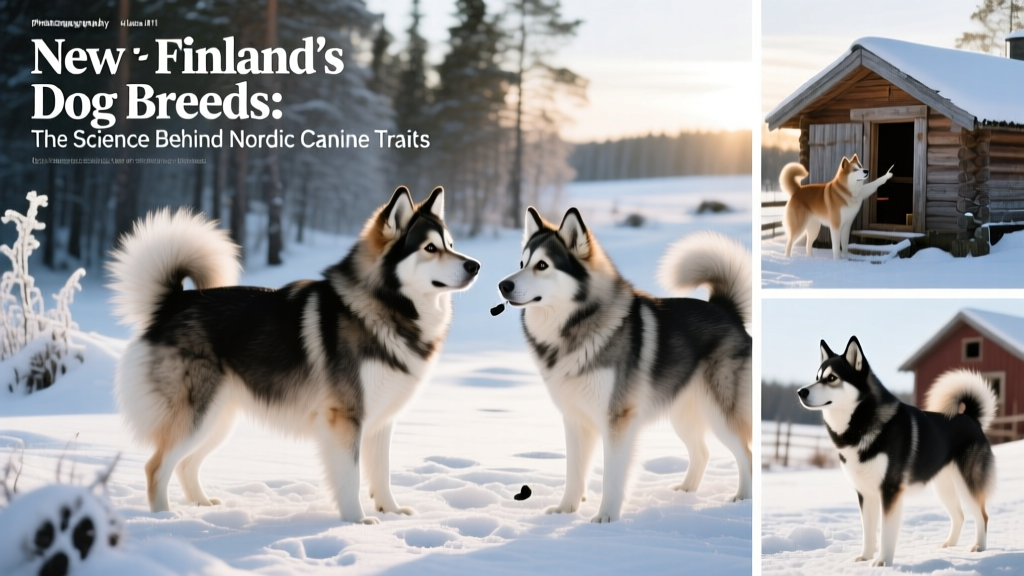
If you've searched for "new Finland's dog" you're likely curious about Finnish dog breeds — either the recently gaining-popularity Nordic breeds or the science behind what makes these cold-climate canines so unique. Finland is home to five nationally recognized breeds: the Finnish Spitz, Finnish Lapphund, Karelian Bear Dog, Finnish Hound, and the rare Lapponian Herder. These breeds share evolutionary adaptations to subarctic environments, including specialized coat physiology, metabolic efficiency, and distinct vocalization patterns that set them apart from most other domestic dogs.
Quick Answer: Finland's recognized dog breeds evolved alongside the semi-nomadic Sámi people and Finnish forest hunters over thousands of years. Their defining traits — double-coat insulation rated to -40°F (-40°C), barking-pointing hunting behavior, and cold-adapted metabolic pathways — are products of both natural selection in boreal environments and deliberate functional breeding. In 2026, breeds like the Finnish Lapphund and Finnish Spitz continue to gain popularity outside Scandinavia, making understanding their science essential for prospective owners.
The Evolutionary Context: How Subarctic Life Shaped Finnish Dogs
Key Insight: Finnish dog breeds diverged from broader European lineages approximately 3,000–7,000 years ago, shaped by the demands of taiga (boreal forest) and tundra environments. Unlike Mediterranean or tropical breeds selected primarily for appearance, Nordic breeds retained stronger functional selection pressures well into the 20th century.
The ancestral dogs accompanying early Finno-Ugric peoples into northern Scandinavia faced extreme selective pressures. Winter temperatures routinely drop below -22°F (-30°C) in Finnish Lapland, and daylight varies from near-total darkness in December to 24-hour sun in June. According to genetic research published in Cell Reports (2016), Arctic-adapted dog lineages show distinct genetic signatures in genes related to fatty acid metabolism, thermoregulation, and circadian rhythm processing.
The Sámi people relied on dogs for three primary functions: herding reindeer across vast migratory routes, alerting hunters to game (often from treetops or dense underbrush), and providing companionship during months-long winters. This functional diversity produced breeds that are simultaneously independent thinkers (necessary when working at distance from handlers) and deeply bonded to their families.
Among Finnish breeds, the Karelian Bear Dog represents perhaps the most extreme evolutionary specialization. Bred to confront animals many times its size — including brown bears and moose — this breed exhibits what researchers call "controlled boldness": the ability to assess threat levels and modulate aggression in real-time, rather than the indiscriminate reactivity seen in poorly bred protection dogs.
Physiological Mechanisms: The Science of Cold-Adapted Canines
Double-Coat Thermoregulation
Finnish breeds possess a two-layer coat system with measurable insulating properties:
- Undercoat: Dense, crimped fibers (typically 1–2 inches / 2.5–5 cm) that trap still air against the skin, creating an insulating boundary layer
- Guard hairs: Longer, coarser outer hairs (2–6 inches / 5–15 cm depending on breed) that shed water, block wind, and prevent snow accumulation
- Sebum production: Nordic breeds produce higher levels of skin oils, creating a natural water-resistant barrier
The combined effect achieves a thermal resistance value (R-value) comparable to lightweight synthetic insulation. Studies on Siberian Huskies — a closely related Nordic type — demonstrated that their coats maintain effective insulation down to approximately -58°F (-50°C) when dry and properly maintained, per the Merck Veterinary Manual.
Metabolic Adaptations
Nordic breeds exhibit what exercise physiologists call "lipid-dominant metabolism." Unlike sprint-adapted breeds (Greyhounds, Whippets) that rely heavily on glycogen stores, Finnish working breeds preferentially burn fatty acids during sustained activity. This is governed by upregulated expression of genes in the PPAR (peroxisome proliferator-activated receptor) pathway.
Practical implication: Finnish Lapphunds and Lapponian Herders can work for 6–10 hours at moderate intensity without the performance crash seen in glycolytic-dependent breeds. However, this also means they require higher dietary fat content — typically 18–25% fat on a dry matter basis for active dogs — compared to the 12–15% adequate for many temperate breeds.
Circadian Rhythm Flexibility
Living above the Arctic Circle means experiencing weeks of continuous daylight (midnight sun) and continuous darkness (polar night or "kaamos" in Finnish). Finnish breeds show greater flexibility in melatonin cycling compared to equatorial breeds. Research in Scientific Reports (2017) found that Nordic dog breeds carry variants in the PER2 gene associated with circadian rhythm plasticity, allowing them to maintain normal sleep-wake cycles despite extreme photoperiod variation.
| Trait | Finnish Spitz | Finnish Lapphund | Karelian Bear Dog | Finnish Hound | Lapponian Herder |
|---|---|---|---|---|---|
| Weight (lb/kg) | 20–33 / 9–15 | 33–53 / 15–24 | 44–62 / 20–28 | 44–55 / 20–25 | 55–66 / 25–30 |
| Height (in/cm) | 15.5–20 / 39–50 | 16–21 / 41–53 | 19–23 / 48–58 | 20–24 / 52–61 | 18–21 / 46–54 |
| Coat Type | Dense double, red-gold | Profuse double, varied colors | Short double, black/white | Short tricolor | Medium double, varied |
| Cold Tolerance | -22°F / -30°C | -40°F / -40°C | -22°F / -30°C | -4°F / -20°C | -40°F / -40°C |
| Primary Function | Barking pointer (birds) | Reindeer herding | Large game deterrent | Scent hunting (hare/fox) | Reindeer herding |
| Vocalization Level | Very High (bred to bark) | Moderate | High (alert barking) | High (hunting voice) | Moderate |
| Lifespan | 12–15 years | 12–15 years | 11–13 years | 10–13 years | 12–14 years |
Behavioral Science: Why Finnish Dogs Act the Way They Do
The Barking-Pointing Phenomenon (Finnish Spitz)
The Finnish Spitz is the only breed in the world specifically selected for "barking-pointing" — locating game birds in trees and then producing a rapid, oscillating bark (up to 160 barks per minute in competition settings) while moving its tail in a distinctive wave. This behavior holds the bird's attention, preventing flight while the hunter approaches.
Neurologically, this behavior involves a unique integration of prey drive (medial forebrain bundle activation), vocal motor patterning (brainstem central pattern generators), and learned operant conditioning. The dog must suppress the final predatory sequence (chase-catch-kill) while amplifying the search-and-orient phases. Brain imaging studies on pointing breeds suggest enhanced connectivity between the prefrontal cortex (inhibition centers) and the hypothalamus (drive centers).
Independent Decision-Making in Herding Breeds
Finnish Lapphunds and Lapponian Herders work at considerable distances from handlers across open tundra. Unlike Border Collies, which maintain constant eye contact with handlers, Nordic herders make autonomous decisions about herd movement. This independence can frustrate owners expecting immediate obedience — it's not stubbornness, it's a cognitive adaptation.
These dogs process spatial information differently: they maintain a mental map of herd position, terrain features, and predator risk simultaneously. Training approaches must account for this by using reward-based methods that build cooperation rather than demanding compliance. Positive reinforcement with high-value food rewards (freeze-dried liver, real meat training treats) works far better than corrective methods.
Common Misconceptions About Nordic Dog Breeds
| Myth | Scientific Fact |
|---|---|
| "Nordic dogs can't live in warm climates" | While heat management is essential, Finnish breeds adapt to temperate and even subtropical climates with proper care: air conditioning, cool-mat surfaces, exercise during early morning/evening, and never shaving the double coat (which actually provides insulation FROM heat) |
| "These breeds are primitive and untrainable" | Finnish breeds score well in working trials and obedience when trained with force-free methods. Their independence is a cognitive feature, not a deficit. The Finnish Lapphund holds titles in agility, rally, and nosework |
| "Finnish Spitz barking is a behavior problem" | Vocalization is a breed-standard trait selected over millennia. Suppression causes frustration; management through designated "bark sessions" and quiet-on-cue training is the evidence-based approach |
| "Karelian Bear Dogs are aggressive" | They display controlled boldness toward large predators but are typically gentle and affectionate with family. The breed standard specifically calls for non-aggression toward humans. They are used in wildlife management programs to deter bears without harm |
| "Arctic breeds don't need veterinary care because they're 'natural'" | Finnish breeds carry breed-specific health risks including hip dysplasia, progressive retinal atrophy (PRA), and glycogen storage disease type II (Finnish Lapphund). Regular veterinary screening is essential |
Health Considerations: Breed-Specific Risks and Screening
Each Finnish breed carries distinct genetic health risks shaped by their population history. Many experienced population bottlenecks during the 20th century (particularly during WWII), reducing genetic diversity. Responsible breeders screen for these conditions:
- Finnish Spitz: Patellar luxation (knee), hip dysplasia, epilepsy (idiopathic). Recommended screening: OFA patella and hip evaluation.
- Finnish Lapphund: Progressive retinal atrophy (prcd-PRA — a DNA test is available), hip dysplasia, glycogen storage disease type IIIa (DNA test available), cataracts. The AKC breed page lists recommended health tests.
- Karelian Bear Dog: Hip dysplasia, elbow dysplasia, eye disorders. Generally robust but benefits from OFA screening.
- Finnish Hound: Cerebellar ataxia (a breed-specific neurological condition), hip dysplasia, ear infections (due to pendant ear structure).
- Lapponian Herder: Hip dysplasia, elbow dysplasia, PRA, von Willebrand disease (vWD Type I — DNA test available).
Practical Owner Guidance: If you're considering a Finnish breed, request health clearances from the breeder including OFA/PennHIP scores, CERF eye exams, and breed-specific DNA panels. Budget $300–$600 for initial health screening of a puppy and $800–$1,500 annually for preventive veterinary care. Pet insurance for Nordic breeds averages $45–$75/month in 2026, depending on coverage level and deductible.
Practical Implications for Owners: Daily Life With Finnish Breeds
Exercise Requirements
Nordic breeds require substantially more exercise than most companion breeds. Minimum daily requirements:
- Finnish Spitz: 60–90 minutes including off-leash exploration (secured areas only)
- Finnish Lapphund: 90–120 minutes; excels at hiking, skijoring, and cani-cross
- Karelian Bear Dog: 90–120 minutes; needs mentally demanding work, not just physical exercise
- Lapponian Herder: 90–120 minutes; thrives with structured tasks and herding-style activities
Grooming Science
The double coat requires specific maintenance. During seasonal shedding ("blowing coat"), Finnish breeds lose their entire undercoat over 2–4 weeks. Use an undercoat rake (not a Furminator-style blade, which can damage guard hairs on Nordic coat types) 2–3 times weekly during blow periods. Bathing should use lukewarm water (98–102°F / 37–39°C) with a moisturizing canine shampoo — Nordic skin tends toward dryness in heated indoor environments.
Never shave a Nordic breed. The double coat provides UV protection and thermal regulation in both directions. Shaved dogs show impaired thermoregulation and increased sunburn risk, and the coat may not regrow correctly (post-clipping alopecia).
Climate Adaptation for Non-Nordic Owners
If you live in a warm climate (consistently above 80°F / 27°C), implement these protocols:
- Exercise before 8 AM and after 7 PM during summer months
- Provide cooling mats (gel-based, rated for your dog's weight) and constant access to air-conditioned space
- Monitor for heat stress signs: excessive panting, bright red gums, staggering, collapse
- Carry water and a collapsible bowl on all outings — Nordic breeds dehydrate faster in heat than brachycephalic breeds
- Consider a cooling vest (such as the Ruffwear Swamp Cooler) for extended outdoor activity
When Finnish Breed Behaviors Signal a Problem
While independence and vocalization are breed-typical, certain behavioral changes warrant veterinary attention:
- Sudden increase in vocalization in a normally quiet individual may indicate pain, cognitive decline (in seniors), or anxiety disorders
- Loss of cold tolerance — a dog that previously enjoyed winter but now shivers or refuses to go outside may have hypothyroidism, a condition with higher prevalence in Nordic breeds
- Compulsive behaviors (spinning, flank sucking, light chasing) occur at higher rates in some Nordic lines and may indicate neurological or anxiety conditions requiring veterinary behavioral consultation
- Aggression toward family members is not breed-typical in any Finnish breed and requires immediate professional assessment by a veterinary behaviorist
Always consult your veterinarian if behavioral changes appear suddenly or escalate rapidly. Many "behavior problems" have underlying medical causes including thyroid dysfunction, pain, or neurological conditions.
Frequently Asked Questions
Why do Finnish dogs bark so much compared to other breeds?
Vocalization was actively selected for in breeds like the Finnish Spitz (hunting communication) and Finnish Hound (scent trail indication). The neural circuits governing bark patterns are more developed in these breeds. Management through training — teaching a "quiet" cue paired with high-value rewards — is more effective than suppression.
Can Finnish dog breeds live in apartments?
The Finnish Spitz (20–33 lb / 9–15 kg) is the most apartment-adaptable due to its smaller size, but all Finnish breeds require significant daily exercise and mental stimulation. Without 60–120+ minutes of structured activity, apartment living leads to frustration-based behaviors. A house with yard access is strongly recommended for Karelian Bear Dogs and herding breeds.
How do Finnish dogs process cold differently from other breeds?
Beyond coat insulation, Nordic breeds have peripheral vasoconstriction responses that reduce blood flow to extremities (paws, ear tips) in extreme cold while maintaining core temperature. Their paw pads contain specialized fat deposits with a lower freezing point than body fat, providing natural cold protection — though booties are still recommended on salted or chemically treated winter surfaces.
What does it mean when my Finnish Lapphund 'smiles'?
The "Lapphund smile" — lips pulled back to show teeth in a relaxed expression — is a breed-typical appeasement gesture, not aggression. It signals contentment and social bonding. This differs from a snarl (wrinkled muzzle, tense body, direct stare). Understanding canine body language prevents misinterpretation of breed-specific expressions.
Is the Finnish Spitz's hunting bark normal in a home setting?
Yes, but it requires management. Finnish Spitz owners report success with "bark budgeting" — allowing designated barking sessions during walks or play, then reinforcing quiet behavior indoors. Professional force-free trainers can help develop a customized protocol. Expect 8–12 weeks of consistent training to see reliable quiet-on-cue response.
How is this different from humans in terms of cold adaptation?
Humans rely on behavioral thermoregulation (clothing, shelter, fire) rather than physiological adaptation. Finnish dog breeds have actual metabolic and structural adaptations — denser mitochondrial populations in muscle tissue, specialized brown adipose tissue (BAT) distribution, and coat structures that no amount of human cold exposure can replicate. Their cold tolerance is biological, not learned.
Tom Renshaw
All our authors care for dogs every day — read more of their work on the authors page.


