The Real Science Behind Military Working Dogs
Explore the canine science behind Max the film about a dog — from Belgian Malinois traits to military K9 cognition, scent detection, and PTSD behavior.
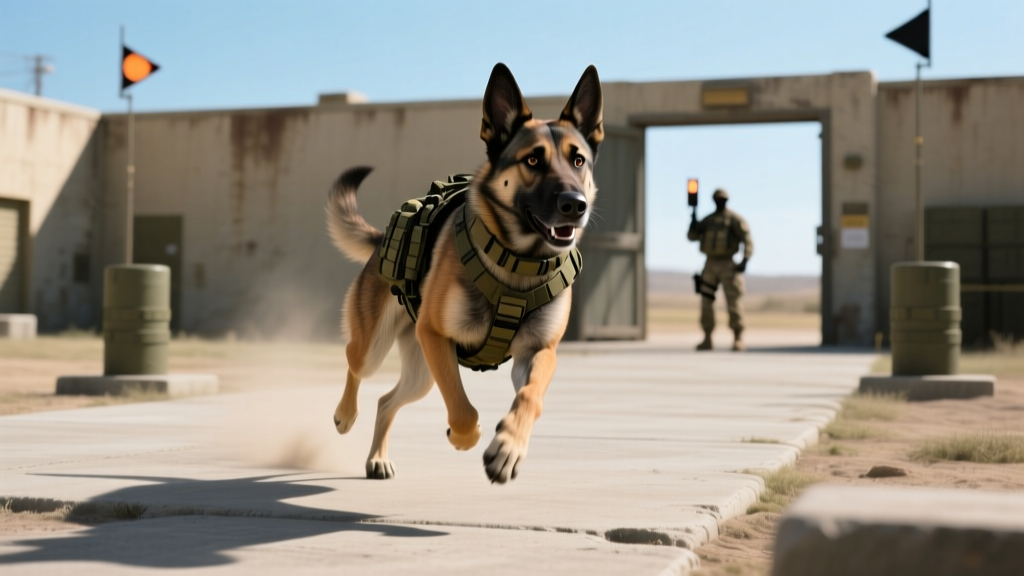
Quick Answer: What Is Max the Film About a Dog — and What's Real?
Max (2015) is a family adventure film about a Belgian Malinois military working dog (MWD) who is discharged from service in Afghanistan after his handler is killed, then adopted by the handler's family in Texas. While the plot is fictional, the science behind Max's behavior — his intense drive, scent-detection ability, bond with his handler, and post-traumatic stress responses — is grounded in real canine cognition research and the documented experiences of actual military working dogs. The film's sequel, Max 2: White House Hero (2017), continued the fictional storyline. Below, we break down the real canine science that makes Max's on-screen behavior plausible.
Why Do Dogs Like Max Excel as Military Working Dogs?
The Belgian Malinois — the breed portrayed in Max — is one of the most commonly used breeds in modern military and police K9 units worldwide. According to the American Kennel Club breed standard, the Malinois stands 22–26 inches (56–66 cm) tall and weighs 40–80 lb (18–36 kg), with a short, weather-resistant coat and an extraordinarily high working drive.
What makes this breed scientifically suited for military work comes down to a combination of three traits:
- Prey drive intensity: Belgian Malinois score consistently high on prey-drive assessments, a trait rooted in the predatory motor sequence — the neurological chain of orient → eye → stalk → chase → grab-bite → kill-bite that all canids possess. In Malinois, selective breeding has amplified the chase and grab-bite phases, making them relentless in apprehension work.
- Olfactory capacity: Like most working breeds, Malinois possess approximately 300 million olfactory receptors (compared to roughly 6 million in humans), with an olfactory bulb proportionally 40 times larger than ours relative to brain size. This enables detection of explosives, narcotics, and human scent at concentrations as low as parts per trillion.
- Handler-bond neurochemistry: Research published in Science (Nagasawa et al., 2015) demonstrated that mutual gaze between dogs and their owners triggers oxytocin release in both species — a feedback loop that parallels the human parent-infant bond. In military working dogs, this bond is intensified by months or years of continuous partnership under high-stress conditions, creating an attachment that makes the loss of a handler genuinely traumatic for the dog.
The Predatory Motor Sequence: Why Max Never Stops Chasing
Every behavior you see Max perform on screen — tracking, biting, holding — traces back to the predatory motor sequence, a hardwired neural pathway inherited from wolves. In wild canids, this sequence runs complete: orient → eye → stalk → chase → grab-bite → kill-bite → dissect → consume. Through thousands of years of selective breeding, humans have "truncated" this sequence in different breeds, amplifying certain phases while suppressing others.
In Belgian Malinois bred for protection and detection work, the orient-eye-stalk-chase-grab-bite phases are powerfully expressed, while the kill-bite and consume phases are inhibited. This gives you a dog that will chase and apprehend with extraordinary intensity but can be trained to release on command — exactly what military and police handlers need.
Can Dogs Experience PTSD Like Max Does in the Film?
Yes — and this is one of the most scientifically accurate aspects of Max the film about a dog. Canine PTSD (sometimes called canine post-traumatic stress disorder or C-PTSD) is a recognized condition in veterinary behavioral medicine, particularly documented in military working dogs returning from deployment.
Dr. Nicholas Dodman, a veterinary behaviorist at Tufts University, has extensively documented PTSD-like symptoms in military dogs. The condition was formally recognized within the Department of Defense's Military Working Dog program around 2012, and it's estimated that roughly 5–10% of deployed MWDs develop symptoms significant enough to affect their working ability.
| Symptom Category | Observable Behavior | Physiological Basis | Common Triggers |
|---|---|---|---|
| Hyperarousal | Excessive vigilance, inability to settle, exaggerated startle response | Elevated cortisol and norepinephrine; amygdala hyperactivation | Loud noises, unfamiliar environments, sudden movements |
| Avoidance | Refusing to enter certain areas, cowering, hiding | Hippocampal contextual memory linking locations to trauma | Vehicles, sand-colored surfaces, confined spaces |
| Hypervigilance | Constant scanning, inability to relax even at home | Sustained sympathetic nervous system activation | New people, crowds, sudden environmental changes |
| Aggression (redirected) | Snapping at familiar people, resource guarding escalation | Lowered bite-threshold due to chronic stress hormones | Being startled, perceived threats to handler |
| Attachment disruption | Clinginess with one person, fear of strangers | Oxytocin dysregulation; insecure attachment pattern | Loss of primary handler, rehoming |
In the film, Max displays several of these symptoms — aggression toward strangers, hypervigilance, and a powerful attachment to his handler's family. These are not Hollywood inventions; they mirror documented cases from the Merck Veterinary Manual's behavioral medicine section on anxiety-related disorders in dogs.
Evolutionary Basis: Why Trauma Runs So Deep in Working Dogs
Wolves evolved in tight-knit social units where survival depended on stable pack relationships and predictable territory. A wolf that lost its pack or territory faced near-certain death. This evolutionary pressure selected for strong attachment bonds and acute threat-detection systems.
Domestic dogs inherited these neural architectures. When a military working dog loses its handler — the single most important social partner in its life — the neurobiological impact is profound: cortisol spikes, oxytocin drops, and the dog's threat-assessment system goes into overdrive. In evolutionary terms, the dog has lost its pack and its territory simultaneously. Max's on-screen behavior after his handler's death reflects this deeply wired survival response.
How Do Dogs Like Max Process Scent in Combat Environments?
The canine olfactory system is one of the most extraordinary sensory apparatuses in the animal kingdom, and understanding it explains why military working dogs remain irreplaceable despite decades of investment in electronic detection technology.
Here's how the mechanism works at a physiological level:
- Airflow separation: When a dog inhales, a fold of tissue inside the nostril splits the airstream — approximately 12% is directed to the olfactory recess (the scent-processing chamber), while 88% continues to the lungs for respiration. This allows continuous scent sampling even during heavy breathing.
- Turbinate filtration: Inside the olfactory recess, ethmoturbinate bones create a labyrinth of bony shelves covered in olfactory epithelium. This structure increases the surface area available for odorant molecules to bind to receptor cells — roughly 130 cm² in a Malinois versus about 5 cm² in humans.
- Receptor binding: Each olfactory receptor neuron expresses one type of receptor protein. When an odorant molecule binds, the neuron fires a signal through the cribriform plate directly to the olfactory bulb — bypassing the thalamus, which means scent processing in dogs is faster and more direct than most other sensory inputs.
- Vomeronasal (Jacobson's) organ: Located on the roof of the mouth, this secondary olfactory structure detects pheromones and large non-volatile molecules. Dogs use the flehmen response (that open-mouthed, "tasting the air" expression) to route molecules to this organ.
According to research from Auburn University's Canine Detection Research Institute, trained explosive-detection dogs can identify target odors at concentrations of 1–10 parts per trillion — equivalent to detecting a single drop of a substance dissolved in an Olympic swimming pool. No portable electronic device has matched this sensitivity as of 2026, which is why MWDs remain deployed worldwide.
What Does It Mean When My Dog Shows "Working Drive" Behaviors?
If you've watched Max and wondered why your own dog — even a non-working breed — exhibits some similar behaviors, you're observing the same predatory motor sequence at a lower intensity. Here's a practical framework for interpreting common drive-related behaviors:
Myth vs. Fact: Working Dog Behaviors at Home
| Behavior | Common Myth | Scientific Reality |
|---|---|---|
| Obsessive ball chasing | "My dog just loves to play" | This is the chase phase of the predatory sequence. In high-drive dogs, it can become compulsive if not managed with structured outlets and clear start/stop cues. |
| Herding children or other pets | "My dog is being protective" | Herding is a truncated predatory sequence (eye-stalk-chase without grab-bite). It's breed-typical in herding breeds but can escalate to nipping if the dog's arousal isn't managed. |
| Destroying toys by ripping out stuffing | "My dog is being aggressive" | This mimics the dissect phase of predation — pulling apart a "carcass" to access contents. It's normal and can be channeled with puzzle toys and snuffle mats. |
| Guarding food or toys | "My dog is trying to dominate me" | Resource guarding is a survival behavior rooted in food-scarcity anxiety, not dominance. It's treatable through counter-conditioning and desensitization protocols. |
| Extreme distress when left alone | "My dog is being dramatic" | Separation anxiety involves genuine panic physiology — elevated heart rate, cortisol release, and sometimes self-injury. It requires a structured behavior modification plan, sometimes paired with medication. |
Is Max's Behavior Normal for a Belgian Malinois?
Most of the behaviors depicted in Max the film about a dog are consistent with breed-typical Belgian Malinois temperament — though the film condenses and dramatizes them for narrative purposes.
Here's what prospective Malinois owners should understand about the breed's baseline behavior, based on AKC temperament standards and working-line assessment data:
| Behavior | Typical (Breed-Normal) | Requires Professional Assessment |
|---|---|---|
| Energy level | 60–90+ minutes of vigorous exercise daily; needs structured mental work | Destructive behavior despite adequate exercise; compulsive pacing or spinning |
| Alertness | High vigilance; barks at novel stimuli; watches environment constantly | Inability to settle even in safe, familiar environments; chronic sleep disruption |
| Bite inhibition | Mouthy as puppies; learns soft-mouth through training | Bites with full force and cannot be redirected; aggression without warning signals |
| Stranger response | Reserved but not fearful with unfamiliar people when properly socialized | Unprovoked attack on strangers; extreme fear responses (cowering + aggression) |
| Handler bond | Strong preference for primary person; works eagerly for handler | Catatonic withdrawal or extreme distress when separated from handler for any duration |
If you're considering a Belgian Malinois, know that these dogs require 1–2 hours of structured physical and mental exercise daily, experienced handling, and consistent positive-reinforcement training. Force-free methods — including counter-conditioning, desensitization, and reward-based obedience — are the only recommended approaches. Aversive tools like shock collars or prong collars can escalate anxiety and aggression, particularly in a breed already prone to high arousal.
How Is Canine Cognition Different from Human Processing?
One reason Max resonates emotionally is that audiences project human-like reasoning onto the dog's behavior. While dogs do possess sophisticated cognition, their mental processing differs from ours in important, scientifically documented ways:
- Episodic-like memory: Research from Eötvös Loránd University (2016) demonstrated that dogs can recall specific events they witnessed — even when they had no expectation of being asked about them — for up to approximately one hour. However, this is "episodic-like" rather than true episodic memory; dogs appear to lack the ability to mentally time-travel the way humans do, planning for or ruminating about distant future/past events.
- Emotional processing: Dogs experience primary emotions — joy, fear, anger, disgust, and (based on fMRI research from Emory University's Gregory Berns) something resembling love or attachment. However, they likely do not experience secondary emotions like guilt, pride, or shame. That "guilty look" your dog gives you? It's a submissive appeasement gesture triggered by your body language, not evidence of moral reasoning.
- Numerical cognition: Dogs can distinguish between small quantities (up to about 4 or 5 items) and will choose larger food amounts when given a choice. But they don't count abstractly — they use approximate number system estimation, the same preverbal quantity sense found in human infants.
- Language comprehension: Border Collies like Chaser (studied by Dr. John Pilley) have demonstrated comprehension of over 1,000 words. Belgian Malinois typically learn 150–250 commands in working contexts. However, dogs process words as sound-patterns associated with outcomes, not as symbolic representations with grammatical structure.
Practical Implications: What Max Teaches Us About Living with High-Drive Dogs
Your Action Plan for High-Drive Breed Owners
- Provide structured work, not just exercise. A 30-minute walk is insufficient for a Malinois. Plan for 60–90 minutes daily that includes scent work, agility, obedience drills, or structured fetch with rules (e.g., "sit before I throw, drop on command"). Budget $150–$400/year for sport-class memberships or equipment.
- Teach an "off switch" explicitly. High-drive dogs don't naturally settle. Train a "place" or "mat" command using positive reinforcement — send the dog to a designated spot, reward calm behavior with low-value treats, gradually extend duration. Practice daily for 10–15 minutes.
- Socialize broadly and early. The critical socialization window closes around 12–16 weeks. Expose puppies to 100+ novel stimuli (surfaces, sounds, people, animals) before this window closes. For adult rescues with unknown histories, work with a certified behavior consultant (IAABC or CCPDT certified).
- Watch for stress signals. Lip-licking, yawning out of context, whale-eye (showing whites of eyes), and displacement behaviors (scratching, sniffing ground during social interaction) indicate rising stress. Intervene by removing the stressor before the dog escalates.
- Plan for veterinary behavioral support. If your dog shows persistent anxiety, aggression, or compulsive behaviors, consult your veterinarian for a referral to a veterinary behaviorist (DACVB). Medications like fluoxetine ($15–$40/month) or clomipramine ($20–$50/month) may be appropriate alongside behavior modification. Your vet will determine the correct dosage based on your dog's weight and health status.
Frequently Asked Questions About Max and Military Working Dog Science
Is Max a real dog?
No, the character Max is fictional, and the storyline is not based on a specific real-life military dog. However, the film's depiction of Belgian Malinois capabilities, handler bonding, and post-deployment adjustment challenges is informed by real MWD program experiences. Several trained dogs were used during filming to portray Max in different scenes.
What breed is Max in the movie?
Max is portrayed as a Belgian Malinois, a herding breed originating from the Malines region of Belgium. The breed stands 22–26 inches (56–66 cm) at the shoulder, weighs 40–80 lb (18–36 kg), and has a typical lifespan of 14–16 years. They are closely related to the Belgian Tervuren, Belgian Groenendael, and Belgian Laekenois — all varieties of Belgian Shepherd distinguished primarily by coat type and color.
Do military dogs really get adopted by their handler's families?
Yes. Since the passage of Robby's Law (H.R. 5314) in 2000, military working dogs are eligible for adoption at the end of their service rather than being euthanized, which was standard practice before. According to the Department of Defense, approximately 90% of retiring MWDs are adopted by their handlers or handler families. The adoption process includes a behavioral evaluation to ensure the dog can safely transition to civilian life.
Can any dog be trained like Max?
No. Military working dogs are selected from specific breeding programs (primarily in the Netherlands and Germany for Malinois and German Shepherds) based on drive, nerve stability, health, and trainability. Only about 50% of dogs bred or purchased for MWD training ultimately graduate. The selection criteria include: confident response to novel environments, strong prey and hunt drive, physical soundness (OFA hip/elbow scores, cardiac clearance), and the ability to work through environmental stressors without shutting down.
How is this different from how humans process trauma?
Humans can cognitively reframe traumatic experiences through language, therapy, and abstract reasoning — we can tell ourselves "I'm safe now." Dogs lack this metacognitive ability. A traumatized dog cannot reason its way out of a fear response; the amygdala-driven threat response fires automatically when triggered. This is why canine PTSD treatment relies on behavioral counter-conditioning (creating new, positive associations with triggers) and sometimes pharmacological intervention to reduce baseline anxiety — rather than talk therapy.
Is the aggressive behavior shown in Max normal for a dog that lost its handler?
Increased reactivity and defensive aggression can occur in dogs that lose a primary attachment figure, particularly in breeds with strong handler bonds like the Malinois. However, outright unprovoked aggression is not typical and would disqualify a real MWD from adoption. The film dramatizes this aspect for tension. In reality, the MWD adoption program conducts thorough behavioral evaluations, and dogs showing dangerous aggression are either rehabilitated through the program or, as a last resort, humanely euthanized.
Sources Referenced
- Nagasawa, M., Mitsui, S., En, S., et al. (2015). "Oxytocin-gaze positive loop and the coevolution of human-dog bonds." Science, 348(6232), 333–336.
- Fugazza, C., & Miklósi, Á. (2016). "Recall of others' actions after incidental encoding reveals episodic-like memory in dogs." Current Biology, 26(23), 3213–3217.
- Berns, G. (2013). How Dogs Love Us: A Neuroscientist and His Adopted Dog Decode the Canine Brain. New Harvest.
- American Kennel Club — Belgian Malinois Breed Standard
- Merck Veterinary Manual — Behavioral Medicine
Disclaimer: This article discusses canine behavior and health topics for educational purposes. If your dog is exhibiting concerning behavioral changes, consult your veterinarian or a board-certified veterinary behaviorist (DACVB) for professional assessment. Never use aversive training methods — shock collars, prong collars, or physical punishment — as these can worsen anxiety and aggression.
Beth Carrasco
All our authors care for dogs every day — read more of their work on the authors page.


