K9 Dogs: The Science Behind Their Extraordinary Senses
Discover the science behind K9 dogs' extraordinary senses. Learn how canine olfaction, hearing, and cognition evolved and what it means for your dog.
Quick Answer: What Makes K9 Dogs So Special?
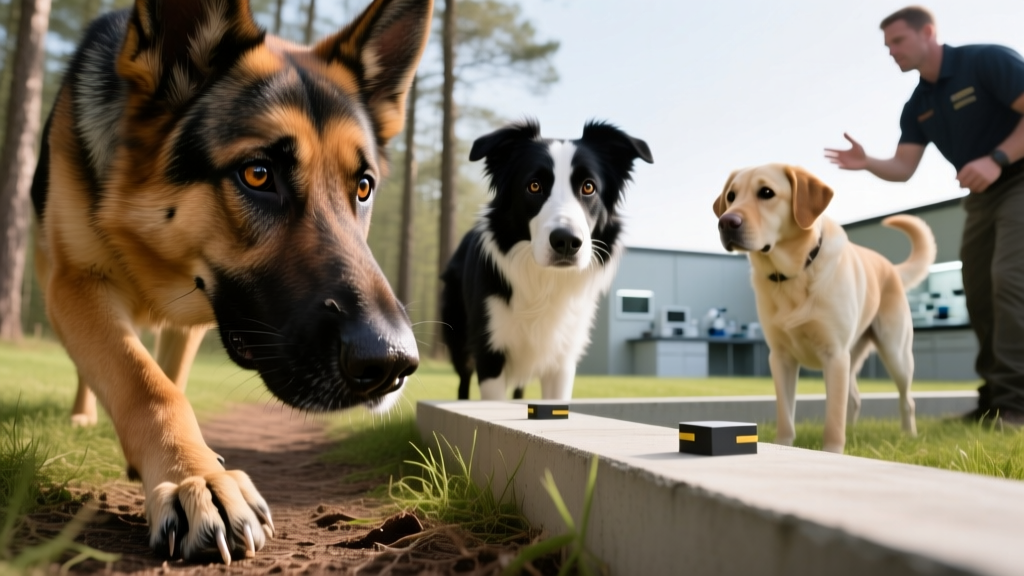
K9 dogs — a term derived from "canine" and commonly applied to working detection, police, and military dogs — possess sensory abilities far beyond human capability. Their olfactory system contains up to 300 million scent receptors (compared to our 6 million), their hearing extends to frequencies of 45-65 kHz (humans top out around 20 kHz), and their brains dedicate roughly 40 times more surface area to processing smell than ours do. These aren't just party tricks — they're evolutionary adaptations rooted in the predatory ecology of wolves, refined through thousands of years of selective breeding for specific working roles.
When people search for "k 9 dogs," they're often thinking about the impressive working dogs they see in law enforcement, search and rescue, or medical detection. But the science that makes these dogs extraordinary applies to every dog — from the Labrador sniffing out a dropped cheese crumb under the couch to the Beagle who alerts you to a visitor two minutes before they knock. Understanding the physiological and evolutionary basis of your dog's senses doesn't just satisfy curiosity; it changes how you train, enrich, and communicate with them daily.
The Evolutionary Blueprint: From Wolf Ancestors to Modern K9 Dogs
Why Predators Need Superior Senses
The gray wolf (Canis lupus), the primary ancestor of all domestic dogs, evolved as a cursorial predator — an animal that hunts over vast distances across varied terrain. Survival depended on detecting prey at long range, tracking wounded animals over miles, and coordinating pack movements through vocalizations at frequencies that wouldn't alert prey.
According to research published in the journal Genome Research, the divergence between wolves and the earliest proto-dogs began roughly 27,000-40,000 years ago. Dogs that could better interpret human gestures, detect specific scents near human settlements, and alert to threats had a survival advantage. This wasn't just natural selection — it was an early form of functional breeding. Humans kept dogs that were useful, and usefulness was almost always sensory.
Modern K9 working dogs represent the apex of this trajectory. Breeds like the German Shepherd, Belgian Malinois, and Labrador Retriever have been selectively bred for generations to amplify specific sensory and cognitive traits. But the underlying hardware — the olfactory epithelium, the cochlear mechanics, the neural processing pathways — is shared by every dog, regardless of breed.
Olfaction: The Dominant Sense That Defines K9 Dogs
Smell is to dogs what vision is to humans — the primary channel through which they understand the world. While we navigate by sight, dogs navigate by scent. This isn't a preference; it's a neurological reality.
The Physiology of Canine Olfaction
A dog's nose operates on principles fundamentally different from our own. Here's the breakdown:
- Receptor count: Dogs have 125-300 million olfactory receptors depending on breed (Bloodhounds sit at the top at roughly 300 million). Humans have approximately 6 million.
- Olfactory epithelium surface area: A dog's olfactory epithelium — the tissue inside the nasal cavity that captures odor molecules — spans roughly 150-170 cm². In humans, it's about 5 cm². That's a 30-fold difference in detection surface.
- Steroid-independent airflow: Dogs can separate the air they breathe for respiration from the air they draw across their olfactory receptors. When a dog sniffs, roughly 12-13% of inhaled air is directed to the olfactory region, while the rest continues to the lungs. They can do this continuously — sniffing 4-5 times per second without interrupting normal breathing.
- Vomeronasal (Jacobson's) organ: Located above the roof of the mouth, this secondary olfactory structure detects pheromones and large molecular compounds. It's connected to the accessory olfactory bulb, which feeds directly to the hypothalamus — the brain region governing emotional and hormonal responses. This is why your dog's reaction to another dog's urine marking is visceral, not intellectual.
- Steroid detection threshold: According to the Merck Veterinary Manual, dogs can detect certain odorants at concentrations as low as one part per trillion. That's roughly equivalent to detecting a single teaspoon of sugar dissolved in a volume of water the size of 20 Olympic swimming pools.
How K9 Detection Dogs Process Scent: The Science of Discrimination
Working K9 detection dogs — those trained for narcotics, explosives, accelerants, human remains, or medical conditions like hypoglycemia and certain cancers — don't just "smell better." They perform a cognitive task called olfactory discrimination, which involves isolating a target odor from an overwhelmingly complex background.
A 2018 study in the journal Animal Cognition demonstrated that trained detection dogs could identify a target odor compound even when it was masked by up to 12 competing distractor scents at higher concentrations. This ability relies on pattern recognition in the olfactory bulb, which in dogs is proportionally much larger relative to total brain mass than in humans.
For the average pet owner, this means your dog is constantly performing a level of sensory analysis you can barely conceptualize. When they stop to sniff a fire hydrant for 30 seconds, they're reading a layered chemical record: which dogs have visited, their sex, reproductive status, approximate health state, and how recently they were there.
| Metric | Dogs (Average) | Humans | Ratio |
|---|---|---|---|
| Olfactory receptors | 125-300 million | ~6 million | 20-50:1 |
| Olfactory epithelium area | 150-170 cm² | ~5 cm² | 30-34:1 |
| Olfactory bulb % of brain | ~0.31% | ~0.03% | ~10:1 |
| Detection threshold (butyric acid) | 10⁻¹⁸ M | 10⁻⁷ M | ~100 billion:1 |
Canine Hearing: Frequencies, Localization, and the K9 Advantage
Dogs hear sounds at frequencies up to 45-65 kHz, depending on breed and age. For comparison, most adult humans hear up to about 15-20 kHz, and that upper limit degrades with age and noise exposure. This means dogs perceive an entire acoustic world that is literally silent to us.
How Dogs Process Sound: Physiological Mechanisms
The canine ear contains roughly 18 muscles (humans have 6) controlling the pinna (outer ear flap), allowing dogs to independently rotate, tilt, and cup each ear to triangulate sound sources. This is called binaural localization, and dogs can pinpoint a sound's origin within roughly 4 degrees of accuracy — about four times more precise than humans.
The basilar membrane in a dog's cochlea is tuned to respond preferentially to higher-frequency vibrations. This is an evolutionary adaptation: small prey animals (rodents, rabbits) produce ultrasonic vocalizations and rustling sounds in the 20-50 kHz range. A wolf that could hear a vole moving under snow had a significant caloric advantage.
For working K9 dogs, this auditory acuity is leveraged in patrol and protection roles. Dogs can detect approaching vehicles, footsteps, or mechanical sounds at distances that would be impossible for their human handlers. Some military working dog teams report that their dogs alert to approaching threats at distances of 500+ meters in quiet conditions.
Breed Variations in Sensory Capacity: Not All K9 Dogs Are Equal
While all dogs share the same basic sensory architecture, selective breeding has dramatically amplified certain capabilities in specific breeds. Understanding these variations helps explain why certain breeds dominate working K9 roles and how to meet your own dog's sensory enrichment needs.
| Breed/Type | Primary Sensory Strength | Receptor Estimate | Common K9 Role |
|---|---|---|---|
| Bloodhound | Olfaction (tracking) | ~300 million | Search & rescue, fugitive tracking |
| Beagle | Olfaction (detection) | ~225 million | Airport contraband detection (Beagle Brigade) |
| German Shepherd | Olfaction + auditory + visual | ~225 million | Police patrol, narcotics, explosives |
| Belgian Malinois | Multi-sensory + high drive | ~200-225 million | Military operations, protection |
| Labrador Retriever | Olfaction (medical detection) | ~220 million | Diabetes alert, cancer detection, accelerant detection |
| Greyhound | Vision (sighthound) | ~125 million (lower olfactory) | Rarely K9; visual pursuit breed |
The brachycephalic (short-nosed) breeds like Pugs, Bulldogs, and Shih Tzus have significantly reduced olfactory capacity due to the compressed anatomy of their nasal passages. While they still outperform humans by a wide margin, their scenting ability is notably diminished compared to dolichocephalic (long-nosed) breeds like the Bloodhound or Greyhound. This is an important consideration if you're choosing a dog for scent-based enrichment activities or competitive nosework.
Common Misconceptions About K9 Dog Abilities
| Myth | Fact (Science-Backed) |
|---|---|
| "Dogs see only in black and white." | Dogs have dichromatic vision — they see blues and yellows clearly but have difficulty distinguishing reds and greens. Their retinas contain two types of cone photoreceptors (compared to three in humans), optimized for low-light and motion detection. |
| "A dog's nose being dry means it's sick." | Nasal moisture fluctuates throughout the day based on hydration, ambient humidity, and activity level. A healthy dog can have a dry nose upon waking. Persistent cracking, crusting, or discharge is the actual concern. |
| "K9 dogs are born knowing how to detect bombs/drugs." | Detection ability requires 600-1,000+ hours of structured training using operant conditioning. Dogs have the sensory hardware, but the discrimination task — identifying one specific compound among thousands of background odors and alerting reliably — is entirely learned. |
| "Dogs can smell fear." | Dogs detect chemical changes in human sweat and breath associated with stress hormones (cortisol, adrenaline metabolites). They're not reading an abstract emotion — they're detecting specific volatile organic compounds. Studies confirm dogs can distinguish "fear sweat" from "exercise sweat" in controlled settings. |
| "All dogs have equally good noses." | Receptor counts vary from ~125 million (smaller breeds, brachycephalic breeds) to ~300 million (Bloodhounds). That's a 2.4x difference within the species, meaning breed selection matters enormously for scent-dependent work. |
Practical Implications: What K9 Science Means for Your Daily Life With Your Dog
Applying Canine Sensory Science at Home
- Sniff walks are mental exercise. A 20-minute walk where your dog is allowed to sniff freely provides more cognitive stimulation than a 60-minute walk at a brisk pace with no sniffing. Olfactory processing activates large regions of the canine brain and is measurably tiring. If your dog is high-energy and you're short on time, prioritize sniffing over distance.
- Enrichment through scent games. Hide treats in snuffle mats, under cups, or around the house. Start easy (visible treats) and progress to concealed ones. This mimics the foraging behavior that is hardwired into all dogs and reduces boredom-related problem behaviors like chewing and barking.
- Avoid scent overload in training. When teaching a new cue, train in a low-distraction environment. Your dog's nose is processing thousands of odors simultaneously — adding a new learning task on top of that in a busy park is like asking someone to solve algebra at a rock concert.
- Respect the sniff at the vet. Let your dog sniff the examination room, the vet's hands, and the equipment before any handling begins. This is their primary way of assessing safety. Rushing past the sniffing phase increases cortisol and makes the visit harder on everyone.
- Choose enrichment products wisely. Scent-based puzzle toys (like the Outward Hound Hide-a-Squirrel or the Nina Ottosson Dog Brick) engage olfactory processing and problem-solving simultaneously. Expect to spend $15-$35 for quality puzzle toys. Replace them when your dog masters the difficulty level — stagnation kills engagement.
- Understand noise sensitivity. Because dogs hear higher frequencies and at greater distances, household sounds you find innocuous — vacuum cleaners, blenders, fireworks, thunderstorms — can be genuinely distressing. Use white noise machines (set to 50-60 dB) during loud events, and consider desensitization protocols for noise-phobic dogs.
When Sensory Behavior Signals a Problem
While heightened sensory engagement is normal, certain changes in sensory behavior warrant veterinary attention:
- Sudden disinterest in food or treats: Can signal dental disease, nasal tumors, or neurological conditions affecting the olfactory nerve (Cranial Nerve I). Brachycephalic breeds are at higher risk for nasal neoplasia.
- Head tilting persistently to one side: May indicate vestibular disease, ear infection (otitis media/interna), or a neurological lesion. This is a "see your vet within 24-48 hours" situation.
- Failure to respond to sounds previously noticed: Progressive hearing loss is common in senior dogs and certain breeds (Dalmatians, Australian Shepherds carrying the merle gene). A BAER (Brainstem Auditory Evoked Response) test can objectively measure hearing ability — expect $150-$300 at a veterinary neurology specialist.
- Compulsive sniffing or licking of one area: Can signal a localized skin infection, foreign body, or in rare cases, a focal seizure (olfactory hallucination). Document the behavior on video before your vet visit.
- Disorientation or "getting lost" in familiar environments: In dogs over 8 years old, this can be an early sign of canine cognitive dysfunction (CCD), analogous to dementia in humans. According to the AVMA, CCD affects an estimated 14-35% of dogs over age 8, though many cases go undiagnosed.
Consult your veterinarian if you notice any sudden or progressive change in your dog's sensory behavior. Many causes are treatable when caught early, and some — like nasal tumors or middle ear infections — worsen significantly with delay.
How Is Canine Sensory Processing Different From Humans?
The fundamental difference is priority weighting. In humans, the visual cortex occupies roughly 30% of the brain's processing capacity. In dogs, the olfactory system holds that dominant position. When you and your dog walk into a room together, you see the layout, the lighting, the people. Your dog smells who has been there, what they ate, whether another dog is stressed or in estrus, and whether there's food within 50 feet.
This isn't a value judgment — it's a neurological architecture difference. Dogs' visual systems are actually superior to ours in some respects: they have more rod photoreceptors (better low-light vision), a reflective layer behind the retina called the tapetum lucidum (which produces eye-shine and boosts light sensitivity), and a wider field of view (up to 240° in some breeds vs. our ~180°). They sacrifice color acuity and fine detail resolution for motion detection and dim-light performance — another predatory adaptation.
The practical upshot: when you communicate with your dog, you're a visual creature talking to an olfactory creature. Your dog is reading your body language, your scent, your tone of voice, and the chemical signals in your breath all at once. Training works best when you align with their sensory strengths — using scent markers, consistent verbal cues (which they hear with far more tonal precision than you produce), and reward timing that accounts for their processing speed.
Frequently Asked Questions About K9 Dog Science
Why do K9 dogs work so effectively with human handlers?
K9 working dogs succeed because of a combination of social cognition and sensory complementarity. Dogs are one of the few species that spontaneously follow human pointing gestures — a trait not seen even in our closest primate relatives. Research from the AKC and multiple university studies confirm that dogs as young as 6 weeks old, with no prior training, will follow a human point to locate hidden food. In K9 teams, the dog provides the sensory detection while the human provides the cognitive direction — searching specific areas, interpreting alerts, and making operational decisions. This partnership works because dogs are uniquely attuned to human communicative intent.
Can dogs really detect diseases like cancer or diabetes?
Yes — with important caveats. Peer-reviewed studies have demonstrated that trained dogs can detect volatile organic compounds (VOCs) associated with certain cancers (lung, breast, ovarian, colorectal) in breath, urine, and blood samples with sensitivity rates ranging from 65-97% depending on the study design and cancer type. For diabetes alert dogs, the mechanism involves detecting isoprene and other ketone-related compounds in breath during hypoglycemic episodes. However, these dogs require extensive training (typically 12-18 months, with program costs of $15,000-$30,000), and their reliability in real-world settings varies. They are best viewed as a supplemental alert system, not a replacement for continuous glucose monitors or medical screening.
How do dogs process scent in layers — and what does that mean?
Dogs experience scent as a temporal and spatial landscape. A single sniff captures information about what was there, when it was there (based on molecular degradation rates), and how much of it was present. This is why a tracking dog can follow a 48-hour-old trail: the odor molecules are still present, just at lower concentrations, and the dog is trained to follow the concentration gradient. Your dog sniffing a tree is essentially reading a time-stamped log of every animal that has passed by.
Is it normal for my dog to sniff other dogs' rear ends?
Completely normal — it's the canine equivalent of a handshake and a résumé review combined. The anal glands secrete a complex mixture of volatile fatty acids, proteins, and other compounds that convey individual identity, sex, reproductive status, diet, and even emotional state. The vomeronasal organ is specifically adapted to process these semiochemicals. Interrupting this behavior is like pulling someone away mid-introduction.
Can I improve my dog's scenting ability through practice?
>You can't increase the number of olfactory receptors your dog was born with, but you can absolutely improve their scent discrimination skills and focus through structured practice. Nosework (also called scentwork) is a competitive sport open to all breeds and ages, and many community training clubs offer introductory classes for $100-$200 for a 6-week session. Even 5-10 minutes of daily scent games at home — finding hidden treats, identifying a specific scented cotton swab among distractors — will sharpen your dog's olfactory attention and provide significant mental enrichment.Sources & Further Reading
- Merck Veterinary Manual — Smell in Dogs
- AVMA — Canine Cognitive Dysfunction
- AKC — Thunderstorm Anxiety in Dogs
- Craven, B.A., et al. (2010). "The canine nasal cavity: A computational fluid dynamics study of airflow and odorant transport." Journal of the Royal Society Interface.
- Heberlein, M.T. & Manser, M.B. (2018). "Dogs' (Canis familiaris) ability to detect human emotional states via olfaction." Animal Cognition.
Dr. Hannah Wickes
All our authors care for dogs every day — read more of their work on the authors page.


