The John Wick Movie Dog
What makes the John Wick movie dog so capable? Explore the canine science behind the Belgian Malinois — bite force, drive, cognition, and owner realities.
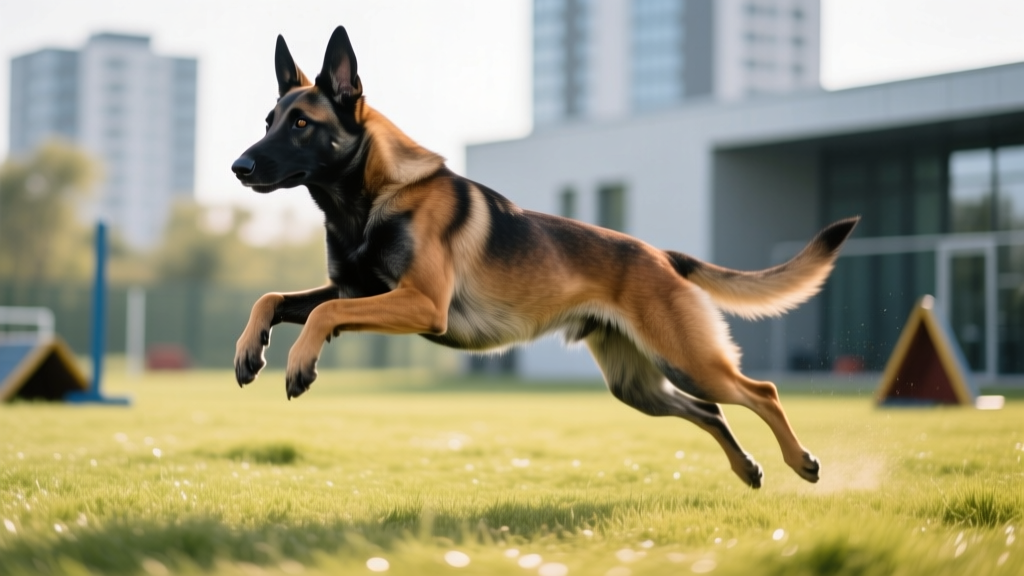
If you have ever searched for "john wick movie dog" after watching Keanu Reeves fight his way through assassins with a Belgian Malinois at his side, you are not alone. The direct answer: the dog in John Wick: Chapter 3 — Parabellum (and later Chapter 4) is a Belgian Malinois, a herding breed originally developed in Belgium that is now widely used in military, police, and protection work because of its exceptional trainability, speed, and bite control. Two Malinois named Marko and Ryuk performed the on-screen work, trained by veteran animal coordinators.
But the real question behind the search is usually this: what biological and behavioral science makes a dog like that possible? Below is a canine-science breakdown of the traits that put the Belgian Malinois on screen — and what those traits actually mean if you are considering living with one.
The Belgian Malinois at a Glance: Breed Data
| Trait | AKC Standard / Typical Range |
|---|---|
| Weight (male) | 60–80 lb / 27–36 kg |
| Weight (female) | 40–60 lb / 18–27 kg |
| Height (male) | 24–26 in / 61–66 cm |
| Height (female) | 22–24 in / 56–61 cm |
| Lifespan | 14–16 years |
| Coat | Short, double coat; fawn-mahogany with black overlay and mask |
| Energy | Very high — 90–120+ minutes of structured activity daily |
| Trainability | Exceptional; ranked among top 3 breeds for working obedience |
| Bite force (estimated) | ~195 psi (pounds per square inch) |
| Top running speed | 30–35 mph / 48–56 km/h |
For context, a German Shepherd Dog typically weighs 50–90 lb and runs around 30 mph, but the Malinois is lighter, faster to accelerate, and often described by handlers as having a "hotter" temperament — meaning faster arousal and faster recovery from stress. That combination is why the breed has largely replaced GSDs in many U.S. and European special-operations units, including the Navy SEAL team that deployed Cairo during the Osama bin Laden raid in 2011.
Why Are Belgian Malinois So Driven? The Science of Prey and Defense Drive
In canine behavioral science, "drive" is not a single trait. It is typically broken into measurable components:
- Prey drive: The sequence of orient → eye → stalk → chase → grab-bite → kill-bite → dissect → consume. Malinois score extremely high on chase and grab-bite phases.
- Defense drive: A dog's willingness to engage a perceived threat rather than flee. High defense drive paired with strong nerves (the ability to recover quickly from startling stimuli) is what allows a protection dog to work under gunfire, explosions, or chaotic environments — like a John Wick fight scene.
- Handler focus ("pack drive" in older literature): The tendency to seek direction and reinforcement from a human partner rather than self-rewarding on environmental stimuli.
Research published in the journal Applied Animal Behaviour Science has shown that working-line Belgian Malinois score significantly higher on "trainability" and "boldness" factors in standardized temperament assessments (such as the C-BARQ — Canine Behavioral Assessment & Research Questionnaire developed at the University of Pennsylvania) compared to pet-line dogs of the same breed. This means that even within Malinois, genetics matter: a dog bred from military or sport-line parents is behaviorally different from one bred for conformation shows, even though they look nearly identical.
The Neurochemistry Behind the Drive
High-drive dogs like the Malinois tend to have specific neurochemical profiles:
- Dopamine receptor sensitivity: Dopamine is the neurotransmitter associated with motivation and reward-seeking. A 2019 study in Proceedings of the Royal Society B found that dogs with certain variants of the dopamine receptor D4 gene (DRD4) showed higher levels of impulsivity and activity — traits strongly selected for in working Malinois lines.
- Cortisol recovery: Cortisol is the primary stress hormone. Working-line Malinois typically show a rapid cortisol spike (fast arousal) followed by a fast return to baseline (quick recovery). This is different from anxious dogs, who spike slowly and recover slowly — a pattern that produces shutdown rather than controlled engagement.
- Oxytocin bonding: The same oxytocin feedback loop that makes dogs gaze at their owners (documented in Nagasawa et al., 2015, published in Science) is leveraged in protection training: the dog works partly for toy/food reward and partly for social reinforcement from the handler.
Evolutionary Basis: How Herding Wolves Became Tactical Dogs
The Belgian Malinois originated in the late 1800s around the city of Malines (Mechelen) in Belgium, where it was one of several regional herding types grouped under the Belgian Shepherd breed umbrella. The four varieties — Malinois (short coat), Tervuren (long coat, fawn), Groenendael (long coat, black), and Laekenois (wire coat) — share the same breed standard in many registries but differ in coat type and, to some degree, temperament.
During World War I, Malinois were used as messenger dogs, ambulance dogs, and cart-pullers. The breed's modern reputation as a military working dog solidified after World War II, when European police and armed forces began systematically selecting for the high-drive, environmentally stable dogs that form today's working gene pool. According to the American Kennel Club, the Malinois was recognized by the AKC in 1959, but its popularity surged in the U.S. after 2011, following widely publicized military deployments.
How Do Dogs Like the John Wick Malinois Process Complex Commands?
The on-screen choreography in John Wick films — where the dog attacks on cue, releases on cue, jumps through windows, and returns to the handler — relies on several layers of canine cognition:
1. Operant Conditioning with Variable Reinforcement
Movie dogs are trained using positive reinforcement — typically toy reward (a tug or ball) rather than food, because toy drive tends to produce faster, more explosive movements on camera. Trainers use a variable reinforcement schedule, meaning the dog does not get a reward after every correct response. This is the same psychological mechanism that makes slot machines addictive in humans: unpredictable rewards sustain high effort over long periods. A typical filming day may require 30–50 takes of the same behavior, and the dog must perform enthusiastically on take 47 as on take 1.
2. Stimulus Control and Generalization
A dog that bites a padded sleeve in a training field will not automatically bite a padded sleeve on a soundstage with pyrotechnics, 80 crew members, and a camera crane overhead. Trainers spend months generalizing each behavior — practicing it in progressively more distracting environments until the dog performs reliably regardless of context. This is a form of stimulus control that depends on the dog's ability to discriminate the relevant cue (the handler's verbal or visual signal) from irrelevant environmental noise.
3. The "Engage-Disengage" Threshold
Protection-trained Malinois operate on a concept called the engage-disengage threshold. Below threshold, the dog is aware of a decoy (the person in the bite suit) but focused on the handler. Above threshold, the dog is fully committed to engaging. Trainers manipulate this threshold through distance, body pressure, and decoy movement. On film, the decoy is typically a trained stunt performer wearing concealed padding, and the dog's engagement is triggered by a specific cue from the handler just off-camera.
Common Misconceptions About the John Wick Movie Dog
| Myth | Fact |
|---|---|
| "Malinois are aggressive by nature." | Malinois have high prey drive and can have high defense drive, but aggression is not a default state. Well-bred, well-trained Malinois are stable and controllable. Poorly bred or under-stimulated Malinois can develop problem behaviors including reactivity and redirected biting. |
| "Any Malinois can be a protection dog." | Only a small percentage of Malinois — even from working lines — have the nerve stability, environmental confidence, and physical soundness to do reliable protection work. Most wash out or are redirected to sport, detection, or active-pet homes. |
| "The dog in John Wick was doing real combat." | All bite work on screen is choreographed with trained stunt decoys wearing protective gear. The dogs are cued for specific behaviors and never free-engage. |
| "I can train a Malinois like John Wick's dog at home." | Movie-level training requires professional decoys, specialized equipment (bite suits, agitation muzzles), and years of experience. Attempting protection training without professional guidance risks creating a dangerously uncontrolled dog. This is a liability issue as well — dog bite lawsuits average $50,000+ in settlements. |
| "Malinois don't make good family pets." | Malinois can thrive in active family homes, but they require 2+ hours of daily structured exercise, mental work (obedience, scent games, agility), and experienced handling. They are not recommended for first-time dog owners. |
Practical Implications: What Living With a Malinois Actually Looks Like
- Exercise minimum: 90–120 minutes of structured activity daily (running, biking, agility, obedience work). A 20-minute walk around the block will not meet this breed's needs and will produce a frustrated, destructive dog.
- Mental work: At least 20–30 minutes of focused training or puzzle activity daily. Malinois that are physically tired but mentally under-stimulated will invent their own "jobs" — which often means chewing drywall, digging through carpets, or obsessively herding children.
- Budget realistically: A well-bred Malinois puppy from working-line parents with health testing (OFA hips, elbows, and eyes) costs $2,500–$5,000. A titled adult from a protection or sport program can cost $8,000–$25,000+. Annual care (food, veterinary, training, gear) runs $2,500–$5,000/year.
- Professional training: Budget $150–$300/hour for a qualified behavior professional or working-dog trainer. Group classes alone are rarely sufficient for this breed's intensity.
- Space: Malinois do best with access to a securely fenced yard (minimum 6-foot fence — they are athletic jumpers). Apartment living is possible but requires a handler committed to multiple daily outings.
- Shedding: Malinois are sometimes jokingly called "Malinois shedding machines." They blow their undercoat heavily twice per year and shed moderately year-round. Budget for a high-velocity dryer ($100–$200) and weekly brushing with an undercoat rake.
Health Considerations
While Malinois are generally one of the healthier working breeds (partly because working-line breeders select for physical soundness as a performance requirement), they are predisposed to several conditions:
- Hip dysplasia: Approximately 5–8% of Malinois evaluated by the Orthopedic Foundation for Animals (OFA) show dysplastic hips. Always require OFA or PennHIP certification from breeders.
- Elbow dysplasia: Less common than in larger breeds but still present. OFA elbow screening is recommended.
- Progressive retinal atrophy (PRA): A degenerative eye disease leading to blindness. DNA tests are available; responsible breeders screen for this.
- Hemangiosarcoma: This aggressive cancer of blood vessel lining is overrepresented in Belgian Malinois compared to the general dog population, according to veterinary oncology data. There is currently no reliable early screening test.
- Cervical vertebral instability ("wobbler syndrome"): Reported in the breed at low but notable rates.
If you notice sudden changes in your Malinois's coordination, reluctance to jump, vision changes, or unexplained weight loss, consult your veterinarian promptly. Early intervention significantly improves prognosis for most of these conditions.
Breed Variations: Malinois vs. Similar Breeds
| Trait | Belgian Malinois | German Shepherd Dog | Dutch Shepherd |
|---|---|---|---|
| Weight | 40–80 lb / 18–36 kg | 50–90 lb / 23–41 kg | 50–70 lb / 23–32 kg |
| Energy level | Very high | High | High to very high |
| Handler sensitivity | Very high | High | High |
| Off-switch at home | Low (needs training to settle) | Moderate | Moderate |
| Health span | 14–16 years | 7–10 years (show lines); 12–14 (working lines) | 11–14 years |
| First-time owner suitability | Not recommended | Experienced owners preferred | Not recommended |
| Common work | Military, police, sport, detection | Police, service work, sport, herding | Police, sport, herding |
When High Drive Signals a Problem
Drive is a spectrum, and there is a meaningful difference between a high-drive dog and an over-aroused or anxious dog. Watch for these red flags in a Malinois (or any high-drive breed):
- Compulsive spinning or tail-chasing that the dog cannot be interrupted from — this can indicate a stereotypic behavior disorder and warrants veterinary behavioral consultation.
- Shadow- or light-chasing to the exclusion of normal activities — sometimes called "laser pointer syndrome," this can become a fixed obsessive-compulsive pattern.
- Inability to settle even after adequate exercise — panting, pacing, whining for hours after physical activity may indicate chronic anxiety or hyperarousal, not insufficient exercise.
- Redirected biting — if a Malinois bites the handler when frustrated (e.g., when it cannot reach a squirrel or another dog), this is a serious behavioral red flag requiring immediate professional intervention from a certified applied animal behaviorist (CAAB) or veterinary behaviorist (DACVB).
- Sudden behavioral changes — increased irritability, aggression, or disorientation can signal pain, neurological disease, or endocrine disorders. A full veterinary workup (bloodwork, urinalysis, thyroid panel) is the first step before attributing changes to "behavioral issues."
If any of these patterns emerge, do not attempt to "train through" them. Consult your veterinarian to rule out medical causes, then seek a qualified behavior professional who uses positive reinforcement and force-free methods. Aversive techniques (shock collars, prong collars, alpha rolls) are contraindicated for anxiety- or compulsion-based behaviors and will typically worsen the problem.
Frequently Asked Questions
Why do Belgian Malinois bite and hold so effectively?
The Malinois's bite-and-hold behavior is a modified form of the ancestral predatory grab-bite phase. In working-line dogs, selective breeding has enhanced both the intensity of the bite (grip strength and willingness to engage) and the dog's ability to release on cue — a trait called a "clean mouth." This combination is rare; most dogs will either bite hard but not release, or engage tentatively but not commit.
Can Belgian Malinois be good family dogs?
Yes, with important caveats. A well-bred, well-socialized Malinois raised with children and other pets can be an excellent family member. However, their herding instinct may cause them to nip at running children, and their intensity can overwhelm toddlers. Families with very young children or other small pets should carefully evaluate individual dogs. Malinois thrive in homes where at least one adult is committed to structured daily training and exercise.
How do Malinois process scent compared to specialized scent hounds?
Malinois have approximately 220–300 million olfactory receptors (compared to ~5 million in humans and ~300 million in Bloodhounds). While they are not the breed of choice for trailing work, Malinois are widely used in detection (explosives, narcotics, accelerants) because they combine strong scenting ability with the speed and agility to search large areas quickly — a combination that is critical in military and tactical contexts.
What does it mean when my Malinois "whales eye" or stares intensely?
Intense staring (sometimes called "the Malinois stare") is a manifestation of high focus and prey-drive orientation. It is normal during training and play. However, if the stare is accompanied by a stiff body, closed mouth, and "whale eye" (showing the whites of the eyes), it may indicate stress or potential aggression. Learn to read the full body-language package — ears, tail, muscle tension, breathing rate — rather than focusing on a single signal. The ASPCA offers resources on canine body language interpretation.
Is the "Malinois crazy" stereotype accurate?
The internet joke that "Malinois are not dogs, they are a lifestyle disorder" contains a grain of truth. This breed is genuinely unsuitable for sedentary or inattentive owners. But "crazy" is not a clinical term — what people are observing is typically under-exercised, under-stimulated dogs expressing frustration through hyperactivity, destruction, or reactivity. A Malinois with 2+ hours of daily structured work, a trained handler, and a predictable routine is typically calm and focused at home.
How is the Belgian Malinois different from humans in stress processing?
Humans and dogs share the same hypothalamic-pituitary-adrenal (HPA) axis for stress response, but dogs — particularly working breeds — process stress differently in key ways. Dogs do not ruminate (they do not replay past stressful events cognitively). Their stress response is more tightly coupled to immediate environmental stimuli, which is why a well-trained Malinois can engage in a high-intensity bite and then immediately return to a calm state once the stimulus is removed. Humans, by contrast, can sustain a cortisol response for hours or days based on cognitive replay alone. This is one reason dogs are so effective in repeated high-stress deployments: they recover faster, both physiologically and behaviorally.
Before You Buy: A Decision Framework
If the John Wick movie dog has you considering a Malinois, use this checklist before contacting a breeder:
- Can you commit to 2+ hours of structured activity daily for 14–16 years? If your current routine includes 30-minute walks and couch evenings, this breed will not fit without major lifestyle changes.
- Do you have prior experience with high-drive breeds? First-time owners should consider starting with a lower-drive breed or volunteering with a working-dog organization to gain experience.
- Have you budgeted $2,500–$5,000+ for a health-tested puppy and $2,500–$5,000/year for ongoing care? This includes food, veterinary care, training, and gear.
- Do you have access to a qualified trainer experienced with working breeds? Search for professionals certified through the AKC or the International Association of Animal Behavior Consultants (IAABC).
- Have you considered adoption? Working-breed rescues such as Mission K9 Rescue and the Belgian Malinois Rescue frequently have adult dogs that have been retired from work or surrendered by owners who underestimated the breed's needs. These dogs are often already trained and evaluated, making them an excellent option for experienced handlers.
The John Wick movie dog is a stunning showcase of what a well-trained Belgian Malinois can do. But the dogs you see on screen represent the top fraction of one percent of the breed — animals selected from elite genetics, trained by professionals for thousands of hours, and supported by a team of handlers, veterinarians, and coordinators. Understanding the science behind that performance helps set realistic expectations for what living with this extraordinary breed actually requires.
Dr. Hannah Wickes
All our authors care for dogs every day — read more of their work on the authors page.


