Is Whipped Cream Bad for Dogs? the Puppuccino
Is whipped cream bad for dogs? We break down the canine science of lactose digestion, fat metabolism, and safe serving sizes so you can decide wisely.
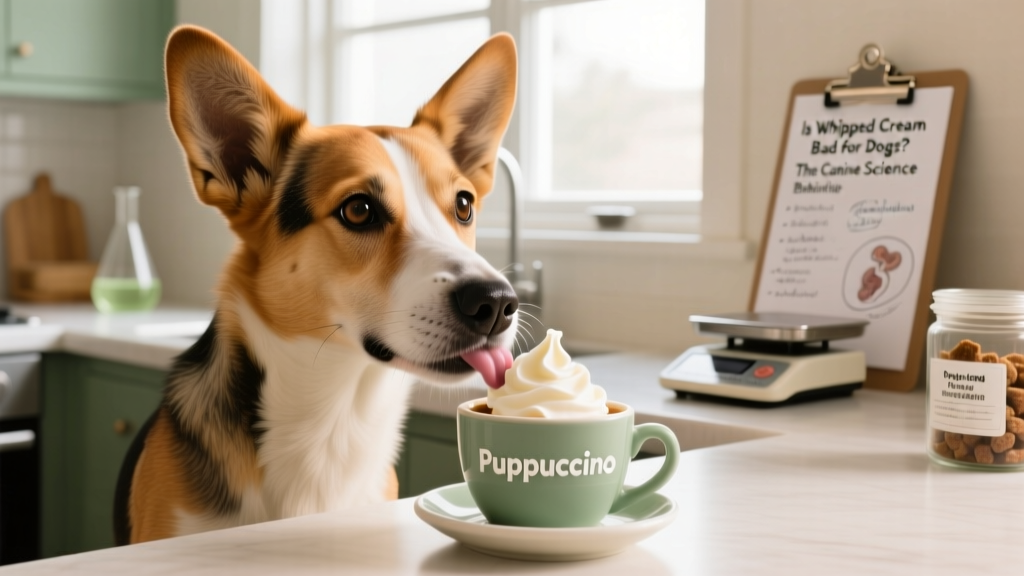
Quick Answer: Plain whipped cream is not toxic to most dogs, but it is not nutritionally beneficial either. A small amount (1–2 teaspoons for a medium dog) given occasionally is unlikely to cause harm in healthy, lactose-tolerant dogs. However, whipped cream is high in fat and lactose—two things many dogs struggle to digest. Dogs with pancreatitis, obesity, or lactose intolerance should avoid it entirely. Whipped cream containing xylitol (birch sugar) is immediately toxic and requires emergency veterinary care.
If you have ever ordered a "puppuccino" at a drive-through or dolloped a swirl of Reddi-wip on your dog's nose for a photo, you are not alone. Whipped cream has become one of the most common human treats shared with dogs. But behind that cute moment sits a real physiological question: can a dog's digestive system actually handle it?
The short answer depends on your dog's breed, weight, health history, and—most importantly—their individual lactase enzyme levels. Let's look at the science.
The Evolutionary Basis: Why Dogs Are Not Built for Dairy
From Wolf to Retriever: The ancestral gray wolf (Canis lupus) consumed almost no dairy. Their diet consisted of raw meat, organ tissue, bone marrow, and occasional plant matter from prey stomachs. Milk was only consumed during the brief nursing period in early puppyhood. Domestication over the past 15,000–30,000 years changed many things about dogs—coat color, skull shape, temperament—but it did not equip them with a robust, lifelong ability to digest lactose.
Like nearly all mammals, dogs produce the enzyme lactase during infancy to break down lactose, the primary sugar in milk. In wolves and wild canids, lactase production drops sharply after weaning (around 8–12 weeks of age). This is the default mammalian pattern: once an animal no longer nurses, the body stops investing energy in producing an enzyme it no longer needs.
Domestic dogs retain slightly higher lactase activity into adulthood compared to wolves—likely a byproduct of thousands of years living alongside human agricultural societies where dairy scraps were occasionally available. But "slightly higher" does not mean "fully capable." According to the Merck Veterinary Manual, a significant portion of adult dogs exhibit some degree of lactose malabsorption, meaning undigested lactose passes into the large intestine where bacterial fermentation produces gas, bloating, and diarrhea.
The Physiological Mechanism: What Happens When a Dog Eats Whipped Cream
How Lactose Digestion Works (or Doesn't) in Dogs:
- Ingestion: Whipped cream enters the stomach. It contains lactose (milk sugar), milk fat, and often added sugar or stabilizers.
- Enzyme availability: The small intestine must produce enough lactase to split lactose into glucose and galactose (absorbable simple sugars). Many adult dogs produce insufficient lactase.
- If lactase is adequate: Lactose is broken down and absorbed. The fat is emulsified by bile and processed through the pancreas and liver.
- If lactase is insufficient: Undigested lactose travels to the colon, where gut bacteria ferment it. This produces short-chain fatty acids, hydrogen gas, and carbon dioxide—resulting in flatulence, cramping, and osmotic diarrhea (water drawn into the intestine by unabsorbed sugars).
- Fat processing: The high fat content of whipped cream (approximately 3–4 grams per tablespoon of heavy whipping cream) triggers the pancreas to release lipase. In dogs with a history of pancreatitis or compromised pancreatic function, this fat load can trigger inflammation—a painful and potentially life-threatening condition.
The fat content deserves special attention. Whipped cream is essentially aerated heavy cream, and heavy cream contains roughly 36–40% milk fat by volume. While a teaspoon of whipped cream contains only about 1 gram of fat, a generous squirt from a can or a large dollop from a coffee shop cup can deliver 5–10 grams of fat in seconds. For a 15-pound dog, that is a significant fat load relative to their daily caloric intake—equivalent to a human eating several pats of butter.
The pancreas is the organ most vulnerable here. Acute pancreatitis in dogs is frequently triggered by a sudden ingestion of high-fat foods, and the American Veterinary Medical Association (AVMA) lists dietary indiscretion—eating rich, fatty human foods—as a leading risk factor.
Is Whipped Cream Bad for Dogs? A Risk-and-Benefit Breakdown
| Factor | Details | Risk Level |
|---|---|---|
| Lactose content | Heavy cream contains ~3g lactose per cup; whipping incorporates air, so a tablespoon of whipped cream has roughly 0.2–0.4g lactose. Lower than milk but not zero. | Low to Moderate |
| Fat content | ~1g fat per teaspoon of whipped cream. A Starbucks Puppuccino (2 oz cup) can contain 10–14g fat. | Moderate to High (dose-dependent) |
| Added sugars | Many canned whipped creams (Reddi-wip, Cool Whip) contain sugar or corn syrup. Not toxic, but contributes to obesity and dental disease over time. | Low (occasional), Moderate (habitual) |
| Xylitol (birch sugar) | Some sugar-free whipped cream brands use xylitol as a sweetener. Xylitol causes rapid insulin release in dogs, leading to hypoglycemia and potentially liver failure. | EXTREME — TOXIC |
| Carrageenan / stabilizers | Commercial whipped creams often contain carrageenan, mono- and diglycerides. Generally recognized as safe (GRAS) by the FDA, but some dogs with sensitive GI tracts may react. | Low |
| Aerosol propellants | Canned whipped cream uses nitrous oxide (N₂O) as a propellant. The gas dissipates quickly and is not harmful in the tiny amounts present in dispensed cream. | Negligible |
⚠️ XYLITOL WARNING: If your dog consumes any product containing xylitol (also labeled as "birch sugar" or E967), contact your veterinarian or the ASPCA Animal Poison Control Center at (888) 426-4435 immediately. Toxic doses in dogs are as low as 50–100 mg/kg, and symptoms (vomiting, weakness, collapse, seizures) can appear within 15–30 minutes. A consultation fee may apply, but this call can save your dog's life.
Safe Serving Sizes: What the Numbers Actually Say
If you have confirmed your whipped cream contains no xylitol and your dog has no history of pancreatitis or severe lactose intolerance, here are practical serving guidelines based on body weight. These amounts assume plain whipped cream (no chocolate, no coffee, no artificial sweeteners).
| Dog Weight | Max Occasional Serving | Approx. Calories | Frequency Limit |
|---|---|---|---|
| Under 10 lb / 4.5 kg | ½ teaspoon | ~4 kcal | No more than once per week |
| 10–25 lb / 4.5–11 kg | 1 teaspoon | ~8 kcal | No more than once per week |
| 25–50 lb / 11–23 kg | 1 tablespoon (3 tsp) | ~25 kcal | No more than 2–3 times per month |
| 50–90 lb / 23–41 kg | 1–2 tablespoons | ~25–50 kcal | No more than 2–3 times per month |
| Over 90 lb / 41 kg | 2 tablespoons | ~50 kcal | No more than 2–3 times per month |
The 10% rule: The American Kennel Club (AKC) recommends that treats should make up no more than 10% of your dog's daily caloric intake. For a 30-pound dog eating approximately 700–800 calories per day, that means treats should not exceed 70–80 calories total. A single tablespoon of whipped cream uses up roughly a third of that treat budget.
Breed Variations: Which Dogs Face Higher Risk?
Not all dogs process fat and lactose equally. Breed-specific predispositions to pancreatitis and digestive sensitivity mean some dogs should skip whipped cream entirely.
Higher-risk breeds for fat-triggered pancreatitis:
- Miniature Schnauzers — genetically predisposed to hyperlipidemia (elevated blood fat), making them significantly more vulnerable to pancreatitis from fatty foods. Even small amounts of whipped cream can trigger a flare-up.
- Yorkshire Terriers — small body mass combined with breed-level pancreatitis susceptibility means a teaspoon of whipped cream represents a proportionally large fat load.
- Cocker Spaniels — overrepresented in pancreatitis case studies.
- Dachshunds — prone to both obesity and pancreatitis.
- Poodles (Miniature and Toy) — higher reported rates of pancreatic inflammation.
Breeds with higher rates of lactose sensitivity (anecdotal and clinical observation):
- Brachycephalic breeds (Bulldogs, Pugs, Boston Terriers) — already prone to GI gas and bloating due to aerophagia (swallowing air). Adding fermentable lactose compounds the problem.
- German Shepherds — frequently reported with sensitive digestive systems and higher rates of small intestinal bacterial overgrowth (SIBO), which can be aggravated by undigested sugars.
On the other hand, many mixed-breed dogs and larger working breeds (Labrador Retrievers, Golden Retrievers) tend to tolerate small amounts of dairy without obvious issues—though "no obvious issues" does not mean the fat content is harmless long-term.
Common Misconceptions Debunked
| Myth | Fact |
|---|---|
| "Whipped cream is fine because it has less lactose than milk." | Heavy cream does contain less lactose than whole milk (~3g per cup vs. ~12g per cup), but the fat content is 10–15× higher. The lactose is reduced, but the fat risk is amplified. Trading a lactose problem for a pancreatitis problem is not a win. |
| "My dog loves it, so it must be fine." | Dogs are motivated by fat and sugar—both potent reward signals in canine taste physiology. Preference does not indicate safety. Dogs will enthusiastically eat chocolate, xylitol gum, and cooked chicken bones, all of which are dangerous. |
| "Cool Whip is safer because it is not real cream." | Cool Whip contains hydrogenated vegetable oil, high fructose corn syrup, and artificial stabilizers. While not acutely toxic (unless it contains xylitol in a sugar-free variant), it provides no nutritional benefit and introduces processed fats and sugars that are equally problematic for canine digestion. |
| "A Puppuccino from Starbucks is vet-approved." | A Starbucks Puppuccino is simply a small cup of their standard whipped cream. It was created as a customer-experience gesture, not formulated by veterinary nutritionists. A 2 oz serving contains roughly 10–14g of fat—far too much for dogs under 25 lb. |
| "Dogs have been eating human food for thousands of years, so dairy is natural." | Dogs have scavenged human food scraps, yes. But "survived" is not the same as "thrived." Many traditional human foods contribute to the chronic diseases (obesity, pancreatitis, dental disease) that now shorten dog lifespans. Evolutionary exposure does not equal safety. |
Practical Takeaways for Dog Owners
What this means for daily life:
- Read every label. Before sharing any whipped cream, check the ingredient list for xylitol (also called birch sugar or E967). This is non-negotiable.
- Start with a tiny test dose. If your dog has never had dairy, offer ¼ teaspoon and wait 12–24 hours. Watch for gas, loose stool, vomiting, or abdominal discomfort (restlessness, hunched posture, whining). If any of these appear, do not offer it again.
- Use it as a pill-hiding tool, not a daily treat. A small dab of whipped cream can effectively mask medication. This is one of the most practical uses—functional, infrequent, and portion-controlled.
- Consider safer alternatives. Plain, unsweetened Greek yogurt (lower in lactose due to bacterial fermentation) or a small amount of pureed pumpkin (no spice, no sugar) provides a similar "special treat" experience with more nutritional benefit and less fat.
- Never give whipped cream to a dog with current or past pancreatitis. This includes Miniature Schnauzers, who may have subclinical lipid issues. Consult your veterinarian before introducing any high-fat treat to these breeds.
- Factor in total daily fat. If your dog already eats a high-fat kibble (check the guaranteed analysis for crude fat >18%), adding whipped cream on top pushes their total fat intake into a range that increases pancreatitis risk.
How Is Lactose Processing Different in Dogs vs. Humans?
Humans are unusual among mammals in that a large proportion of the global population retains lactase production into adulthood—a trait called lactase persistence. This evolved independently in several human populations (Northern European, East African, Arabian) within the last 5,000–10,000 years, driven by strong cultural selection for dairy farming.
Dogs never underwent this selection pressure. While they co-evolved with humans and may have consumed dairy scraps, the selective advantage was never strong enough to fix lactase-persistence genes across the canine population. The result: most adult dogs sit somewhere on a spectrum from "mildly lactose-intolerant" to "significantly lactose-intolerant," with very few dogs being fully lactose-tolerant.
Additionally, human pancreatitis is more commonly associated with gallstones, alcohol use, and hypertriglyceridemia. In dogs, dietary fat indiscretion is the single most common trigger—meaning dogs are, in some ways, more acutely vulnerable to a single high-fat meal than humans are.
When Whipped Cream Consumption Signals a Problem
Occasionally, a dog's intense fixation on whipped cream (or any high-fat food) can indicate an underlying issue rather than simple food motivation:
- Pica or compulsive eating: If your dog obsessively seeks out non-standard foods, steals from counters relentlessly, or seems unable to feel satiated, this could signal a nutritional deficiency, endocrine disorder (such as Cushing's disease or diabetes), or a behavioral compulsion. A veterinary workup including a complete blood panel and cortisol test may be warranted.
- Exocrine pancreatic insufficiency (EPI): Dogs with EPI cannot produce enough digestive enzymes and may show intense food-seeking behavior combined with weight loss and greasy, voluminous stools. Paradoxically, these dogs cannot properly digest the fat in whipped cream at all.
- Post-treat symptoms that warrant a vet call: If your dog experiences vomiting, diarrhea lasting more than 24 hours, a hunched "prayer position" stretch (front legs flat, rear end raised—this is a classic pancreatitis pain posture), lethargy, or refusal to eat their next meal after consuming whipped cream, contact your veterinarian promptly.
🩺 Call your veterinarian if your dog shows any of these after eating whipped cream:
- Repeated vomiting (more than 2 episodes in 12 hours)
- Bloody or black, tarry diarrhea
- Abdominal pain (whining when touched, hunched posture, restlessness)
- Lethargy or collapse
- Signs of bloat: distended abdomen, unproductive retching, pacing (THIS IS AN EMERGENCY — seek immediate care)
- Any symptoms after ingesting sugar-free whipped cream (possible xylitol poisoning)
Frequently Asked Questions
Can dogs eat whipped cream every day?
No. Even in healthy dogs, daily whipped cream adds unnecessary fat and sugar that contribute to obesity, pancreatitis risk, and dental disease over time. Reserve it for rare occasions—a birthday, a vet-visit reward, or a pill-hiding tool—not a daily routine.
Is Cool Whip safe for dogs?
Standard Cool Whip is not toxic to dogs (assuming no xylitol-containing variants), but it contains hydrogenated vegetable oil, high fructose corn syrup, and artificial ingredients that offer zero nutritional benefit. It is not "safer" than real whipped cream; it simply swaps dairy fat for processed vegetable fat. A tiny taste will not harm most dogs, but it is not a recommended treat.
Why do dogs love whipped cream so much?
Dogs have taste receptors that are strongly activated by fat and sweetness. Whipped cream delivers both in an aerated, easy-to-eat texture. From an evolutionary standpoint, fat-dense foods were rare and valuable for wild canids, so the drive to consume them is deeply wired. Your dog's enthusiasm is a survival instinct meeting modern abundance—a mismatch that requires owner management.
Can puppies have whipped cream?
Puppies under 6 months should not have whipped cream. While nursing puppies produce lactase, their digestive systems are still developing and are highly sensitive to rich, fatty foods. Introducing whipped cream during puppyhood can cause severe GI upset and may predispose them to food sensitivities. Stick to puppy-formulated treats and a complete-and-balanced AAFCO-approved puppy diet.
Is canned whipped cream different from homemade whipped cream for dogs?
Homemade whipped cream (just heavy cream whipped with no added sugar or stabilizers) is the "cleanest" option because you control every ingredient. Canned varieties often contain added sugar, corn syrup, carrageenan, and sodium. Neither is nutritionally appropriate for dogs, but homemade lets you avoid unnecessary additives. In both cases, check for xylitol and keep portions tiny.
What should I do if my dog ate a whole can of whipped cream?
First, check the ingredient label for xylitol. If xylitol is present, call the ASPCA Animal Poison Control at (888) 426-4435 or your emergency vet immediately. If there is no xylitol, monitor your dog closely for the next 24–48 hours. Expect GI upset (gas, diarrhea, possibly vomiting). Offer plenty of fresh water and a bland diet (boiled chicken breast and white rice) for their next meal. If vomiting is persistent, your dog becomes lethargic, or you see signs of abdominal pain, contact your veterinarian—pancreatitis treatment is most effective when started early.
Are there any health benefits to feeding dogs whipped cream?
No meaningful health benefits exist. Whipped cream provides calories from fat and trace amounts of vitamin A and calcium, but these are negligible and easily obtained from a balanced diet. The only practical "benefit" is its usefulness as a high-value reward for training or medication administration—functions that can also be filled by lower-fat alternatives like a pea-sized amount of peanut butter (xylitol-free) or a commercial soft treat.
Research References
- Merck Veterinary Manual — Malabsorption and Maldigestion in Small Animals: Detailed overview of lactase deficiency and fat malabsorption mechanisms in dogs.
- AVMA — Pancreatitis in Dogs: Risk factors, clinical signs, and dietary triggers for canine pancreatitis.
- AKC — Feeding Your Dog: Tips and Guidelines: The 10% treat rule and general nutrition framework for companion dogs.
This article is for educational purposes and does not replace professional veterinary advice. Always consult your veterinarian before introducing new foods to your dog's diet, especially if your dog has a history of pancreatitis, obesity, or digestive disorders.
Marcus Aldridge
All our authors care for dogs every day — read more of their work on the authors page.


