Is a Coyote a Dog? Coyotes, Dogs & Their Shared Ancestry
Is a coyote a dog? Explore the evolutionary science, genetic differences, and practical implications of coyote-dog relationships for pet owners.
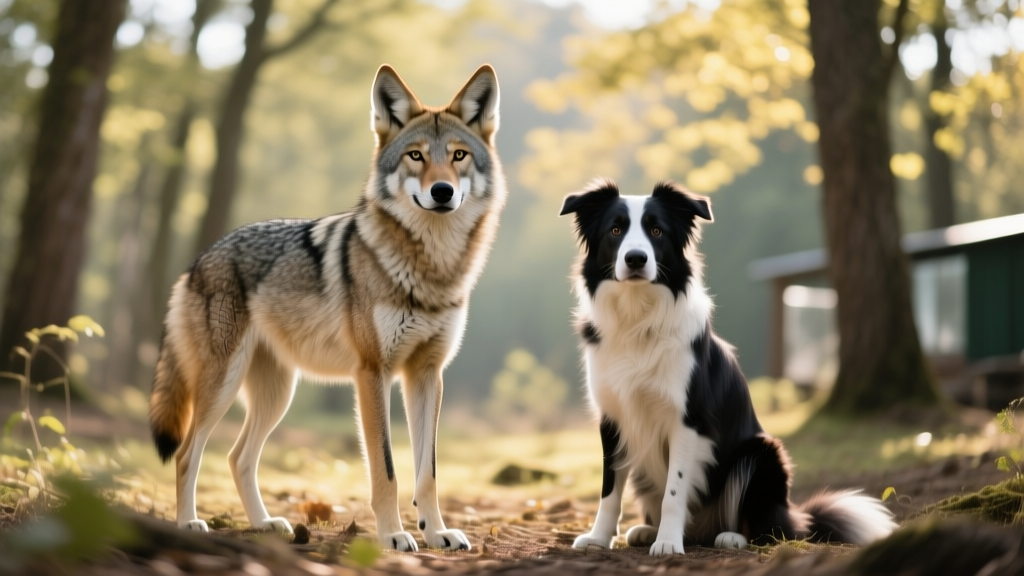
The Short Answer: Is a Coyote a Dog?
No, a coyote (Canis latrans) is not a dog (Canis lupus familiaris). However, coyotes and domestic dogs are closely related members of the genus Canis, sharing a common ancestor approximately 6–7 million years ago. They share roughly 96.4% of their DNA and can even interbreed to produce fertile offspring known as "coydogs." Despite this genetic closeness, they are distinct species with different evolutionary paths, behaviors, and ecological roles.
If you've ever watched your German Shepherd tilt its head at a coyote howling in the distance and wondered how closely related they really are, you're asking a question that has fascinated evolutionary biologists for decades. The answer involves ancient migrations, chromosome counts, and a divergence that shaped two very different survival strategies — one leading to the wild opportunist thriving across North America, and the other to the 360+ recognized breeds sleeping on our couches today.
The Evolutionary Split: How Dogs and Coyotes Diverged
Timeline of Canid Divergence
The family Canidae originated in North America roughly 35 million years ago during the Oligocene epoch. The genus Canis emerged approximately 6 million years ago, and from there, the lineage branched into wolves, coyotes, jackals, and eventually domestic dogs.
The gray wolf (Canis lupus) and the coyote (Canis latrans) diverged from a shared ancestor approximately 1.5 to 1.8 million years ago during the Pleistocene epoch, according to genomic analyses published in genome research studies. Domestic dogs descended from an extinct lineage of gray wolves, with domestication occurring between 20,000 and 40,000 years ago — making dogs a subspecies of wolf, not of coyote.
Here's what this means in practical taxonomic terms:
| Taxonomic Rank | Domestic Dog | Coyote | Gray Wolf |
|---|---|---|---|
| Kingdom | Animalia | Animalia | Animalia |
| Family | Canidae | Canidae | Canidae |
| Genus | Canis | Canis | Canis |
| Species | C. lupus | C. latrans | C. lupus |
| Subspecies | C. l. familiaris | — | Multiple subspecies |
The critical distinction: dogs are a subspecies of the gray wolf. Coyotes are their own separate species. This is why dogs and wolves can produce fully fertile offspring easily, while dog-coyote hybrids (coydogs) are rarer and face more reproductive challenges.
The Genetics: DNA, Chromosomes, and Hybridization
Chromosome Compatibility
Both dogs and coyotes have 78 chromosomes (39 pairs), which is why hybridization is biologically possible. This identical chromosome count allows proper pairing during meiosis, the cell division process that produces sperm and egg cells. Compare this to horses (64 chromosomes) and donkeys (62 chromosomes), whose hybrid offspring — mules — are almost always sterile due to mismatched chromosome pairing.
Whole-genome sequencing studies have revealed that coyotes and dogs share approximately 96.4% of their DNA sequence. For context, humans and chimpanzees share roughly 98.8%, meaning dogs and coyotes are slightly less genetically similar than our closest primate relatives — but still remarkably close.
Research from the Merck Veterinary Manual notes that the genus Canis is one of the most genetically fluid groups among mammals, with natural hybridization documented between wolves, coyotes, dogs, jackals, and even Ethiopian wolves in the wild.
Coydogs: When Dogs and Coyotes Interbreed
Coyote-dog hybrids do occur in nature, particularly in regions where coyote habitat overlaps with areas where intact (unspayed/neutered) dogs roam freely. The northeastern United States has seen increasing reports of coydogs as coyote populations expanded eastward over the past century.
Key facts about coydogs:
- Fertility: Unlike mules, coydogs are typically fertile and can breed with either parent species
- Appearance: Highly variable — often tawny or grizzled coats, erect ears, bushy tails, and a lean build weighing 30–50 lb (14–23 kg)
- Temperament: Unpredictable — they may inherit the coyote's wariness and prey drive alongside dog-like sociability, making them challenging and often unsuitable as pets
- Legal status: Ownership laws vary significantly by state and municipality; many jurisdictions classify coydogs as wild animals requiring special permits
Physiological and Behavioral Differences
Despite their genetic similarity, millions of years of separate evolution produced distinct physiological adaptations. Here's how dogs and coyotes compare across key biological dimensions:
| Trait | Domestic Dog | Coyote |
|---|---|---|
| Weight range | 2–200+ lb (1–90+ kg) by breed | 20–50 lb (9–23 kg) typical |
| Shoulder height | 6–34 in (15–86 cm) | 21–24 in (53–61 cm) |
| Lifespan (wild/captive) | 10–18 years (varies by breed) | 6–8 years wild; up to 18 captive |
| Diet classification | Omnivore (adapted to starch-rich diets) | Omnivore (primarily carnivorous) |
| Breeding season | Year-round (most breeds cycle 2×/year) | January–March (once annually) |
| Litter size | 1–12+ puppies (breed-dependent) | 4–7 pups average |
| Vocalization | Bark, howl, whine, growl | Howl, yip, bark-howl (rarely bark-only) |
| Social structure | Flexible; bonds with humans and other dogs | Pair bonds or small family groups; territorial |
| Starch digestion (AMY2B gene) | High copy number (4–30+) | Low copy number (typically 2) |
The Amylase Gene: A Key Evolutionary Difference
One of the most significant genetic differences between dogs and coyotes involves the AMY2B gene, which produces pancreatic amylase — the enzyme responsible for breaking down starch. A landmark 2013 study published in Nature (Axelsson et al.) found that dogs carry between 4 and 30+ copies of this gene, while wolves and coyotes typically carry only 2 copies.
This isn't a trivial difference. It represents a direct evolutionary adaptation to the starch-rich diets dogs encountered while scavenging near human agricultural settlements beginning roughly 10,000–15,000 years ago. Dogs literally evolved the digestive machinery to thrive on grains and carbohydrates — a capability coyotes largely lack.
Practical implication for owners: This is why most commercial dog foods (kibble) contain grain or starch-based ingredients that dogs digest efficiently, but a coyote's digestive system would struggle to process. If you're considering a grain-free diet for your dog, discuss it with your veterinarian — the FDA has investigated potential links between grain-free diets and dilated cardiomyopathy (DCM) in certain breeds.
How Dogs Process Coyote Signals: Scent, Sound, and Instinct
Why Does My Dog React to Coyote Sounds?
Dogs possess an extraordinary olfactory system with up to 300 million scent receptors (compared to humans' 6 million), and their vomeronasal organ (Jacobson's organ) specifically detects pheromones. When your dog catches the scent of a coyote — or hears a coyote howl — several neurological processes activate simultaneously:
- Olfactory detection: The dog's olfactory epithelium identifies canid-specific volatile compounds in the air
- Amygdala activation: The brain's threat-assessment center evaluates whether the signal represents danger, competition, or curiosity
- Auditory processing: Dogs hear frequencies up to 45–65 kHz (compared to coyotes' similar range), and the specific frequency modulation of a coyote howl triggers innate recognition
- Behavioral output: Depending on breed temperament, socialization, and individual personality, the dog may bark, howl back, become alert/still, or show fear behaviors
What Does It Mean When My Dog Howls at Coyotes?
Howling in response to coyotes is a deeply conserved behavior — meaning it's inherited from the shared ancestor both species descended from. In wolf packs, howling serves three primary functions: territory declaration, pack location/assembly, and social bonding. When your dog howls at a coyote, they're essentially running ancient software — a communication protocol that predates domestication by millions of years.
Breed matters significantly here. Northern breeds (Siberian Huskies, Alaskan Malamutes, Akitas) and hounds (Beagles, Coonhounds) are far more likely to howl in response to coyote vocalizations than brachycephalic breeds (Bulldogs, Pugs) or toy breeds, which have been selected for different behavioral traits over thousands of years of breeding.
Practical Implications for Dog Owners
Living Safely in Coyote Country
Coyotes now inhabit every U.S. state except Hawaii, including major urban centers like Los Angeles, Chicago, and New York City. Understanding the coyote-dog relationship has real safety implications for your daily routine.
When Is My Dog at Risk?
Coyotes generally avoid confrontation with dogs larger than themselves, but documented attacks have occurred on dogs under 25 lb (11 kg), particularly during:
- Breeding season (January–March): Coyotes are more territorial and may view small dogs as prey or competitors
- Pup-rearing season (April–August): Adult coyotes hunting to feed young are more aggressive and opportunistic
- Dawn and dusk: Peak coyote activity periods coincide with common dog-walking times
- Food-scarce winter months: Desperation drives bolder behavior near human habitation
Protective Measures With Specific Details
| Measure | Details | Estimated Cost |
|---|---|---|
| Supervised outdoor time | Stay within 6 ft of small dogs (<25 lb); avoid off-leash time in known coyote areas | Free |
| Coyote-deterrent lighting | Motion-activated LED lights (e.g., URPOWER Solar Lights, 2-pack ~$30–$45) along fence lines | $30–$80 |
| Fence upgrades | Minimum 6 ft tall with a coyote roller bar at the top ($15–$25 per linear foot installed); add a 12-in underground apron to prevent digging | $800–$3,000+ for a typical yard |
| Coyote vest for small dogs | CoyoteVest brand ($75–$130) with Kevlar body armor and spike strips | $75–$130 |
| Hazing techniques | Air horn ($8–$15), whistle, or throwing objects near (not at) approaching coyotes to maintain their natural fear | $8–$20 |
| GPS tracking collar | Fi Series 3 ($129 + $8–$12/mo) or Whistle GO ($70 + $7–$10/mo) for real-time location if a dog escapes | $70–$129 + subscription |
Common Misconceptions Debunked
| Myth | Fact |
|---|---|
| "Coyotes are just wild dogs" | Coyotes are a distinct species (Canis latrans) that diverged from the wolf lineage ~1.5 million years ago — long before dogs were domesticated (~20,000–40,000 years ago) |
| "My dog and a coyote could never produce puppies" | Because both have 78 chromosomes, hybridization is biologically possible and has been documented, though it's uncommon due to behavioral and seasonal breeding barriers |
| "Coyotes lure dogs away from their yards to attack them" | This widely shared claim lacks scientific documentation. Coyotes may retreat when confronted by a dog, and a pursuing dog may end up near coyote den sites where other pack members defend their young — but the "luring" behavior is not a documented hunting strategy |
| "If my dog is big enough, coyotes won't bother them" | While coyotes preferentially target small dogs, packs of coyotes have been documented challenging larger dogs, especially when defending territory or pups |
| "Dogs are part coyote because they howl" | Howling is a conserved ancestral trait shared across the genus Canis. Your Husky howls because wolves howled — not because coyote DNA is involved |
| "Coydogs make good pets if raised from pups" | Coydogs retain significant wild instincts including high prey drive, fear-based reactivity, and poor response to training. Most animal behaviorists advise against keeping them as pets |
When Coyote-Like Behavior Signals a Problem in Your Dog
Some behaviors that owners describe as "coyote-like" can actually indicate medical or behavioral issues that warrant professional attention.
Consult Your Veterinarian If Your Dog Shows:
- Excessive nighttime restlessness and vocalization — could indicate canine cognitive dysfunction (CCD), particularly in dogs over 8 years old
- Sudden predatory behavior toward other household pets — may signal pain, neurological issues, or resource guarding that requires a certified behaviorist
- Escalating reactivity to wildlife sounds or scents — leash reactivity and barrier frustration can intensify without proper counter-conditioning using positive reinforcement methods
- Roaming or escape attempts that are new — can indicate intact hormonal drives (spay/neuter discussion), anxiety, or insufficient environmental enrichment
If you observe sudden behavioral changes, always rule out medical causes first. Conditions like hypothyroidism, brain tumors, and urinary tract infections can manifest as behavioral shifts that owners misinterpret as instinctual or breed-related.
Frequently Asked Questions
Can dogs and coyotes communicate with each other?
Partially. Both species use overlapping body language signals — ear position, tail carriage, piloerection (raised hackles), and vocalizations like growls and howls. However, domestication has altered dogs' communication significantly. Dogs have evolved specialized facial muscles (specifically the levator anguli oculi medialis) that allow them to produce "puppy dog eyes" — a signal wolves and coyotes cannot make. This means a dog's communicative repertoire includes signals coyotes don't recognize, and vice versa.
Is coyote behavior normal in my dog if it's a husky or shepherd?
Some behaviors that appear "wild" — howling, digging, high prey drive, wariness of strangers — are breed-typical traits selected during the development of northern and herding breeds. These are normal breed characteristics, not evidence of coyote ancestry. A Husky howling at the moon is expressing conserved wolf-lineage behavior, not coyote DNA. If these behaviors are problematic in your household, a certified professional dog trainer (CPDT) using force-free, positive reinforcement methods can help you manage them through counter-conditioning and environmental enrichment.
How do dogs sense coyotes differently than humans do?
Dogs detect coyotes through olfactory and auditory channels that far exceed human capability. A dog's sense of smell is estimated at 10,000 to 100,000 times more sensitive than ours, allowing them to identify individual coyotes by scent marking. Dogs also hear frequencies up to 45–65 kHz, meaning they may detect coyote vocalizations — including ultrasonic components — that are completely inaudible to human ears. This is why your dog may become alert and focused in a direction where you perceive nothing unusual.
How is a dog's relationship to coyotes different from a human's relationship to other primates?
The analogy is imperfect but instructive. Dogs and coyotes share a more recent common ancestor than humans share with most primates, but they diverged longer ago than humans and Neanderthals did. A closer human analogy might be Homo sapiens and Denisovans — separate species that could and did interbreed, producing fertile offspring, yet maintained distinct populations and adaptations. The key difference: dogs underwent intense artificial selection by humans, accelerating morphological change far beyond what natural selection alone would produce in the same timeframe.
Can I train my dog to be safe around coyotes?
Yes — through recall training and desensitization. A reliable recall ("come" command) is the single most important safety behavior you can teach a dog in coyote country. Train using high-value treats (real chicken, cheese, or commercial treats like Zuke's Mini Naturals at ~$6–$8 per 6-oz bag) with progressive distraction levels: start indoors, move to a fenced yard, then practice on-leash in open areas. Never use shock collars or aversive methods — these can create fear associations that worsen reactivity. The goal is a dog who voluntarily checks in with you and returns when called, even when wildlife scents or sounds are present.
Key Takeaways
- Coyotes are not dogs — they are a separate species within the same genus, sharing ~96.4% DNA and 78 chromosomes
- Dogs are a subspecies of gray wolf, domesticated 20,000–40,000 years ago; coyotes diverged from the wolf lineage ~1.5 million years ago
- Hybridization (coydogs) is biologically possible but uncommon and generally inadvisable
- Dogs evolved superior starch digestion (AMY2B gene copies) as an adaptation to human-associated diets — coyotes did not
- In coyote-populated areas, supervise small dogs (<25 lb), secure fencing to 6+ ft with roller bars, and maintain reliable recall training
- Breed-typical "wild" behaviors are normal canine traits, not evidence of coyote ancestry
For breed-specific behavioral guidance or concerns about your dog's reactions to wildlife, consult your veterinarian or a certified applied animal behaviorist (CAAB). For coyote encounters posing immediate safety risks, contact your local animal control agency.
Aaron Whyte
All our authors care for dogs every day — read more of their work on the authors page.


