Inside the Mind of a Dog: What Canine Cognitive Science Reveals
Explore what's inside the mind of a dog through peer-reviewed cognitive science. Learn how dogs think, feel, and perceive the world around them.
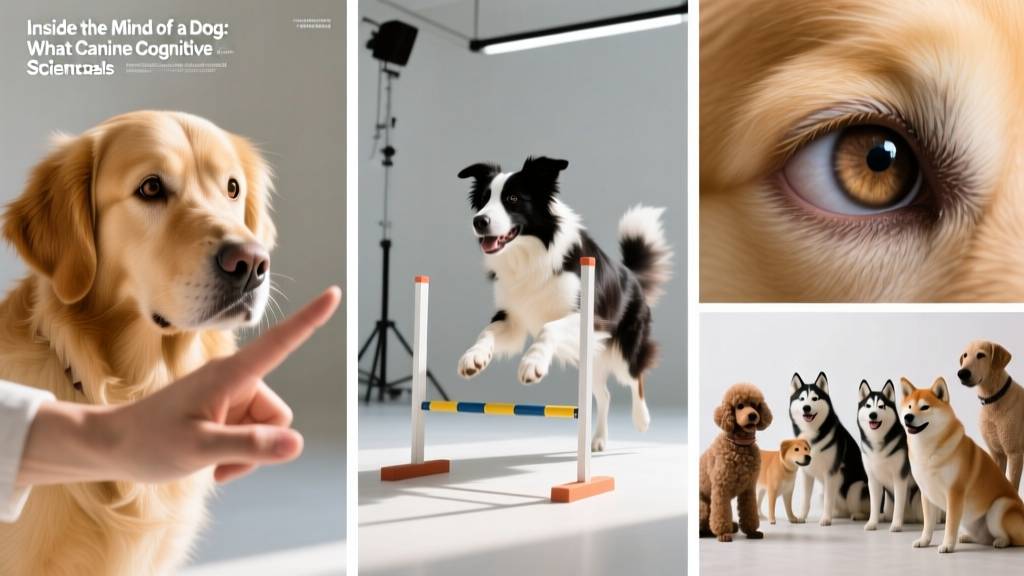
What's Really Inside the Mind of a Dog?
Dogs possess cognitive abilities roughly comparable to a 2- to 2.5-year-old human child, according to research by psychologist Stanley Coren, PhD. They can learn an average of 165 words, count to four or five, understand basic arithmetic, and experience core emotions including joy, fear, love, and anger. However, dogs likely do not experience complex emotions like guilt or pride. Their minds are optimized for social cooperation, scent-based environmental mapping, and reading human body language with extraordinary precision — skills honed over at least 15,000 to 30,000 years of co-evolution with humans.
The Canine Brain: How Dogs Process the World
Understanding what happens inside the mind of a dog starts with neuroanatomy. A dog's brain weighs approximately 72 grams on average (compared to roughly 1,300–1,400 grams for humans), but brain-to-body ratio tells only part of the story. What matters more is cortical folding and neuron density.
A landmark 2017 study published in Frontiers in Neuroanatomy found that dogs possess approximately 530 million cortical neurons — roughly twice as many as cats (250 million) and significantly more than raccoons or bears. These neurons are concentrated in the cerebral cortex, the region responsible for complex thought, decision-making, and sensory integration.
Key Brain Structures and Their Functions
| Brain Region | Function in Dogs | Compared to Humans |
|---|---|---|
| Olfactory bulb | Processes scent — up to 40% of brain volume dedicated to smell | Proportionally ~40x larger than in humans |
| Temporal lobe (auditory cortex) | Processes vocal tones, word recognition, sound localization | Dogs distinguish tone from word meaning separately |
| Caudate nucleus | Reward processing, positive expectation, attachment | Activates similarly to humans when anticipating rewards |
| Amygdala | Fear processing, threat assessment, emotional memory | More reactive to novel stimuli; faster fight-or-flight response |
| Prefrontal cortex | Decision-making, impulse control, working memory | Significantly smaller; explains limited impulse control |
Functional MRI (fMRI) studies conducted at Emory University by neuroscientist Gregory Berns, PhD, have shown that a dog's caudate nucleus — the brain's reward center — activates when they smell their owner, anticipate a treat, or hear praise. This isn't just conditioning; the caudate response to a familiar human's scent is measurably stronger than to food alone in many dogs, suggesting genuine social attachment rather than simple food-motivated behavior.
The Evolutionary Blueprint: From Wolf Pack to Family Couch
Why Domestication Reshaped the Canine Mind
The divergence between wolves and proto-dogs began roughly 20,000–40,000 years ago. The leading hypothesis — supported by genomic analysis published in Scientific Reports (Nature) — is that less fearful wolves began scavenging near human settlements. These animals had a selective advantage: lower cortisol reactivity and higher social tolerance. Over hundreds of generations, this "self-domestication" process selected for:
- Reduced flight distance: Dogs tolerate human proximity at distances that trigger flight in wolves
- Prolonged juvenile behavior (neoteny): Adult dogs retain puppy-like playfulness and dependency
- Eye contact seeking: Dogs gaze at humans for help when solving problems; wolves attempt to solve problems independently
- Starch digestion: Dogs carry multiple copies of the AMY2B gene for starch digestion — wolves typically carry only two
This evolutionary history explains a core feature inside the mind of a dog: they are not simply tamed wolves. Domestication fundamentally restructured their social cognition. A 2015 study from Japan's Azabu University demonstrated that mutual gazing between dogs and owners triggers oxytocin release in both species — the same neurochemical bonding mechanism that connects human parents and infants. Wolves, even when hand-raised by humans, do not produce this oxytocin feedback loop through eye contact.
How Dogs Think: Memory, Learning, and Problem-Solving
Memory Systems
Dogs possess both short-term and long-term memory, but their working memory (the ability to hold information actively in mind) is notably brief. Research from Stockholm University found that dogs' short-term memory for non-salient events lasts approximately 2 minutes — meaning if your dog chews a shoe and you discover it 10 minutes later, they genuinely cannot connect your reaction to the earlier action. This is why punishment after the fact is both ineffective and cruel.
However, dogs' associative long-term memory is remarkably strong. They remember:
- Location-reward associations: Where they found food, where the leash hangs, the route to the park
- Emotional associations: The sound of a vet clinic door, a specific person's voice, the car keys jingling before a ride
- Procedural memory: Trained behaviors like "sit," "shake," or agility sequences can persist for years without practice
Social Learning and Imitation
Studies from the Family Dog Project at Eötvös Loránd University in Budapest have shown that dogs can learn through observation and imitation — a cognitive skill once thought exclusive to primates. In controlled experiments, dogs watched a human demonstrator open a box using a specific technique, then replicated that technique even when simpler alternatives existed. This "overimitation" suggests dogs view humans as intentional teachers, not just environmental features.
Numerical Cognition
Research published in the journal Behavioural Processes demonstrated that dogs can distinguish between different quantities — choosing the larger of two food piles with approximately 70% accuracy when the ratio is 2:1 or greater. Border Collies and other herding breeds tend to outperform brachycephalic breeds in numerical discrimination tasks, though individual variation is substantial.
How Do Dogs Sense and Process Their Environment?
A dog's perceptual world is fundamentally different from ours. Understanding these sensory differences is essential for interpreting what's happening inside the mind of a dog in everyday situations.
Olfaction: The Dominant Sense
Dogs possess between 220 million and 300 million olfactory receptors (depending on breed — Bloodhounds top the scale), compared to roughly 5-6 million in humans. Their olfactory cortex is proportionally 40 times larger than ours. This means:
- A dog can detect some odors at concentrations of parts per trillion — equivalent to detecting a single teaspoon of sugar dissolved in two Olympic swimming pools
- They can smell the passage of time: scent concentrations decrease predictably, allowing dogs to determine how long ago someone passed by
- They detect hormonal changes — cortisol, adrenaline, and even early-stage cancer markers — through scent alone
Vision: Motion Over Detail
Dogs have dichromatic vision (two types of color receptors), perceiving primarily blues and yellows. They cannot distinguish red from green. However, their visual system is optimized for motion detection:
- Temporal resolution: Dogs process visual information at approximately 75 Hz (frames per second), compared to 60 Hz for humans. This is why dogs may react to flickering screens that appear steady to us.
- Night vision: The tapetum lucidum (reflective layer behind the retina) gives dogs approximately 5x better light sensitivity than humans
- Visual acuity: Dogs see at roughly 20/75 — what a human sees clearly at 75 feet, a dog needs to be 20 feet away to see with equal clarity
Hearing: Frequency and Localization
Dogs hear frequencies up to approximately 45,000–65,000 Hz (humans top out around 20,000 Hz). They can also independently rotate each ear up to 180 degrees using 18 separate muscles, enabling sound localization within approximately 6 degrees of accuracy. This is why your dog reacts to a car pulling into the driveway long before you hear it.
Common Misconceptions About How Dogs Think
| Myth | Scientific Reality |
|---|---|
| "My dog looks guilty when I come home to a mess" | The "guilty look" (ears back, lowered body, averted gaze) is an appeasement behavior triggered by your tone and body language, not an admission of wrongdoing. A 2009 Barnard College study confirmed dogs show this response equally whether or not they actually committed the "offense." |
| "Dogs are trying to be the alpha / dominate me" | Dominance theory applied to dog-human relationships has been thoroughly debunked. The original wolf-pack hierarchy research (Schenkel, 1947) studied captive, unrelated wolves in artificial conditions. Wild wolf packs are family units led by breeding parents, not aggressors fighting for rank. |
| "Dogs live entirely in the moment" | While dogs have limited episodic memory, they do form expectations about the future based on patterns. They anticipate walks, meals, and owner departures based on environmental cues — a form of prospective cognition. |
| "A wagging tail always means a happy dog" | Tail wag direction matters. Research from the University of Trento showed that right-biased wagging correlates with positive emotions (approach motivation), while left-biased wagging indicates anxiety or negative arousal. Speed and height also modify meaning. |
| "Dogs can't understand words, only tone" | fMRI studies show dogs process word meaning in the left hemisphere and tone in the right — similar to humans. They can distinguish "sit" from "hit" even when spoken in identical tones. |
Breed Variations in Cognitive Style
Not all canine minds work the same way. Centuries of selective breeding for specific tasks have produced measurable differences in cognitive style, impulse control, and problem-solving approach across breeds.
| Cognitive Trait | Breeds That Excel | Breeds With Different Strengths |
|---|---|---|
| Working memory / impulse control | Border Collies, German Shepherds, Belgian Malinois | Sighthounds (Greyhounds, Whippets) — bred for chase instinct over inhibition |
| Social cognition / human-directed gazing | Golden Retrievers, Labrador Retrievers, Cavalier King Charles Spaniels | Akita, Shiba Inu, Basenji — more independent problem-solvers |
| Scent discrimination | Bloodhounds, Beagles, Basset Hounds | Brachycephalic breeds (Pugs, Bulldogs) — shortened nasal passages reduce olfactory surface area |
| Vocal communication comprehension | Poodles, Border Collies, German Shepherds | Bulldogs, Mastiffs — slower auditory discrimination on average |
These are population-level tendencies, not individual guarantees. A mixed-breed dog may inherit any combination of cognitive traits. However, understanding breed predispositions helps set realistic expectations — if you adopt a livestock guardian breed like a Great Pyrenees, their independent decision-making isn't stubbornness; it's the cognitive style they were bred for over thousands of years.
When Cognitive Changes Signal a Problem
Changes in your dog's thinking patterns, memory, or problem-solving ability can indicate underlying medical conditions. Canine Cognitive Dysfunction (CCD) — the dog equivalent of Alzheimer's disease — affects an estimated 14% of dogs over age 11, though only about 2% receive a formal diagnosis, according to the Merck Veterinary Manual.
Red Flags: Cognitive Changes That Require a Vet Visit
- Disorientation: Walking into walls, getting stuck behind furniture, staring blankly at walls for extended periods
- Altered social interaction: Suddenly ignoring family members they previously greeted enthusiastically, or becoming clingy after years of independence
- Sleep-wake cycle disruption: Pacing or vocalizing at night, sleeping excessively during the day
- House-training regression: Soiling indoors after years of reliable house training — always rule out UTI, kidney disease, and CCD
- Activity level changes: Repetitive behaviors (circling, licking) or apathy toward previously enjoyed activities
- Anxiety escalation: New fears of familiar sounds, people, or environments
Action step: If you observe two or more of these signs, consult your veterinarian. Early intervention with medications like selegiline (Anipryl®), prescription diets rich in medium-chain triglycerides, and environmental enrichment can slow CCD progression. Typical veterinary consultation costs range from $150–$400 for initial evaluation, with ongoing medication costs of $30–$80/month.
Practical Implications: Using Canine Science in Daily Life
Here's how understanding what's inside the mind of a dog translates to better care, training, and communication:
Training Timing
Because working memory lasts roughly 2 minutes, deliver rewards within 0.5–1.5 seconds of the desired behavior. If you ask your dog to "sit" and they comply, the treat must arrive almost instantly. Delayed rewards confuse the association. Use a clicker or marker word ("yes!") to bridge the gap between behavior and reward — the click marks the exact moment, buying you 2-3 seconds to deliver the treat.
Enrichment That Matches Their Brain
Dogs evolved to spend 6-8 hours per day foraging and problem-solving. Modern pet dogs receive food in a bowl in 30 seconds, leaving their cognitive capacity underutilized. Budget $15–$45 for enrichment tools:
- Snuffle mats ($18–$35): Hide kibble in fleece strips — engages scent-driven foraging for 15-30 minutes
- Puzzle feeders ($12–$40): Nina Ottosson or Outward Hound puzzles require multi-step problem-solving
- Scatter feeding ($0): Simply toss kibble across the yard — activates natural search patterns
- Scent work games ($0–$25): Hide treats in increasingly difficult locations; eventually progress to discriminating between specific scents using cotton swabs and essential oils (birch, anise, clove — used in AKC Scent Work trials)
Communication Adjustments
Since dogs process tone and word meaning separately, consistency matters more than volume. Pick one word per behavior ("down" OR "off" for getting off furniture — never both). Keep your tone calm and neutral during training; excited tones increase arousal and reduce impulse control. And remember: dogs read body language far more accurately than verbal language. If your verbal cue says "stay" but your body leans forward (a signal to approach in dog communication), your dog is following your body, not disobeying your words.
Managing Separation
Given that dogs form genuine attachment bonds (confirmed through oxytocin research and secure-base effect studies), separation distress is not manipulation — it's a real emotional state. For dogs with separation anxiety:
- Practice departures in 1-second to 5-minute increments over weeks, not days
- Provide a long-duration enrichment item (frozen Kong filled with peanut butter and banana, $5–$8 in ingredients) 10 minutes before leaving
- Avoid emotional departure/greeting rituals — calm, low-key transitions reduce anxiety spikes
- Consider Adaptil® diffusers ($25–$45) which release synthetic dog-appeasing pheromone (DAP); clinical studies show modest but measurable anxiety reduction
Frequently Asked Questions
Can dogs understand human emotions?
Yes, to a degree. Research from the University of Lincoln showed that dogs can form cross-modal mental representations of human emotions — they match a happy face with a happy voice and a sad face with a crying sound, even when these are presented separately. Dogs also respond differently to human emotional states: they approach crying humans more often than humming or talking humans, suggesting empathic concern. However, this is likely rooted in social bonding and learned association rather than abstract understanding of emotion concepts.
Do dogs dream?
Yes. Dogs experience REM (rapid eye movement) sleep, the stage associated with dreaming in humans. MIT researcher Matthew Wilson demonstrated that rats replay spatial experiences during REM sleep, and the same neural replay mechanism is believed to occur in dogs. If your dog twitches, whimpers, or "runs" during sleep, they are likely replaying waking experiences. Small dogs tend to dream more frequently (every 10 minutes or so during sleep cycles) while larger dogs have longer but less frequent dream periods (approximately every 45–90 minutes).
Is it normal for my dog to seem "stubborn" during training?
What owners perceive as stubbornness is almost always one of three things: (1) the dog hasn't generalized the behavior to the current environment — dogs learn context-specifically, so "sit" in the kitchen is not automatically "sit" at the park; (2) the reinforcement history isn't strong enough to compete with environmental distractions; or (3) the dog is stressed, overstimulated, or physically uncomfortable and cannot focus. Force-free training methods — using positive reinforcement and environmental management — address all three causes without damaging the human-dog bond.
How is a dog's mind different from a human's?
The most significant differences are: (1) Dogs lack complex episodic memory — they don't mentally replay past events the way humans do; (2) Dogs have no evidence of abstract reasoning about the future — they anticipate based on patterns, not planning; (3) Dogs process the world primarily through scent rather than vision; (4) Dogs lack a fully developed prefrontal cortex, limiting impulse control and abstract decision-making. However, dogs surpass humans in social cognition — they read human gestures, pointing, and gaze direction more accurately than even our closest primate relatives, chimpanzees.
Why does my dog stare at me?
Direct eye contact from your dog is typically a social bid — they're seeking information, requesting something, or initiating interaction. The oxytocin feedback loop (mutual gazing increases bonding hormones in both species) means staring at you literally makes your dog feel good. However, context matters: a hard, unblinking stare with a rigid body toward a stranger or another dog is a threat display, not a social bid. Learn to distinguish the soft, relaxed "tell me what's happening" gaze from the tense, fixed "I'm assessing a threat" stare.
Key Sources Referenced
- Jardim et al. (2017). "Dogs have the most neurons, though not the largest brain." Frontiers in Neuroanatomy.
- Nagasawa et al. (2015). "Oxytocin-gaze positive loop and the coevolution of human-dog bonds." Science, 348(6232).
- Horowitz, A. (2009). "Disambiguating the 'guilty look': Salient prompts to a familiar dog behaviour." Behavioural Processes, 81(2).
- Berns, G. et al. (2014). "Scent of the familiar: An fMRI study of canine brain responses to familiar and unfamiliar human and dog odors." Behavioural Processes, 110.
- Merck Veterinary Manual: Cognitive Dysfunction Syndrome in Dogs
Dr. Hannah Wickes
All our authors care for dogs every day — read more of their work on the authors page.


