HPV in Dogs
Can dogs get HPV? Learn the science behind canine papillomavirus (CPV), how it differs from human HPV, symptoms, treatment, and when to see your vet.
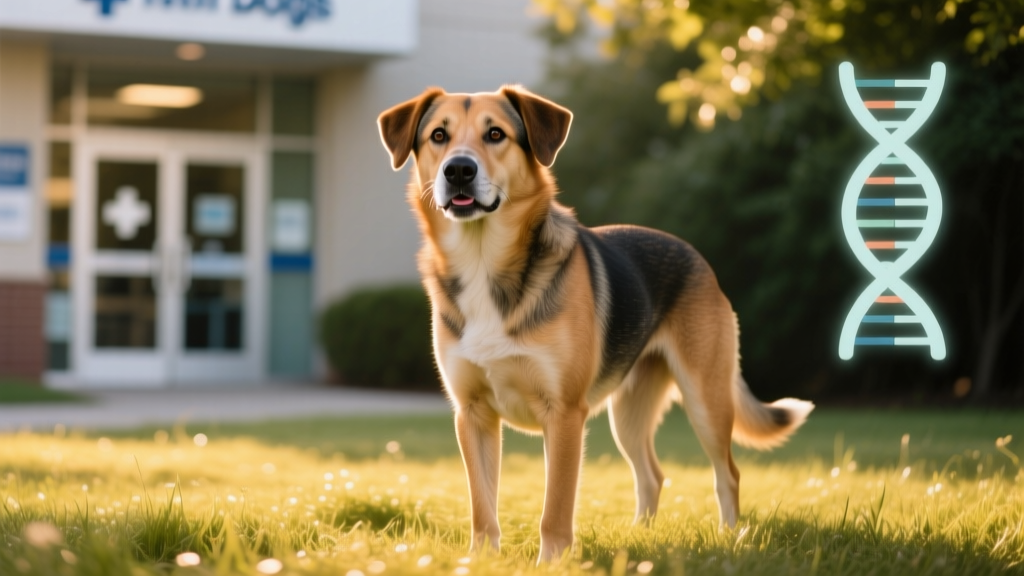
Quick Answer: Can dogs get HPV?
No. Dogs cannot contract human papillomavirus (HPV). Papillomaviruses are highly species-specific, meaning the strains that infect humans cannot infect dogs — and vice versa. However, dogs have their own family of papillomaviruses called canine papillomavirus (CPV), which causes similar wart-like growths. If your dog has bumps or cauliflower-like lesions around the mouth, eyes, or paws, CPV is a likely suspect and warrants a veterinary evaluation.
If you've noticed odd, fleshy growths on your dog's muzzle or inside their mouth, your mind may have jumped to HPV — the virus you've heard about in human health news. It's a reasonable concern, but the biology tells a different story. Let's break down exactly what papillomaviruses do in dogs, why they exist, and what you actually need to know as an owner.
Why Can't Dogs Get Human HPV? The Science of Species Specificity
How Papillomavirus Host Specificity Works
Papillomaviruses have co-evolved with their host species over millions of years. The virus depends on binding to specific cell-surface receptors on epithelial (skin and mucosal) cells. These receptors differ between species at the molecular level — the viral capsid proteins of human HPV simply don't "fit" the receptor landscape on canine cells.
According to research published in the National Center for Biotechnology Information (NCBI), papillomaviruses are among the most host-restricted viruses known. Even closely related mammal species rarely share papillomavirus strains. The genetic divergence between human HPV (over 200 identified types) and canine papillomavirus (currently 24+ recognized types as classified by the International Committee on Taxonomy of Viruses) reflects roughly 80 million years of separate evolutionary paths.
What this means practically: You cannot pass HPV to your dog through kissing, sharing food bowls, or any form of contact. Your dog also cannot transmit CPV to you. This is not a zoonotic concern in either direction.
Canine Papillomavirus (CPV): What Dogs Actually Get
While your dog is safe from human HPV, canine papillomavirus is a real and relatively common condition. CPV infects the basal epithelial cells of the skin and mucous membranes, hijacking the cell's replication machinery to produce viral copies. As infected cells divide and move toward the skin surface, they form the characteristic papillomas — fleshy, often cauliflower-textured warts.
Recognized CPV Types and Their Clinical Presentations
| CPV Type | Primary Location | Clinical Signs | Typical Age |
|---|---|---|---|
| CfPV-1 (COPV) | Oral mucosa, lips, tongue, palate | Multiple cauliflower-like warts; may cause drooling, halitosis, difficulty eating | Puppies and young dogs (under 2 years) |
| CfPV-2 | Cutaneous (body skin) | Solitary or multiple firm, raised skin warts | Any age, more common in immunocompromised |
| CfPV-3 / CfPV-4 | Footpads, interdigital skin | Pigmented plaques, horn-like growths on pads | Adult dogs |
| CfPV-16 and others | Various cutaneous sites | Pigmented viral plaques; rare malignant transformation to squamous cell carcinoma | Older or immunosuppressed dogs |
The most frequently encountered form is canine oral papillomatosis, caused primarily by CfPV-1 (also called COPV — canine oral papillomavirus). The Merck Veterinary Manual describes it as a self-limiting condition in immunocompetent dogs, with most oral warts regressing spontaneously within 1 to 3 months as the dog's cell-mediated immune response develops.
The Evolutionary Basis: Why Papillomaviruses Exist in Canids
An Ancient Viral Partnership
Papillomaviruses have existed for at least 300 million years — they predate the divergence of mammals and reptiles. In ancestral canids (the wolf-like carnivores from which modern dogs descended roughly 15,000–40,000 years ago), papillomaviruses likely served as a low-level selective pressure on immune system development.
In wild wolf populations, oral papillomas have been documented, suggesting CPV has circulated in canid populations for millennia. The virus persists because it has evolved a "stealth" strategy: it replicates in the uppermost epithelial layers, largely avoiding immune detection. The virus doesn't kill its host — it simply needs the host alive long enough to transmit through direct contact or fomites (contaminated surfaces).
Why young dogs are most affected: Puppies and juvenile dogs haven't yet developed type-specific immunity. In ancestral environments, young wolves encountering CPV for the first time would develop warts, clear the infection over weeks, and carry lifelong immunity. This pattern is conserved in modern domestic dogs. The social nature of canids — muzzle-licking, play-biting, shared dens — creates ideal transmission conditions among juveniles.
Physiological Mechanism: How CPV Infects and Produces Warts
Understanding the infection cycle helps explain why warts appear, persist, and eventually resolve:
- Micro-abrasion entry: CPV requires a tiny break in the skin or mucosal surface — often from chewing on sticks, rough play, or teething in puppies. The virus cannot penetrate intact epithelium.
- Basal cell infection: The viral particle (virion) binds to heparan sulfate proteoglycans on the surface of basal keratinocytes — the deepest layer of the skin. It enters via endocytosis.
- Episomal persistence: Inside the nucleus, the viral DNA exists as an episome (a circular DNA molecule separate from the host chromosomes). It replicates slowly, in sync with normal cell division, maintaining roughly 50–100 copies per cell.
- Productive replication in upper layers: As infected basal cells divide and their daughter cells migrate upward through the epithelial layers, the virus switches to active replication. In the granular and cornified layers, it produces thousands of new virions per cell.
- Wart formation: The virus manipulates host cell cycle proteins (particularly E6 and E7 oncoproteins, which inhibit p53 and Rb tumor suppressors), causing hyperproliferation. This produces the visible, exophytic (outward-growing) papilloma.
- Immune clearance: Eventually, Langerhans cells (skin-resident immune sentinels) detect viral antigens. A T-cell-mediated immune response develops, typically clearing visible warts within 4–12 weeks. The dog retains immunological memory against that specific CPV type.
This mechanism is fundamentally the same process that occurs in human HPV infections — the cellular machinery is conserved across mammals. The difference is purely in the viral "key" that fits the species-specific cellular "lock."
Practical Implications: What CPV Means for Your Dog's Daily Life
What Dog Owners Need to Do (and Not Do)
If your dog has suspected papillomas:
- Get a veterinary diagnosis. While most papillomas are benign, other conditions — including squamous cell carcinoma, transmissible venereal tumor (TVT), and histiocytomas — can look similar. Your vet may use fine-needle aspiration, biopsy, or PCR testing to confirm. Expect a diagnostic workup to cost $150–$400 depending on whether biopsy and histopathology are needed.
- Limit contact with other dogs during active outbreaks. CPV transmits through direct contact and contaminated objects. Avoid dog parks, daycare, and communal water bowls until warts have fully resolved — typically 4–12 weeks.
- Don't attempt home removal. Cutting, freezing, or applying over-the-counter wart removers designed for humans can cause severe tissue damage, infection, and pain. Human OTC salicylic acid products are not formulated for canine mucosal tissue and can cause chemical burns.
- Support immune function. Ensure your dog is on a complete, AAFCO-formulated diet. For dogs with persistent or recurrent papillomas, your veterinarian may discuss immune-modulating therapies.
When treatment is necessary:
- Most oral papillomas in young dogs resolve without intervention. Treatment is indicated when warts interfere with eating, cause secondary bacterial infection, or persist beyond 3–4 months.
- Surgical removal (cryosurgery, laser ablation, or excision) costs $200–$800 per session depending on the number and location of warts.
- Azithromycin (an antibiotic with antiviral properties in this context) has shown efficacy in some studies. Typical dosing: 10–15 mg/kg orally once daily for 10–14 days. Your vet will determine the appropriate protocol.
- Imiquimod cream (Aldara) may be prescribed off-label for cutaneous papillomas. Applied topically 3 times per week, it stimulates local immune response. Expect a prescription cost of $40–$80 per tube.
- Autogenous vaccines (made from the dog's own wart tissue) are occasionally used in refractory cases, though evidence of efficacy is mixed. Cost: $200–$500 for preparation and administration.
Common Misconceptions About HPV and Dogs
| Myth | → | Fact |
|---|---|---|
| "My dog can catch HPV from me." | → | Papillomaviruses are strictly species-specific. Human HPV cannot infect dogs under any natural conditions. |
| "Dog warts mean poor hygiene." | → | CPV transmission has nothing to do with cleanliness. It spreads through normal social canine behavior — sniffing, licking, playing. |
| "Warts will turn into cancer." | → | Malignant transformation of canine oral papillomas is extremely rare. Certain cutaneous CPV types (particularly in immunosuppressed dogs) carry a slightly higher risk of squamous cell carcinoma, but this is uncommon. |
| "I can use my wart remover on my dog." | → | Human wart treatments contain salicylic acid concentrations that can cause chemical burns on canine skin and are toxic if licked. Never use human OTC wart products on dogs. |
| "All skin bumps on my dog are warts." | → | Many growths mimic papillomas — including sebaceous adenomas, histiocytomas, mast cell tumors, and melanomas. Always get new growths evaluated by a veterinarian. |
Breed Variations and Risk Factors
While CPV can infect any dog, certain patterns have been observed in veterinary practice and literature:
- Brachycephalic breeds (Pugs, French Bulldogs, Bulldogs, Boxers) appear overrepresented in oral papillomatosis cases. Their compressed oral anatomy creates more mucosal folds where micro-abrasions occur, and their compromised immune function (related to chronic airway stress) may slow viral clearance.
- Immunocompromised dogs — including those on long-term corticosteroids, dogs with Cushing's disease, or those with congenital immunodeficiencies — are at higher risk for persistent, widespread, or recurrent papillomas. Certain breeds with known immunodeficiency predispositions (such as Shar-Pei with their susceptibility to immune-mediated conditions) may warrant closer monitoring.
- Young dogs under 2 years are disproportionately affected regardless of breed, simply due to naive immune status. Dog daycare facilities, shelters, and breeding kennels see the highest incidence due to dense populations of susceptible juveniles.
- Older dogs (typically 8+ years) may develop cutaneous papillomas related to age-associated immune senescence. These are usually solitary and less concerning, but should still be evaluated to rule out other neoplasms.
When Papilloma-Like Growths Signal a Bigger Problem
Red Flags: When to See Your Veterinarian Promptly
- Rapidly growing or changing masses — any growth that doubles in size within 1–2 weeks, changes color, or begins bleeding
- Warts persisting beyond 3–4 months without regression, especially in adult dogs
- Difficulty eating, swallowing, or breathing due to oral mass obstruction
- Warts with ulceration, discharge, or foul odor — may indicate secondary bacterial infection or a different diagnosis entirely
- Multiple new growths appearing in an older dog — could signal underlying immunosuppression (Cushing's disease, cancer, or medication side effects)
- Growths on the genitals or perianal area — may indicate transmissible venereal tumor (TVT), a contagious cancer that requires entirely different treatment
Consult your veterinarian for any new or changing skin growth on your dog. A proper diagnosis — whether through visual examination, cytology, or biopsy — is essential before any treatment decision.
How Is Canine Papillomavirus Different From Human HPV?
| Feature | Human HPV | Canine Papillomavirus (CPV) |
|---|---|---|
| Number of types | 200+ identified | 24+ identified (growing with research) |
| Cross-species transmission | No — human-only | No — canine-only |
| Cancer association | High-risk types (16, 18) cause cervical, oropharyngeal, and other cancers | Malignant transformation is rare; some cutaneous types linked to squamous cell carcinoma in immunosuppressed dogs |
| Vaccine availability | Gardasil 9 (widely available, recommended for ages 9–45) | No commercially available vaccine; autogenous vaccines used experimentally |
| Typical resolution | Most cleared by immune system within 1–2 years; some types persist | Oral warts typically resolve in 4–12 weeks in immunocompetent dogs |
| Zoonotic risk | N/A (human pathogen) | None — not transmissible to humans |
Frequently Asked Questions
Can my dog give me warts or HPV?
No. Canine papillomavirus is species-specific and cannot infect humans. Similarly, you cannot transmit your HPV to your dog. The two virus families share a common ancestor hundreds of millions of years ago but have since diverged to exclusively infect their respective hosts. According to the American Veterinary Medical Association (AVMA), CPV poses no zoonotic risk to people in the household.
Is it normal for my puppy to have mouth warts?
Yes — oral papillomatosis is relatively common in puppies and young dogs under 2 years old. It's most often seen in puppies that have been in group housing situations (shelters, breeding facilities, puppy daycare). The warts typically appear 4–8 weeks after exposure and resolve on their own within 1–3 months as the puppy's immune system matures. However, always have a veterinarian confirm the diagnosis to rule out other conditions.
How do dogs catch canine papillomavirus?
CPV spreads through direct contact with an infected dog's warts or through fomites — contaminated objects like toys, food bowls, bedding, or grooming tools. The virus enters through micro-abrasions in the skin or mucous membranes. It does not spread through the air. The incubation period is typically 1–2 months, meaning warts appear weeks after the initial exposure.
Should I have my dog's warts removed?
In most cases, oral papillomas in young, healthy dogs resolve without treatment. Removal is recommended when warts cause functional problems (difficulty eating, excessive drooling, airway obstruction), become secondarily infected, or fail to regress after 3–4 months. Your veterinarian will assess whether watchful waiting or active treatment is the better approach for your dog's specific situation.
Can dogs be tested for papillomavirus?
Yes. While diagnosis is often made by visual examination and clinical history, your veterinarian can confirm CPV through PCR (polymerase chain reaction) testing of a biopsy sample, which identifies the specific viral type. Immunohistochemistry can also detect viral antigens in tissue samples. Testing is most useful when the diagnosis is uncertain, when warts are atypical in appearance, or when malignant transformation is suspected. Expect PCR testing to add $100–$250 to your veterinary visit costs.
Is canine papillomavirus the same as canine oral papillomatosis?
Canine oral papillomatosis is the most common clinical disease caused by one specific type of canine papillomavirus (CfPV-1/COPV). Think of CPV as the broader viral family (with 24+ types affecting different body sites) and oral papillomatosis as the specific condition that CfPV-1 causes in the mouth. Not all CPV types cause oral warts — some affect footpads, body skin, or genital mucosa.
Sources consulted: Merck Veterinary Manual — Papillomas in Dogs; NCBI — Papillomavirus Host Specificity Research; AVMA Dog Owner Resources.
Beth Carrasco
All our authors care for dogs every day — read more of their work on the authors page.


