How Old Is 3 in Dog Years? The Real Science of Canine Aging
How old is 3 in dog years? Discover the science-backed answer, why the 7-year myth is wrong, and what your dog's age means for their health and care.
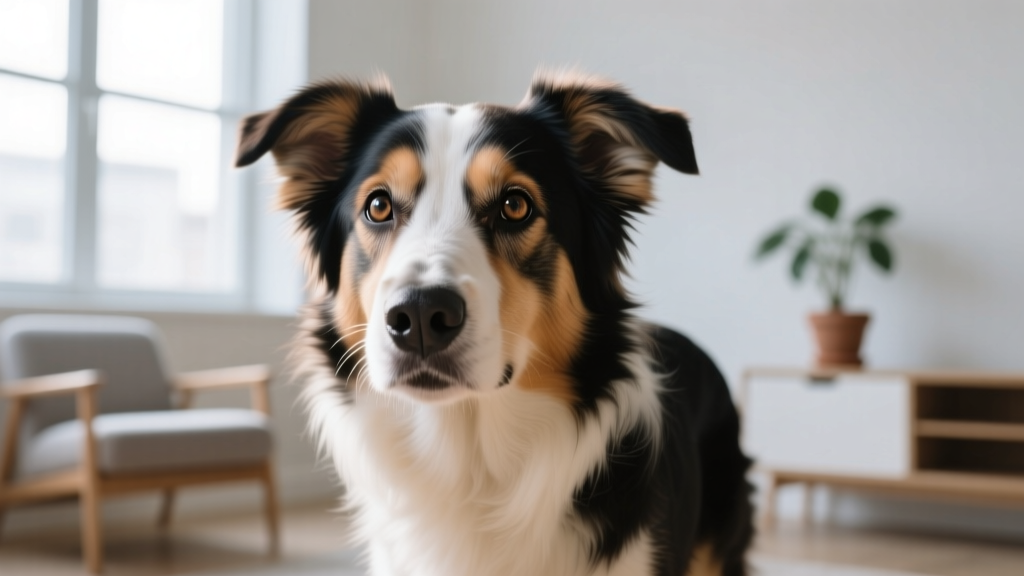
The Quick Answer: How Old Is 3 in Dog Years?
A 3-year-old dog is approximately 28 to 31 human years old, depending on their size and breed. This is based on epigenetic research from the University of California, San Diego, which mapped canine DNA methylation patterns to create a more accurate aging formula than the outdated "multiply by 7" rule.
For a more precise estimate: a 3-year-old small breed (under 20 lb / 9 kg) is roughly 28 in human years, a medium breed (21-50 lb / 10-23 kg) is about 29-30, and a large or giant breed (over 50 lb / 23 kg) is closer to 31.
If you've ever done the quick math of multiplying your dog's age by seven, you're not alone — it's one of the most persistent pieces of folk wisdom in pet ownership. But that calculation gives you 21 for a 3-year-old dog, and the science simply doesn't support it. The reality of canine aging is far more nuanced, and understanding it can genuinely change how you care for your dog at every life stage.
In this guide, we'll walk through the actual research behind dog-to-human age conversion, why dogs age the way they do from an evolutionary standpoint, and what hitting the 3-year mark means for your dog's health, behavior, and daily needs.
The Science Behind Dog Years: Why "Multiply by 7" Is Wrong
The Epigenetic Clock: DNA Methylation Research
In 2019, researchers at the University of California, San Diego published a landmark study in Cell Systems that fundamentally changed how we understand canine aging. Led by geneticist Trey Ideker, the team studied DNA methylation — chemical tags that attach to DNA over time and serve as a biological clock — in 104 Labrador Retrievers ranging from 4 weeks to 16 years old.
By comparing these methylation patterns to those in humans (ages 1 to 103), the researchers developed a logarithmic formula:
Human Age = 16 × ln(dog's age) + 31
Using this formula, a 3-year-old dog calculates to: 16 × ln(3) + 31 = 16 × 1.099 + 31 ≈ 48.6 human years.
Wait — that's higher than the 28-31 range we gave above. Here's why: the UCSD formula was derived specifically from Labrador Retrievers, a medium-to-large breed, and the logarithmic curve is steepest in early life. The formula captures the biological reality that dogs mature extremely rapidly in their first two years, then aging slows considerably. Many veterinary professionals adjust the raw formula output based on breed size categories, which is why practical conversion charts typically place a 3-year-old dog at 28-31 for most size groups.
The traditional "multiply by 7" rule likely originated from a simplistic observation that dogs live roughly one-seventh as long as humans (average dog lifespan of ~10-13 years versus ~75-80 years for humans). But this linear approach ignores the critical fact that dogs don't age at a constant rate. A 1-year-old dog has already reached sexual maturity and is roughly equivalent to a 15-year-old human — not a 7-year-old child. The first year packs in enormous developmental change.
Dog Age to Human Age: A Research-Based Conversion Table
The American Veterinary Medical Association (AVMA) provides a widely referenced framework that accounts for the rapid early maturation and size-based differences in aging. Here's a detailed breakdown for the first several years, with specific attention to the 3-year mark:
| Dog's Actual Age | Small Breed (under 20 lb / 9 kg) |
Medium Breed (21-50 lb / 10-23 kg) |
Large Breed (51-100 lb / 23-45 kg) |
Giant Breed (over 100 lb / 45 kg) |
|---|---|---|---|---|
| 1 year | 15 | 15 | 15 | 12 |
| 2 years | 24 | 24 | 24 | 22 |
| 3 years | 28 | 29 | 31 | 31 |
| 4 years | 32 | 34 | 36 | 38 |
| 5 years | 36 | 37 | 40 | 43 |
| 7 years | 44 | 47 | 50 | 56 |
| 10 years | 56 | 60 | 66 | 79 |
Notice how the gap between small and large breeds widens with age. At 3 years old, the difference is modest — only about 3 human years separates a Chihuahua from a Great Dane. But by age 10, that gap has grown to 23 human years. This size-based divergence is the key reason a single multiplier can't accurately represent canine aging.
Why Do Dogs Age Faster Than Humans? The Evolutionary Explanation
From Wolves to Living Rooms: The Life-History Trade-Off
Dogs inherited their accelerated aging from their wolf ancestors. In the wild, wolves face high mortality rates from predation, starvation, disease, and territorial conflict. The average wolf in the wild lives only 6-8 years, though captive wolves can reach 12-15 years.
This harsh reality shaped a live-fast reproductive strategy: wolves reach sexual maturity at 22-46 months, produce litters of 4-6 pups, and invest heavily in early-life growth. Pups must reach functional independence quickly because the pack can't afford to carry non-contributing members indefinitely.
Domestication has softened some edges — our dogs face far fewer predators and have consistent food — but the underlying genetic blueprint for rapid maturation remains. A 3-year-old wolf or dog is a fully mature adult capable of hunting, defending territory, and raising offspring. A 3-year-old human is still a toddler learning to form complete sentences.
The physiological mechanism driving this accelerated early development involves several interconnected systems:
- Growth hormone pathways: Dogs produce proportionally higher levels of growth hormone (GH) and insulin-like growth factor 1 (IGF-1) during their first two years, driving rapid skeletal and muscular development. The IGF-1 gene is also strongly linked to body size in dogs — a discovery made by researchers at the National Institutes of Health.
- Telomere dynamics: Telomeres — the protective caps on chromosome ends — shorten more rapidly in dogs than in humans. Research published in Proceedings of the National Academy of Sciences found that telomere attrition rates in dogs correlate with breed size and lifespan, with larger breeds showing faster telomere loss.
- Metabolic rate: While dogs don't have a dramatically higher basal metabolic rate than expected for their body mass, their developmental metabolism — the energy devoted to growth and tissue building — is concentrated into a much shorter window than in humans.
Why Do Larger Dogs Age Faster? The Size-Aging Paradox
One of the most counterintuitive findings in canine science is that larger dogs age faster than smaller dogs. In most mammal species, bigger animals live longer (elephants outlive mice, for example). But within the dog species, the opposite holds true: a Great Dane's average lifespan is 7-10 years, while a Toy Poodle commonly lives 14-18 years.
The leading explanations for this paradox include:
| Theory | Mechanism | Evidence |
|---|---|---|
| Accelerated Growth Stress | Large breeds must grow from ~1 lb to 100+ lb in 18-24 months, placing enormous oxidative stress on developing cells | Large breed puppies show higher markers of oxidative DNA damage during growth phases |
| IGF-1 and Cancer Risk | Higher IGF-1 levels that drive large body size also promote abnormal cell growth later in life | Large breeds have significantly higher rates of osteosarcoma and other cancers |
| Cellular Replication Burden | More cells means more cell divisions, increasing the probability of replication errors and senescent cell accumulation | Supported by general biogerontology research across species |
| Selective Breeding Pressure | Giant breeds were developed relatively recently and from smaller gene pools, potentially accumulating deleterious mutations | Many giant breeds show high rates of inherited conditions (cardiomyopathy, hip dysplasia) |
At 3 years old, this size difference is just beginning to manifest. Your 3-year-old Great Dane is technically a young adult but is already entering what would be the "early 30s" in human terms, while your 3-year-old Jack Russell Terrier is closer to a fresh-faced 28-year-old. This gap will compound significantly over the following years.
Common Dog Years Myths: Fact vs. Fiction
| Myth | → | Fact |
|---|---|---|
| "One dog year equals seven human years." | → | Dogs age non-linearly. The first year equals ~15 human years, the second adds ~9 years, and each subsequent year adds roughly 4-5 years (varying by size). |
| "A 3-year-old dog is like a 21-year-old human." | → | A 3-year-old dog is closer to 28-31 in human years. They've already passed the equivalent of human adolescence and early adulthood. |
| "All breeds age at the same rate." | → | Small breeds mature slightly faster in year one but age much more slowly afterward. By age 7, a Great Dane is biologically "older" than a Chihuahua by over a decade in human terms. |
| "Dogs are seniors at 7 years old." | → | It depends on size. Small breeds aren't considered senior until 10-11 years. Large breeds may enter their senior phase at 6-7 years. Giant breeds can be seniors as early as 5 years. |
| "You can't teach an old dog new tricks." | → | Dogs retain neuroplasticity throughout life. While older dogs may learn more slowly, cognitive enrichment remains beneficial at every age. At 3, your dog is at peak learning ability. |
What Being "3 in Dog Years" Means for Your Dog's Health and Behavior
Your 3-Year-Old Dog: Practical Care Guide
At 3 years old, your dog is a fully mature adult. Here's what that means across key areas of care:
Physical Maturity and Exercise Needs
By age 3, all breeds have reached full skeletal maturity — growth plates are closed, adult teeth are fully set, and muscle mass has peaked. This is the ideal time to:
- Increase exercise intensity if you've been holding back during puppyhood. High-impact activities like agility, flyball, and sustained running are now safe for most breeds (consult your vet for brachycephalic breeds and those with known joint predispositions).
- Establish a consistent exercise baseline: Most 3-year-old dogs need 30-60 minutes of moderate-to-vigorous activity daily. Working breeds (Border Collies, Belgian Malinois, German Shepherds) often need 60-120 minutes including mental stimulation.
- Begin baseline health screenings — your vet can establish normal blood work values at this age, which becomes invaluable for detecting changes later. Typical adult wellness bloodwork costs $80-$200 depending on the panel.
Behavioral Maturity
Three is often called the "settling age" among dog trainers and behaviorists. The hyperactive puppy energy and adolescent testing phases are behind you. At 3, most dogs:
- Have established stable personality traits and predictable energy patterns
- Show fully developed social behaviors (their true temperament around other dogs and strangers is now apparent)
- Can focus for longer training sessions — 15-20 minutes versus the 3-5 minute sessions recommended for puppies
- May begin showing early signs of breed-specific behavioral tendencies that weren't obvious in youth (resource guarding, territorial barking, prey drive intensification)
Nutrition Transition
If your dog is still on puppy food at age 3, it's time to transition. Most veterinary nutritionists recommend switching to adult maintenance formulas between 12-24 months, depending on breed size. At 3, your dog should be eating a food that meets AAFCO adult maintenance nutrient profiles. Key considerations:
- Calorie monitoring: Metabolism begins its very gradual decline after age 3. An average 30 lb (14 kg) dog needs roughly 630-750 calories/day at this age, depending on activity level. Overfeeding now sets up obesity problems by age 6-7.
- Joint supplements: For large and giant breeds, starting a glucosamine/chondroitin supplement (typically 500-1000 mg glucosamine daily for a 50 lb dog) at age 3 can support cartilage health before degenerative changes begin. Discuss with your veterinarian.
- Dental health: By age 3, the AKC estimates that over 80% of dogs show some degree of periodontal disease. Daily tooth brushing and annual veterinary dental cleanings ($300-$700 under anesthesia) are critical at this stage.
How Is Canine Aging Different From Human Aging?
The fundamental difference lies in the shape of the aging curve. Humans age in a relatively linear fashion — a 20-year-old is roughly twice as biologically "old" as a 10-year-old, and a 40-year-old is twice as old as a 20-year-old. Dogs follow a logarithmic curve: the most dramatic biological changes happen in the first 2 years, then the rate of change decelerates.
This has a fascinating practical implication: the difference between a 2-year-old and a 3-year-old dog is much smaller (in biological terms) than the difference between a 1-year-old and a 2-year-old dog. Your dog's second birthday to their third represents roughly 5-7 human years of aging, while the first to second birthday represents about 9 human years.
Other key physiological differences in aging:
- Sensory decline: Dogs typically begin showing hearing and vision decline around age 7-10 (equivalent to human 50s-60s), while humans often notice sensory changes in their 40s.
- Cognitive aging: Canine cognitive dysfunction (CCD, analogous to Alzheimer's) affects roughly 28% of dogs aged 11-12 years and over 68% of dogs aged 15-16, according to research cited in the Merck Veterinary Manual. At 3, your dog's cognitive function is at its peak.
- Reproductive aging: Female dogs can remain fertile well into their senior years (unlike human menopause), though breeding after age 5-6 carries significant health risks.
When Age-Related Changes at 3 Might Signal a Problem
⚠️ Red Flags: Premature Aging Signs in a 3-Year-Old Dog
At 3, your dog should be in their physical prime. If you notice any of the following, consult your veterinarian — these are not normal signs of aging at this life stage and may indicate underlying medical conditions:
- Greying muzzle or face — Some premature greying is genetic (especially in black-coated breeds), but widespread coat color change combined with lethargy could indicate hypothyroidism or Cushing's disease.
- Decreased energy or exercise intolerance — A 3-year-old dog refusing walks or tiring quickly may have cardiac issues, anemia, hypothyroidism, or chronic pain from hip dysplasia or other orthopedic conditions.
- Weight gain despite normal food intake — Could signal metabolic disorders, particularly hypothyroidism, which has onset peaks in young-to-middle-aged dogs.
- Cloudy eyes or vision changes — While nuclear sclerosis (benign lens haziness) is normal in older dogs, it shouldn't appear at age 3. Cataracts at this age may indicate diabetes, genetic predisposition, or inflammatory conditions.
- Behavioral changes — Increased anxiety, confusion, or disorientation in a 3-year-old dog warrants neurological evaluation. These are not normal aging signs at this age.
Always consult your veterinarian if you observe changes that seem inconsistent with your dog's age and breed. Early detection of conditions like hypothyroidism (treatment typically costs $20-$50/month for lifelong medication) can dramatically improve quality of life.
Frequently Asked Questions About Dog Years
How old is 3 in dog years for a Labrador Retriever?
A 3-year-old Labrador Retriever (a medium-to-large breed, typically 55-80 lb / 25-36 kg) is approximately 29-31 in human years. Labs fall into the medium-large category where aging begins to accelerate slightly more than small breeds after the second year.
Is 3 years old still a puppy?
No. By age 3, all dog breeds have reached full physical and behavioral maturity. While some giant breeds (Great Danes, Saint Bernards) take until 18-24 months to finish growing, by 3 years every dog is a fully mature adult. Behaviorally, most dogs have settled into their adult temperament by 2.5-3 years.
Can dogs live to be 20 years old?
It's rare but possible, almost exclusively in small breeds. The oldest verified dog was Bobi, a Portuguese Alentejo Mastiff, who reportedly lived to 31 years — though this claim has been disputed. More commonly, small breeds like Chihuahuas, Toy Poodles, and Dachshunds occasionally reach 18-20 years. A 20-year-old small dog would be roughly equivalent to a 96-100-year-old human.
How do I calculate my dog's age in human years accurately?
The most accurate approach uses the AVMA framework: count 15 human years for the first dog year, 9 human years for the second, and then add approximately 4-5 human years per dog year afterward — adjusting upward for large/giant breeds and slightly downward for small breeds. For the most precise biological age assessment, some veterinary clinics now offer epigenetic testing (DNA methylation analysis), though this typically costs $150-$300 and is not yet widely available.
What does it mean when my 3-year-old dog seems to be slowing down?
A 3-year-old dog should not be noticeably slowing down. While energy levels naturally plateau after the puppy and adolescent phases, a genuine decrease in activity, enthusiasm, or stamina at age 3 warrants a veterinary examination. Common causes include hypothyroidism, early-onset joint disease, cardiac conditions, or chronic pain — all of which are treatable when caught early.
Do mixed breed dogs age differently than purebreds?
Mixed breed dogs may benefit from hybrid vigor (heterosis) — the tendency for crossbred animals to have improved biological function due to greater genetic diversity. A 2013 study published in the Journal of Veterinary Internal Medicine found that mixed breed dogs had a slightly longer average lifespan (12.2 years) compared to purebreds (11.6 years). However, this advantage is modest, and a mixed breed dog's aging trajectory depends heavily on which breeds are in their genetic makeup and their adult body size.
Sources Referenced
- Wang, T., et al. (2020). "Quantitative Translation of Dog-to-Human Aging by Intraspecies Alignment of Methylomes." Cell Systems, 11(1), 99-108.
- American Veterinary Medical Association (AVMA) — Dog and Cat Age Comparison Guidelines
- American Kennel Club (AKC) — Canine Health and Life Stage Resources
- Merck Veterinary Manual — Canine Cognitive Dysfunction and Geriatric Care
- Patronek, G.J., et al. (1997). "Risk Factors for Euthanasia in Dogs." Journal of the American Veterinary Medical Association
Anouk Beaumont
All our authors care for dogs every day — read more of their work on the authors page.


