How Long After Spay Can a Dog Walk? A Science-Based Recovery Guide
Learn how long after spay a dog can walk safely, with science-backed recovery timelines, leash-walking milestones, and vet-approved activity guidelines.
The Short Answer
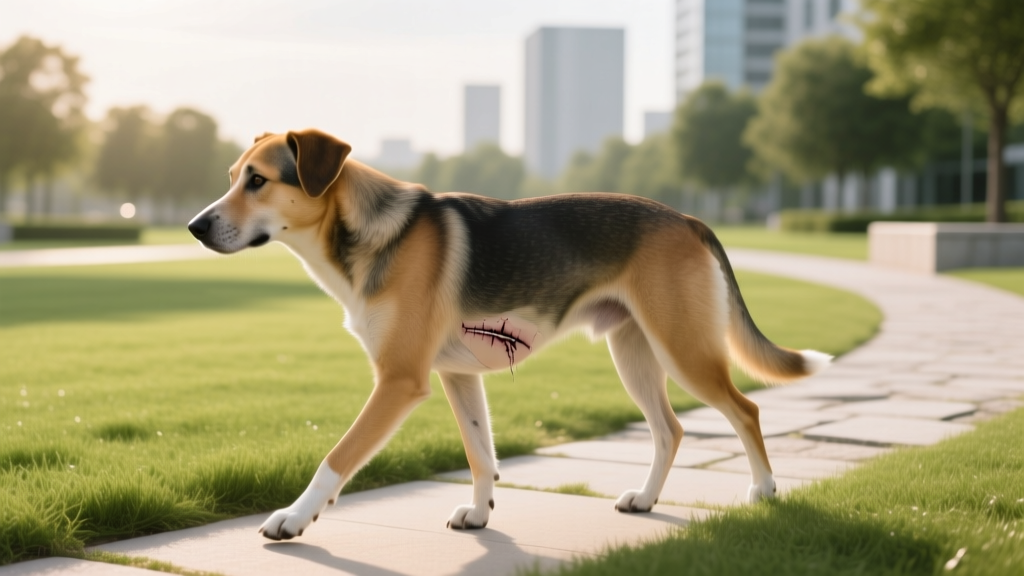
Most dogs can begin short, controlled leash walks 24–48 hours after a routine spay (ovariohysterectomy or ovariectomy). These initial walks should be limited to 5 minutes on a flat leash, purely for bathroom breaks. Full unrestricted activity — including off-leash play, running, jumping, and dog-park visits — typically requires 10–14 days of recovery, with clearance from your veterinarian at a post-surgical checkup.
Every year, approximately 3.3 million dogs undergo spay procedures in the United States, making ovariohysterectomy (OVH) or ovariectomy (OVE) one of the most common canine surgeries performed. Despite how routine this procedure is, one of the most anxiety-inducing questions for owners remains: how long after spay can a dog walk — and more importantly, how much walking is safe at each stage of recovery?
This guide breaks down the physiological science of post-spay recovery, explains why movement restrictions exist at a cellular level, and gives you a precise, day-by-day walking protocol you can follow with confidence.
The Science of Spay Recovery: What Happens Inside Your Dog's Body
Tissue Healing Phases After Ovariohysterectomy
When your dog is spayed, a surgeon removes the ovaries (and usually the uterus) through an incision in the abdominal wall — typically along the linea alba, the fibrous connective tissue running down the midline of the abdomen. This creates three distinct wound layers that must heal:
- Internal muscle/fascia closure — the abdominal wall, sutured with absorbable monofilament (commonly poliglecaprone 25, sold as Monocryl)
- Subcutaneous tissue layer — the fat and connective tissue beneath the skin
- Skin closure — either external sutures, surgical staples, or intradermal (hidden) sutures sealed with tissue adhesive
According to the Merck Veterinary Manual, wound healing progresses through four overlapping phases:
- Inflammatory phase (Days 0–3): Blood clotting, immune cell recruitment, and debris clearance. The incision site is at its most vulnerable. Tensile strength of the wound is near zero.
- Debridement phase (Days 2–5): Macrophages clear dead tissue. New blood vessels begin forming (angiogenesis).
- Repair/proliferative phase (Days 5–14): Fibroblasts produce collagen, and wound tensile strength increases rapidly. By day 7, a healing wound regains roughly 20% of its original strength. By day 14, it reaches approximately 50–60%.
- Maturation/remodeling phase (Weeks 2–12+): Collagen fibers reorganize along stress lines. Full tensile strength may never reach 100% of pre-surgical levels, but by week 4, most incisions have sufficient integrity for normal activity.
This timeline is why veterinarians universally recommend the 10–14 day restriction window. During the first week, the internal suture line is bearing nearly all the mechanical load — and excessive movement, jumping, or straining can compromise that closure.
Day-by-Day Walking Protocol After Spay Surgery
The following protocol applies to a routine spay in a healthy adult dog with no surgical complications. Puppies under 6 months, senior dogs, overweight dogs, and dogs with comorbidities (such as diabetes or Cushing's disease) may need modified timelines — always consult your veterinarian for individualized guidance.
| Timeframe | Walk Duration | Activity Type | Restrictions |
|---|---|---|---|
| Day 0 (surgery day) | No walks | Carry or assist outside to potty on a short leash | No stairs, no jumping. Dog is still recovering from anesthesia (sedation effects can last 12–24 hours). |
| Days 1–2 | 2–5 minutes, 3–4× daily | Leash-assisted potty breaks only. Flat, even ground. | No sniffing adventures. No pulling. Short leash (3–4 ft). Monitor for grogginess, vomiting, or incision redness. |
| Days 3–5 | 5–10 minutes, 2–3× daily | Slow, controlled leash walks on flat terrain. | No running, no stairs if avoidable, no roughhousing with other pets. Continue e-collar or surgical suit. |
| Days 6–9 | 10–15 minutes, 2× daily | Leash walks at a normal pace. Gentle terrain only (grass, pavement). | No off-leash time. No dog park. No fetch or tug. No jumping onto furniture or into vehicles. |
| Days 10–14 | 15–20 minutes, 2× daily | Leash walks with gradual pace increases. | Post-surgical vet check typically occurs around day 10–14. Vet clears for off-leash activity if incision is fully closed. |
| Days 15–21 | 20–30 minutes, normal frequency | Gradual return to pre-surgery exercise levels. | Monitor for any swelling, discharge, or behavioral signs of pain. Increase intensity by no more than 10–15% per day. |
| Day 21+ | Full activity | Normal walks, runs, play, dog park visits. | Continue monitoring incision site for several weeks. Internal healing continues for up to 8–12 weeks. |
Important note: These are general guidelines. Your veterinarian may adjust this timeline based on your dog's size, age, surgical technique used (laparoscopic spays often have shorter recovery windows of 5–7 days), and individual healing progress.
Why Activity Restriction Matters: The Biomechanics of Abdominal Wound Stress
Why Dogs Want to Move After Surgery — An Evolutionary Perspective
Domestic dogs (Canis lupus familiaris) inherited a strong drive for physical activity from their wolf ancestors. In wild canid populations, prolonged immobility after injury is a survival liability — wolves that remain stationary too long risk predation, starvation, or separation from the pack. This evolutionary pressure selected for a robust pain-masking system and a powerful motivation to resume movement even when injured.
Modern dogs retain this instinct. A dog recovering from spay surgery may appear alert, energetic, and eager to walk just 48 hours post-op — not because she is fully healed, but because her neurobiology is wired to minimize visible vulnerability. Endorphins released during and after surgery, combined with residual effects of perioperative pain medications (such as carprofen or meloxicam), can further mask discomfort.
This creates a dangerous mismatch: your dog feels ready to walk long before her abdominal wall has healed sufficiently to handle the mechanical forces of exercise.
When a dog walks, trots, or runs, her abdominal muscles contract rhythmically to stabilize the spine and pelvis. These contractions generate intra-abdominal pressure that directly stresses the healing incision line. The forces involved scale dramatically with activity type:
- Slow walking: Intra-abdominal pressure increases by approximately 10–20% above resting baseline
- Trotting: Pressure increases by 40–60%
- Running/galloping: Pressure can spike to 200–300% above baseline
- Jumping down from furniture: A single impact can generate forces equivalent to 4–6× the dog's body weight transmitted through the abdominal wall
This is precisely why a dog who "seems fine" at 3 days post-spay can still develop a seroma (fluid pocket under the incision), dehiscence (wound reopening), or even a hernia if allowed to run or jump too soon. The internal suture line — not the visible skin closure — is the critical structure, and it cannot be assessed by looking at the surface.
Common Myths About Post-Spay Walking — Debunked
| Myth | Fact |
|---|---|
| "If my dog wants to walk, she's healed enough to walk." | Wound tensile strength at day 3 is near zero regardless of the dog's apparent energy level. Pain medication and instinctive pain-masking behavior make dogs appear more recovered than they are. |
| "A tired dog won't try to be active, so walks are fine to tire her out." | Walking itself is the activity that risks the incision. Mental enrichment (snuffle mats, frozen Kongs, training sessions) tires dogs without physical strain. |
| "Small dogs heal faster and can walk sooner." | Small breeds may have smaller incisions, but tissue healing biology is identical. In fact, small breeds like Chihuahuas and Dachshunds are sometimes more prone to post-surgical complications like incisional hernias due to thinner abdominal walls. |
| "If the skin looks closed, the inside must be healed too." | Skin heals fastest of all tissue layers. The internal fascial closure takes the longest to regain strength — often 3–4 weeks for full integrity. |
| "Laparoscopic spays don't need recovery time." | While laparoscopic (keyhole) spays involve smaller incisions and often less post-operative pain, internal tissue healing timelines are similar. Most vets still recommend 5–7 days of restricted activity for laparoscopic patients. |
How Is Post-Spay Recovery Different From Humans?
Human patients who undergo laparoscopic hysterectomy or oophorectomy are often cleared for light activity within 1–2 weeks and full activity within 4–6 weeks. So why can dogs seemingly recover faster?
The answer lies in several physiological differences:
- Quadrupedal biomechanics: Dogs distribute gravitational and locomotive forces across four limbs and a horizontal spine, reducing direct vertical loading on the abdominal wall compared to upright bipedal humans.
- Smaller incision-to-body ratio: A typical canine spay incision is 2–5 cm, while a human laparotomy may span 10–15 cm. Smaller wounds reach functional tensile strength faster.
- Accelerated metabolic healing: Dogs have higher basal metabolic rates relative to body size than humans, which can accelerate the proliferative phase of wound healing by approximately 20–30%.
- Lower body mass: Even large-breed dogs (40–50 kg) generate less absolute force on an abdominal incision than an 80 kg human during equivalent activities.
However, dogs have one significant disadvantage: they cannot understand or comply with activity restrictions voluntarily. A human patient can be told "don't lift anything over 10 pounds for two weeks" and understand the consequences. A dog simply responds to her internal drive to move, play, and explore. This is why owner-managed restriction — using crates, exercise pens, short leashes, and environmental modifications — is absolutely essential.
Practical Takeaways: Managing Your Dog's Recovery at Home
What This Means for Your Daily Routine
1. Set up a recovery station before surgery day. Prepare a confined space — a crate (sized so your dog can stand and turn but not pace), an exercise pen, or a small gated room with non-slip flooring. Place water, a low-sided bed, and chew toys within easy reach.
2. Use the right restraint. A standard flat collar is safest during recovery. Avoid harnesses that wrap around the abdomen (like step-in or vest-style harnesses) for the first 10–14 days, as they can press on or rub against the healing incision. If your dog normally walks on a harness, switch to a collar-and-leash setup temporarily. A 3–4 foot flat leash gives you far more control than a retractable leash, which encourages pulling and sudden acceleration.
3. Implement mental enrichment. Physical restriction doesn't mean your dog needs to be bored. Research published in the Journal of Applied Animal Behaviour Science confirms that mental stimulation reduces stress behaviors in confined dogs as effectively as physical exercise. Use:
- Frozen Kong toys stuffed with peanut butter or yogurt (10–20 minutes of licking activity)
- Snuffle mats or scatter-feeding on a blanket
- Short (3–5 minute) training sessions practicing stationary behaviors like "sit," "down," "touch," and "look at me"
- Calming music designed for dogs (studies from the University of Glasgow showed classical music and specially composed canine audio reduce cortisol levels in kenneled dogs)
4. Monitor the incision twice daily. Gently part the fur around the incision site and check for:
- Redness that is spreading or worsening after day 3
- Swelling or a fluid-filled lump (seroma)
- Discharge — clear/pink-tinged fluid is normal for days 1–3; yellow/green or foul-smelling discharge is not
- Missing sutures or gaps in the closure
- Excessive licking or chewing (keep the e-collar on 24/7 for the full 10–14 days)
5. Budget for post-surgical care. A routine spay in the US typically costs $200–$800 depending on your region, clinic type (private practice vs. low-cost clinic), and dog size. Post-surgical complications can add significant costs:
- Seroma drainage and antibiotics: $100–$300
- Wound dehiscence requiring re-suturing: $400–$1,200
- Incisional hernia repair: $800–$2,500
Following the walking protocol above is the single most effective way to avoid these complications and their associated costs.
Breed and Size Variations in Spay Recovery
While the fundamental biology of wound healing is the same across all dogs, body size and breed-specific factors influence recovery timelines and walking protocols:
| Size Category | Weight Range | Typical Incision Size | Recovery Notes |
|---|---|---|---|
| Toy/Small breeds (Chihuahua, Yorkie, Pomeranian) | Under 20 lb / 9 kg | 2–3 cm | Higher risk of hypothermia post-surgery. May be more prone to hypoglycemia in first 24 hours. Thinner abdominal wall — be extra cautious about jumping. Recovery timeline: standard 10–14 days. |
| Medium breeds (Beagle, Cocker Spaniel, Border Collie) | 20–55 lb / 9–25 kg | 3–5 cm | Standard recovery protocol applies. High-energy herding and sporting breeds may require extra mental stimulation and stricter confinement to prevent restlessness-driven activity. |
| Large breeds (Labrador, Golden Retriever, German Shepherd) | 55–90 lb / 25–41 kg | 4–6 cm | Larger body mass means greater gravitational force on the incision. Stairs and jumping into vehicles are especially risky. Consider a recovery ramp or sling assistance. May take closer to 14 days for full clearance. |
| Giant breeds (Great Dane, Mastiff, Newfoundland) | 90+ lb / 41+ kg | 5–8 cm | Higher risk of seroma due to larger dead space under the incision. Weight puts more stress on suture lines. Some vets recommend 14–21 days of restricted activity. Abdominal support wraps may be prescribed. |
Brachycephalic breeds (French Bulldogs, Pugs, English Bulldogs) warrant special attention during post-spay recovery. Their compromised airway anatomy (brachycephalic obstructive airway syndrome, or BOAS) means they are at higher risk for respiratory complications under anesthesia and may experience more post-operative nausea and panting. Keep walks especially short and slow in warm weather, and watch for signs of respiratory distress (excessive panting, blue-tinged gums, labored breathing).
When Post-Spay Activity Changes Signal a Problem
Most dogs follow a predictable recovery arc: groggy and reluctant on day 1, improving steadily through days 2–5, and increasingly eager to move by days 7–10. Deviations from this pattern warrant veterinary attention.
Red Flags: Contact Your Veterinarian Immediately If You Notice:
- Refusal to walk at all after day 2 — while some reluctance is normal on day 1, persistent refusal to stand or walk by 48 hours may indicate uncontrolled pain, infection, or internal complications
- Sudden limping or favoring a hind leg — could indicate nerve irritation, muscle strain from surgical positioning, or (rarely) a reaction to suture material
- Excessive panting, trembling, or vocalizing during walks — signs of pain that may not be visible at rest
- Abdominal swelling or a visible bulge near the incision — may indicate seroma, hematoma, or incisional hernia
- Vomiting or diarrhea lasting more than 24 hours post-surgery — can be a reaction to pain medication (NSAIDs like carprofen) or a sign of systemic infection
- Lethargy that worsens after day 3 instead of improving — a dog who was alert on day 2 but becomes increasingly listless by day 4 needs evaluation
- Incision opening, visible internal tissue, or active bleeding — this is a surgical emergency
For any suspected toxic ingestion during recovery (e.g., your dog chews and swallows part of her e-collar or accesses medication), contact the ASPCA Animal Poison Control Center at (888) 426-4435 (24/7, consultation fee applies).
Frequently Asked Questions
Can my dog walk up stairs after being spayed?
Avoid stairs for the first 3–5 days if possible. Stair climbing engages the abdominal muscles significantly more than flat-ground walking due to the vertical lift required. If stairs are unavoidable, carry small dogs or use a towel sling under the hindquarters for large dogs. After day 5, slow, controlled stair use is generally acceptable, but discourage racing up or down.
Is it normal for my dog to not want to walk the day after surgery?
Yes. Reduced appetite, mild lethargy, and reluctance to walk are all normal within the first 12–24 hours after spay surgery. Residual anesthesia effects, combined with the body's natural inflammatory response, cause temporary grogginess. If your dog is still refusing to stand or walk by 48 hours post-op, contact your veterinarian — this may indicate inadequate pain management or a complication.
How long after spay can my dog run and play off-leash?
Most veterinarians clear dogs for unrestricted activity at the 10–14 day post-surgical checkup, assuming the incision has healed well. Some vets may recommend waiting a full 14 days for large or giant breeds. Never allow off-leash running before receiving explicit clearance — a single enthusiastic sprint across the yard can generate enough abdominal force to compromise an incompletely healed suture line.
Should I walk my dog if she's wearing an e-collar (cone)?
Yes — short leash walks are fine with an e-collar in place. The cone may make your dog slightly clumsy at first, and she may bump into doorframes or furniture. Clear a wide path and walk slowly. An alternative is a soft recovery suit (like the ones sold by brands such as Recovery Suit or Alfie Pet), which protects the incision without the spatial awareness challenges of a cone. However, suits must be removed and washed regularly and may not prevent all licking.
Does a laparoscopic spay change the walking timeline?
Laparoscopic (keyhole) spays involve 1–3 small incisions (typically 0.5–1.5 cm each) rather than a single larger midline incision. Because there is less tissue trauma, dogs often experience less post-operative pain and recover faster. Many veterinarians clear laparoscopic patients for normal leash walks at 5–7 days and full activity at 7–10 days. However, internal healing timelines remain similar, so the restriction period is shorter but not eliminated. Always follow your surgeon's specific recommendations.
What does it mean when my dog is whining and restless instead of walking after spay?
Whining and restlessness in the first 24–48 hours typically indicate one of three things: residual disorientation from anesthesia, inadequate pain control, or a full bladder (dogs may be reluctant to walk to their usual potty spot due to discomfort). If whining persists beyond 48 hours despite pain medication, your veterinarian may need to adjust the dosage or switch medications. Never give human pain relievers (ibuprofen, acetaminophen, aspirin) to your dog — these are toxic to dogs and can cause kidney failure, liver damage, or gastrointestinal perforation.
Can I use a harness to walk my dog after spay surgery?
Avoid abdominal-contact harnesses (step-in, vest-style, or dual-clip designs) for the first 10–14 days, as straps can rub against or compress the incision site. Use a flat collar with a short leash instead. If your dog is a strong puller and a collar alone is unsafe, consider a front-clip harness that sits high on the chest (away from the abdomen) or a head halter as a temporary alternative.
Sources & Further Reading
This article is for informational purposes only and does not replace professional veterinary advice. Always consult your veterinarian for post-surgical care instructions specific to your dog's health status, surgical technique, and individual recovery progress.
Jonas Cole
All our authors care for dogs every day — read more of their work on the authors page.


