How Do Dog Microchips Work? The Science Behind Pet ID Technology
Learn how dog microchips work, from RFID technology to implantation. Vet-backed guide covers chip types, scanning, registration, and common myths.
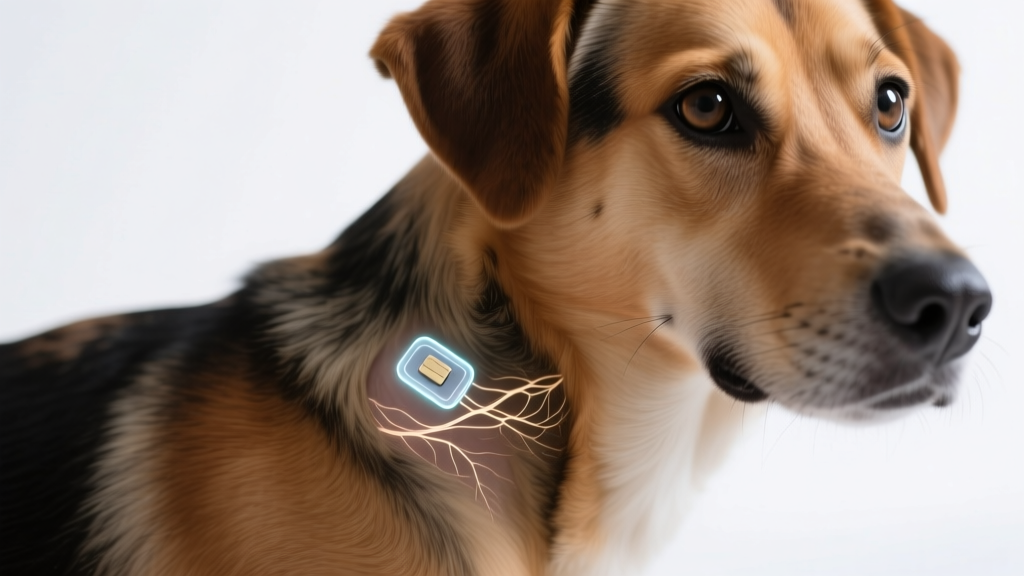
Quick Answer: Dog microchips work using radio-frequency identification (RFID) technology. A tiny glass-encased chip — about the size of a grain of rice (12-14mm long) — is implanted under your dog's skin between the shoulder blades. The chip contains no battery or GPS. Instead, it stores a unique 15-digit identification number. When a scanner passes over the chip, it emits a low-frequency radio wave (134.2 kHz in ISO-compliant chips) that energizes the chip's antenna coil, causing it to transmit its ID number back to the scanner. That number is then looked up in a pet recovery database to retrieve the owner's contact information.
If you've ever wondered what actually happens when a lost dog is brought to a shelter and "scanned," you're not alone. Microchipping is one of the most effective tools for reuniting lost pets with their families — but the technology behind it is widely misunderstood. Let's break down the science of how dog microchips work, what they can and cannot do, and what every dog owner needs to know in 2026.
The Physics of RFID: How Dog Microchips Actually Transmit Data
A dog microchip is a passive RFID transponder. "Passive" is the key word here — the chip has no internal power source. It sits dormant under your dog's skin until activated by a scanner.
Here's the step-by-step mechanism:
- The scanner emits an electromagnetic field at a specific frequency (134.2 kHz for ISO-standard chips, 125 kHz for older chips used primarily in the US).
- The chip's copper antenna coil captures energy from that electromagnetic field through electromagnetic induction — the same principle behind wireless phone chargers.
- This harvested energy powers the chip's integrated circuit, which contains the stored ID number.
- The chip modulates the electromagnetic field to transmit its number back to the scanner using a technique called backscatter modulation.
- The scanner reads the number and displays it on screen.
The entire process takes less than one second and operates over a range of just 1-3 inches (2.5-7.5 cm), which is why the scanner must be held close to the dog's body.
According to the American Veterinary Medical Association (AVMA), ISO-standard 134.2 kHz chips are the international norm and are readable by universal scanners used at shelters and veterinary clinics worldwide. Older 125 kHz chips, still found in some US dogs microchipped before 2010, require compatible scanners — though most modern universal scanners now read both frequencies.
Microchip Anatomy: What's Inside That Tiny Glass Capsule
The microchip itself is an engineering marvel packed into a biocompatible borosilicate glass cylinder measuring approximately 12mm × 2.1mm (roughly the size of a grain of long-grain rice). Here's what's inside:
| Component | Function | Material |
|---|---|---|
| Integrated circuit (IC) | Stores the unique 15-digit ID number and manages data transmission | Silicon microchip |
| Antenna coil | Receives electromagnetic energy from scanner and transmits ID signal back | Copper wire wound around ferrite core |
| Capacitor | Stores harvested energy to power the IC during transmission | Ceramic or film capacitor |
| Glass capsule | Seals all components in a biocompatible, sterile enclosure | Borosilicate glass |
| Parylene-C coating | Prevents glass capsule from migrating under the skin; promotes tissue bonding | Biopolymer coating on exterior |
The parylene-C coating is a critical detail often overlooked. This ultra-thin polymer layer creates a slightly textured surface that encourages fibrous tissue to grow around the chip after implantation, anchoring it in place. Without this coating, the smooth glass capsule would be more prone to migration — drifting from the original implant site between the shoulder blades toward the chest or flank.
Evolutionary Context: Why Dogs Have No Natural Analog to This Technology
Unlike many canine science topics, microchipping has no evolutionary basis — it's a purely human-engineered intervention. However, understanding why dogs are such good candidates for subcutaneous implants does connect to canine physiology.
Dogs evolved from wolves with a loose, mobile skin layer — the subcutaneous tissue plane between the dermis and the underlying muscle fascia. In wolves, this loose skin served a survival function: it allowed a grabbed animal to twist and escape a predator's jaws without the skin tearing deeply. This same anatomical feature creates a natural "pocket" where a microchip can sit comfortably without interfering with movement, muscle function, or nerve pathways.
The implant site — the dorsal midline between the scapulae — was chosen because it's an area of minimal muscle contraction in canids, reducing the chance of the chip being squeezed or displaced by normal activity.
Implantation Procedure: What Happens at the Vet
Microchip implantation is a quick, minimally invasive procedure that does not require anesthesia. Here's exactly what happens:
- Preparation: The veterinarian or technician loads a pre-sterilized microchip into a single-use applicator syringe. The needle gauge is typically 12-gauge (2.7mm outer diameter) — noticeably larger than a standard vaccine needle.
- Site selection: The dog is positioned standing or in sternal recumbency. The technician "tents" the skin between the shoulder blades by pinching and lifting it.
- Injection: The needle is inserted subcutaneously (under the skin, not into muscle) at a shallow angle, and the plunger is depressed. The chip is pushed out of the needle into the subcutaneous space.
- Verification scan: A scanner is immediately passed over the site to confirm the chip is readable and the displayed ID number matches the documentation.
- Registration: The chip's ID number and the owner's contact information are entered into a pet recovery database.
The entire process takes about 30-60 seconds. Most dogs react similarly to how they react to a routine injection — a brief flinch or yelp, then immediate recovery. Some dogs show no reaction at all.
Cost Breakdown for Microchip Implantation (2026)
| Source | Cost Range | Includes Registration? |
|---|---|---|
| Private veterinary clinic | $35 - $75 | Usually yes (first year); annual renewal fees may apply ($10-$25/year depending on registry) |
| Shelter/rescue adoption event | $0 - $25 | Often included in adoption fee |
| Low-cost microchip clinic | $15 - $30 | Varies — verify before attending |
| DIY purchase (self-implantation kits) | $10 - $20 | Not recommended — improper implantation can cause complications; registration is your responsibility |
Important note on registration: The microchip itself is useless without current registration. According to an AVMA-published study in JAVMA, only 58% of microchipped animals entering shelters had registration information that could be traced back to the owner. The chip is just a number — the database is what reconnects you to your dog.
How Dogs Process the Microchip: Physiological Response
From a physiological standpoint, the canine body's response to a microchip is remarkably minimal. Here's the timeline:
- Immediately after implantation (0-24 hours): A small amount of localized inflammation occurs at the needle insertion site — similar to any subcutaneous injection. Minor swelling or tenderness may be present. This resolves within 24-48 hours in most dogs.
- Days 1-14: The body begins forming a thin fibrous capsule around the glass chip. Fibroblasts (connective tissue cells) migrate to the chip surface, attracted by the parylene-C coating. This capsule is typically 0.1-0.5mm thick.
- Weeks 2-6: The fibrous capsule matures and fully encases the chip. At this point, the chip is effectively "locked in" by the dog's own tissue and migration risk drops significantly.
- Long-term (months to years): The chip remains inert. Borosilicate glass is biologically inert — it does not corrode, leach chemicals, or trigger ongoing immune response. Studies tracking microchipped dogs over 10+ years have found no evidence of systemic health effects attributable to the chip.
The chip does not interact with your dog's nervous system, does not emit any sensation your dog can feel, and does not interfere with MRI scans at standard clinical field strengths (though it may cause a small local artifact near the implant site).
Myth vs. Fact: Debunking Common Microchip Misconceptions
| Myth | Fact |
|---|---|
| "Microchips have GPS tracking built in." | False. Microchips are passive RFID tags. They contain no battery, no GPS receiver, and no transmitter capable of broadcasting a location. They only respond when a scanner is within 1-3 inches. |
| "Microchips can cause cancer in dogs." | Highly misleading. A small number of tumor cases near microchip sites have been reported in rodents and in a handful of dogs, but the incidence is extraordinarily rare. The FDA's Center for Veterinary Medicine states that the risk is extremely low and that the benefit of microchipping far outweighs the theoretical risk. For context, millions of dogs are microchipped annually with only isolated adverse event reports. |
| "The chip will migrate through my dog's body." | Partially true, but overstated. Chip migration (movement from the implant site) can occur, particularly in the first few weeks before the fibrous capsule forms. This is why shelters scan the entire body of a found dog, not just between the shoulder blades. Modern chips with parylene-C coatings have significantly reduced migration rates compared to older smooth-glass designs. |
| "One microchip lasts forever — no maintenance needed." | Partially false. The physical chip has no expiration date and will function for the dog's lifetime. However, your registration must be kept current. If you move, change phone numbers, or transfer ownership, you must update the registry. An unregistered chip is a dead end. |
| "Microchipping hurts my dog long-term." | False. Once the initial injection discomfort passes (seconds), the chip causes no ongoing pain or awareness. Dogs cannot feel the chip under their skin. |
| "Any scanner can read any microchip." | Mostly true now, but historically false. Before universal scanners became standard (roughly pre-2012), some shelters had scanners that only read one frequency and could miss chips on a different frequency. Today, universal scanners from companies like Avid, HomeAgain, and 24PetWatch read both 125 kHz and 134.2 kHz chips. However, it's still worth confirming your chip's frequency with your vet. |
Major Microchip Registries Compared
Choosing where to register your dog's microchip matters. Not all registries participate in the same lookup networks, and some charge annual fees while others offer lifetime registration. Here's a comparison of the major US registries:
| Registry | Annual Fee | Lifetime Option | Participates in AAHA Universal Lookup? | 24/7 Recovery Hotline |
|---|---|---|---|---|
| HomeAgain | $19.99/year (first year free) | Not available | Yes | Yes |
| AKC Reunite | $19.95/year (first year free with enrollment) | $99.95 one-time (lifetime) | Yes | Yes |
| 24PetWatch (by Allstate) | $14.95/year (basic free) | $99.99 one-time (premium) | Yes | Yes |
| FreePetChipRegistry.com | Free | Free | No (not in AAHA lookup) | No |
| Found Animals Registry | Free | Free | Yes | No (email/text alerts) |
Practical recommendation: Register with a registry that participates in the AAHA Universal Pet Microchip Lookup tool. This ensures that when a shelter or vet enters your dog's chip number, your contact information appears regardless of which scanner brand is used. Free registries that don't participate in AAHA lookup create a dangerous gap — your dog could be scanned and the number found, but the shelter won't be able to reach you.
Practical Takeaways for Dog Owners
- Microchip your dog at or before 8 weeks of age, or at the time of spay/neuter if you adopt an unchipped adult dog. Puppies can be microchipped as early as 6-8 weeks, provided they weigh at least 2 pounds.
- Verify registration immediately. After your vet implants the chip, log into the registry website within 48 hours and confirm your contact details are correct. Many vets will initiate registration, but errors happen — misspelled names, outdated phone numbers, or incomplete addresses.
- Ask your vet to scan the chip at every wellness visit. This takes 10 seconds and confirms the chip is still readable and hasn't migrated significantly. If the chip has moved, note the new location in your records so shelters know where to scan.
- Update your registration every time your contact info changes. Moving to a new home? New phone number? Divorce or name change? Update the registry immediately. This is the single most common reason microchipped dogs aren't returned to their owners.
- Keep a record of your chip number and registry name in your phone, wallet, and your dog's medical file. If your dog goes missing, you'll need to call the registry to flag the chip as "lost" — and you'll need that number to do so.
- A microchip is not a substitute for a collar and ID tag. Shelters and Good Samaritans can read a collar tag instantly; a microchip requires a scanner, which most private citizens don't own. Use both layers of identification.
How This Differs From Human RFID Implants
While some humans have voluntarily received RFID implants (typically in the hand, for purposes like unlocking doors or storing medical data), there are key differences between canine and human microchip use:
- Size: Human RFID implants are often smaller (about 2mm × 12mm for the xNT chip from Dangerous Things) or similar in size to pet chips. The technology is fundamentally the same.
- Placement: Human chips are typically implanted in the webbing between the thumb and index finger. Canine chips go in the dorsal subcutaneous space between the scapulae.
- Data stored: Both store only an ID number — no personal data, no medical records, no GPS coordinates. The ID number links to an external database where the actual information is stored.
- Regulation: In the US, animal microchips are regulated by the USDA's Center for Veterinary Biologics. Human RFID implants are not currently FDA-approved for medical use, though some are classified as low-risk devices.
When Microchip Issues Might Signal a Problem
While microchip complications are rare, dog owners should be aware of signs that warrant veterinary attention:
- Persistent swelling, redness, or discharge at the implant site beyond 48 hours post-implantation could indicate infection or an inflammatory reaction. Contact your vet.
- A palpable lump that grows over time near the chip site should be evaluated. While the vast majority of lumps near microchips are benign granulomas (small areas of fibrous scar tissue), any growing mass warrants veterinary examination to rule out other causes.
- Your dog cannot be scanned despite known implantation. The chip may have failed (extremely rare), migrated to an area the scanner didn't cover, or the scanner may be incompatible with the chip's frequency. Ask your vet to perform a full-body scan with a universal scanner.
Veterinary Disclaimer: If you notice any unusual lumps, swelling, or behavioral changes after microchip implantation, consult your veterinarian for an in-person evaluation. While complications are rare, only a physical examination and, if needed, diagnostic imaging can determine whether intervention is required.
Frequently Asked Questions
Why do dogs need microchips if they wear collars?
Collars can break, slip off, or be removed. A microchip is a permanent form of identification that stays with your dog for life. The ASPCA recommends using both a collar with an ID tag and a registered microchip as a two-layer identification strategy. In one Ohio State University study, microchipped dogs were returned to their owners at a rate of 74.1% compared to just 12.8% for unchipped dogs entering shelters.
Can dogs feel the microchip after implantation?
No. Once the initial injection discomfort passes (within seconds), the chip sits in the subcutaneous tissue — a layer with minimal nerve endings. Dogs do not feel, sense, or react to the chip during normal activity, grooming, or when lying down. You can sometimes feel the chip yourself by gently palpating the area between your dog's shoulder blades; it feels like a small, firm grain of rice under the skin.
How do dog microchips differ from GPS trackers?
Microchips and GPS trackers serve entirely different purposes. A microchip is a passive ID tag — it identifies your dog after someone finds them and takes them to a facility with a scanner. A GPS tracker (like a Fi Series 4 or Whistle Go collar attachment) actively transmits your dog's location to your phone in real time. GPS trackers require batteries, cellular subscriptions ($5-$10/month), and regular charging. Microchips require no power and no subscription. Ideally, use both.
Is microchipping normal and safe for all breeds?
Yes. Microchipping is considered safe for all dog breeds and sizes, including toy breeds like Chihuahuas and Yorkshire Terriers, provided the puppy meets minimum weight guidelines (typically 2 lb / 0.9 kg). There are no breed-specific contraindications for microchipping. Brachycephalic breeds, giant breeds, and dogs with known allergies have no elevated risk from microchip implantation.
What does it mean when my dog's microchip "isn't found" at the vet?
If a vet cannot detect your dog's microchip during a scan, it most commonly means one of three things: (1) the chip migrated and the vet didn't scan the full body, (2) the scanner is not compatible with your chip's frequency, or (3) the chip was never implanted despite documentation suggesting otherwise. Request a full-body scan with a universal scanner. If the chip still isn't found, your vet may recommend X-rays to locate it — microchips are radiopaque and will appear clearly on radiographs.
Can my dog be microchipped twice?
Technically yes, but it's unnecessary and not recommended. If you adopt a dog that already has a chip, ask the shelter or rescue to provide the existing chip number and transfer the registration to your name rather than implanting a second chip. Dual chips can cause confusion at shelters if the wrong chip is scanned first.
Jonas Cole
All our authors care for dogs every day — read more of their work on the authors page.


