Guardian Dogs: The Science Behind Livestock Protection Instincts
Explore the canine science behind guardian dogs—how evolution, physiology, and selective breeding shaped livestock protection behaviors and what owners need to know.
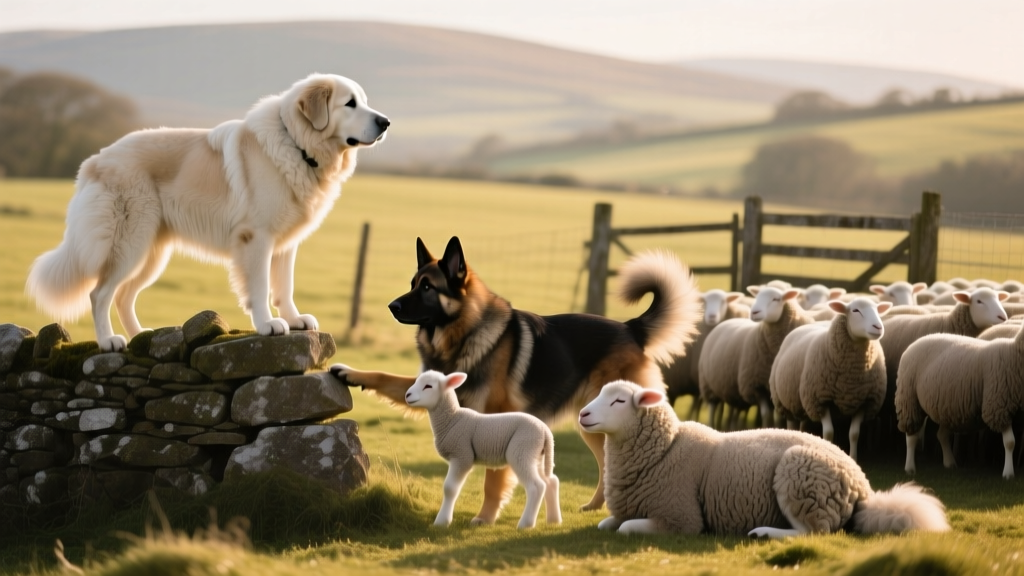
What Are Guardian Dogs and Why Do They Protect?
Guardian dogs—formally known as livestock guardian dogs (LGDs)—are breeds selectively developed over thousands of years to live alongside and protect herds from predators. Unlike herding dogs that move livestock, guardian dogs bond with the flock and use their size, vigilance, and territorial instinct to deter threats. This protective behavior stems from a combination of reduced predatory drive, heightened social bonding with non-canine species, and modified fear-response circuitry shaped by both natural selection in ancestral wolves and centuries of intentional breeding by pastoral societies.
The Evolutionary Roots of Guardian Behavior
From Wolf Pack to Flock Protector
Guardian dog behavior is rooted in the same social-bonding mechanisms that allowed wolves to cooperate in packs. In ancestral canids, the ability to form tight social bonds with group members was essential for cooperative hunting and pup-rearing. Early pastoralists in Central Asia and the Fertile Crescent—roughly 10,000 to 12,000 years ago—exploited this bonding drive by imprinting wolf-dog puppies onto sheep or goat herds during critical socialization windows (typically 4 to 16 weeks of age).
Over generations, humans selected for dogs that showed:
- Low prey drive toward herd animals (suppressing the predatory sequence of orient → stalk → chase → grab → kill)
- High affiliative behavior toward livestock (treating flock members as pack members)
- Heightened vigilance and territorial defense against unfamiliar predators
- Independent decision-making (operating without human commands, often at night)
According to research published in the Journal of Applied Animal Behaviour Science, LGDs display a truncated predatory motor pattern compared to herding breeds—meaning the neural circuits that trigger chasing and killing prey are partially inhibited, while the circuits governing territorial defense and social bonding remain highly active.
The Neuroscience: How Guardian Dogs Process Threats
Brain, Hormones, and the Guardian Response
Guardian behavior involves several physiological systems working in concert:
1. Amygdala and Threat Assessment
The amygdala—a brain structure responsible for processing fear and threat—functions differently in LGD breeds compared to high-prey-drive breeds. Studies on canine neurology suggest that guardian breeds exhibit faster threat-detection responses to novel predators (coyotes, wolves, bears) but slower escalation toward prey-like stimuli (small fleeing animals). This means a Great Pyrenees may bark ferociously at a coyote approaching the flock but ignore a rabbit darting through the pasture.
2. Oxytocin and Cross-Species Bonding
Oxytocin, often called the "bonding hormone," plays a critical role in how guardian dogs form attachments to livestock. Research from ScienceDirect indicates that dogs with strong human-directed gaze behavior (a proxy for oxytocin-mediated bonding) also show stronger affiliative behavior toward other species they are imprinted on. In LGDs raised with sheep from puppyhood, oxytocin pathways essentially redirect the dog's social attachment from conspecifics (other dogs) to heterospecifics (sheep, goats, even poultry).
3. Cortisol and Vigilance
Guardian breeds maintain a baseline of elevated environmental awareness. Their cortisol (stress hormone) profiles differ from companion breeds—they show lower resting cortisol when with their flock but sharper cortisol spikes when detecting predator scent or sound. This allows them to remain calm during routine grazing but mobilize instantly when threatened.
4. Serotonin and Aggression Regulation
The serotonergic system modulates impulse control and aggression. Breeds selected for guarding show genetic variations in serotonin receptor genes (particularly HTR1A and HTR2A) that influence whether a dog responds to a threat with controlled intimidation (barking, posturing, patrolling) versus uncontrolled aggression (biting, chasing). Responsible breeding programs for LGDs prioritize this controlled-response phenotype.
Breed Variations: Not All Guardian Dogs Are Equal
| Breed | Origin | Weight (lb / kg) | Primary Threat Deterred | Independence Level | Typical Barking Frequency |
|---|---|---|---|---|---|
| Great Pyrenees | France/Spain (Pyrenees Mountains) | 85–120 lb / 39–54 kg | Wolves, bears, foxes | Very high | High (especially nocturnal) |
| Anatolian Shepherd | Turkey (Anatolia) | 90–150 lb / 41–68 kg | Wolves, jackals, large cats | Extremely high | Moderate–High |
| Maremma Sheepdog | Italy (Abruzzo/Maremma) | 65–100 lb / 30–45 kg | Wolves, foxes, stray dogs | High | Moderate |
| Kangal | Turkey (Sivas Province) | 90–145 lb / 41–66 kg | Wolves, bears, large predators | Very high | Moderate |
| Akbash | Turkey (Western Anatolia) | 75–140 lb / 34–64 kg | Wolves, bears | High | Moderate |
| Komondor | Hungary | 80–135 lb / 36–61 kg | Wolves, bears, human intruders | Very high | Low–Moderate (silent approach first) |
| Kuvasz | Hungary | 70–115 lb / 32–52 kg | Wolves, bears, human intruders | High | Moderate |
Despite shared guarding instincts, these breeds vary significantly in working style. The Kangal, for instance, is known for confronting predators physically—it has one of the strongest bite forces measured in domestic dogs (estimated at over 700 PSI). The Great Pyrenees, by contrast, relies more on intimidation through sustained nocturnal barking and patrol behavior, rarely engaging in direct physical confrontation unless a predator breaches the flock perimeter.
Practical Implications for Owners
Living With a Guardian Breed: What You Need to Know
1. Early Imprinting Is Non-Negotiable
If you're raising an LGD for actual livestock protection, the puppy must be introduced to the flock between 7 and 16 weeks of age. Puppies raised exclusively with humans during this window will bond to people, not livestock, and may never develop reliable guarding behavior. The American Kennel Club recommends placing puppies in a pen adjacent to the flock initially, then allowing supervised integration.
2. Nighttime Barking Is a Feature, Not a Bug
Most LGD breeds are crepuscular and nocturnal in their patrol behavior. Expect barking between 10 PM and 4 AM, particularly in response to sounds and scents you can't perceive. If you live in a suburban area with noise ordinances, an LGD breed may not be suitable. Consider white-noise solutions for neighbors and ensure your dog has a secure perimeter to patrol.
3. Fencing Requirements Are Substantial
Guardian dogs are territorial and will expand their patrol range if not contained. Minimum fencing: 6 feet tall, with a dig-proof apron extending 12 inches underground. Electric fencing (hot wire at nose height, approximately 12 inches off the ground) can supplement physical fencing. Budget $3,500–$8,000 for professional installation on a 1-acre perimeter.
4. Training Approach Must Respect Independence
LGDs were bred to make decisions without human direction. They do not respond well to repetitive obedience drills or force-based methods. Use positive reinforcement and management-based training: reward check-ins, teach reliable recall with high-value treats (freeze-dried liver, cooked chicken), and use long lines (30–50 feet) for controlled outdoor exposure. Never use shock collars or prong collars—these breeds are sensitive to pain-based correction and may develop fear-based aggression.
5. Socialization Priorities Differ
Unlike companion breeds where broad socialization is ideal, LGDs benefit from selective socialization. They should be friendly with their family and familiar livestock but remain aloof with strangers. Over-socializing an LGD to all people can undermine its territorial guarding instinct. Focus socialization on: handling tolerance (for vet visits and grooming), leash manners, and calm behavior around familiar visitors.
6. Nutrition and Joint Health
Most LGD breeds are giant or large-breed dogs prone to hip dysplasia, elbow dysplasia, and osteosarcoma. Feed a large-breed puppy formula (AAFCO-certified, with calcium:phosphorus ratio between 1.1:1 and 1.4:1) until 18–24 months to prevent rapid growth. Adult maintenance: look for diets with minimum 22% protein and 12% fat. Budget $80–$150/month for quality kibble for a 100+ lb dog, or consider a veterinary nutritionist-formulated raw diet at $200–$350/month.
Common Misconceptions About Guardian Dogs
| Myth | Scientific Fact |
|---|---|
| "Guardian dogs will protect any animal automatically." | Guarding behavior requires early imprinting onto the target species. An LGD raised with chickens will guard chickens; the same dog raised with humans will not instinctively guard sheep without retraining. |
| "They're aggressive dogs." | Well-bred LGDs are typically calm and confident. Aggression toward humans is a disqualifying fault in breed standards. Their protective behavior is directed at predators, not people. |
| "You can't keep an LGD as a house pet." | Many LGD breeds adapt to home life if given adequate exercise and mental stimulation. However, nocturnal barking and territorial behavior require management in residential settings. |
| "Guardian dogs don't need training." | While their guarding instinct is innate, all LGDs need foundational training: recall, leash manners, boundary awareness, and handling tolerance. Untrained LGDs can become liability risks. |
| "They bond only with livestock, not people." | LGDs form strong bonds with their human families. Working LGDs often check in with handlers regularly and seek physical contact during rest periods. The bond is real—it's just expressed differently than in companion breeds. |
When Guardian Behavior Signals a Problem
While protective instincts are normal in these breeds, certain behavioral shifts warrant attention:
- Sudden aggression toward flock members: May indicate pain (dental disease, arthritis, ear infection), neurological issues, or resource guarding. Consult your veterinarian immediately.
- Failure to bark or respond to predators: Could signal hearing loss, cognitive decline (in senior dogs), or illness. A veterinary exam including a BAER hearing test ($150–$300) may be needed.
- Compulsive patrolling without rest: May indicate anxiety, hyperthyroidism (rare in dogs but possible), or inadequate environmental enrichment. A certified applied animal behaviorist (CAAB) can assess and develop a behavior modification plan ($200–$500 per consultation).
- Attacking livestock during specific triggers (e.g., lambing): Some LGDs become confused by blood or distress vocalizations. This requires immediate management—separate the dog during birthing events and consult a professional trainer experienced with working dogs.
- Fear-based hiding instead of patrolling: May indicate under-socialization, trauma, or a medical condition causing lethargy. Rule out hypothyroidism, anemia, or infectious disease with a full veterinary workup (CBC, chemistry panel, thyroid panel—approximately $200–$400).
Red Flags Requiring Immediate Veterinary Attention:
- Sudden behavioral change with no environmental cause
- Aggression paired with physical symptoms (vomiting, diarrhea, limping, head tilt)
- Seizures, collapse, or disorientation during patrol
- Refusal to eat for more than 24 hours in a working dog
How Guardian Dogs Compare to Humans
The human equivalent of guardian behavior might be a security guard's vigilance—but the canine version operates on a fundamentally different neurological basis. Humans rely on prefrontal cortex-mediated reasoning to assess threats: we analyze, plan, and communicate verbally. Guardian dogs rely on subcortical threat-detection circuits (amygdala, periaqueductal gray, hypothalamus) that trigger near-instantaneous protective responses without conscious deliberation.
Additionally, while humans can suppress protective instincts through social norms, guardian dogs express these behaviors as fixed action patterns—hardwired sequences that, once triggered by a specific stimulus (predator scent, distress vocalization from livestock), run to completion. This is why you cannot "train out" guarding behavior in an LGD; you can only manage the environment and redirect inappropriate expressions of the instinct.
Related Behaviors and Cross-References
Behaviors Linked to the Guardian Instinct
- Territorial marking: LGDs use urine and scat to establish perimeter boundaries, similar to wolf scent-marking behavior.
- Vigilance posturing: Standing alert with ears forward, tail raised, and body oriented toward the threat—distinct from play-bowing or prey-stalking postures.
- Alarm barking: A deep, resonant bark pattern (typically 3–5 barks, pause, repeat) that differs from the high-pitched excitement barking of companion breeds.
- Flock-checking behavior: Periodic circling and sniffing of flock members, especially after a disturbance—a reassurance behavior analogous to human head-counting.
- Maternal defense: Female LGDs show heightened protective behavior when puppies are present, extending defense to juvenile livestock as "surrogate pups."
Further Reading
- Merck Veterinary Manual — Canine behavior and working dog management
- American Veterinary Medical Association — Guidelines for working dog welfare
- Coppinger, R. & Coppinger, L. (2001). Dogs: A Startling New Understanding of Canine Origin, Behavior & Evolution — Seminal text on LGD development and behavior
Frequently Asked Questions
Why do guardian dogs bark so much at night?
Nocturnal barking is an adaptive trait. Most predators (coyotes, wolves, mountain lions) hunt at dusk and dawn. LGDs evolved to be most vigilant during these periods, using barking as a long-distance deterrent—essentially advertising their presence to predators before a physical confrontation becomes necessary. Research shows that predator incursion rates drop by 60–80% on farms with actively barking LGDs.
Can guardian dogs be trained as family pets?
Yes, but with caveats. Breeds like the Great Pyrenees and Maremma adapt reasonably well to family life if given sufficient exercise (minimum 60–90 minutes of structured activity daily) and a job to do (even if that "job" is watching the backyard). However, their independent nature, nocturnal activity, and wariness of strangers make them less suitable for first-time dog owners or apartment living.
How do guardian dogs sense predators before humans do?
LGDs detect predators through a combination of olfactory sensitivity (dogs have approximately 300 million olfactory receptors compared to humans' 6 million), auditory range (dogs hear frequencies up to 45 kHz; humans max out around 20 kHz), and environmental pattern recognition. A guardian dog may notice a disruption in the flock's movement, a change in wind-borne scent, or the silence of birds in a specific direction—subtle cues that indicate a predator's presence long before a human would notice.
Is it normal for my guardian dog to ignore me when patrolling?
Yes. This is a hallmark of the breed type. LGDs were selected for independent decision-making—they had to protect flocks without human direction, often at night in remote terrain. This means they are less responsive to verbal commands during high-arousal patrol states. Build recall reliability in low-distraction environments first, then gradually increase difficulty. Expect a 12–18 month training timeline for reliable off-leash recall, and even then, some individuals will prioritize guarding over obedience in genuine threat scenarios.
What does it mean when my guardian dog lies down facing the fence line?
This is a strategic rest posture. The dog is resting while maintaining visual contact with the most likely point of predator entry. It's a sign of a well-functioning guardian—alert even during downtime. Some LGDs will also position themselves between the flock and the perimeter, creating a physical buffer even while sleeping.
How is guardian behavior different from herding behavior?
Herding dogs (Border Collies, Australian Shepherds) use modified predatory behavior—stalking, chasing, and nipping—to move livestock. Guardian dogs use modified social bonding and territorial defense—living with, protecting, and bonding to livestock. Herding dogs work with human direction; guardian dogs work independently of human direction. The neurological basis differs fundamentally: herding engages the predatory motor sequence; guarding engages the affiliative and territorial circuits.
Priya Sutaria
All our authors care for dogs every day — read more of their work on the authors page.


