Are Good Apt Dogs Born or Made? The Science of Canine Aptitude
What makes good apt dogs? Explore the science behind canine aptitude, from genetics and brain structure to training methods that unlock your dog's potential.
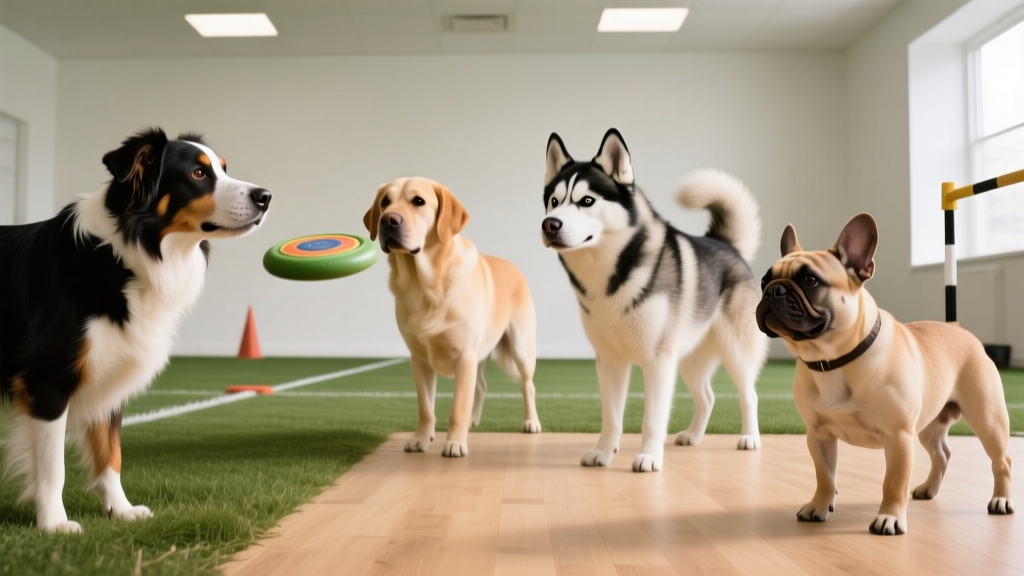
Quick Answer: "Good apt dogs" — dogs with high aptitude for learning, problem-solving, and working alongside humans — are shaped by both genetics and environment. Research from the Canine Cognition Center shows that roughly 50% of a dog's working aptitude is heritable, while the remaining 50% depends on early socialization, training methods, and environmental enrichment. Certain breeds (Border Collies, Belgian Malinois, Poodles) carry genetic advantages for task-oriented aptitude, but any dog can develop strong aptitude through structured positive-reinforcement training beginning as early as 8 weeks of age.
What Does "Good Apt" Mean in Canine Science?
The term aptitude in canine behavioral science refers to a dog's innate and developed capacity to learn tasks, solve novel problems, and adapt its behavior based on environmental feedback. When people search for "good apt dogs," they're typically asking about dogs that demonstrate:
- Trainability: How quickly a dog acquires new behaviors (measured in repetitions to criterion)
- Problem-solving ability: Success rate on novel spatial or social cognition tasks
- Working drive: Sustained motivation to perform tasks without food reward escalation
- Adaptive flexibility: Ability to generalize learned behaviors to new contexts
Dr. Brian Hare's research at Duke University's Canine Cognition Center established that dogs outperform even chimpanzees on social-cognitive tasks — specifically, reading human pointing gestures. This isn't just intelligence; it's a specialized aptitude shaped by thousands of years of co-evolution.
In practical terms, a "good apt" dog learns a new cue in 5-15 repetitions, retains it for 30+ days without practice, and can perform the behavior in at least 3 different environments. By contrast, a dog with lower task aptitude may require 30-80 repetitions and struggle with generalization. Neither is "smarter" — they simply have different cognitive profiles.
The Evolutionary Basis: From Wolf Pack to Working Partner
Evolutionary Context
Approximately 20,000-40,000 years ago, ancestral wolves that were less fearful and more tolerant of humans gained access to food scraps near human settlements. This self-domestication selected for two critical traits: reduced flight distance (the distance at which an animal flees from a perceived threat) and social attentiveness (the ability to read and respond to social cues from another species).
Over generations, these proto-dogs developed what researchers call the "human-directed social orientation" — they began looking to humans for help solving problems that wolves would attempt to solve independently. A landmark 2003 study by Miklósi et al. demonstrated that dogs gaze at their owners when faced with an unsolvable task, while wolves do not. This isn't dependency; it's a collaborative aptitude that made dogs uniquely suited for working partnerships.
The selective breeding for specific working roles (herding, retrieving, guarding) further amplified aptitude in particular domains. Border Collies were selected for responsiveness to distant whistled commands — dogs that couldn't process and act on subtle auditory cues at 300+ yard distances were removed from breeding programs. This created breed-specific aptitude profiles that persist today.
The Physiological Mechanism: How a Dog's Brain Produces Aptitude
Neuroanatomy of Canine Aptitude
A dog's aptitude isn't housed in one brain region — it emerges from the interaction of several neural systems:
1. Prefrontal Cortex (Executive Function)
Dogs with higher working aptitude show greater activation in the prefrontal cortex during task-switching exercises. This region governs impulse control, working memory, and behavioral inhibition. A Border Collie resisting the urge to chase a squirrel while maintaining a "stay" command is exercising prefrontal control.
2. Caudate Nucleus (Reward Processing)
MRI studies by Dr. Gregory Berns at Emory University revealed that dogs' caudate nuclei activate in response to both food rewards and owner praise. "Good apt" dogs often show stronger caudate activation to social praise than to food, making them easier to train without constant treat dependency.
3. Oxytocin Pathway (Social Bonding)
When dogs and their owners make mutual eye contact, both species release oxytocin — the same hormone involved in human parent-infant bonding. Dogs with robust oxytocin responses are more socially attuned and responsive to handler cues. A 2015 study published in Science (Nagasawa et al.) confirmed this oxytocin loop is unique to dogs and does not exist in wolves raised identically.
4. Dopaminergic System (Motivation & Drive)
Working-breed dogs tend to have more sensitive dopamine reward pathways, which explains their sustained drive to perform repetitive tasks. This is the neurological basis of "ball drive" in retrievers or "herding drive" in collies — the behavior itself triggers dopamine release, making the task intrinsically rewarding.
Genetics play a measurable role. The WBSCR17 gene region on chromosome 6 has been linked to hypersociability in dogs — the same region associated with Williams-Beuren syndrome in humans, which causes extreme social outgoingness. Dogs with variants in this region tend to score higher on cooperative tasks. Similarly, variants of the DRD4 dopamine receptor gene correlate with novelty-seeking behavior and trainability differences across breeds.
Can Dogs Develop Aptitude, or Are They Born With It?
This is the core question behind "good apt dogs" — and the answer requires understanding heritability coefficients. According to working dog research compiled by the Merck Veterinary Manual, the heritability estimates for key aptitude traits are:
| Trait | Heritability (h²) | What This Means |
|---|---|---|
| Trainability | 0.35-0.50 | Moderate genetic influence; environment/training matters significantly |
| Boldness/Confidence | 0.25-0.40 | Moderate; early socialization can substantially modify |
| Prey Drive | 0.50-0.70 | High genetic influence; difficult to fully suppress through training |
| Social Attentiveness | 0.30-0.45 | Moderate; handler relationship quality significantly impacts |
| Impulse Control | 0.40-0.55 | Moderate-high; trainable but baseline temperament sets a ceiling |
A heritability of 0.40 means that 40% of the variation in that trait across a population is explained by genetics. The remaining 60% comes from environment, training, nutrition, early development, and individual experience. This is encouraging: even if your dog wasn't bred from working lines, structured training can dramatically improve functional aptitude.
Breed Variations in Aptitude Profiles
Not all "good apt dogs" excel in the same domains. Breed selection created specialized aptitude profiles:
| Aptitude Domain | Top Breeds | Typical Learning Speed |
|---|---|---|
| Obedience/Working | Border Collie, Belgian Malinois, German Shepherd, Poodle | New cue mastered in 5-15 repetitions |
| Scent Discrimination | Bloodhound, Beagle, Basset Hound, Labrador Retriever | Can track 12-day-old scent trails over 10+ miles |
| Retrieving/Carry | Labrador, Golden Retriever, Chesapeake Bay Retriever | Natural soft-mouth carry; minimal shaping needed |
| Social/Therapy | Cavalier King Charles Spaniel, Golden Retriever, Standard Poodle | High stranger-tolerance; low startle response |
| Independent Problem-Solving | Shiba Inu, Siberian Husky, Australian Cattle Dog | High problem-solving but lower compliance motivation |
An important distinction: breeds like Shiba Inus and Huskies score high on independent problem-solving (figuring out how to open a gate, escape a yard) but lower on cooperative aptitude (responding to recall in a distracting environment). This doesn't mean they're less intelligent — their aptitude profile simply favors autonomy over compliance. Owners who understand this distinction can train more effectively by working with the breed's natural aptitude rather than against it.
Common Misconceptions About Canine Aptitude
| Myth | Fact (Supported by Research) |
|---|---|
| "Smart dogs are easy to own" | High-aptitude dogs often develop more behavior problems when understimulated. A bored Border Collie will invent its own "job" — like herding your children or dismantling your couch. |
| "Old dogs can't learn new tricks" | Senior dogs can learn new behaviors, though acquisition takes 2-3x longer. A 2020 study in Scientific Reports showed dogs aged 8+ could learn discrimination tasks, just at a slower rate than dogs under 3. |
| "Mixed breeds are less trainable" | Mixed-breed dogs show equivalent trainability to purebreds on average. Hybrid vigor may even improve cognitive function by reducing inbreeding-related neurological deficits. |
| "Aptitude is all about breed" | Individual variation within breeds often exceeds between-breed differences. A poorly socialized Border Collie will underperform a well-raised mixed breed on cooperative tasks. |
| "Food rewards make dogs dependent on treats" | Variable-ratio reinforcement schedules (rewarding unpredictably) actually strengthen behaviors. This is the same mechanism behind slot machine addiction — intermittent rewards create the most persistent behavior patterns. |
Practical Implications: Building Aptitude in Your Dog
What This Means for Your Daily Routine
1. Start Early, But It's Never Too Late
Puppies aged 8-16 weeks have the highest neural plasticity. Enroll in a positive-reinforcement puppy class (cost: $150-$300 for a 6-week course) during this window. If your dog is older, adult dog training classes ($200-$400 for 6-8 weeks) still produce measurable aptitude gains within 4-6 weeks.
2. Enrichment Over Repetition
Rather than drilling the same "sit" command 50 times, vary the context: sit on different surfaces (grass, gravel, a mat), at different distances, with different distractions. This builds generalization — a hallmark of genuine aptitude rather than rote memorization.
3. Use the 3-Second Rule for Marking
Dogs associate consequences with behaviors that occurred within 1-3 seconds. Use a clicker or verbal marker ("yes!") the instant the correct behavior occurs, then deliver the reward within 2 seconds. Delayed marking confuses the dog about which behavior earned the reward.
4. Build Impulse Control Gradually
Practice "wait" exercises starting with 2-second holds and increasing by 2-3 seconds per session. By week 4, most dogs can hold a 30-second wait. Impulse control is the foundation of every advanced working behavior.
5. Mental Exercise Costs Nothing
A 15-minute training session burns as much mental energy as a 45-minute walk. Incorporate puzzle feeders ($15-$40 for Kong Wobbler, Outward Hound Nina Ottosson puzzles), snuffle mats, and scatter feeding to build problem-solving aptitude daily.
When High or Low Aptitude Signals a Problem
Sometimes, a sudden change in your dog's aptitude indicates an underlying medical or behavioral issue that warrants veterinary attention:
Red Flags: When to Consult Your Veterinarian
- Sudden inability to learn previously known cues: May indicate cognitive dysfunction syndrome (CDS), which affects 28% of dogs over age 11. Consult your veterinarian for assessment.
- Loss of food motivation in a previously food-driven dog: Can signal dental pain, gastrointestinal issues, or systemic illness. A dog that refuses high-value treats (chicken, cheese) needs a veterinary exam.
- Hyper-fixation on a single task to the exclusion of eating/drinking: Compulsive behaviors (tail chasing, shadow chasing, fly snapping) may indicate neurological dysfunction or anxiety disorders requiring professional intervention.
- Inability to focus for more than 3-5 seconds consistently: While breed-typical in some hounds, a sudden attention deficit in a previously focused dog may indicate pain, sensory decline, or thyroid dysfunction.
- Aggression when interrupted during a task: Resource guarding of activities (not just objects) can develop in dogs with high drive and poor impulse control. Consult a certified behavior consultant (IAABC or CCPDT certified).
For age-related cognitive decline, your veterinarian may recommend supplements like SAMe (S-adenosylmethionine) at 18 mg/kg once daily, or prescription medications like selegiline (Anipryl) at 0.5-1.0 mg/kg once daily. Environmental enrichment and continued training can slow CDS progression by an estimated 40-60% based on longitudinal studies.
How Canine Aptitude Differs From Human Intelligence
Dogs don't think like less-capable humans — they think like highly specialized dogs. Key differences include:
- No abstract reasoning: Dogs cannot reason about hypothetical scenarios or plan for distant future events. A dog hiding a bone isn't "saving it for later" in the way humans understand saving — it's following an instinctual caching pattern triggered by surplus.
- Episodic-like memory exists but is limited: A 2016 study by Fugazza et al. showed dogs can recall events they witnessed up to 24 hours later, but this "episodic-like" memory degrades far faster than human long-term memory.
- Social intelligence exceeds expectations: Dogs outperform human toddlers on certain social-cognitive tasks, such as following pointing gestures to find hidden food. This isn't "dumb" — it's a specialized evolutionary adaptation.
- Sensory processing shapes cognition: A dog's olfactory cortex is proportionally 40x larger than a human's. When a dog "ignores" your recall to sniff a fire hydrant, it's processing an amount of chemical information comparable to you reading a detailed news article.
Frequently Asked Questions
Why do some dogs learn faster than others?
Learning speed is influenced by breed genetics (dopamine receptor variants), early socialization (puppies exposed to novel stimuli between 3-14 weeks develop stronger neural pathways), motivation level, and the handler's timing. A well-timed marker and reward can make a 3x difference in acquisition speed compared to delayed reinforcement.
Can dogs improve their aptitude over time?
Yes. Consistent positive-reinforcement training builds neural pathways for learning. Dogs that have been trained across multiple disciplines (obedience, nosework, agility) develop "learning to learn" skills — they become faster at acquiring new behaviors because they understand the training process itself. Expect measurable improvement within 4-6 weeks of consistent daily sessions (10-15 minutes each).
How do dogs process human communication compared to other animals?
Dogs are uniquely attuned to human communicative intent. They follow pointing gestures spontaneously (no training needed), respond to the emotional tone of human speech, and can learn over 1,000 human words (as demonstrated by the famous Border Collie Chaser). No other domestic animal — including cats raised identically — matches this level of human-directed social cognition.
Is it normal for my dog to be "bad" at some tasks but great at others?
Completely normal. A Beagle that struggles with a 30-second "stay" may excel at scent discrimination tasks that would overwhelm a Border Collie. This reflects breed-specific aptitude profiles, not overall intelligence. Work to your dog's strengths while maintaining basic manners training in weaker areas.
What does it mean when my dog seems to understand full sentences?
Dogs process prosody (tone, rhythm, emotional valence) more than syntax (word order). Your dog likely responds to the familiar words embedded in your sentence plus your emotional tone, not the grammatical structure. A 2016 fMRI study by Andics et al. showed dogs process word meaning in the left hemisphere and intonation in the right — similar to humans — but they don't parse grammar.
Key Research References
- Hare, B. & Tomasello, M. (2005). Human-like social skills in dogs. Trends in Cognitive Sciences, 9(9), 439-444.
- Nagasawa, M. et al. (2015). Oxytocin-gaze positive loop and the coevolution of human-dog bonds. Science, 348(6232), 333-336.
- Berns, G. et al. (2014). Scent of the familiar: An fMRI study of canine brain responses to familiar and unfamiliar human and dog odors. Behavioural Processes, 110, 37-46.
- American Kennel Club: How Smart Is Your Dog? — Breed-specific trainability rankings based on Stanley Coren's research.
- AVMA: Dog and Cat Behavior Resources — Veterinary behavioral medicine guidelines.
Aaron Whyte
All our authors care for dogs every day — read more of their work on the authors page.


