Glucosamine and Dogs: The Science Behind Joint Supplements
How glucosamine works in dogs, what research shows about joint supplements, correct dosing, and when it actually helps canine osteoarthritis.
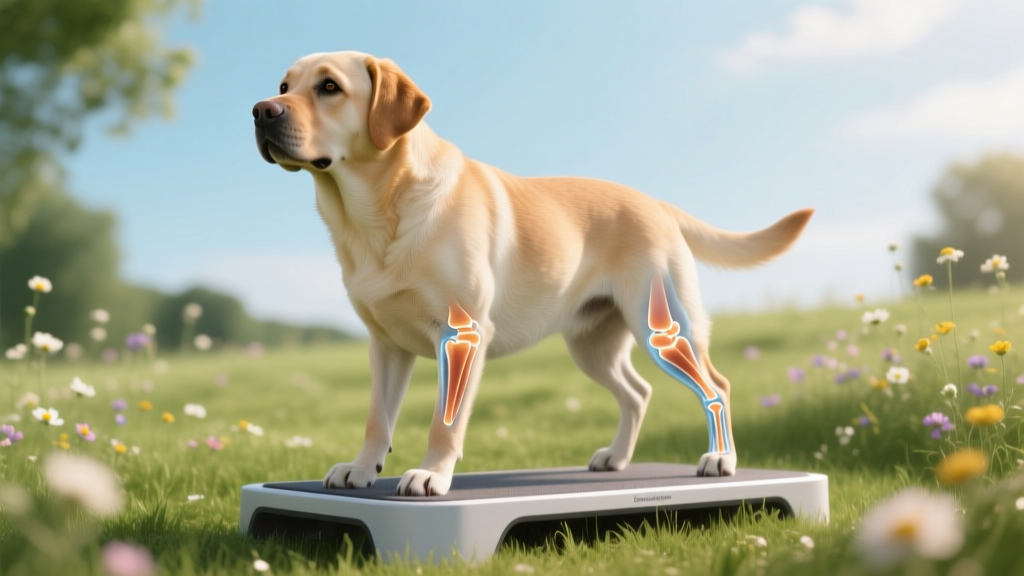
The Biochemistry of Glucosamine in Canine Joints
Glucosamine (specifically D-glucosamine) is an amino monosaccharide synthesized in your dog's body from glucose and the amino acid glutamine. It is a precursor to glycosaminoglycans (GAGs) — long-chain carbohydrates that form the structural matrix of articular cartilage, the smooth tissue covering the ends of bones within synovial joints.
How Cartilage Maintenance Works
Healthy canine cartilage exists in a constant state of turnover. Chondrocytes (cartilage cells) continuously break down and rebuild the extracellular matrix. Glucosamine is a rate-limiting substrate in this process — meaning when glucosamine availability drops, cartilage repair slows down. In dogs with osteoarthritis, the inflammatory environment increases cartilage degradation while simultaneously suppressing chondrocyte activity. The theory behind supplementation is straightforward: provide more raw material so chondrocytes can keep pace with degradation.
Glucosamine also stimulates the production of hyaluronic acid, a key component of synovial fluid that provides joint lubrication and shock absorption. According to the Merck Veterinary Manual, synovial fluid changes are among the earliest detectable signs of canine osteoarthritis.
When your dog ingests a glucosamine supplement, it is absorbed primarily in the small intestine, with oral bioavailability estimated at approximately 12–14% in canine studies (lower than the roughly 26% seen in humans). The compound is then distributed to joint tissues via the bloodstream, where it crosses the synovial membrane and enters the cartilage matrix. Peak plasma concentrations are reached within 2–4 hours of oral administration in dogs.
Evolutionary Context: Why Dogs Are Prone to Joint Degeneration
Ancestral Perspective: Gray wolves (Canis lupus), the primary ancestors of domestic dogs, typically live 6–8 years in the wild. Their joint cartilage evolved to function optimally for that timeframe under high-activity conditions. Domestic dogs now routinely live 10–16 years — far beyond the evolutionary design window for their musculoskeletal systems. Selective breeding has compounded the problem: many popular breeds carry genetic predispositions to hip dysplasia, elbow dysplasia, and patellar luxation that would have been eliminated by natural selection in wild populations.
The mismatch between evolutionary joint design and modern canine longevity is the fundamental reason osteoarthritis affects an estimated 20% of adult dogs and over 65% of dogs over age seven. Large and giant breeds — German Shepherds, Labrador Retrievers, Golden Retrievers, Rottweilers — carry disproportionate risk due to both genetic predisposition and the biomechanical stress of greater body mass on joint surfaces.
Wolves in the wild self-select for joint soundness. A wolf with dysplastic hips cannot hunt, cannot maintain pack position, and does not survive to reproduce. In domestic dogs, veterinary care allows animals with significant joint pathology to live long enough for osteoarthritis to become clinically apparent. This is not a failure of glucosamine or any supplement — it is a consequence of the evolutionary gap between what canine joints were built for and what we now ask them to endure over a decade-plus lifespan.
What the Research Actually Shows About Glucosamine and Dogs
The evidence base for glucosamine in dogs is more limited than many supplement marketing materials suggest. Here is what peer-reviewed veterinary literature has established:
| Study / Source | Finding | Limitation |
|---|---|---|
| Peal et al., Veterinary Therapeutics (2002) | Glucosamine HCl demonstrated chondroprotective effects in canine cartilage explant cultures, reducing GAG degradation | In vitro study — not live dogs |
| Moreau et al., Canadian Veterinary Journal (2007) | Dogs receiving glucosamine/chondroitin showed modest improvement in weight-bearing on force-plate analysis at 60 days | Small sample (n=23), no placebo crossover |
| James et al., BMC Veterinary Research (2010) | Systematic review found insufficient high-quality evidence to recommend glucosamine as a sole treatment for canine OA | Highlighted poor study design in many trials |
| Vandeweerd et al., Osteoarthritis and Cartilage (2012) | Meta-analysis showed small but statistically significant improvement in owner-reported mobility scores | Owner-reported outcomes are subject to placebo-by-proxy effect |
The consensus among veterinary orthopedic specialists is that glucosamine may provide mild symptomatic benefit for some dogs with early-to-moderate osteoarthritis, particularly when combined with chondroitin sulfate and omega-3 fatty acids. It is not considered a disease-modifying agent — meaning it does not reverse cartilage loss or halt osteoarthritis progression. It should be viewed as one component of a multimodal management plan that includes weight management, controlled exercise, NSAIDs (when prescribed), and potentially other therapies like adequan (polysulfated glycosaminoglycan) injections or platelet-rich plasma.
Dosing, Forms, and Practical Guidance for Owners
Glucosamine for dogs is available in three primary chemical forms, and the differences matter for absorption and efficacy:
| Form | Characteristics | Typical Cost (per 1000mg dose) |
|---|---|---|
| Glucosamine Hydrochloride (HCl) | Higher concentration of active glucosamine per gram (~83%). Most commonly used in veterinary products. Better stability in chewable formulations. | $0.15–$0.35 |
| Glucosamine Sulfate | Lower active glucosamine concentration (~65% due to sulfate and stabilizer salts). Some human studies suggest the sulfate group itself may have anti-inflammatory properties. Less stable in liquid or chew forms. | $0.10–$0.25 |
| N-Acetyl Glucosamine (NAG) | Different metabolic pathway — primarily supports gut lining and mucosal tissue rather than joint cartilage. Not interchangeable with HCl or sulfate for joint support. | $0.20–$0.40 |
Daily Glucosamine Dosing by Dog Weight (HCl Form)
Standard therapeutic dose: 20 mg/lb (44 mg/kg) of body weight, given once daily or split into two doses.
| Dog Weight | Daily Dose | Example Product Dosing |
|---|---|---|
| 10 lb (4.5 kg) | 200 mg | ½ of a standard 500mg chew |
| 25 lb (11 kg) | 500 mg | 1 standard chew or capsule |
| 50 lb (23 kg) | 1,000 mg | 2 chews or 1 extra-strength tablet |
| 75 lb (34 kg) | 1,500 mg | 3 standard chews |
| 100 lb (45 kg) | 2,000 mg | 4 chews or 2 extra-strength tablets |
Many veterinary-recommended joint supplements combine glucosamine with synergistic ingredients. Products such as Dasuquin (Nutramax), Cosequin (Nutramax), and GlycoFlex (VetriScience) include chondroitin sulfate (typically at 15–20 mg/lb daily), MSM (methylsulfonylmethane), and sometimes ASU (avocado/soybean unsaponifiables). These combination products typically cost $25–$55 per month for a 50 lb dog, depending on the brand and formulation.
Key timing detail: Glucosamine is not a fast-acting pain reliever. Clinical effects, if they occur, typically take 4–8 weeks of consistent daily administration to become apparent. During this loading period, your veterinarian may recommend concurrent NSAID therapy (such as carprofen or meloxicam) for pain management. Never combine NSAIDs with corticosteroids without explicit veterinary direction — this combination carries a high risk of gastrointestinal ulceration.
Common Misconceptions About Glucosamine for Dogs
| Myth | What the Science Says |
|---|---|
| "Glucosamine rebuilds lost cartilage." | No peer-reviewed study has demonstrated cartilage regeneration in dogs from glucosamine supplementation. It may slow further degradation and support remaining cartilage, but it does not regrow what has been lost. Cartilage in mature dogs has extremely limited regenerative capacity due to its avascular nature (no direct blood supply). |
| "Human glucosamine supplements work just as well for dogs." | While the active ingredient is chemically identical, human products may contain xylitol (toxic to dogs), artificial flavorings, or dosages calibrated for a 150+ lb human. Some human glucosamine sulfate products use sodium chloride as a stabilizer, adding unnecessary sodium. Use veterinary-formulated products with NASC (National Animal Supplement Council) quality certification. |
| "My dog doesn't need glucosamine until they show limping." | Osteoarthritis pathology begins well before clinical signs appear. By the time a dog visibly limps, significant cartilage degradation and subchondral bone changes have already occurred. For predisposed breeds, many veterinary orthopedists recommend starting joint support supplements at 1–2 years of age as a preventive measure. |
| "Glucosamine cures hip dysplasia." | Hip dysplasia is a structural malformation of the hip joint — the femoral head does not fit properly into the acetabulum. No supplement can correct this anatomical defect. Glucosamine may help manage the secondary osteoarthritis that develops as a consequence of the instability, but surgical correction (FHO, THR, or JPS in young dogs) addresses the root cause. |
| "More glucosamine is always better." | Exceeding the recommended dose does not increase efficacy. Glucosamine absorption has a saturation threshold, and excess is excreted in urine. High doses (above 40 mg/lb) may cause gastrointestinal upset including nausea, diarrhea, and soft stools without providing additional joint benefit. |
Breed Variations and Risk Factors for Joint Disease
Not all dogs face equal osteoarthritis risk. The following breeds have documented predispositions that make glucosamine supplementation particularly relevant:
- German Shepherd Dogs: Hip dysplasia prevalence estimated at 19–20% based on Orthopedic Foundation for Animals (OFA) radiographic data. Also predisposed to degenerative myelopathy, which can mimic joint pain in early stages.
- Labrador Retrievers: OFA hip dysplasia prevalence approximately 11–13%. Additionally prone to elbow dysplasia (12–14% prevalence), making both forelimb and hindlimb joints vulnerable.
- Golden Retrievers: Hip dysplasia prevalence around 14–15%. High cancer rates in the breed can also present as bone pain that owners mistake for arthritis.
- Rottweilers: Hip dysplasia prevalence approximately 20%. Also predisposed to cranial cruciate ligament (CCL) rupture, which accelerates stifle joint osteoarthritis.
- Bernese Mountain Dogs: Hip dysplasia prevalence around 12–15%, with elbow dysplasia prevalence as high as 25%. Their large body mass (70–115 lb / 32–52 kg) places substantial mechanical load on compromised joints.
- Dachshunds and other chondrodysplastic breeds: While hip dysplasia rates are lower, these breeds are predisposed to intervertebral disc disease (IVDD). Glucosamine's effects on disc health are not well-studied, and IVDD management requires different interventions.
Small breeds under 20 lb (9 kg) — such as Chihuahuas, Pomeranians, and Toy Poodles — have lower overall osteoarthritis prevalence but are predisposed to patellar luxation and Legg-Calvé-Perthes disease. Joint supplements may be beneficial but the dosing is proportionally smaller and the cost-to-benefit calculation is different than for a 90 lb Labrador.
When Joint Stiffness Signals Something Beyond Normal Aging
Red Flags: See Your Veterinarian Promptly If Your Dog Shows:
- Sudden, acute lameness — especially in a single limb with no obvious trauma (possible fracture, CCL tear, or bone tumor)
- Joint swelling or heat — warm, enlarged joints suggest infection (septic arthritis), immune-mediated polyarthritis, or tick-borne disease (Lyme, Ehrlichia, Anaplasma)
- Fever accompanying joint stiffness — systemic infection or immune-mediated disease until proven otherwise
- Reluctance to rise combined with spinal pain — may indicate IVDD, discospondylitis, or spinal neoplasia rather than appendicular joint disease
- Progressive hind limb weakness with knuckling — hallmark of degenerative myelopathy, not osteoarthritis; requires neurological evaluation
- Joint pain in a dog under 12 months of age — consider panosteitis, hypertrophic osteodystrophy (HOD), osteochondritis dissecans (OCD), or growth plate injuries rather than osteoarthritis
Glucosamine is appropriate as a supportive supplement for chronic, diagnosed osteoarthritis. It is not appropriate as a first-line response to undiagnosed lameness. If your dog develops new mobility issues, a veterinary examination including orthopedic assessment and likely radiographs should precede any supplement decision. The cost of a basic orthopedic exam with two-view radiographs typically ranges from $200–$450 depending on your region and clinic type.
How Canine Glucosamine Metabolism Differs From Humans
While the glucosamine molecule is identical across species, several physiological differences affect how dogs process and respond to supplementation compared to people:
- Intestinal absorption rate: Dogs absorb oral glucosamine less efficiently than humans (~12–14% vs. ~26% bioavailability). This is partly due to differences in intestinal transporter expression and faster gastrointestinal transit times in dogs (12–24 hours vs. 24–72 hours in humans).
- Body weight scaling: A 50 lb dog receiving 1,000 mg of glucosamine is getting approximately 20 mg/lb. A 170 lb human taking a standard 1,500 mg dose receives only about 9 mg/lb. Dogs often receive proportionally higher doses per unit of body weight.
- Disease progression timeline: Canine osteoarthritis can progress more rapidly than in humans, particularly in large breeds with structural joint disease. The window for meaningful intervention is often shorter.
- Outcome measurement difficulty: Humans can self-report pain levels and functional improvement. Dogs cannot, making clinical assessment reliant on owner observation (subjective), veterinary gait analysis, and objective tools like force-plate analysis — which is only available at specialized veterinary facilities.
Practical Takeaways for Dog Owners
Actionable Steps
- Get a diagnosis first. Before purchasing any glucosamine supplement, have your veterinarian perform an orthopedic exam. Confirm that joint pain — not neurological, infectious, or neoplastic disease — is the underlying issue.
- Choose NASC-certified products. Look for the National Animal Supplement Council quality seal, which indicates the manufacturer meets labeling accuracy and contaminant testing standards. Independent testing has found that some non-certified pet supplements contain significantly less active ingredient than labeled.
- Commit to a 60-day trial. If starting glucosamine, administer the full weight-based dose daily for at least 8 weeks before evaluating effectiveness. Track your dog's mobility with specific observations: time to rise from rest, willingness to climb stairs, stride length on walks, and activity duration before lying down.
- Combine with weight management. Research consistently shows that maintaining an ideal body condition score (BCS 4–5 on a 9-point scale) is the single most impactful intervention for canine osteoarthritis. A 10% reduction in body weight in overweight dogs produces measurable improvement in lameness scores — often exceeding the benefit of glucosamine alone.
- Use multimodal management. Glucosamine works best as part of a comprehensive plan: controlled low-impact exercise (swimming, leash walks on soft surfaces), omega-3 fatty acid supplementation (EPA/DHA at 75–100 mg/kg combined daily), veterinary-prescribed NSAIDs for pain flares, and environmental modifications (ramps, orthopedic beds, non-slip flooring).
Frequently Asked Questions
Is glucosamine safe for all dogs?
Glucosamine is generally well-tolerated in healthy dogs. The most common side effects are mild gastrointestinal upset (soft stools, gas, occasional vomiting). Dogs with diabetes should be monitored — glucosamine is an amino sugar and may theoretically affect insulin sensitivity, though clinical significance in dogs at standard doses is debated. Dogs on anticoagulant medications (such as warfarin) should use glucosamine with veterinary supervision, as some forms may have mild anticoagulant effects. Always consult your veterinarian before starting glucosamine in dogs with chronic health conditions or those taking prescription medications.
Can I give my dog human glucosamine supplements?
It is not recommended. Human glucosamine products may contain xylitol (highly toxic to dogs, causing rapid hypoglycemia and hepatic failure), grape-derived ingredients, chocolate flavoring, or dosages inappropriate for canine body weight. Some human formulations include glucosamine derived from shellfish, which is also common in veterinary products, but the inactive ingredients differ. If cost is a concern, ask your veterinarian about bulk veterinary-grade glucosamine powder, which can be measured and mixed into food at a lower per-dose cost than branded chewables.
At what age should I start giving glucosamine to my dog?
For breeds predisposed to hip or elbow dysplasia (German Shepherds, Labs, Goldens, Rottweilers), many veterinary orthopedists recommend starting joint supplements between 12–24 months of age — after skeletal maturity but before clinical signs appear. For small breeds with lower joint disease risk, supplementation may not be necessary until age 5–7 or when early signs of stiffness emerge. Your veterinarian can assess individual risk based on breed, body condition, activity level, and screening radiographs.
How does glucosamine compare to other joint supplements like green-lipped mussel or CBD?
Green-lipped mussel (Perna canaliculus) contains naturally occurring glucosamine, chondroitin, and omega-3 fatty acids in a single source. Some studies (notably a 2017 trial published in the Journal of Veterinary Pharmacology and Therapeutics) have shown comparable or slightly superior efficacy to synthetic glucosamine, likely due to the combined anti-inflammatory effect of its omega-3 content. CBD (cannabidiol) operates through a different mechanism — primarily anti-inflammatory and analgesic via the endocannabinoid system — and does not directly support cartilage matrix synthesis. These are not mutually exclusive; some dogs benefit from combined approaches under veterinary guidance.
What should I do if my dog eats an entire bottle of glucosamine chews?
While glucosamine itself has a wide safety margin, most joint supplement chews contain additional ingredients (MSM, chondroitin, manganese, flavoring agents) that in large quantities can cause significant gastrointestinal distress — vomiting, diarrhea, and dehydration. If your dog consumes a large quantity, contact the ASPCA Animal Poison Control Center at (888) 426-4435 (24/7, consultation fee applies) or your emergency veterinary clinic. Bring the product packaging so the exact ingredients and quantities can be assessed.
Robin Maitland
All our authors care for dogs every day — read more of their work on the authors page.


