Flower Remedies for Dogs: What the Science Actually Shows
Do flower remedies for dogs work? We examine the veterinary science, Bach flower evidence, safety data, and what canine behaviorists recommend in 2026.
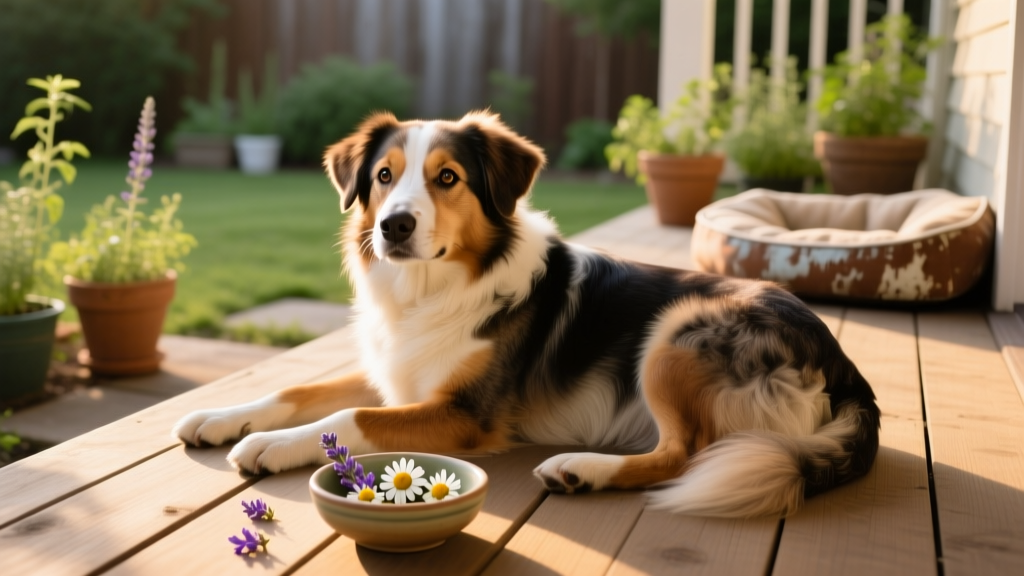
Quick Answer: Do Flower Remedies Work for Dogs?
The evidence-based verdict: INCONCLUSIVE. No peer-reviewed veterinary studies have demonstrated that Bach flower remedies or other floral essences produce measurable behavioral or physiological changes in dogs beyond placebo effects observed in owners. Flower essences are generally safe (they contain negligible active compounds), but they should never replace evidence-based behavioral interventions or veterinary-prescribed anxiety treatments. If your dog has significant anxiety, fear, or behavioral issues, consult a veterinarian or certified applied animal behaviorist (CAAB) for proven treatment protocols.
Walk into any holistic pet store or browse online wellness shops, and you'll find dozens of flower remedy products marketed for canine anxiety, fear, aggression, and grief. Brands like Rescue Remedy for Pets, Spirit Essences, and Anaflora promise emotional balance through diluted flower extracts. But what does veterinary science actually say about these products, and should you spend $15–$35 per bottle on them?
This article examines the mechanisms, evidence base, and practical realities of flower remedies for dogs — separating what's harmless from what's genuinely helpful.
What Are Flower Remedies and How Are They Made?
Flower remedies — most commonly associated with the Bach flower system developed by English physician Edward Bach in the 1930s — are prepared by placing fresh flowers in water and exposing them to sunlight (the "sun method") or boiling them. The resulting infusion is then diluted, typically at a ratio of 1:240 or greater, and preserved with brandy or vegetable glycerin.
The 38 original Bach remedies each target a specific emotional state: Rescue Remedy (a blend of five essences) is marketed for acute stress; Mimulus addresses known fears; Aspen targets vague anxieties; Walnut supports transitions. Pet-specific brands have expanded this catalog to include canine-targeted blends for separation anxiety, thunderstorm phobia, and shelter-dog decompression.
The Dilution Problem
A standard Bach flower remedy diluted at 1:240 contains approximately 0.4% of the original flower infusion. By the time you administer 4 drops to a 50 lb (23 kg) dog, the quantity of any bioactive plant compound is vanishingly small — often below the threshold of detection by mass spectrometry. This is a key distinction from herbal medicine (phytotherapy), where measurable quantities of plant compounds like flavonoids, terpenes, or alkaloids are present.
Flower essences are not essential oils, which contain concentrated volatile compounds. They are also not homeopathic preparations, though they share the philosophical premise that extreme dilution retains therapeutic "energy" or "vibrational imprint" — a concept that has no support in modern pharmacology or biochemistry.
The Science: What Research Exists on Flower Remedies for Dogs?
The honest answer is that rigorous veterinary research on flower essences in dogs is nearly nonexistent. Here's what the literature actually contains:
- A 2012 randomized controlled trial published in the journal Homeopathy tested Bach flower remedies against placebo in dogs with noise phobia (fireworks). The study found no statistically significant difference between the treatment and placebo groups in behavioral or physiological stress markers.
- A 2007 study in Complementary Therapies in Clinical Practice examined Rescue Remedy in humans under laboratory-induced stress and found no measurable effect on heart rate, blood pressure, or self-reported anxiety compared to placebo.
- No published veterinary trials in the Journal of Veterinary Behavior, Applied Animal Behaviour Science, or Journal of the American Veterinary Medical Association have demonstrated efficacy of flower essences for any canine behavioral condition as of 2026.
The Merck Veterinary Manual does not include flower essences in its behavioral medicine treatment protocols, and the American Veterinary Medical Association (AVMA) does not recognize flower remedies as an evidence-based treatment modality.
Why Do Owners Report Success?
The caregiver placebo effect is well-documented in veterinary behavioral medicine. A 2014 study in the Journal of Veterinary Behavior found that approximately 40% of dog owners rated their dog's anxiety as "improved" when given a known placebo. When owners believe they're actively helping their dog, they may interpret normal behavioral fluctuations as improvement, change their own behavior in ways that actually reduce the dog's stress (calmer handling, more predictable routines), or selectively notice positive moments while discounting negative ones.
Evolutionary Context: How Dogs Process Stress and Why Plants Aren't a Straightforward Answer
Ancestral Stress Response
Dogs inherited their stress physiology from wolves, whose survival depended on a finely tuned hypothalamic-pituitary-adrenal (HPA) axis. When a wolf perceives a threat, the amygdala signals the hypothalamus to release corticotropin-releasing hormone (CRH), triggering a cascade: the pituitary releases ACTH, the adrenal glands pump out cortisol and epinephrine, and the body enters fight-or-flight mode within seconds.
This system evolved over millions of years to respond to acute, physical threats — predator encounters, territorial disputes, prey capture. It was not designed for the chronic, environmental stressors modern dogs face: prolonged isolation, noise phobias, leash reactivity in dense urban settings. The mismatch between ancestral neurobiology and modern living conditions is a core driver of canine behavioral disorders.
Wild canids do consume plant matter — stomach contents of prey, seasonal berries, grasses — and some researchers propose this provides trace phytochemicals. However, there is no evidence that ancestral canids sought out specific flowers for emotional regulation, and the concept of "flower essence energy" has no parallel in wildlife behavioral ecology.
Physiological Mechanism: How Anxiety Actually Works in the Canine Brain
Understanding why flower remedies lack a plausible mechanism requires understanding how canine anxiety actually functions at the neurochemical level.
The key neurotransmitters involved in canine anxiety:
- Serotonin (5-HT): Regulates mood, impulse control, and fear extinction. Low serotonin activity is associated with generalized anxiety and compulsive behaviors. SSRIs like fluoxetine (Prozac) work by increasing serotonin availability at synapses — at measured doses of 1–2 mg/kg twice daily.
- GABA (gamma-aminobutyric acid): The brain's primary inhibitory neurotransmitter. Benzodiazepines like alprazolam enhance GABA activity to produce rapid anxiolysis. This is what stops a panic response in its tracks.
- Norepinephrine: Drives arousal and vigilance. Overactive noradrenergic signaling contributes to hypervigilance and exaggerated startle responses.
- Cortisol: The primary stress hormone. Chronic elevation damages hippocampal neurons and impairs the dog's ability to learn new, non-fearful associations.
For a flower essence to meaningfully alter these pathways, it would need to contain molecules capable of crossing the blood-brain barrier, binding to specific receptor sites, and modulating neurotransmitter activity at pharmacologically relevant concentrations. The extreme dilutions in flower remedies mean no such molecular interaction is possible — the preparations simply do not contain enough of any compound to engage these systems.
This is why evidence-based anxiety treatments for dogs use measurable interventions: fluoxetine (serotonin modulation), trazodone (serotonin antagonist/reuptake inhibitor), clomipramine (tricyclic antidepressant), gabapentin (GABA analog), and Sileo (dexmedetomidine oromucosal gel, an alpha-2 agonist specifically FDA-approved for noise aversion in dogs). Each has a known pharmacokinetic profile, dose-response curve, and measurable mechanism of action.
Are Flower Remedies Safe for Dogs? Risk Assessment
The safety profile of properly prepared Bach-type flower essences is generally favorable — but "safe" and "harmless" are not the same thing when we consider indirect risks.
| Risk Category | Details | Severity |
|---|---|---|
| Alcohol content | Traditional Bach remedies use brandy as a preservative (27% alcohol). Four drops contain ~0.05 mL ethanol — negligible for most dogs, but relevant for toy breeds under 5 lb (2.3 kg) or dogs with hepatic disease. Glycerin-based versions avoid this. | Low (use glycerin-based for small breeds) |
| Delayed treatment | The most significant risk. Dogs with severe separation anxiety, noise phobia, or aggression who receive only flower remedies miss the window for effective behavioral modification and pharmacotherapy. Chronic untreated anxiety causes neurobiological damage (hippocampal atrophy, immune suppression). | High |
| Product contamination | Flower remedies are not FDA-regulated as drugs. Quality control varies. Some artisanal brands may use flowers treated with pesticides, or preparations may harbor bacterial growth if improperly preserved. | Moderate |
| Toxic flower species | Some non-Bach "flower essence" brands include plants toxic to dogs (oleander, lily of the valley, foxglove). Always verify every botanical ingredient against the ASPCA Toxic and Non-Toxic Plants database. | High (species-dependent) |
| Xylitol in flavored versions | Some pet wellness brands add sweeteners to improve palatability. Xylitol (birch sugar) is lethal to dogs at doses as low as 0.1 g/kg. Always check ingredient labels. | Critical (if present) |
⚠ Poison Control Resources
If your dog ingests any product containing a potentially toxic plant, xylitol, or an unknown substance, contact ASPCA Animal Poison Control: (888) 426-4435 (24/7, consultation fee applies) or Pet Poison Helpline: (855) 764-7661 immediately.
Common Myths About Flower Remedies for Dogs — Debunked
| Myth | What the Science Says |
|---|---|
| "Flower remedies work through quantum energy/vibrational healing" | No instrument has ever detected a "vibrational imprint" in diluted flower water. Quantum effects operate at subatomic scales and do not translate to macro-scale biological systems in this manner. This is a misapplication of quantum terminology. |
| "My dog visibly calmed down after taking Rescue Remedy" | The caregiver placebo effect is powerful. Additionally, the act of administering a remedy — gentle handling, focused attention, calm voice — is itself anxiolytic for dogs. The ritual, not the remedy, may be doing the work. |
| "Flower remedies are just like herbal medicine" | Herbal medicine (phytotherapy) uses measurable concentrations of bioactive plant compounds. Chamomile extract at clinical doses contains quantifiable apigenin that binds to GABA-A receptors. Flower essences at 1:240 dilution contain no measurable active compounds. They are fundamentally different categories. |
| "Vets recommend flower remedies" | Some integrative veterinarians stock them, but no veterinary behavioral medicine textbook (Overall's Clinical Behavioral Medicine for Small Animals, Horwitz & Mills' BSAVA Manual of Canine and Feline Behavioural Medicine) includes flower essences in treatment algorithms. Board-certified veterinary behaviorists (DACVBs) rely on SSRIs, TCAs, benzodiazepines, and structured behavior modification. |
| "It can't hurt to try" | The remedy itself is unlikely to cause direct harm. But using it instead of proven treatments allows chronic anxiety to worsen, deepens neural fear pathways, and can escalate behavioral problems to the point where rehoming or euthanasia becomes a consideration. Time lost is the real cost. |
What Actually Works: Evidence-Based Alternatives for Canine Anxiety
If your dog struggles with anxiety, fear, or stress-related behaviors, these interventions have robust evidence behind them:
Pharmacological Options (Require Veterinary Prescription)
- Fluoxetine (Prozac): 1–2 mg/kg once daily. SSRI for generalized anxiety, separation anxiety, and compulsive disorders. Takes 4–8 weeks to reach full effect. Cost: ~$10–$30/month for generic.
- Trazodone: 2–5 mg/kg every 8–24 hours as needed. Serotonin antagonist/reuptake inhibitor for situational anxiety (vet visits, travel, thunderstorms). Onset: 1–2 hours. Cost: ~$8–$20/month.
- Sileo (dexmedetomidine gel): FDA-approved specifically for canine noise aversion. Applied to the gums 30–60 minutes before expected noise events. Cost: ~$30–$50 per tube (multiple doses).
- Clomipramine (Clomicalm): 1–2 mg/kg twice daily. FDA-approved for separation anxiety in dogs. Tricyclic antidepressant. Takes 4–6 weeks. Cost: ~$15–$40/month.
Behavioral Interventions
- Systematic desensitization and counter-conditioning (DS/CC): Gradually exposing the dog to the fear trigger at sub-threshold intensity while pairing with high-value rewards. This is the gold standard for phobias and fear-based reactivity. Work with a certified professional dog trainer (CPDT-KA) or CAAB. Typical cost: $100–$200 per session; expect 8–16 sessions for significant issues.
- AdaptDAP (dog-appeasing pheromone): Synthetic analog of the pheromone produced by lactating dams. Available as diffuser ($25–$40), collar ($15–$25), or spray ($12–$20). Some studies show modest anxiolytic effects, particularly in puppies and shelter dogs. Evidence is mixed but it carries virtually no risk.
- L-theanine supplements: An amino acid found in green tea that promotes alpha brain wave activity. Products like Virbac Anxitane (100–200 mg per dose depending on weight) have some clinical trial support. Cost: $20–$35 for a 30-day supply.
- Pressure wraps (Thundershirt): Constant gentle pressure on the torso. Published studies show mild-to-moderate reduction in anxiety behaviors in some dogs during storms. Cost: $40–$70. Not a standalone solution but a reasonable adjunct.
Practical Decision Framework: Should You Use Flower Remedies?
- If your dog has mild, situational nervousness (slightly tense at the vet, mildly wary of strangers): A flower remedy is unlikely to help but unlikely to harm. You can try it alongside low-risk interventions like Adaptil and L-theanine — but if you don't see improvement within 2–3 weeks, move to evidence-based options.
- If your dog has moderate anxiety (pacing, whining, destructive behavior when alone; trembling during storms; leash reactivity): Skip flower remedies. Consult your veterinarian about a combination of behavioral modification and, if appropriate, pharmacotherapy. Every week of untreated moderate anxiety strengthens the neural fear pathways.
- If your dog has severe anxiety or fear-based aggression (self-injury during separation, panic-level storm responses, biting when fearful): Flower remedies are not appropriate. Seek a veterinary behaviorist (DACVB) or a CAAB immediately. These cases often require medication alongside structured behavior modification to prevent injury and preserve quality of life.
Breed Variations in Anxiety Susceptibility
While flower remedy marketing often targets "anxious breeds," the reality is that anxiety disorders have complex genetic and environmental etiologies that vary within breeds as much as between them. That said, some breeds show higher prevalence of specific anxiety-related conditions:
- Border Collies and Australian Shepherds: Higher rates of noise phobia and storm sensitivity, likely linked to selection for environmental vigilance in herding work. These breeds often respond well to structured DS/CC protocols paired with fluoxetine.
- German Shepherds: Overrepresented in separation anxiety cases. Their strong social bonding, selected for cooperative working relationships, can become maladaptive in modern solo-household living.
- Greyhounds and rescue dogs from institutional settings: Often display generalized anxiety related to early life experiences rather than breed genetics. Environmental enrichment and predictable routines are foundational.
- Small companion breeds (Chihuahuas, Italian Greyhounds, Toy Poodles): Higher reported rates of trembling and fear-based behaviors, though owner reporting bias may inflate these numbers. Small body size makes them more vulnerable in chaotic environments.
No breed-specific evidence suggests flower remedies work differently across breeds. The neurochemistry of anxiety is conserved across all domestic dogs regardless of breed.
When Anxiety Signals a Medical Problem
Sudden-onset behavioral changes — including new fear responses, aggression, or anxiety in a previously confident dog — should always prompt a veterinary examination before behavioral or alternative treatments are pursued. Medical conditions that can manifest as anxiety include:
- Hypothyroidism: Can cause fearfulness, aggression, and lethargy. Diagnosed via full thyroid panel (T4, free T4, TSH, thyroid antibodies). Cost: $80–$200.
- Cognitive dysfunction syndrome (CDS): Senior dogs may develop disorientation, night waking, and apparent anxiety as brain changes progress. Affects an estimated 28% of dogs over 11 years.
- Pain conditions: Orthopedic pain (hip dysplasia, IVDD), dental disease, and otitis can cause irritability and apparent "anxiety" that is actually pain-avoidance behavior.
- Neurological disorders: Partial seizures, brain tumors, and hepatic encephalopathy can produce sudden behavioral changes that mimic anxiety disorders.
🩺 Consult Your Veterinarian
This article provides educational information only and does not replace professional veterinary advice. If your dog is experiencing anxiety, behavioral changes, or any health concern, consult your veterinarian for a proper diagnosis and treatment plan. A veterinary behaviorist (DACVB) can be found through the American College of Veterinary Behaviorists.
Frequently Asked Questions
Can dogs take human Bach flower remedies?
Technically yes, since the preparations contain negligible active compounds. However, human formulations often use brandy as a preservative, which is unnecessary for dogs when glycerin-based pet versions are available. The main concern is not toxicity but the delay in seeking effective treatment for genuine behavioral problems.
How do dogs process flower essences compared to humans?
Dogs metabolize compounds through the same hepatic cytochrome P450 enzyme system as humans, though with species-specific variations in enzyme activity. However, since flower essences at standard dilutions contain essentially no bioactive molecules, there is nothing meaningful for either species to metabolize. The physiological processing question is essentially moot.
Is it normal for my dog to be anxious?
Mild wariness in novel situations is normal canine behavior — it's an adaptive survival mechanism inherited from wolves. However, anxiety that interferes with daily functioning (inability to eat, sleep, or engage in normal activities), causes self-injury, or persists beyond the triggering event is not normal and warrants professional intervention. Approximately 20–40% of pet dogs display some form of anxiety-related behavior, making it common but not something owners should simply accept.
What does it mean when my dog seems calmer after a flower remedy?
Several explanations are more likely than pharmacological efficacy: (1) The calming ritual of administration — your focused attention, gentle handling, and quiet voice are genuinely soothing. (2) Natural fluctuation in anxiety levels. (3) Caregiver placebo effect altering your perception. (4) Simultaneous environmental changes you may not have consciously noted (shorter alone-time, more exercise, weather changes).
How is a dog's anxiety response different from a human's?
Dogs lack the prefrontal cortex capacity for abstract worry about future events — they don't ruminate about tomorrow's vet visit the way humans do. Their anxiety is primarily driven by immediate environmental cues and associative memory. This is actually why behavioral modification (changing associations through DS/CC) can be highly effective: you're rewiring direct stimulus-response pathways rather than trying to change complex cognitive narratives. It also means that "talking your dog through it" or expecting cognitive insight from a remedy is not how canine neurology works.
Can flower remedies replace anxiety medication prescribed by my vet?
No. Never discontinue prescribed veterinary medication in favor of flower remedies without your veterinarian's guidance. Abruptly stopping SSRIs or other psychotropic medications can cause withdrawal effects and rebound anxiety. If you wish to reduce medication, work with your vet on a structured tapering protocol alongside behavioral modification progress.
Sources & Further Reading
- American Veterinary Medical Association (AVMA): avma.org
- ASPCA Animal Poison Control — Toxic and Non-Toxic Plants: aspca.org/pet-care/animal-poison-control/toxic-and-non-toxic-plants
- Merck Veterinary Manual — Behavioral Medicine: merckvetmanual.com/dog-behavior
- American College of Veterinary Behaviorists (DACVB): dacvb.org
Robin Maitland
All our authors care for dogs every day — read more of their work on the authors page.


