English Dog Breeds: The Science Behind Their Unique Traits
Explore the evolutionary science, physiology, and behavior behind popular English dog breeds — from scent hounds to retrievers and terriers.
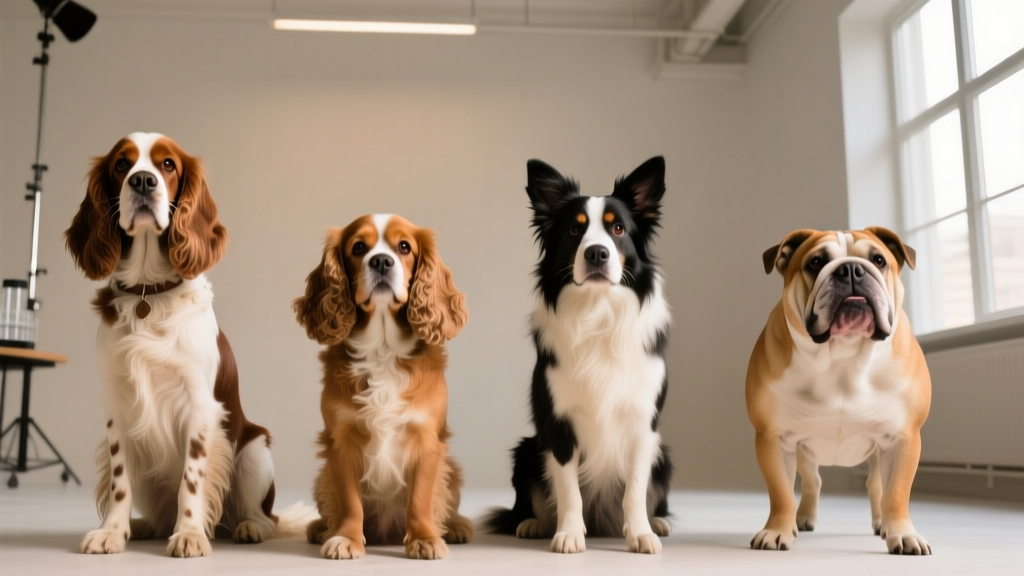
Quick Answer: "English dog" is not a single breed — it refers to dogs originating from England, encompassing over 30 recognized breeds including the English Bulldog, English Springer Spaniel, English Setter, English Foxhound, and English Toy Terrier. These breeds share a common geographic origin but were selectively bred for vastly different purposes: scent tracking, vermin control, livestock herding, and companionship. Their shared evolutionary roots trace back to Roman-era mastiffs and Celtic hunting hounds, but centuries of artificial selection have produced dramatically different physiologies, temperaments, and behavioral drives.
What Defines an English Dog Breed?
The term "English dog" covers breeds developed on the British Isles — specifically England — for working roles that shaped their anatomy and neurology. The American Kennel Club recognizes dozens of English-origin breeds across seven groups: Sporting, Hound, Working, Terrier, Toy, Non-Sporting, and Herding. What unites them is not a shared body type but a shared selective breeding history rooted in England's rural economy between the 12th and 19th centuries.
During the English Enclosure Acts (1600s–1800s), land ownership consolidation created distinct farming roles that demanded specialized dogs. Fox hunting required fast, vocal hounds. Rat-infested grain stores needed compact, fearless terriers. Livestock operations demanded intelligent herders. This occupational diversification drove the genetic divergence we see today across English breeds.
The Evolutionary Roots: From Wolf to Working English Dog
Evolutionary Context: All English dog breeds descend from Canis lupus familiaris, domesticated approximately 15,000–40,000 years ago. The earliest dogs in Britain arrived with Mesolithic hunter-gatherers around 10,000 years ago. Genetic analysis published in the journal Science (Frantz et al., 2016) showed that European dogs underwent a significant population turnover around 6,000–7,000 years ago, replaced by dogs accompanying Neolithic farmers from the Near East. English breeds carry this mixed ancestry — combining early European dog lineages with later Near Eastern introductions.
The behavioral traits we associate with English breeds map directly onto ancestral wolf behavioral repertoires, amplified or suppressed through selection:
- Scent hounds (English Foxhound, Beagle, Harrier): Wolves track prey by scent over distances up to 1.5 miles. English hound breeds were selected for extreme olfactory persistence — the ability to follow a scent trail for 10+ miles without losing the line.
- Terriers (Jack Russell, English Toy Terrier, Staffordshire Bull Terrier): The wolf prey sequence is orient → eye → stalk → chase → grab-bite → kill-bite → dissect → consume. Terriers were selected for an exaggerated grab-bite and kill-bite phase, with the dissect and consume phases suppressed.
- Retrievers and Spaniels (English Springer Spaniel, Curly-Coated Retriever): These breeds were selected for a modified prey drive where the grab-bite is soft ("soft mouth") and the kill-bite is entirely absent, allowing them to carry game without damage.
- Bulldogs and Mastiff-types (English Bulldog, Bullmastiff): Selected from Roman-era war dogs (canes pugnaces) for gripping and holding large animals. Their brachycephalic skulls and powerful jaw musculature are extreme modifications of the wolf's grab-and-hold predatory sequence.
How Do English Dog Breeds Process the World? The Physiology
Olfactory Processing in English Scent Hounds
The English Foxhound possesses approximately 300 million olfactory receptors — compared to a human's 6 million and a Beagle's 225 million. The olfactory bulb in scent hound breeds occupies a proportionally larger volume of the forebrain than in brachycephalic breeds. Research published in Applied Animal Behaviour Science demonstrated that scent hound breeds show significantly higher investigative sniffing durations (averaging 8–12 seconds per novel odor source) compared to toy breeds (2–4 seconds).
The vomeronasal organ (Jacobson's organ), located in the roof of the mouth, detects pheromones. English hound breeds have a well-developed flehmen response — the lip-curling behavior that directs airborne molecules to this organ. This dual olfactory system allows them to simultaneously track ground scent (via the main olfactory epithelium) and airborne scent (via the vomeronasal system).
Neurological Wiring: Prey Drive Circuitry
The predatory motor sequence in dogs is controlled by a neural circuit involving the hypothalamus, amygdala, and brainstem motor nuclei. In English terrier breeds, the neural pathway from the chase phase to the grab-bite phase is hyper-connected — meaning the transition from seeing movement to biting is nearly instantaneous. This is why a Jack Russell Terrier can go from stillness to a full-speed chase in under 0.8 seconds.
Conversely, English Springer Spaniels have been selected for a truncated predatory sequence. The neural signal from chase to grab-bite is present, but the signal from grab-bite to kill-bite is suppressed. This produces the "soft mouth" trait — the dog will pick up a bird but not crush it. Electromyographic studies of jaw muscles in retriever breeds show peak bite forces of 13–16 PSI during retrieval, compared to 45–60 PSI during defensive biting (Gosling et al., Journal of Veterinary Behavior).
English Dog Breed Comparison: Traits by Working Group
| Breed | Origin Purpose | Weight (lb/kg) | Prey Drive Level | Olfactory Receptors (est.) | Exercise Need (min/day) |
|---|---|---|---|---|---|
| English Foxhound | Pack fox hunting | 60–75 / 27–34 | Very High | ~300 million | 90–120 |
| English Springer Spaniel | Flushing/retrieving game | 40–55 / 18–25 | Moderate | ~200 million | 60–90 |
| English Bulldog | Bull-baiting (historical) | 40–55 / 18–25 | Low | ~100 million | 20–30 |
| Jack Russell Terrier | Vermin/fox bolting | 9–15 / 4–7 | Extreme | ~150 million | 60–90 |
| English Setter | Bird locating/pointing | 45–80 / 20–36 | High | ~250 million | 90–120 |
| Bullmastiff | Estate guardian | 100–130 / 45–59 | Low–Moderate | ~120 million | 30–45 |
Common Misconceptions About English Dog Breeds
| Myth | Scientific Fact |
|---|---|
| "English Bulldogs are lazy by nature" | Bulldogs have brachycephalic obstructive airway syndrome (BOAS), which restricts airflow by 30–60% compared to mesocephalic breeds. Their reduced activity is a physiological limitation, not a temperament trait. Many Bulldogs are eager to exercise but physically cannot sustain it. |
| "Terriers are aggressive" | Terriers display high predatory aggression toward small animals (a selected working trait) but typically score average or above-average on human-directed friendliness assessments. The C-BARQ temperament survey data shows Jack Russell Terriers scoring higher on stranger-directed friendliness than many "gentle" breeds. |
| "All English dogs are good with children" | Temperament varies enormously. English Springer Spaniels from working lines can display dominance-related aggression (a condition called "springer rage syndrome" linked to a serotonin receptor polymorphism). English Foxhounds are pack-oriented but too boisterous for toddlers. Breed origin predicts behavior far better than nationality of origin. |
| "English breeds are healthier because they're traditional" | Several English breeds carry some of the highest genetic disease burdens of any dogs. English Bulldogs have a coefficient of inbreeding (COI) averaging 22–26% — higher than many rare breeds — and a median lifespan of only 8–10 years. The Bullmastiff has a 25% lifetime risk of cancer. |
What Does It Mean When My English Dog Shows Breed-Specific Behaviors?
Vocalization Patterns
English Foxhounds and Beagles produce a distinctive vocalization called "baying" — a prolonged, resonant howl-bark hybrid. This is not random noise. Baying serves a specific communication function: it allows hunters on horseback to track the hound's position and progress during a chase over long distances. The acoustic structure of a bay (fundamental frequency of 200–400 Hz, duration of 1–3 seconds) carries further through woodland than a sharp bark (which attenuates rapidly at frequencies above 1,000 Hz).
If your English Foxhound or Beagle bays excessively at home, this signals under-stimulation of their scent-tracking drive. These breeds need structured nose-work activity — not just physical exercise — to satisfy their neurological need to process olfactory information. A 2022 study in Applied Animal Behaviour Science found that scent hounds given 15 minutes of structured scent work daily showed a 40% reduction in nuisance vocalization compared to those receiving equivalent-duration leash walks.
Pointing and Setting Behavior
The English Setter's "set" — freezing in a crouched position with one foreleg raised — is a modified stalk phase of the predatory sequence. In wolves, the stalk precedes the chase. Setters were selected to freeze at this point rather than continue, allowing hunters to approach and net (later, shoot) the game birds.
When your English Setter freezes in the yard, they are detecting a scent cone from a small animal. This behavior is involuntary and hardwired — it cannot be trained away, only managed. If your Setter begins pointing at nothing visible, trust their olfactory assessment: they are likely detecting an animal you cannot see, possibly underground or in dense cover.
Digging and Earth-Dog Behavior
English terriers (particularly Jack Russell and Border Terrier types) dig with a specific biomechanical pattern: rapid alternating forepaw strokes at a rate of 3–4 cycles per second, using the claws to loosen soil and the muzzle to push debris backward. This is a direct inheritance from the behavior of bolting foxes from underground setts. The energy expenditure of terrier digging is approximately 8–10 metabolic equivalents (METs) — comparable to a human running at 6 mph.
Providing a designated digging area (a sandbox or loose-soil pit measuring at least 3×3 feet and 18 inches deep) can reduce destructive yard digging by 60–70% within two weeks, based on behavioral modification studies using environmental enrichment protocols.
When Breed-Specific Behavior Signals a Problem
Red Flags: When Normal Breed Behavior Becomes Abnormal
- English Bulldog breathing at rest exceeds 40 breaths/minute: Normal resting respiratory rate is 15–30 breaths/minute. Persistent tachypnea in Bulldogs signals worsening BOAS and requires veterinary evaluation for soft palate resection or nostril widening surgery (cost: $1,500–$4,000).
- English Springer Spaniel shows unprovoked growling or snapping followed by apparent confusion: This may indicate springer rage syndrome (idiopathic aggression), a neurological condition with suspected genetic basis. Consult a veterinary behaviorist immediately — this is not a training problem.
- English Foxhound becomes fixated on a scent trail and becomes unresponsive to recall for 10+ minutes: While scent fixation is normal, complete unresponsiveness to auditory stimuli suggests a heightened state that may indicate anxiety-related hyperfocus rather than normal hunting drive. A certified behaviorist can assess whether counter-conditioning is needed.
- Bullmastiff shows sudden lethargy, abdominal distension, and unproductive retching: These are signs of gastric dilatation-volvulus (GDV/bloat), a life-threatening emergency. Deep-chested English breeds are at elevated risk. Immediate veterinary surgery is required — survival rate drops from 80% to under 50% if treatment is delayed beyond 2 hours.
Practical Implications for English Dog Owners
Exercise Programming by Breed Type
Generic "walk the dog" advice fails English breeds because their working origins demand specific stimulation types:
- Scent hounds (Foxhound, Beagle, Harrier): Minimum 90 minutes daily, of which at least 30 minutes should involve off-leash exploration in a secure area or structured scent-work games. A flirt pole (a lure on a rope attached to a pole, $25–$45) satisfies chase drive safely. Snuffle mats ($15–$30) and frozen Kong toys stuffed with wet food provide olfactory enrichment at home.
- Terriers (Jack Russell, Staffordshire Bull Terrier): 60–90 minutes daily with high-intensity intervals. Earth-dog trials (competitive tunnel-digging events sanctioned by the AKC) provide an ideal outlet. Lure coursing is also suitable. Expect to spend $20–$40 per trial entry.
- Spaniels and Setters: 60–120 minutes daily, ideally including field work or hunt-test training. The AKC hunt test program provides structured outlets for flushing and pointing breeds. Training sessions should be short (5–10 minutes) but frequent — these breeds are bred for sustained independent decision-making and can become frustrated with repetitive drills.
- Bulldogs and Mastiff-types: 20–45 minutes daily, broken into short sessions. Avoid exercise during temperatures above 75°F (24°C) — brachycephalic breeds overheat rapidly due to compromised evaporative cooling. A cooling vest ($30–$60) can extend safe exercise time by approximately 15–20 minutes in warm weather.
Nutrition Considerations
English breeds vary dramatically in caloric needs. An active English Foxhound (70 lb / 32 kg) working in the field may require 2,200–2,800 kcal/day, while a sedentary English Bulldog of similar weight needs only 1,100–1,400 kcal/day to maintain an ideal body condition score (BCS) of 4–5 out of 9. Overfeeding Bulldogs is the single most common nutritional error — excess weight compounds BOAS severity by increasing tissue mass around the airway.
For deep-chested English breeds (Bullmastiff, English Setter, English Foxhound), feed 2–3 smaller meals rather than one large meal to reduce GDV risk. Avoid exercise for 60 minutes before and after meals. The cost difference between a standard and a raised feeder is minimal ($15–$30), but the AVMA notes that evidence on raised feeders reducing GDV risk is mixed — the meal-splitting strategy has stronger evidence.
Frequently Asked Questions
Why do English dog breeds have such different temperaments?
Artificial selection for specific working roles created divergent behavioral phenotypes from the same ancestral gene pool. A Foxhound selected for 200 generations to chase foxes in packs will have fundamentally different neurochemistry — higher dopamine receptor density in reward pathways, lower serotonin turnover — than a Bulldog selected for 50 generations to grip and hold. The Canine Behavioral Genomics project has identified specific gene variants (e.g., in the DRD4 dopamine receptor gene) that correlate with breed-typical behavioral differences.
Can English dog breeds live in apartments?
It depends entirely on the breed and your commitment to structured exercise. English Bulldogs and English Toy Terriers adapt reasonably to apartment life given their lower exercise needs. English Foxhounds, English Setters, and working-line Springer Spaniels are poor apartment candidates — their need for 90+ minutes of vigorous daily activity and their vocalization tendencies (baying, barking) create conflicts in shared housing. If you live in an apartment and want an English breed, prioritize breeds under 30 lb (14 kg) with exercise needs under 45 minutes/day.
Is it normal for my English Springer Spaniel to "shut down" during training?
Yes — this is a breed-typical stress response. English Springer Spaniels, bred for independent decision-making in the field, often disengage (lie down, look away, stop responding) when training becomes repetitive or overly controlling. This is not stubbornness. It signals that the training session has exceeded the dog's engagement threshold. Switch to shorter sessions (3–5 minutes), increase reward value (use real meat instead of kibble), and incorporate more choice-based training where the dog can opt in or out of exercises.
How is an English dog's sense of smell different from a human's?
English scent hounds can detect odor concentrations 10,000–100,000 times lower than humans. Their nasal anatomy includes a secondary airflow pathway that separates breathing from smelling — when a dog inhales, approximately 12% of the air is directed to the olfactory recess while 88% goes to the lungs. Humans direct 100% of inhaled air to the lungs, with olfactory detection occurring only by diffusion. Additionally, dogs can move each nostril independently, allowing them to determine scent direction without turning their head — a capability called "stereo olfaction" that humans entirely lack.
What is the average lifespan of English dog breeds?
Lifespan varies significantly: English Toy Terriers average 13–15 years, English Springer Spaniels 12–14 years, English Setters 10–12 years, Bullmastiffs 7–9 years, and English Bulldogs 8–10 years. The inverse relationship between body size and lifespan holds across English breeds — larger breeds age faster at the cellular level, with accelerated telomere shortening documented in breeds over 80 lb (36 kg).
Disclaimer: This article provides educational information about canine science and breed behavior. It is not a substitute for professional veterinary advice. Always consult your veterinarian for breed-specific health screening recommendations and before making changes to your dog's diet, exercise, or medication regimen.
Anouk Beaumont
All our authors care for dogs every day — read more of their work on the authors page.


