Dogs With Mustache: The Science Behind Whiskered Breeds
Why do some dogs have mustaches? Explore the science of canine vibrissae, breed genetics, and what those facial whiskers really do for your dog.
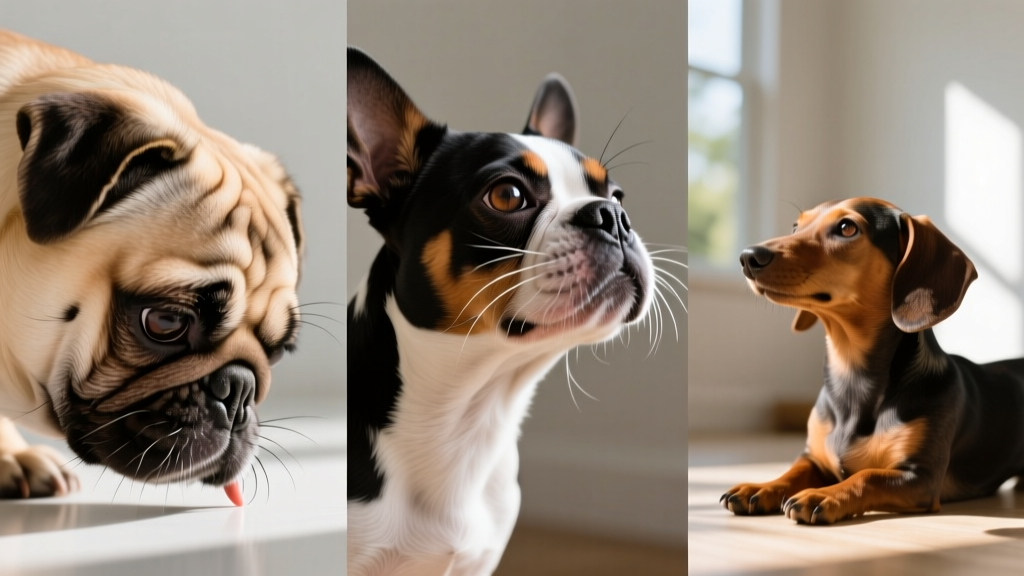
Quick Answer: Why Do Some Dogs Have Mustaches?
Yes, many dogs naturally grow mustache-like facial hair. These aren't cosmetic features — they're specialized sensory whiskers called vibrissae. Breeds like the Schnauzer, Scottish Terrier, and Brussels Griffon have prominent mustaches due to selective breeding for wire-haired coats. The mustache hairs are deeply rooted in follicles packed with nerve endings, functioning as tactile sensors that help dogs navigate their environment, detect objects in low light, and protect their eyes and muzzle from debris.
The Anatomy of a Canine Mustache: What Those Hairs Actually Are
When you see a Miniature Schnauzer sporting that distinguished facial hair, you're looking at one of the most sophisticated sensory systems in the animal kingdom. The "mustache" on wire-haired and certain long-haired breeds consists of vibrissae — stiff, thickened hairs that differ fundamentally from the regular guard hairs and undercoat that make up the rest of your dog's coat.
Vibrissae vs. Regular Coat Hair: The Key Differences
| Feature | Vibrissae (Mustache Hairs) | Regular Coat Hair |
|---|---|---|
| Follicle depth | 3x deeper in skin | Standard dermal depth |
| Nerve supply | Dense mechanoreceptor cluster (blood sinus) | Minimal nerve endings |
| Hair shaft diameter | 2-3x thicker | Standard diameter |
| Growth cycle | Independent, continuous | Seasonal shedding cycles |
| Function | Tactile sensing, spatial awareness | Insulation, protection |
Each vibrissa follicle is surrounded by a blood sinus — a capsule of blood-filled tissue that amplifies mechanical signals. When a mustache hair bends, even slightly, the blood sinus transmits that pressure to a cluster of mechanoreceptors at the follicle base. These receptors fire signals through the trigeminal nerve directly to the somatosensory cortex, the brain region responsible for processing touch information.
Research published in the Journal of Comparative Neurology has documented that canine vibrissae follicles contain approximately 100-200 nerve endings per follicle, compared to roughly 5-10 for standard coat hairs. This makes the mustache region one of the most touch-sensitive areas on a dog's body — comparable to human fingertips in terms of tactile resolution.
Evolutionary Origins: Why Wolves Developed Facial Whiskers
Ancestral function: In wild canids — including gray wolves (Canis lupus), coyotes, and foxes — facial vibrissae serve critical survival functions that predate domestication by millions of years. These sensory hairs evolved as a low-light navigation system for hunting in darkness, dense brush, and underground burrows.
Wolves and wild canids rely on vibrissae for several survival-critical tasks:
- Prey detection in darkness: Wolves hunting at dusk or dawn use vibrissae to sense the proximity of prey when visual information is limited. The mustache hairs detect air current changes caused by nearby movement.
- Burrow and den navigation: Foxes and other burrowing canids use facial whiskers to gauge tunnel width and detect obstacles in complete darkness. Studies on red foxes show vibrissae can detect gaps as narrow as 0.5 cm wider than the animal's head.
- Social communication: In wolf packs, close-contact facial interactions during greeting ceremonies involve vibrissae-to-vibrissae contact, providing tactile feedback about pack members' proximity and emotional state.
- Eye and muzzle protection: The supraorbital (above-eye) and mystacial (mustache) vibrissae trigger a blink reflex when they contact objects, protecting vulnerable eye tissue and nasal passages from thorns, branches, and debris during high-speed pursuit.
According to the Merck Veterinary Manual, the trigeminal nerve pathway that processes vibrissae input is one of the most evolutionarily conserved neural circuits in mammals, appearing in nearly identical form across canids, felids, rodents, and marine mammals.
How Dogs Process Mustache Sensory Input: The Neurological Mechanism
Understanding how your Schnauzer's mustache actually works requires tracing the signal path from hair tip to brain:
- Mechanical stimulus: An object contacts or air current deflects the vibrissa shaft, causing it to bend at its base.
- Hydraulic amplification: The blood sinus surrounding the follicle compresses, magnifying the mechanical force approximately 5-10 times before it reaches the nerve endings.
- Neural transduction: Merkel cells and lanceolate endings (specialized mechanoreceptors) convert the mechanical pressure into electrochemical signals.
- Trigeminal transmission: Signals travel via the maxillary branch of the trigeminal nerve (Cranial Nerve V) to the brainstem.
- Cortical processing: The somatosensory cortex receives and maps the input, creating a spatial "touch image" of the object or air current pattern.
What makes this system remarkable is its speed. Vibrissae-to-cortex signal transmission occurs in approximately 8-12 milliseconds — faster than visual processing (which takes 40-80 ms in dogs). This is why your dog reflexively blinks or turns away before you can even see that something is approaching their face.
Breeds Famous for Their Mustaches: Genetics and Coat Types
The prominent mustache isn't universal across all dogs. It's primarily associated with wire-haired coat genetics — specifically the RSPO2 gene variant that produces furnishings (longer hair on the face, legs, and tail). A 2010 study in PLOS Genetics identified that three genes — RSPO2, FGF5, and KRT71 — together account for approximately 95% of coat variation in domestic dogs, including the presence of facial furnishings.
| Breed | Mustache Prominence | Coat Genetics | Original Working Purpose |
|---|---|---|---|
| Miniature Schnauzer | Very prominent, bushy | Wire coat (RSPO2 variant) | Ratting, farm guarding — mustache protected muzzle from rodent bites |
| Standard Schnauzer | Very prominent, dense | Wire coat (RSPO2 variant) | All-purpose farm dog, livestock driving |
| Scottish Terrier | Moderate to prominent | Wire coat (RSPO2 variant) | Burrowing vermin hunting — mustache sensed tunnel walls |
| Brussels Griffon | Prominent, wiry | Wire coat (RSPO2 variant) | Stable ratting in Belgium |
| West Highland White Terrier | Moderate | Wire coat (RSPO2 variant) | Fox and badger hunting in Scottish Highlands |
| Affenpinscher | Prominent, monkey-like | Wire coat (RSPO2 variant) | Kitchen and stable rodent control |
| Soft Coated Wheaten Terrier | Moderate, softer texture | Modified wire coat | Vermin hunting, herding in Ireland |
| Cesky Terrier | Prominent, silky | Modified wire coat | Burrow hunting in Czech Republic |
Notice a pattern? Nearly every breed with a prominent mustache was originally bred for underground or close-quarters vermin hunting. The mustache wasn't a cosmetic choice — it was functional armor. When a Scottish Terrier plunged into a badger sett or a Schnauzer cornered a rat in a barn, those facial whiskers provided critical spatial awareness and triggered protective blink reflexes against bites and scratches.
Practical Implications for Owners: Caring for Your Dog's Mustache
What This Means for Daily Life
- Never trim or cut vibrissae. Some groomers mistakenly shave or scissor-cut mustache hairs for a "cleaner" look. This removes your dog's tactile sensors and can cause disorientation, increased anxiety in dim environments, and more frequent bumping into objects. Vibrissae do grow back, but the 6-12 week regrowth period leaves your dog sensorily impaired.
- Be mindful of food and water bowl design. Narrow, deep bowls force mustache hairs to bend constantly during eating and drinking, which can cause whisker fatigue — a sensory overload condition. Choose wide, shallow bowls (minimum 7 inches / 18 cm diameter for small breeds, 9 inches / 23 cm for medium-to-large breeds). Stainless steel or ceramic bowls cost $12-$25 and reduce bacterial buildup in the mustache area.
- Clean the mustache regularly. Wire-haired mustache breeds are prone to facial folliculitis and yeast dermatitis (Malassezia overgrowth) in the dense facial hair. Wipe the mustache daily with a damp cloth or veterinary-recommended facial wipe (products like Earthbath Facial Wipes, approximately $8-$12 for 25 wipes). For breeds prone to tear staining that extends into the mustache, a weekly wash with a diluted chlorhexidine solution (2-4%) helps prevent infection.
- Watch for behavioral changes. If your mustached breed suddenly seems clumsy, bumps into furniture, or hesitates in dim hallways, check whether vibrissae have been damaged or trimmed. This sensory deficit often gets misdiagnosed as vision problems.
Grooming Costs for Mustache Breeds
Wire-coated breeds with prominent mustaches require specialized grooming. Here's what to budget:
- Hand-stripping (recommended): $65-$120 per session, every 6-8 weeks. Hand-stripping removes dead wire hairs without damaging the coat texture and preserves vibrissae integrity. Ask your groomer specifically about their hand-stripping experience.
- Clipper cut (less ideal): $40-$75 per session. Clipping softens the wire coat over time and can make mustache hairs more prone to breakage. If you choose clipping, explicitly instruct the groomer to leave vibrissae untouched.
- Annual grooming budget: $520-$960 for hand-stripping maintenance; $320-$600 for clipping. Factor in an additional $100-$200 annually for at-home maintenance products (shampoos, wipes, detangling sprays).
Common Misconceptions About Dog Mustaches
| Myth | Fact |
|---|---|
| "Dog whiskers are just decorative hair" | Vibrissae are deeply rooted sensory organs with dedicated neural pathways to the brain. They're functionally equivalent to a human's fingertips for close-range spatial sensing. |
| "Cutting whiskers doesn't hurt the dog" | While the hair shaft itself has no pain receptors, the follicle base is richly innervated. Cutting causes no acute pain, but the resulting sensory deprivation creates measurable stress — elevated cortisol levels have been documented in studies of vibrissae-trimmed laboratory animals. |
| "All dogs have the same whiskers" | Breed, coat type, and individual genetics determine vibrissae density and length. Wire-haired breeds typically have 20-40% more mystacial vibrissae than smooth-coated breeds. |
| "Whiskers help dogs smell better" | Vibrissae process touch and air current data, not olfactory information. However, by detecting air current patterns, they can help direct scent molecules toward the nose — an indirect relationship, not a direct one. |
| "If a dog's whiskers fall out, they won't grow back" | Vibrissae follow their own growth cycle and will regrow within 6-12 weeks if the follicle is undamaged. Persistent vibrissae loss may indicate an underlying condition like hypothyroidism or Cushing's disease — consult your veterinarian if you notice unusual whisker shedding. |
When Mustache Changes Signal a Health Problem
Because vibrissae are integrated with your dog's nervous and endocrine systems, changes in the mustache area can indicate underlying medical conditions:
- Symmetrical whisker loss (alopecia): Often signals endocrine disorders — hypothyroidism (most common in Schnauzers and other terrier breeds) or hyperadrenocorticism (Cushing's disease). Your vet will typically run a thyroid panel ($80-$150) and ACTH stimulation test ($150-$300) to differentiate.
- Crusting or redness at follicle bases: Suggests bacterial folliculitis or demodectic mange. Breeds with dense mustaches trap moisture and debris, creating an ideal environment for Staphylococcus overgrowth and Demodex mite proliferation.
- Trembling or twitching mustache hairs: Involuntary vibrissae movement (facial myokymia) can indicate neurological conditions including focal seizures or trigeminal neuritis. If twitching persists beyond a few minutes or accompanies other neurological signs (head tilt, circling, disorientation), seek emergency veterinary care.
- Broken or frayed vibrissae: Occasional breakage is normal, but widespread fraying suggests excessive mechanical stress — often from crate rubbing, rough play, or compulsive face-wiping against surfaces. This can be a sign of anxiety or environmental stress.
See your veterinarian promptly if you notice: sudden whisker loss, facial swelling around the muzzle, persistent redness or discharge from whisker follicles, involuntary facial twitching, or behavioral changes like increased clumsiness or reluctance to eat from regular bowls. These may indicate conditions requiring diagnostic testing and treatment.
How Dog Mustache Sensation Differs From Human Touch
Humans process fine touch primarily through Merkel cells and Meissner corpuscles concentrated in the fingertips. Dogs, lacking manual dexterity, evolved to concentrate equivalent tactile acuity in their facial vibrissae. Here's how the comparison breaks down:
- Resolution: A dog's vibrissae can detect objects as thin as 0.02 mm in diameter at a distance of 2-3 cm from the face — roughly equivalent to a human detecting a human hair held an inch from their skin.
- Air current sensitivity: Canine vibrissae detect air velocity changes as small as 0.1 m/s, allowing dogs to sense approaching objects without direct contact. Humans have no equivalent air-current detection ability.
- Active vs. passive sensing: Some mustached breeds (particularly terriers) actively "whisk" — sweeping their muzzle side-to-side to scan their environment, similar to how a human sweeps their fingertips across a surface. This active sensing behavior is most visible when dogs investigate new objects or navigate tight spaces.
- Brain mapping: In the canine somatosensory cortex, the facial vibrissae region occupies a disproportionately large area — similar to how the human hand occupies a large region of our cortical homunculus. This reflects the evolutionary importance of facial touch in canine behavior.
Research from the National Institutes of Health on mammalian vibrissae systems confirms that dogs share this sensory modality with approximately 80% of terrestrial mammals — but the specific arrangement and density of mystacial (mustache) vibrissae varies significantly by species and ecological niche.
Frequently Asked Questions
Why do dogs have mustaches?
Dogs have mustaches (composed of vibrissae) because these specialized hairs function as tactile sensors. They help dogs navigate in darkness, detect nearby objects, protect their eyes through triggered blink reflexes, and gauge whether openings are wide enough to pass through. The trait evolved in ancestral canids for hunting and survival and was preserved — and in some breeds, enhanced — through selective breeding for wire-coated working dogs.
Can dogs feel through their mustache?
Yes. Each vibrissa in a dog's mustache is connected to 100-200 nerve endings at its follicle base. Dogs can detect object proximity, surface texture, air current direction, and even subtle vibrations through their mustache hairs. This tactile information is processed in the somatosensory cortex, giving dogs a detailed "touch map" of objects near their face — even in complete darkness.
How do dogs sense objects with their whiskers?
When a vibrissa bends — from direct contact or air current deflection — the blood sinus surrounding the follicle amplifies the mechanical force and transmits it to mechanoreceptors. These receptors send signals through the trigeminal nerve to the brain in approximately 8-12 milliseconds. Dogs can actively "whisk" by sweeping their muzzle side-to-side, building a tactile image of their surroundings much like sonar.
What does it mean when my dog's mustache is twitching?
Occasional, brief mustache twitching during sleep or excitement is normal — it reflects active processing of sensory input or REM sleep muscle activity. Persistent or involuntary twitching while awake, especially if accompanied by head tilting, disorientation, or behavioral changes, may indicate a neurological issue such as a focal seizure or trigeminal nerve disorder. Consult your veterinarian if twitching is frequent or prolonged.
Is it normal for a dog's mustache whiskers to fall out?
Occasional individual whisker loss is normal — vibrissae follow their own growth cycle and shed/regrow independently. However, noticeable thinning, symmetrical loss on both sides of the muzzle, or failure of whiskers to regrow within 8-12 weeks warrants veterinary evaluation. Common causes of abnormal vibrissae loss include hypothyroidism, Cushing's disease, demodectic mange, and certain autoimmune conditions.
How is a dog's mustache sensation different from human touch?
Dogs concentrate fine-touch sensitivity in their facial vibrissae rather than their hands. Canine mustache hairs can detect objects as thin as 0.02 mm and air currents as slow as 0.1 m/s — capabilities humans simply don't possess. While humans build spatial understanding primarily through vision and fingertip touch, dogs integrate vibrissae input with olfactory and auditory data to create a multisensory picture of their immediate environment.
Marcus Aldridge
All our authors care for dogs every day — read more of their work on the authors page.


