Dogs That Resemble Wolves: The Science Behind Ancestral Traits
Explore the science behind dogs that resemble wolves — genetics, physiology, behavior, and what wolf-like traits mean for modern dog owners.
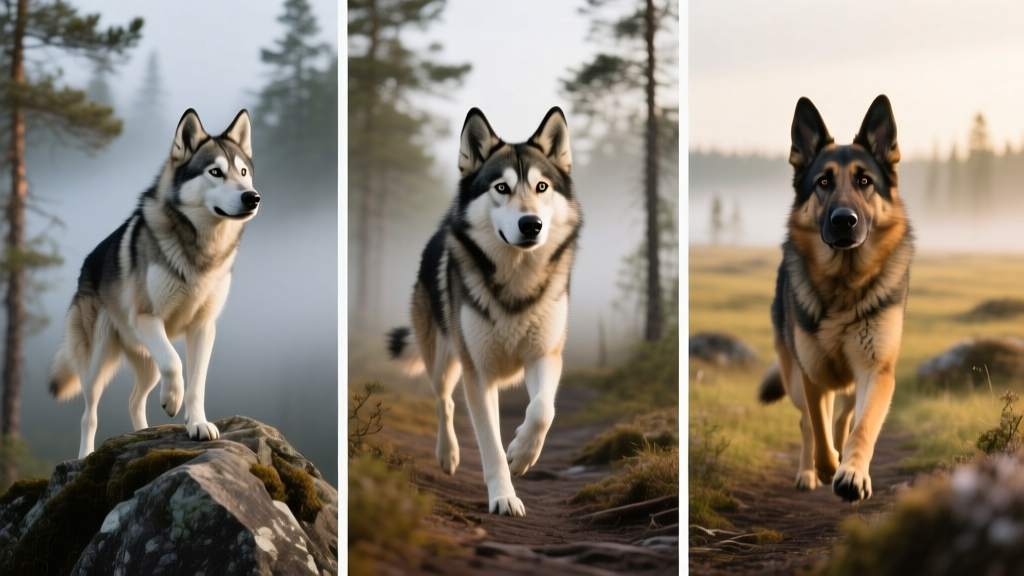
Quick Answer: Which Dogs Resemble Wolves and Why?
The dog breeds that most closely resemble wolves — both physically and genetically — include the Siberian Husky, Alaskan Malamute, German Shepherd, Saarloos Wolfdog, Czechoslovakian Vlcak, Northern Inuit Dog, and Tamaskan Dog. However, genetic resemblance and physical appearance don't always align. A 2004 study published in Science identified the Basenji, Afghan Hound, Akita, and Siberian Husky among the most genetically ancient breeds, meaning their DNA diverges least from the gray wolf (Canis lupus). Meanwhile, some breeds that look extremely wolf-like — such as the Northern Inuit Dog — were created through modern selective breeding and carry no more wolf DNA than a Labrador Retriever.
If you've ever watched a Husky throw its head back and howl at a distant siren, or marveled at a Malamute's amber eyes tracking movement across a field, you've witnessed thousands of years of evolutionary history playing out in your living room. Understanding what makes dogs that resemble wolves tick — scientifically, behaviorally, and physiologically — isn't just an academic exercise. It directly shapes how you train, exercise, feed, and bond with these animals.
The Evolutionary Basis: From Gray Wolf to Living Room
🐺 Evolutionary Timeline
- 30,000–40,000 years ago: Gray wolves and an extinct wolf lineage diverged. Early proto-dogs began associating with human hunter-gatherer camps.
- 15,000–20,000 years ago: Domestication intensified. Dogs developed smaller skulls, shorter muzzles, and reduced fight-or-flight reactivity compared to wolves.
- ~150 years ago: Modern breed standards formalized. Selective breeding for appearance created wolf-looking breeds with minimal wolf ancestry.
All domestic dogs belong to the species Canis lupus familiaris — a subspecies of the gray wolf. This means every Chihuahua and every Great Dane shares a common ancestor with modern wolves. The difference lies in which genes were selected for during domestication.
Research led by Dr. Robert Wayne at UCLA and published in peer-reviewed journals demonstrated that dogs diverged from wolves approximately 15,000 to 40,000 years ago, depending on the population studied. The domestication process selected for reduced aggression, increased social tolerance, and neoteny (the retention of juvenile traits into adulthood). Wolves that could tolerate human proximity gained access to food scraps; over generations, these proto-dogs developed floppy ears, curled tails, piebald coats, and smaller teeth — a cluster of traits known as domestication syndrome.
Breeds that "resemble wolves" either retained more ancestral physical characteristics (thick double coats, erect ears, elongated muzzles, loping gaits) or were deliberately bred in the 20th century to recreate wolf-like aesthetics. The two paths produce very different dogs.
The Genetics: Which Breeds Are Actually Closest to Wolves?
A landmark 2004 study by Parker et al., published in Science, used microsatellite DNA analysis to map genetic relationships among 85 dog breeds. The breeds clustering closest to wolves genetically were:
| Breed | Genetic Clustering | Origin | Looks Wolf-Like? |
|---|---|---|---|
| Shar-Pei | Ancient / Basal | China | No |
| Shiba Inu | Ancient / Basal | Japan | Somewhat |
| Chow Chow | Ancient / Basal | China | Somewhat |
| Akita | Ancient / Basal | Japan | Yes |
| Basenji | Ancient / Basal | Central Africa | No |
| Afghan Hound | Ancient / Basal | Afghanistan | No |
| Siberian Husky | Ancient / Basal | Siberia | Yes |
| Alaskan Malamute | Ancient / Basal | Alaska | Yes |
| Northern Inuit Dog | Modern creation | UK (1980s) | Extremely |
| Czechoslovakian Vlcak | Wolf hybrid (F4+) | Czechoslovakia (1955) | Extremely |
| Saarloos Wolfdog | Wolf hybrid (F4+) | Netherlands (1935) | Extremely |
The takeaway is counterintuitive: genetic proximity to wolves does not predict physical resemblance. The Shar-Pei and Basenji are among the most wolf-adjacent breeds genetically, yet they look nothing like wolves. Conversely, breeds engineered for wolf-like aesthetics may sit squarely in the "modern breed" genetic cluster.
For breeds with documented wolf hybridization — the Czechoslovakian Vlcak (German Shepherd × Carpathian Wolf, started 1955) and the Saarloos Wolfdog (German Shepherd × European Wolf, started 1935) — the wolf DNA contribution is real but diluted. By the F4 generation and beyond, these breeds carry roughly 6–12% wolf ancestry, with the remainder being domestic dog genetics.
Physiological Mechanisms: How Wolf-Like Traits Manifest in Dogs
🔬 The Biology Behind Wolf-Like Features
Coat and Coloration
Wolves possess a double coat: a dense, woolly undercoat for insulation (shed seasonally) and longer guard hairs that repel moisture. Breeds like the Siberian Husky and Alaskan Malamute inherited this exact coat structure through selection in Arctic climates. The agouti banding pattern — where individual hairs display alternating light and dark bands — is controlled by the Agouti Signaling Protein (ASIP) gene. This gene regulates melanin type switching and produces the "wild gray" coloration seen in wolves and wolf-resembling breeds.
Skull Morphology
Wolves have a dolichocephalic (long-skulled) head shape with a pronounced stop and elongated muzzle. This provides greater bite force (estimated 400–1,200 PSI in wolves vs. 200–550 PSI in most domestic dogs) and enhanced olfactory surface area. Breeds like the German Shepherd and Czechoslovakian Vlcak retain a moderately elongated muzzle, while brachycephalic breeds (Pugs, Bulldogs) represent the opposite extreme of domestication-driven skull shortening.
Sensory Processing
Wolf-resembling breeds tend to retain heightened prey drive circuitry. The visual system of wolves — and by extension, breeds that retain ancestral traits — includes a high density of rod cells in the retina, optimized for detecting motion in low light. A wolf can detect movement at distances up to 1.2 miles (1.9 km). Northern breeds and primitive breeds often display similar visual acuity, which is why a Husky may fixate on a squirrel at 200 yards while a Cavalier King Charles Spaniel may not register it.
Vocalization
Wolves howl for long-distance communication across territories spanning 50–1,000 square miles. Adult wolves rarely bark — barking is a neotenous trait (juvenile behavior retained into adulthood through domestication). Breeds closer to their wolf ancestry, such as the Basenji and Shiba Inu, tend to bark less and produce more wolf-like vocalizations: howls, yodels, and "talking" sounds. The laryngeal anatomy is similar across all canids, but the neural pathways triggering vocalization differ based on domestication selection pressure.
Wolf-Like Behaviors: What's Normal and What's a Problem?
Owners of dogs that resemble wolves frequently ask whether certain behaviors signal a problem. Here's how to distinguish normal ancestral behavior from concerning signs:
| Behavior | Normal Ancestral Trait | When It Signals a Problem |
|---|---|---|
| Howling | Response to sirens, music, other dogs howling. Breed-typical communication. | Excessive howling when left alone may indicate separation anxiety. Consult a certified behaviorist (IAABC or CCPDT). |
| High prey drive | Chasing small animals, stalking movement. Innate predatory motor sequence. | Redirected aggression toward humans or inability to interrupt the behavior with trained cues. |
| Digging | Creating cool resting spots or caching food. Natural denning behavior. | Compulsive digging that damages paws or occurs non-stop may signal anxiety or boredom. |
| Escape attempts | Northern breeds are notorious roamers with wide-ranging instincts. | Self-injury during escape attempts, or escape driven by fear/phobia rather than exploration. |
| Resource guarding | Mild food possessiveness is common in many breeds. | Biting or snapping when approached during meals. Requires professional behavior modification. |
| Low obedience motivation | Primitive breeds are independent thinkers, bred to work without human direction. | Not a medical issue — but indicates training methods need adjustment (use higher-value rewards, shorter sessions). |
For any behavioral concern involving aggression, self-injury, or sudden behavior changes, consult your veterinarian first to rule out medical causes such as pain, thyroid dysfunction, or neurological issues before pursuing behavioral intervention.
Common Misconceptions About Wolf-Like Dogs
| Myth | Fact |
|---|---|
| "Wolf-looking dogs are part wolf." | Most breeds that resemble wolves (Huskies, Malamutes, German Shepherds) have zero recent wolf ancestry. Their appearance results from selection for working traits in cold climates, not hybridization. |
| "Wolfdog hybrids make good guard dogs." | Wolves are naturally neophobic (fearful of novel stimuli), including strangers. Wolfdog hybrids tend to be more skittish and less reliable than purpose-bred guardian breeds like the Anatolian Shepherd or Great Pyrenees. |
| "These dogs need to be 'dominated' like wolves in a pack." | The dominance/alpha theory has been debunked by modern ethology. Wolf packs are family units, not hierarchies maintained by aggression. Positive reinforcement training is more effective and safer for all dogs, including primitive breeds. |
| "A raw diet will make my dog more wolf-like and healthier." | Dogs have evolved AMY2B gene duplications that allow starch digestion — a key domestication adaptation wolves lack. A balanced commercial diet meeting AAFCO standards is nutritionally appropriate. Raw diets carry Salmonella and nutritional imbalance risks. |
| "Huskies and Malamutes are aggressive because they look like wolves." | Siberian Huskies rank among the least aggressive breeds toward humans in standardized temperament testing. Their intensity is directed at prey and exploration, not people. |
Practical Implications: Living With Dogs That Resemble Wolves
What This Means for Your Daily Routine
Exercise Requirements
Wolf-resembling working breeds need significantly more physical and mental exercise than average:
- Siberian Husky: 90–120 minutes/day of vigorous activity. Bred to pull sleds 100+ miles. A 20-minute walk will not suffice.
- Alaskan Malamute: 60–90 minutes/day. Stronger but slower than Huskies; excels at weight-pulling and hiking with a loaded pack.
- German Shepherd: 60–90 minutes/day plus structured mental work (obedience, scent games, agility).
- Czechoslovakian Vlcak: 90–120+ minutes/day. Extremely high endurance. Not suitable for apartment living or sedentary owners.
Containment
Standard 4-foot fences are inadequate for most northern and primitive breeds. Expect to need:
- Minimum 6-foot fence with no horizontal rails (which provide climbing footholds)
- Dig-proof barrier: Concrete footer or L-footer wire buried 12–18 inches below the fence line
- GPS tracking collar as a backup — brands like Fi Series 3 (~$149 + $8/month subscription) or Whistle Go Explore (~$100 + $8/month) provide real-time location tracking if your dog escapes
Grooming
Double-coated wolf-resembling breeds shed heavily, with two major "coat blows" per year (spring and fall). Budget for:
- Daily brushing during shedding season using an undercoat rake (e.g., FURminator deShedding Tool, ~$35–$45)
- Never shave a double-coated dog — this damages the coat's thermal regulation and UV protection. The undercoat insulates against both cold AND heat.
- Professional grooming: $60–$120 per session, 2–4 times per year for deshedding treatments
Training Approach
Independent-thinking, wolf-resembling breeds respond poorly to repetitive drill-based training. Use:
- Short sessions: 5–10 minutes, multiple times daily
- High-value rewards: Freeze-dried liver, real chicken, or cheese — not dry kibble
- Engagement-based methods: Flirt poles, scent work, and recall games build drive and focus
- Force-free methods only: Shock collars and prong collars increase fear and reactivity in sensitive primitive breeds. Work with a CCPDT-certified trainer who uses positive reinforcement.
Health Considerations for Wolf-Like Breeds
While hybrid vigor (the health advantage of genetic diversity in crossbreeds) is sometimes cited as a benefit of wolf-dog hybridization, the reality is more nuanced. Purpose-bred wolf-dog breeds like the Czechoslovakian Vlcak have a limited gene pool — the entire breed descends from a handful of German Shepherds and four Carpathian wolves — which creates bottleneck-related health risks.
Common health concerns across wolf-resembling breeds include:
- Hip dysplasia: Prevalence of 10–20% in German Shepherds (OFA data), lower but present in Huskies (~6%) and Malamutes (~12%).
- Eye conditions: Progressive retinal atrophy (PRA), cataracts, and corneal dystrophy are documented in Huskies and Malamutes.
- Zinc-responsive dermatosis: Siberian Huskies and Alaskan Malamutes have a genetic predisposition to impaired zinc absorption, causing crusting lesions around the eyes, mouth, and pressure points. Treatment involves lifelong zinc supplementation under veterinary guidance.
- Gastric dilatation-volvulus (GDV/bloat): Deep-chested breeds like German Shepherds are at elevated risk. Prophylactic gastropexy during spay/neuter costs $300–$600 and can be life-saving.
Frequently Asked Questions
Why do some dogs look like wolves while others don't?
Selective breeding for function and climate drove physical divergence. Dogs bred for Arctic work (pulling, guarding livestock in cold regions) retained wolf-like coats, body proportions, and skull shapes because those traits were adaptive. Dogs bred for companionship or specialized indoor work (retrieving, herding in temperate climates) were selected for different traits, leading to the enormous morphological diversity we see across 360+ recognized breeds.
Can dogs that resemble wolves actually interbreed with wolves?
Yes. Dogs and wolves are the same species (Canis lupus) and can produce fertile offspring. However, natural interbreeding is rare because wolves are seasonal breeders (estrus once per year, typically January–March) while dogs cycle 1–2 times per year. Most wolfdog breeds were created through deliberate human-managed matings, not natural encounters.
How do dogs process the world differently from wolves?
Domestication changed canine neurobiology. A 2016 study published in Science found that dogs have a genetic mutation in the GTF2I and GTF2IRD1 genes — the same genes associated with Williams-Beuren syndrome in humans — that produces hypersociability. This means dogs are neurologically wired to seek human interaction in ways wolves are not. Even wolf-resembling breeds raised from puppyhood will look to humans for problem-solving help, while wolves attempt to solve problems independently.
What does it mean when my dog howls at sirens or music?
This is a normal ancestral vocalization triggered by sustained, high-pitched tones that resemble wolf howl frequencies (typically 300–700 Hz). Your dog is not in pain or distressed — they are responding to an acoustic stimulus that activates the same neural pathways wolves use for long-distance pack communication. It's especially common in Huskies, Malamutes, Beagles, and Coonhounds.
Is it normal for my wolf-like dog to be aloof with strangers?
Yes, within limits. Breeds like the Akita, Shiba Inu, and Czechoslovakian Vlcak were selected for wariness of outsiders — a trait that served their original guarding and hunting functions. Aloofness (ignoring strangers, maintaining distance) is breed-typical. Aggression (lunging, biting, uncontrolled barking at visitors) is not and warrants professional evaluation.
How is this different from humans?
Humans underwent our own form of self-domestication, but the timeline and mechanisms differ. Dog domestication involved intense artificial selection over 15,000–40,000 years, producing dramatic morphological changes in a relatively short evolutionary window. A wolf and a Chihuahua share over 99.8% of their DNA — yet their skull shapes, body sizes, and behavioral repertoires are vastly different. In humans, comparable physical diversity within a single species doesn't exist because we haven't undergone the same selective breeding pressures.
References
- Parker, H.G. et al. (2004). "Genetic Structure of the Purebred Domestic Dog." Science, 304(5674), 1160–1164. science.org
- Axelsson, E. et al. (2013). "The genomic signature of dog domestication reveals adaptation to a starch-rich diet." Nature, 495(7441), 360–364. Referenced via Merck Veterinary Manual
- vonHoldt, B.M. et al. (2017). "Structural variants in genes associated with human Williams-Beuren syndrome underlie stereotypical hypersociability in domestic dogs." Science Advances, 3(7). Referenced via AVMA
- American Kennel Club breed standards for Siberian Husky, Alaskan Malamute, German Shepherd Dog, and related breeds.
Jonas Cole
All our authors care for dogs every day — read more of their work on the authors page.


