Dogs That Don't Shed: The Science Behind Hypoallergenic Coats
Why do some dogs not shed?
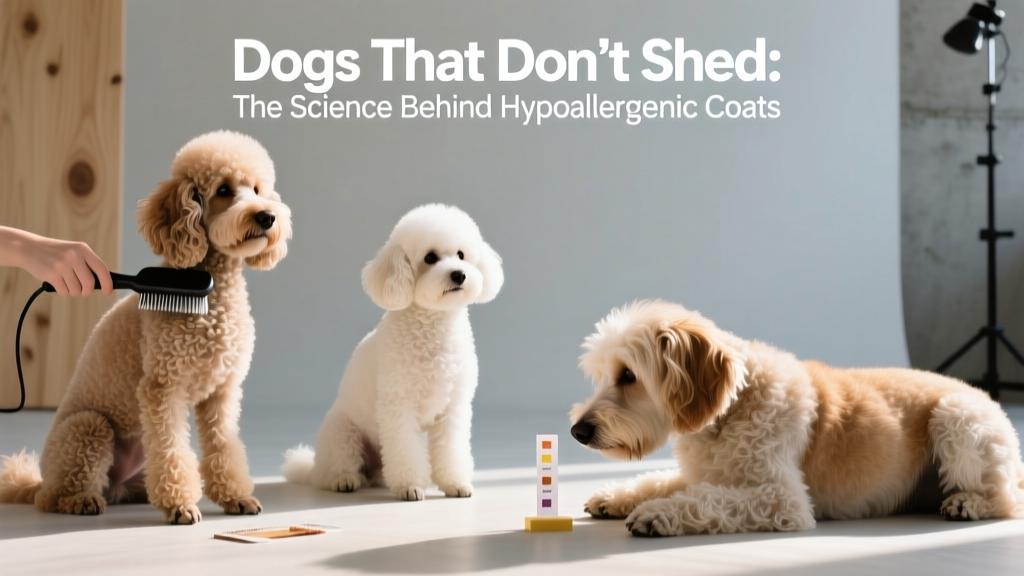
The Biology of Shedding: Why Some Dogs Shed and Others Barely Do
Every hair on a dog's body cycles through three phases: anagen (active growth), catagen (transition), and telogen (resting/shedding). In most dogs, a large percentage of hair follicles enter telogen simultaneously — typically triggered by changes in daylight hours and temperature — resulting in the seasonal "coat blow" familiar to Husky and Shepherd owners.
Low-shedding breeds, by contrast, have hair follicles that remain in the anagen (growth) phase for significantly longer periods. Research published in the journal Genetics (Cadieu et al., 2009) identified that three genetic variants — in the genes FGF5 (fibroblast growth factor 5), RSPO2 (R-spondin 2), and KRT71 (keratin 71) — collectively explain the majority of coat type variation in domestic dogs. Dogs carrying specific alleles of these genes produce what we colloquially call "hair" rather than "fur," though biologically both are keratin-based fibers.
The FGF5 Gene and Hair Length
The FGF5 gene produces a protein that signals hair follicles to stop growing and enter the resting phase. A mutation in this gene — common in Poodles, Yorkshire Terriers, and Afghan Hounds — disrupts this signal, causing hair to grow continuously. The result is a coat that can reach floor-length if never trimmed, with individual hairs growing for months or even years before entering telogen. This is functionally identical to the mutation that produces long hair in humans.
The RSPO2 gene variant contributes to "furnishings" — the longer hair on the face (eyebrows, mustache) seen in breeds like Schnauzers and Wire Fox Terriers. The KRT71 variant determines whether hair grows straight or curly. Dogs inheriting the curly variant produce a coat that traps shed hairs within the curls, preventing them from dispersing into the environment.
Evolutionary Context: From Wolf Coats to Designer Breeds
Gray wolves (Canis lupus) possess a double coat consisting of a dense, short undercoat for insulation and longer guard hairs for weather protection. They shed heavily once or twice annually — a survival mechanism that replaces winter insulation with a lighter summer coat.
The non-shedding coat types seen in modern dogs did not exist in ancestral wolves. These mutations arose during thousands of years of domestication, likely appearing independently in different geographic populations. The FGF5 long-hair mutation, for instance, is estimated to have originated at least 3,000–5,000 years ago based on genetic diversity analysis. Early humans may have selected for these coat types not for allergy reasons, but because continuously growing hair in certain working breeds (like water retrievers) provided consistent insulation without seasonal gaps in coat density.
The deliberate breeding of "hypoallergenic" dogs is a relatively modern phenomenon. The Labradoodle, created by Wally Conron in Australia in 1989, was specifically designed to combine the Poodle's low-shedding coat with the Labrador Retriever's temperament for a vision-impaired woman whose husband had dog allergies. This sparked the modern "designer breed" movement, though it also introduced significant coat-type unpredictability in F1 and F2 generations.
The Allergy Connection: What Science Actually Says
A persistent misconception is that low-shedding dogs are "hypoallergenic" in the sense that they produce fewer allergens. This is not supported by evidence. A 2011 study published in the American Journal of Rhinology & Allergy measured Can f 1 (the primary dog allergen protein, produced in saliva and sebaceous glands) in homes with supposedly hypoallergenic breeds versus standard breeds. The study found no statistically significant difference in airborne allergen levels between the two groups.
What low-shedding dogs do offer is a mechanical advantage: because loose hair is trapped in curls rather than distributed across furniture, clothing, and HVAC systems, the total surface area contaminated with allergen-laden dander is reduced. The allergen isn't eliminated — it's concentrated on the dog's body and removed during grooming rather than passively deposited throughout the home.
| Factor | Low-Shedding Breeds (e.g., Poodle) | Double-Coated Breeds (e.g., Husky) |
|---|---|---|
| Hair growth cycle (anagen phase) | 6–18 months | 2–6 months |
| Seasonal shedding events | Minimal to none | 1–2 heavy blows per year |
| Undercoat present | Typically no (single coat) | Yes, dense |
| Hair trapping mechanism | Curly coat retains loose hair | Loose hair sheds freely |
| Grooming frequency needed | Every 4–8 weeks (professional clip) | Weekly brushing; daily during blow |
| Annual grooming cost (US avg.) | $480–$900/year | $0–$150/year (home grooming) |
Practical Implications: Living With a Low-Shedding Dog
What This Means for Your Daily Life
- Grooming is non-negotiable. Because shed hair is trapped rather than released, it will mat against the skin if not brushed regularly. A Poodle or Doodle requires brushing every 1–2 days and professional grooming every 4–8 weeks. Budget $60–$120 per grooming session depending on coat length and your metro area.
- Skin issues hide more easily. The dense, curl-trapping coat conceals hot spots, tick attachment, and fungal infections. Part the coat to the skin weekly during brushing to inspect for redness, bumps, or odor.
- Ear infections are more common. Many low-shedding breeds have hair that grows into the ear canal (especially Poodles and Bichons). Your groomer should pluck or trim ear hair, and you should clean ears weekly with a veterinary-approved otic cleanser.
- You still need to vacuum. While environmental hair is reduced, dander (dead skin flakes) and saliva residue on furniture still carry allergens. A HEPA-filter vacuum and air purifier remain beneficial for allergy sufferers.
- Designer breed coats are unpredictable. An F1 Labradoodle (first-generation Poodle × Labrador cross) has roughly a 50% chance of inheriting the low-shedding coat. F1B (backcross to Poodle) and multigen generations have higher predictability — around 75–90% — but coat type cannot be guaranteed without genetic testing of both parents.
Myths vs. Facts: Clearing Up Common Misconceptions
| Myth | Fact |
|---|---|
| "Hypoallergenic dogs don't produce allergens." | All dogs produce Can f 1 and Can f 2 allergen proteins in saliva and skin. Low-shedding breeds simply distribute less allergen-laden hair into the environment. |
| "Hair is different from fur." | Both are composed of keratin and grow from identical follicle structures. The difference is in growth cycle length and texture, not biological composition. |
| "Non-shedding dogs don't need brushing." | They require more attentive grooming because shed hair is trapped and will mat if not removed manually. |
| "Shaving a double-coated dog stops shedding." | Shaving damages the coat's thermal regulation and does not alter the follicular growth cycle. The undercoat will regrow and shed on the same schedule. Consult a professional groomer — never shave a double-coated breed. |
| "All Doodles are hypoallergenic." | Coat type varies enormously in F1 crosses. Only puppies from parents genetically tested for the FGF5 and KRT71 variants have predictable low-shedding outcomes. |
When Excessive Shedding Signals a Medical Problem
If your normally low-shedding dog suddenly begins losing hair in clumps, this is not a grooming issue — it's a clinical sign that warrants veterinary evaluation. Common causes include:
- Hypothyroidism: The thyroid gland produces insufficient hormone, disrupting the hair growth cycle. Common in middle-aged Standard Poodles and Portuguese Water Dogs. Diagnosis requires a full thyroid panel (total T4, free T4, TSH), typically costing $150–$250.
- Cushing's disease (hyperadrenocorticism): Excess cortisol causes symmetrical hair loss, typically on the trunk. More common in Poodles over age 7. Diagnosis involves an ACTH stimulation test or low-dose dexamethasone suppression test ($200–$400).
- Alopecia X: Also called "black skin disease," this idiopathic (cause unknown) condition primarily affects Pomeranians, Chow Chows, and Poodle mixes. Hair loss occurs without itching or systemic illness. Prognosis is cosmetically concerning but medically benign.
- Allergic dermatitis: Environmental or food allergies cause inflammation that disrupts follicle health. Accompanied by itching, redness, and secondary infections in many cases.
Breeds With the Lowest Shedding: Genetic Profiles
According to AKC breed standards and genetic research, the following breeds consistently carry the FGF5/KRT71 variants associated with minimal shedding:
| Breed | Weight Range | Coat Type | Grooming Interval |
|---|---|---|---|
| Poodle (Toy/Mini/Standard) | 4–70 lb / 2–32 kg | Curly, single coat | 4–6 weeks |
| Bichon Frisé | 12–18 lb / 5–8 kg | Curly, double-layered (unique) | 4–6 weeks |
| Portuguese Water Dog | 35–60 lb / 16–27 kg | Curly or wavy | 6–8 weeks |
| Soft Coated Wheaten Terrier | 30–40 lb / 14–18 kg | Silky, wavy single coat | 6–8 weeks |
| Yorkshire Terrier | 4–7 lb / 2–3 kg | Straight, silky single coat | 6–8 weeks (or daily brushing for long coat) |
| Chinese Crested (Powderpuff) | 8–12 lb / 4–5 kg | Hair on head, tail, feet only | Minimal; skin care priority |
Frequently Asked Questions
Why do dogs shed in the first place?
Shedding is an evolutionary adaptation for thermoregulation. Wild canids in temperate climates grow a dense winter undercoat for insulation and shed it as daylight increases in spring to prevent overheating. The photoperiod (hours of daylight) triggers hormonal changes — specifically melatonin fluctuations from the pineal gland — that signal follicles to enter telogen. Indoor dogs exposed to artificial light year-round may shed more evenly across seasons rather than in concentrated blows.
Can dogs be truly hypoallergenic?
No dog breed is 100% hypoallergenic. All dogs produce allergenic proteins (Can f 1, Can f 2, Can f 3, and Can f 5) in saliva, dander, and urine. Low-shedding breeds reduce the distribution of allergens but do not eliminate production. Individual allergic people react differently — some tolerate Poodles well, others react to all dogs regardless of coat type. Spending extended time with a specific dog before adoption is the most reliable test.
How do dogs with low-shedding coats regulate temperature without an undercoat?
Single-coated breeds rely on behavioral thermoregulation rather than coat-based insulation. They seek shade, lie on cool surfaces, and are more susceptible to cold stress. In winter, a dog sweater or coat is recommended for single-coated breeds when temperatures drop below 45°F (7°C), especially for small breeds under 20 lb (9 kg) with less body mass for heat generation.
What does it mean when my low-shedding dog suddenly starts shedding heavily?
Sudden coat changes in a historically low-shedding dog typically indicate an underlying endocrine disorder (hypothyroidism, Cushing's disease), nutritional deficiency (particularly zinc or essential fatty acids), or severe stress response. Schedule a veterinary exam with a full blood panel including thyroid function. This is not a grooming problem that can be resolved with supplements alone.
Is it normal for puppies to shed their puppy coat?
Yes. All puppies — including those from low-shedding breeds — shed their juvenile coat between 4–8 months of age as adult hair follicles mature. This transition can temporarily make a Poodle puppy appear to shed significantly. The adult coat texture (curly vs. wavy vs. straight) may differ from the puppy coat, and the true shedding pattern won't be apparent until the adult coat fully establishes around 12–18 months.
How is dog hair growth different from human hair growth?
Humans have a very long anagen phase on scalp hair (2–7 years) but a very short anagen phase on body hair (30–45 days). Dogs with the FGF5 mutation essentially have "human-like" hair growth on their entire body — all follicles grow continuously for extended periods. Wild-type dogs, however, have synchronized follicular cycles across the body, meaning large patches of hair enter telogen simultaneously, producing visible shedding events. This synchronization is what distinguishes a shedding breed from a non-shedding one at the physiological level.
This article is for informational purposes and does not replace professional veterinary advice. If your dog experiences sudden coat changes, hair loss, or skin abnormalities, consult your veterinarian for diagnosis and treatment.
Priya Sutaria
All our authors care for dogs every day — read more of their work on the authors page.


