Dogs That Don't Malt: The Science of Non-Shedding Canine Coats
Discover why dogs that don't malt exist, the genetics behind non-shedding coats, and what science reveals about hypoallergenic breeds in this deep canine science guide.
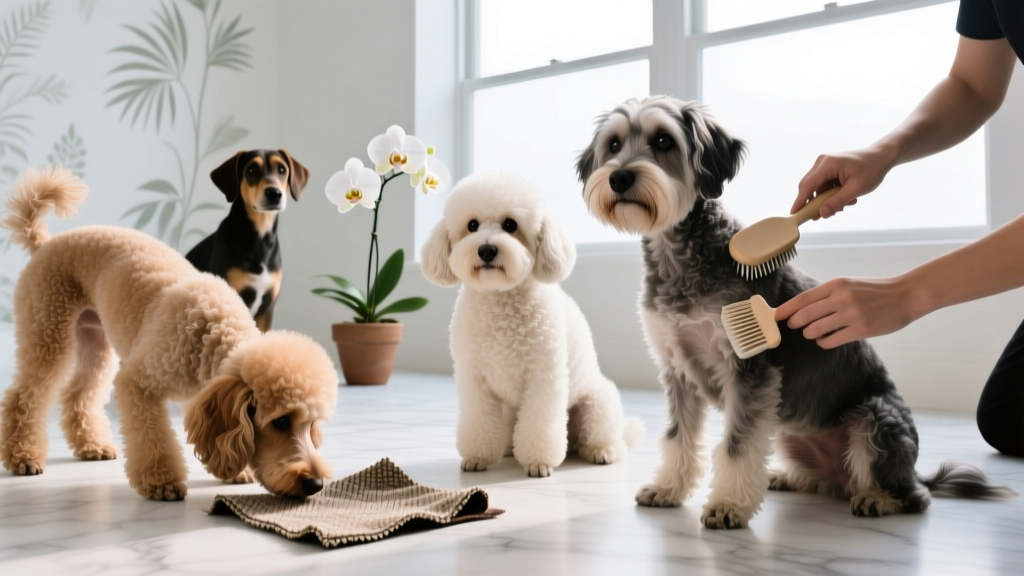
The Quick Answer: Do Dogs That Don't Malt Exist?
No dog is truly non-shedding, but some breeds shed so minimally they appear not to malt at all. Dogs like Poodles, Bichon Frisés, and certain wire-haired breeds have hair growth cycles that closely resemble human hair — their follicles remain in the active growth phase (anagen) far longer than typical double-coated breeds. Instead of blowing their coat seasonally, these dogs shed individual hairs slowly and continuously, making loose fur nearly invisible. The term "malt" (a common misspelling of "moult") refers to the seasonal shedding cycle. Dogs that don't malt in the traditional sense simply lack the synchronized follicle cycling that causes dramatic coat blowouts.
Why Do Some Dogs Malt While Others Don't?
The answer lies in canine coat genetics and the evolutionary pressures that shaped different breed types. All mammals shed — it's a biological necessity to replace damaged or aged hair. But the pattern of shedding varies dramatically based on a dog's genetic heritage.
The Hair Growth Cycle Explained
Every hair follicle on your dog's body cycles through three phases:
- Anagen (growth phase): The follicle actively produces new hair. In non-shedding breeds, this phase can last months to years.
- Catagen (transition phase): Growth stops, the follicle shrinks, and the hair shaft detaches from the blood supply. This phase lasts 2-3 weeks.
- Telogen (resting phase): The hair sits dormant before eventually being pushed out by a new anagen-phase hair. In heavy shedders, many follicles enter telogen simultaneously, causing seasonal "blowing" of the coat.
Research published in the journal Scientific Reports identified that the FGF5 gene plays a critical role in regulating hair length and growth cycle duration in dogs. Variants of this gene, along with RSPO2 (associated with furnishings like eyebrows and moustaches) and KRT71 (associated with curly coats), combine to produce the low-shedding coat types seen in Poodles and related breeds.
In typical double-coated breeds — think Siberian Huskies, German Shepherds, or Golden Retrievers — environmental cues like daylight length and temperature trigger synchronized telogen entry across thousands of follicles simultaneously. This produces the dramatic seasonal shedding events that owners recognize as "moulting." In single-coated, curly-haired, or wire-haired breeds, follicles cycle independently and asynchronously, meaning hair loss is distributed across time rather than concentrated into a few intense weeks.
The Evolutionary Basis: Why Coat Types Diverged
From Wolves to Living Rooms
Ancestral wolves possess a double coat — a dense, insulating undercoat beneath a longer, water-resistant guard coat. This coat moults seasonally in response to photoperiod changes, allowing wolves to transition between a thick winter coat and a lighter summer coat. This adaptation was essential for surviving extreme temperature fluctuations across northern latitudes.
As humans selectively bred dogs for specific working roles, coat type became a functional trait. Wire-haired terriers were bred to push through dense underbrush without matting or collecting burrs — their coats shed slowly and required hand-stripping to maintain. Curly-coated water retrievers (like the Poodle's ancestors) needed coats that provided insulation in cold water without becoming waterlogged. These working requirements favored asynchronous shedding patterns.
The divergence accelerated during the Victorian era, when breed standards formalized coat types. According to the American Kennel Club, there are now at least seven recognized coat type categories across registered breeds, ranging from smooth and short to long and corded. The non-moulting coat type became especially prized as dogs transitioned from working partners to indoor companions — a dog that didn't leave fur on furniture had obvious practical advantages.
Modern genetic research shows that the mutation responsible for the curly, continuously-growing Poodle-type coat likely arose in European water dogs several hundred years ago and was then spread across multiple breeds through deliberate crossbreeding. The KRT71 gene variant that produces tight curls also fundamentally alters follicle cycling, keeping hairs in anagen for extended periods.
The Physiological Mechanism: How the Body Controls Shedding
Shedding is regulated by a complex interplay of hormones, environmental signals, and genetic programming at the follicle level:
| Factor | Effect on Moulting | Non-Shedding Breed Difference |
|---|---|---|
| Melatonin (daylight response) | Triggers synchronized telogen entry in double-coated breeds | Reduced follicle sensitivity to melatonin fluctuations |
| Thyroid hormones (T3/T4) | Regulate overall hair growth rate and follicle cycling speed | Normal levels, but follicle receptors respond differently |
| Cortisol (stress hormone) | Elevated cortisol can trigger premature telogen entry | Same stress-shedding response, but less visible due to asynchronous cycling |
| FGF5 gene expression | Controls transition from anagen to catagen phase | Variant forms prolong anagen significantly |
| Prolactin | Seasonal hormone that influences coat density changes | Reduced prolactin-driven follicle synchronization |
In practical terms, a Poodle's follicles are essentially "locked" in growth mode for far longer than a Husky's. Where a Husky's undercoat hairs might complete a full growth cycle in 4-6 months (meaning the entire coat turns over twice a year), a Poodle's hairs may grow continuously for 12-24 months before cycling out. The result: hair keeps getting longer rather than falling out, which is why Poodles need regular haircuts while Huskies do not.
Common Misconceptions About Dogs That Don't Malt
| Myth | Scientific Fact |
|---|---|
| "Hypoallergenic dogs don't produce allergens" | All dogs produce Can f 1 and Can f 2 proteins (found in saliva, dander, and sebaceous gland secretions). Non-shedding breeds spread fewer allergens through the environment because less dander-laden fur becomes airborne, but they are not allergen-free. |
| "Non-shedding dogs don't need grooming" | These breeds actually require MORE maintenance. Continuously growing coats mat easily and need professional grooming every 4-8 weeks at an average cost of $60-$120 per session. |
| "Mixed breed dogs with a Poodle parent won't shed" | Coat type inheritance is polygenic. An F1 Labradoodle has roughly a 50% chance of inheriting a low-shedding coat. Only F1B (backcross to Poodle) or multigen generations with genetic coat testing offer higher predictability. |
| "Short-haired dogs don't malt" | Many short-haired breeds (Dachshunds, Boxers, Beagles) are prolific shedders. Hair length and shedding rate are controlled by different genes. |
| "Dogs that don't malt are healthier" | Coat type is not correlated with overall health. Some non-shedding breeds carry higher risks for specific conditions — Poodles are predisposed to sebaceous adenitis (an autoimmune skin disease affecting coat quality) with an estimated prevalence of 2-8% in Standard Poodles. |
Breed Variations: Which Dogs Don't Malt (and How Much They Actually Shed)
No dog sheds zero hairs. But the breeds below shed so minimally that most owners never notice loose fur on clothing or furniture. Here's a comparison based on coat genetics, grooming requirements, and real-world shedding levels:
| Breed | Coat Type | Shedding Level (1-10) | Grooming Frequency | Annual Grooming Cost | Key Genetic Factor |
|---|---|---|---|---|---|
| Poodle (all sizes) | Curly, single coat | 1-2 | Every 4-6 weeks | $720-$1,440 | KRT71 (curl) + FGF5 variant |
| Bichon Frisé | Curly double coat | 1-2 | Every 4-6 weeks | $600-$1,200 | KRT71 + RSPO2 |
| Soft Coated Wheaten Terrier | Wavy, single coat | 2-3 | Every 6-8 weeks | $480-$960 | RSPO2 (furnishings) |
| Kerry Blue Terrier | Wavy, single coat | 2-3 | Every 6-8 weeks | $540-$900 | FGF5 variant |
| Portuguese Water Dog | Curly or wavy | 2-3 | Every 6-8 weeks | $600-$1,080 | KRT71 variant |
| Schnauzer (all sizes) | Wire, double coat | 2-3 | Every 6-8 weeks (strip or clip) | $480-$960 | RSPO2 + wire-hair variant |
| Maltese | Long, single coat (hair-like) | 1-2 | Every 4-6 weeks | $480-$840 | FGF5 (long-hair variant) |
| Afghan Hound | Long, silky single coat | 2-4 | Every 2-4 weeks (high maintenance) | $960-$2,400 | FGF5 + unique long-hair alleles |
It's worth noting that wire-haired breeds like Schnauzers and some terriers occupy a unique middle ground. They don't "malt" in the traditional sense, but their coats do die and need to be manually removed through hand-stripping (pulling dead guard hairs) or clipping. Without this maintenance, dead hairs become trapped in the coat and can cause skin irritation or folliculitis.
What Does It Mean When a Normally Non-Shedding Dog Starts Losing Hair?
If your Poodle, Bichon, or other low-shedding breed suddenly begins leaving fur on furniture or develops visible thinning patches, this is not normal seasonal moulting — it's a clinical sign that warrants investigation.
Red Flags That Require Veterinary Attention
- Sudden, diffuse hair loss across the body: May indicate hypothyroidism (common in some Poodle lines), Cushing's disease (hyperadrenocorticism), or a systemic illness. Expect your vet to run a full thyroid panel ($80-$150) and possibly an ACTH stimulation test ($150-$300) to check adrenal function.
- Symmetric bilateral hair loss (matching patches on both sides): A hallmark of endocrine disorders — particularly hypothyroidism and Cushing's disease. The Merck Veterinary Manual identifies symmetric alopecia as a key diagnostic indicator.
- Patchy, irregular hair loss with redness or scaling: Suggests dermatophytosis (ringworm), demodectic mange, or sebaceous adenitis. A skin scraping and fungal culture ($40-$80) will help differentiate.
- Hair loss with intense itching or hot spots: Points toward allergic dermatitis (food or environmental), flea allergy dermatitis, or bacterial pyoderma.
- Coat texture changes (previously curly coat becoming straight or brittle): Can signal nutritional deficiency, hypothyroidism, or the early stages of sebaceous adenitis in predisposed breeds.
Always consult your veterinarian if you notice unexplained hair loss. Early diagnosis of endocrine conditions significantly improves long-term prognosis.
Practical Implications: Living With Dogs That Don't Malt
Owning a low-shedding dog is often marketed as "easy" — but the reality involves a different kind of maintenance commitment. Here's what daily life actually looks like:
Grooming Budget and Schedule
Plan to spend between $480 and $2,400 annually on professional grooming, depending on breed, coat length preference, and your geographic area. Urban groomers in major US cities typically charge 30-50% more than rural equivalents. A Standard Poodle in a continental clip in Manhattan may cost $150-$200 per session, while the same cut in rural Ohio might run $80-$100.
At-Home Maintenance Between Groomer Visits
- Brushing: Curly and wavy coats need brushing every 1-2 days with a slicker brush and metal comb to prevent matting. Mats that reach the skin can trap moisture and cause painful dermatitis.
- Bathing: Every 2-4 weeks with a pH-balanced canine shampoo (dog skin pH ranges from 6.2-7.4, making human shampoo inappropriate). Look for products with colloidal oatmeal or aloe for skin support.
- Ear care: Many non-shedding breeds grow hair inside the ear canal, which traps moisture and debris. This significantly increases otitis externa risk. Weekly ear checks and cleaning with a veterinary ear wash are essential. Some groomers pluck ear canal hair — discuss with your vet whether this is appropriate for your dog, as recent veterinary dermatology guidance suggests plucking may cause micro-trauma that increases infection risk in some dogs.
- Eye area: Breeds with continuously growing facial hair (Poodles, Shih Tzus, Maltese) need hair trimmed around the eyes weekly to prevent corneal irritation and tear staining.
Allergy Considerations
If you're choosing a low-shedding breed specifically for allergy management, know this: a 2011 study published in the American Journal of Rhinology & Allergy found that homes with "hypoallergenic" dogs did not have significantly lower Can f 1 allergen levels than homes with shedding breeds. The primary benefit of non-shedding coats is reduced distribution of allergens via airborne fur, not reduced allergen production.
Practical allergy mitigation strategies include:
- HEPA air filtration in rooms where the dog spends the most time (units rated for 300+ sq ft cost $150-$400)
- Washing hands after petting and avoiding face contact
- Keeping the dog out of bedrooms entirely
- Regular bathing (weekly) to reduce surface dander
- Consulting an allergist for immunotherapy if symptoms persist
Frequently Asked Questions
Can dogs completely stop shedding?
No. All dogs shed some hair as part of normal follicle turnover. Even Poodles lose individual hairs — they just lose them slowly and in such small quantities that it's rarely noticed. If a dog truly stops shedding and hairs are retained abnormally, this can indicate a follicle cycling disorder that requires veterinary evaluation.
Is it normal for a Poodle to lose some hair?
Yes. Finding a few hairs on your hands after petting a Poodle or noticing occasional loose hairs during brushing is completely normal. What isn't normal: clumps of hair coming out during brushing, visible thinning, or bald patches. These warrant a veterinary visit.
How is dog shedding different from human hair loss?
Humans have a very high percentage of scalp follicles in anagen (approximately 85-90% at any given time), with the remaining 10-15% in telogen. This is similar to non-shedding dog breeds across their entire body. However, humans shed approximately 50-100 scalp hairs daily — roughly comparable to what a Bichon Frisé loses across its full body. The key difference: dogs that "malt" have synchronized follicle cycling across large body areas, creating dramatic seasonal shedding that has no direct human equivalent.
What does it mean when my non-shedding dog's coat changes texture?
Coat texture changes can occur for several reasons. Puppies of many curly-coated breeds have a softer, wavier puppy coat that transitions to the adult curl pattern between 9-18 months — this is normal. In adult dogs, however, texture changes (curl becoming wavy, coat becoming dry or brittle) may indicate hypothyroidism, nutritional deficiency (particularly zinc or essential fatty acids), or sebaceous adenitis. A veterinary dermatologist can perform a skin biopsy ($200-$400) to determine the underlying cause.
Can I predict whether a mixed-breed puppy will be low-shedding?
Genetic coat testing is now available through companies like Embark ($199) and Wisdom Panel ($99). These tests analyze variants at the FGF5, RSPO2, KRT71, and MC5R loci to predict adult coat type with reasonable accuracy. For F1 crosses (e.g., a first-generation Labradoodle), results are less predictable because the puppy carries one copy of each parent's alleles. F1B or multigen crosses with two copies of the Poodle-type variants at key loci are far more likely to produce low-shedding coats.
Are there health risks specific to non-shedding coat types?
Yes. The same genetic variants that produce continuously growing coats also predispose certain breeds to specific conditions. Poodles and Bichons are overrepresented in sebaceous adenitis cases. Wire-haired breeds are prone to follicular dysplasia. And breeds with excessive facial furnishings (hair around the eyes) face higher rates of entropion, trichiasis, and corneal ulceration. Regular veterinary dermatology checks — at least annually — help catch these conditions early.
Related Canine Science Topics
- Dander production and allergenicity: How sebaceous gland activity varies by breed and impacts allergy sufferers
- Coat color genetics: The MC1R and Agouti signaling protein pathways that determine pigmentation
- Seasonal photoperiod response: How melatonin secretion from the pineal gland drives synchronized moulting in double-coated breeds
- Nutritional dermatology: The role of omega-3 and omega-6 fatty acid ratios in coat quality and follicle health
Dr. Hannah Wickes
All our authors care for dogs every day — read more of their work on the authors page.


