Dogs on Marmaduke: The Science Behind Giant Breed Behavior
What dogs on Marmaduke reveals about Great Dane behavior, giant breed physiology, and the science of why massive dogs act the way they do.
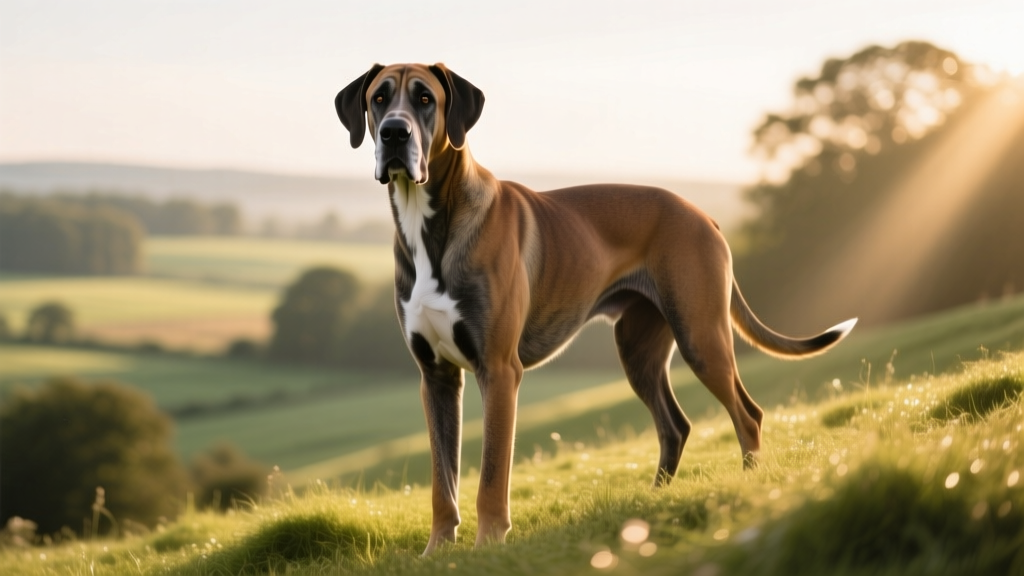
Quick Answer: What Breed Are the Dogs on Marmaduke?
The dogs on Marmaduke — both the original comic strip (since 1954) and the live-action films — are Great Danes. Marmaduke is modeled after the Great Dane breed, one of the tallest dog breeds in the world, standing 28–32 inches (71–81 cm) at the shoulder and weighing 110–175 lb (50–79 kg). The strip's creator, Brad Anderson, chose the Great Dane specifically because the breed's enormous size contrasted humorously with a gentle, clumsy, people-pleasing temperament — traits that science confirms are deeply rooted in the breed's genetics and physiology.
If you've ever watched the Marmaduke movies or read the comics and wondered whether real Great Danes behave anything like their cartoon counterpart, you're asking the right question. The answer involves a fascinating intersection of selective breeding, neurobiology, and evolutionary history. Let's unpack what canine science actually tells us about the breed behind one of pop culture's most recognizable dogs.
The Evolutionary Origin of Giant Breeds Like the Great Dane
From Wolf to Gentle Giant: A Selective Breeding Story
All domestic dogs (Canis lupus familiaris) descended from gray wolves roughly 15,000–40,000 years ago. Giant breeds like the Great Dane represent an extreme endpoint of artificial selection — humans deliberately breeding for size over hundreds of generations. The Great Dane's ancestors were boar-hunting dogs in Germany (the breed is known as Deutsche Dogge in its homeland), where they needed enough mass and power to pin wild boar. By the 1800s, German breeders shifted selection pressure from working ability to conformation and temperament, producing the modern Great Dane: massive in body but notably low in prey drive and aggression compared to its working ancestors.
This evolutionary trajectory explains a paradox at the heart of the "dogs on Marmaduke" question: why does such a large animal act so goofy and submissive? The answer is that temperament was selected alongside size. Breeders who kept the largest dogs also culled aggressive individuals, producing a lineage where giant body size is genetically linked to docile behavior — a phenomenon behavioral geneticists call a correlated response to selection.
A 2019 study published in Scientific Reports (MacLean et al.) found that larger dog breeds tend to score lower on aggression and higher on trainability compared to smaller breeds, even after controlling for training history. This isn't just anecdotal — it's measurable across populations. The Great Dane consistently ranks among the least aggressive breeds in standardized temperament assessments, including data compiled by the American Kennel Club.
The Physiology Behind Great Dane Behavior: Why Marmaduke Acts That Way
The Neurobiology of Giant Breed Temperament
Great Danes' characteristic behavior — leaning on people, slow movement, apparent laziness punctuated by clumsy bursts of energy — maps to specific physiological mechanisms:
- Growth hormone (GH) and IGF-1 pathways: Great Danes carry variants of the IGF1 gene associated with extreme body size. These same growth pathways influence brain development timing, resulting in prolonged juvenile behavioral phases. A Great Dane may not reach full behavioral maturity until 2.5–3 years of age, compared to 1–1.5 years for a medium-sized breed.
- Serotonin receptor density: Larger breeds show different serotonin receptor (5-HT2A) distributions in the prefrontal cortex compared to terriers and herding breeds. Higher serotonergic tone correlates with lower reactivity and impulse control — explaining why Marmaduke's real-life counterparts are slow to anger.
- Metabolic rate scaling: Kleiber's Law tells us that metabolic rate scales to approximately the ¾ power of body mass. A 150 lb (68 kg) Great Dane has a lower mass-specific metabolic rate than a 20 lb (9 kg) Beagle. This means less spontaneous energy per pound of body weight — the biological basis for the breed's reputation as a "couch potato."
- Joint proprioception and spatial awareness: Rapid growth in giant breeds (Great Dane puppies gain up to 2 lb/0.9 kg per week during peak growth) can outpace neuromuscular coordination development. The result: adolescent Great Danes are genuinely clumsy, bumping into furniture and misjudging distances — exactly the slapstick behavior the Marmaduke strip exaggerates for comedy.
These physiological factors combine to produce what behaviorists call the "gentle giant" phenotype: a dog that is physically imposing but behaviorally soft, slow-moving, and highly affiliative toward humans.
Can Dogs Like Marmaduke Actually Be That Big? Size Science and Limits
The Great Danes depicted in Marmaduke are sometimes shown at exaggerated sizes for comedic effect, but the real-world breed is genuinely massive. Here's how they compare to other giant breeds and to the fictional portrayal:
| Breed | Male Weight | Height at Shoulder | Lifespan | Energy Level (1-10) |
|---|---|---|---|---|
| Great Dane (Marmaduke) | 140–175 lb / 64–79 kg | 30–32 in / 76–81 cm | 7–10 years | 4–5 |
| Irish Wolfhound | 120–160 lb / 54–73 kg | 32–35 in / 81–89 cm | 6–8 years | 4 |
| English Mastiff | 160–230 lb / 73–104 kg | 28–31 in / 71–79 cm | 6–10 years | 3 |
| Saint Bernard | 140–180 lb / 64–82 kg | 28–30 in / 71–76 cm | 8–10 years | 3–4 |
| Leonberger | 110–170 lb / 50–77 kg | 28–31.5 in / 71–80 cm | 7–9 years | 5–6 |
The tallest Great Dane on record, Zeus, measured 44 inches (111.8 cm) at the shoulder — significantly taller than any dog shown in the Marmaduke films. So while the comics exaggerate Marmaduke's clumsiness, they actually understate how physically large real Great Danes can be.
Common Misconceptions About Great Danes Debunked
| Myth | → | Science-Based Fact |
|---|---|---|
| "Great Danes need a huge yard and constant exercise." | → | Due to their low mass-specific metabolic rate, adult Great Danes typically need only 30–60 minutes of moderate walking per day. They are famously apartment-friendly if given daily leash walks. Many Great Dane rescue organizations specifically promote them as good urban dogs. |
| "Big dogs are aggressive and dangerous." | → | The Merck Veterinary Manual notes that aggression in dogs correlates more strongly with fear reactivity and poor socialization than with body size. Great Danes score well below average on aggression metrics in the C-BARQ (Canine Behavioral Assessment and Research Questionnaire) database. |
| "Great Danes eat an enormous amount of food." | → | While total caloric intake is higher than a small breed, per-pound food consumption is actually lower due to metabolic scaling. An adult Great Dane typically eats 6–10 cups of high-quality kibble daily (roughly $80–$150/month), not the mountain of food depicted in cartoons. |
| "Great Danes are dumb because they're slow to respond." | → | Processing speed in giant breeds is slower due to longer neural pathways (literally more distance for signals to travel from brain to extremities). This is a physiological delay, not a cognitive one. Great Danes perform well on problem-solving tasks when given adequate response time. |
| "Marmaduke's destructive behavior is typical for the breed." | → | Destructive behavior in Great Danes usually signals separation anxiety, insufficient mental stimulation, or adolescent developmental phases (8–18 months). Well-exercised, properly socialized adult Great Danes are notably calm indoors. The comic exaggerates destruction for humor. |
How Do Great Danes Process Their Environment? Sensory Science
Understanding how the dogs on Marmaduke perceive the world requires looking at canine sensory processing, which differs from humans in several measurable ways:
Vision
Great Danes, like all dogs, are dichromatic — they possess two types of cone photoreceptors (blue and yellow) compared to humans' three (red, green, blue). Their visual acuity is approximately 20/75, meaning what a human sees clearly at 75 feet, a Great Dane must approach to 20 feet to resolve. However, their rod density is higher, giving them superior motion detection and low-light vision. This explains why your Great Dane might not see a stationary toy across the room but will instantly track a squirrel darting through the yard.
Olfaction
The Great Dane's long muzzle (dolichocephalic to mesocephalic skull type) houses approximately 200–300 million olfactory receptors, compared to humans' 5–6 million. The olfactory bulb in a Great Dane's brain is proportionally 40 times larger than in humans. When Marmaduke sticks his nose into everything in the comics, that's not just comedic exaggeration — it's accurate representation of a dog processing an extraordinarily rich chemical landscape that humans simply cannot perceive.
Auditory Processing
Great Danes can detect frequencies up to approximately 45–65 kHz (humans max out around 20 kHz). Their large, erect or semi-erect ears (depending on whether they are cropped or natural) function as directional sound collectors. The breed's characteristic "head tilt" when listening isn't just adorable — it's a functional behavior that helps triangulate sound sources by adjusting ear position relative to the pinnae.
When Marmaduke's Behavior Signals a Problem: Red Flags in Giant Breeds
While the gentle, clumsy temperament of the Great Dane is breed-typical, certain behavioral changes warrant veterinary evaluation. Giant breeds are predisposed to specific conditions that manifest behaviorally before they become physically obvious:
When to Consult Your Veterinarian
- Sudden reluctance to move or climb stairs: May indicate hip dysplasia (prevalence in Great Danes: approximately 12–15% per OFA data) or early-onset arthritis. Great Danes are also at elevated risk for wobbler syndrome (cervical spondylomyelopathy), which causes gait abnormalities and neck pain.
- Lethargy combined with a distended abdomen: This is a potential sign of gastric dilatation-volvulus (GDV / bloat) — a life-threatening emergency in deep-chested breeds. Great Danes have a lifetime bloat risk estimated at 20–40%. If you observe these signs, seek emergency veterinary care immediately.
- Excessive sleeping beyond 14–16 hours/day in adults: While Great Danes do sleep more than average, a sudden increase may signal dilated cardiomyopathy (DCM), which affects an estimated 5–10% of the breed.
- New-onset aggression or fearfulness in a previously stable adult: Pain is the most common cause of sudden behavioral change in dogs. A thorough veterinary exam (including orthopedic and neurological assessment) should precede any behavioral intervention.
- Head pressing, circling, or apparent confusion: These neurological signs may indicate a brain tumor — giant breeds have slightly elevated risk for intracranial neoplasia.
Always consult your veterinarian before attributing behavioral changes to "just personality." Giant breeds can mask serious illness due to their naturally stoic demeanor.
Practical Takeaways for Living With a Real-Life Marmaduke
What Great Dane Science Means for Your Daily Life
Exercise Protocol
- Puppies (2–12 months): Limit structured exercise to 5 minutes per month of age, twice daily (e.g., a 6-month-old gets 30-minute walks). Forced exercise on developing joints increases hip dysplasia risk. Free play on soft surfaces is preferred.
- Adults (1.5–5 years): 30–60 minutes of leash walking daily, plus optional free-running time in a secure area. Avoid high-impact activities (agility, repetitive jumping) that stress joints.
- Seniors (5+ years): Shorter, more frequent walks (15–20 minutes, 2–3x daily). Consider joint supplements containing glucosamine HCl (1,500 mg/day for dogs over 100 lb / 45 kg) and omega-3 fatty acids (EPA+DHA: 1,000–2,000 mg/day).
Nutrition Specifics
- Feed a large-breed-specific formula that meets AAFCO standards for large-breed growth (calcium: 1.0–1.8% dry matter basis; phosphorus: 0.8–1.6%). This is critical during puppyhood to prevent developmental orthopedic disease.
- Use a slow-feeder bowl (such as the Outward Hound FunFeeder, ~$12–$18) to reduce bloat risk. Feed 2–3 smaller meals rather than one large meal.
- Wait 60 minutes after eating before any exercise — this is a key bloat prevention measure for deep-chested breeds.
- Budget approximately $100–$180/month for food alone for an adult Great Dane eating a premium large-breed kibble.
Training Approach
- Use positive reinforcement methods exclusively. Great Danes are sensitive dogs that shut down under harsh correction. Food rewards and praise produce reliable results.
- Start socialization early (8–16 weeks is the critical window). A 150 lb dog that is fearful of strangers or other dogs is a management challenge that is entirely preventable with proper early exposure.
- Teach "leave it," "drop it," and loose-leash walking as priority behaviors — a Great Dane that pulls on leash can easily overpower most handlers.
- Allow extra response time (2–4 seconds) when giving cues. Remember: longer neural pathways mean slower signal transmission, not stubbornness.
Cost Reality
- Puppy purchase: $1,500–$3,000 from a responsible breeder performing OFA hip, cardiac, and thyroid evaluations. Adoption through breed-specific rescues: $300–$600.
- First-year total costs: $3,500–$6,000 (including food, veterinary care, supplies, spay/neuter, and preventive medications).
- Annual ongoing costs: $2,000–$4,000/year for food, routine veterinary care, heartworm prevention, and insurance.
- Emergency fund recommendation: Maintain $3,000–$5,000 accessible for potential GDV surgery ($3,000–$7,000) or orthopedic procedures.
Related Behaviors and Cross-References
Understanding the Great Dane's behavioral profile connects to several other areas of canine science:
- Leaning behavior: Great Danes are notorious for pressing their body weight against their owners. This affiliative contact-seeking is more pronounced in giant breeds and is thought to relate to both thermoregulation (large bodies lose heat slowly; contact provides warmth exchange) and social bonding via oxytocin release in both dog and human.
- "Zoomies" (frenetic random activity periods): Even low-energy breeds like Great Danes experience occasional FRAPs. In giant breeds, these episodes can be startling due to the sheer mass in motion. Ensure a clear space to prevent injury to the dog or household objects.
- Vocalization patterns: Great Danes tend toward a deep, resonant bark rather than frequent vocalization. Their bark carries significant low-frequency energy (fundamental frequency around 150–300 Hz compared to a Chihuahua's 1,000+ Hz), which humans perceive as more threatening — despite the dog's typically friendly intent.
- Sleep architecture: Great Danes spend approximately 12–14 hours per day sleeping or resting, with a higher proportion of REM sleep compared to smaller breeds. This is consistent with the metabolic conservation pattern seen in large mammals generally.
Frequently Asked Questions About the Dogs on Marmaduke
Why do Great Danes act so goofy if they're so big?
The combination of prolonged juvenile behavioral development (up to 3 years to full maturity), low metabolic energy per pound, and generations of selection for docile temperament produces a dog that is physically imposing but behaviorally puppy-like. The same genetics that produce large size also selected for the calm, playful temperament we associate with the breed. This is a textbook example of neoteny — the retention of juvenile traits into adulthood — which is common in domesticated animals.
Can Great Danes actually live in apartments?
Yes. Despite their size, adult Great Danes are among the best giant breeds for apartment living. Their low indoor energy level means they spend most of their time lying down. The primary requirements are daily leash walks (30–60 minutes), access to an elevator or ground-floor unit (stairs are hard on giant breed joints), and a sufficiently large sleeping area. Many urban Great Dane owners report their dogs prefer a couch or large floor bed to a traditional dog bed.
How do Great Danes compare to other breeds in intelligence?
In Stanley Coren's working/obedience intelligence rankings, Great Danes fall in the "average" category — able to learn new commands in 25–40 repetitions and obey known commands on the first attempt about 50% of the time. However, this metric measures trainability, not overall cognitive ability. Great Danes excel in social intelligence (reading human cues) and environmental problem-solving when motivated. Their slower response speed is neurological (longer signal pathways), not a deficit in comprehension.
What does it mean when my Great Dane leans against me?
Leaning is a breed-typical affiliative behavior. It serves multiple functions: physical contact triggers oxytocin release (bonding hormone) in both dog and human, provides a sense of security for the dog, and may have thermoregulatory benefits. It is not a sign of anxiety unless accompanied by other stress signals (lip licking, whale eye, trembling). If your Great Dane leans on you while relaxed and soft-eyed, it's a bonding behavior — essentially the canine equivalent of a hug.
Is it normal for a Great Dane puppy to be clumsy?
Yes, extremely normal. Great Dane puppies grow rapidly — up to 2 lb (0.9 kg) per week during peak growth (3–6 months). Their skeletal growth outpaces neuromuscular coordination, resulting in genuine clumsiness: misjudging distances, tripping over their own feet, bumping into doorframes. This typically improves significantly by 12–18 months as coordination catches up to body size. Persistent gait abnormalities (stiffness, dragging feet, "bunny hopping") should be evaluated by a veterinarian to rule out hip dysplasia or wobbler syndrome.
How is Great Dane physiology different from humans?
Beyond the obvious size difference, key physiological distinctions include: a resting heart rate of 60–80 bpm (vs. human 60–100 bpm), but a significantly shorter lifespan driven by accelerated cellular aging; a body temperature of 101–102.5°F (38.3–39.2°C); a digestive transit time of 8–12 hours (vs. human 24–72 hours); and a sense of smell approximately 10,000–100,000 times more sensitive than humans. Great Danes also age at approximately 7 times the human rate, which is why their 7–10 year lifespan corresponds roughly to a human living into their 60s–70s.
Sources & Further Reading
- MacLean, E.L. et al. (2019). "Associations between domestic dog morphology and behaviour." Scientific Reports. PMC6784822
- American Kennel Club. "Great Dane Breed Standard and Care." akc.org/dog-breeds/great-dane
- Merck Veterinary Manual. "Behavioral Medicine Overview." merckvetmanual.com
- Orthopedic Foundation for Animals (OFA). "Great Dane Hip Dysplasia Statistics." ofa.org
Jonas Cole
All our authors care for dogs every day — read more of their work on the authors page.


