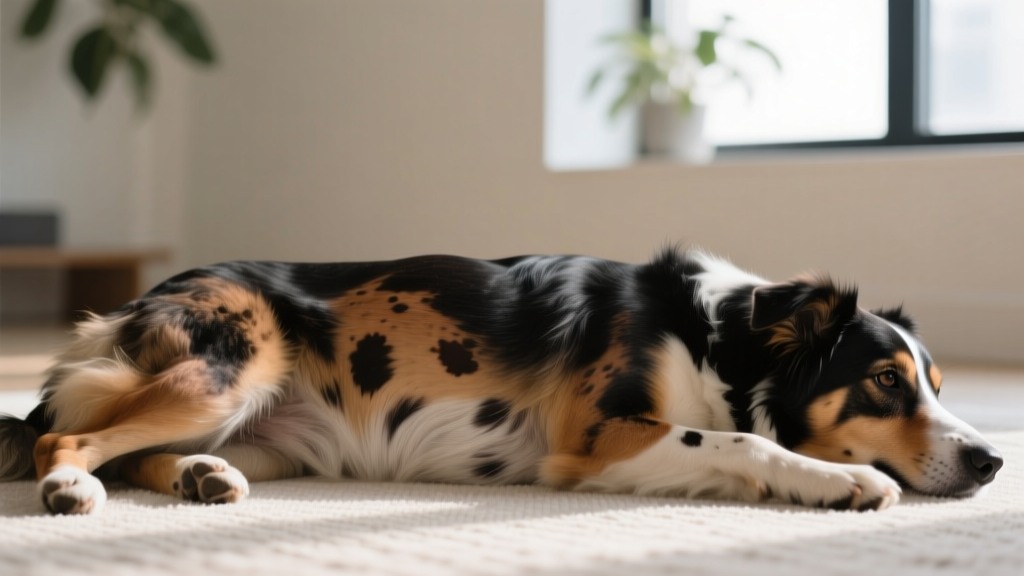
Dogs of Scotland: The Science Behind Their Instincts & Traits
Explore the canine science behind dogs of Scotland — from herding instincts to cold-weather adaptations. Learn what research reveals about Scottish breeds.

What Defines the Dogs of Scotland Scientifically?
The dogs of Scotland — including the Border Collie, Scottish Terrier, Shetland Sheepdog, Cairn Terrier, West Highland White Terrier, Golden Retriever, and others originating from Scottish regions — share a set of scientifically documented behavioral and physiological traits shaped by selective breeding for specific working roles in harsh, cold, highland and island environments. Research published in journals such as Animal Behaviour and data from the American Kennel Club confirm that these breeds exhibit heightened herding drive, prey-drive sequences (modified or truncated by breeding), cold-weather coat physiology, and strong handler-bonding behaviors. Their traits are not arbitrary — they reflect measurable genetic selection pressures applied over 200–400 years of functional breeding in Scotland's rugged terrain.
The Evolutionary Blueprint: From Wolf Ancestors to Scottish Working Dogs
Every dog alive today descends from a common ancestor shared with the gray wolf (Canis lupus), diverging approximately 20,000–40,000 years ago according to genomic studies referenced by the Merck Veterinary Manual. The dogs of Scotland carry this ancestral legacy in their behavioral sequences, but centuries of targeted selection have amplified, suppressed, or redirected specific wolf behaviors.
🐺 Wolf-to-Dog Behavioral Mapping in Scottish Breeds
A wolf's predatory sequence follows: eye → orient → stalk → chase → grab-bite → kill-bite → dissect → consume. Selective breeding in Scotland modified this sequence for functional purposes:
- Border Collies: The sequence is amplified at eye → stalk → chase but truncated before grab-bite — producing the iconic "eye" herding style without injuring livestock.
- Scottish Terriers & Cairn Terriers: The full predatory sequence is preserved but directed toward small vermin — grab-bite and kill-bite remain intact for rodent control.
- Golden Retrievers (Scottish Highlands origin): The grab-bite is modified into a soft-mouth retrieve, suppressing kill-bite entirely while preserving chase and grab.
- Shetland Sheepdogs: Similar to Border Collies but with more vocalization added — barking supplements the stalk/chase to move sheep on the Shetland Islands.
This is not anthropomorphism — it is measurable behavioral genetics. A 2019 study published in the journal Proceedings of the Royal Society B (Morrill et al.) demonstrated that herding behaviors in collie-type breeds are linked to specific genomic regions that regulate neural development and synaptic function, confirming that these are inherited neurological patterns, not learned tricks.
Physiological Mechanisms: How Scottish Breeds Are Built for Their Environment
Cold-Weather Coat Architecture
Scotland's climate — averaging 37–50°F (3–10°C) in winter with persistent wind and rain — selected for a specific coat physiology in native breeds:
- Double-coat structure: Breeds like the Golden Retriever, Shetland Sheepdog, and Border Collie possess a dense undercoat (secondary hairs, 1–2 inches long) overlaid by guard hairs (primary hairs, 2–5 inches). The undercoat traps insulating air; guard hairs shed water.
- Sebaceous gland density: Scottish breeds typically have higher sebaceous gland activity than short-coated tropical-origin breeds, producing oils that waterproof the outer coat.
- Counter-current heat exchange: In extremities, arterial blood flowing to paws passes close to venous blood returning from paws, minimizing heat loss — a mechanism shared with arctic breeds but present in moderate form in Scottish highland dogs.
The Neurobiology of Herding Drive
The "herding instinct" in Border Collies and Shelties is not a vague personality trait — it is a neurologically hardwired motor pattern. Functional MRI studies on working dogs (conducted at Eötvös Loránd University in Hungary) show that herding breeds demonstrate heightened activation in the motor cortex and cerebellum when observing moving objects, compared to non-herding breeds.
| Breed | Origin Region | Primary Drive | Predatory Sequence Stage | Exercise Need (min/day) |
|---|---|---|---|---|
| Border Collie | Anglo-Scottish border | Herding (eye/stalk) | Eye → Stalk → Chase | 90–120+ |
| Scottish Terrier | Scottish Highlands | Vermin hunting | Full sequence (stalk → kill) | 45–60 |
| Shetland Sheepdog | Shetland Islands | Herding (bark/chase) | Stalk → Chase + vocalize | 60–90 |
| Cairn Terrier | Scottish Highlands/Isle of Skye | Vermin hunting (digging) | Orient → Chase → Grab → Kill | 45–60 |
| Golden Retriever | Scottish Highlands (Guisachan) | Retrieving (soft-mouth) | Chase → Grab (modified) | 60–90 |
| West Highland White Terrier | Argyll, Scotland | Vermin hunting | Full sequence (stalk → kill) | 45–60 |
Why Do Dogs of Scotland Exhibit Such Strong Breed-Specific Behaviors?
The answer lies in selective breeding intensity. In Scotland's agricultural economy from the 1600s through the 1800s, dogs were functional tools — a farmer who couldn't manage sheep with a dog faced economic ruin. This created intense selection pressure. Dogs that displayed the wrong behaviors (biting sheep, ignoring commands, lacking stamina in cold rain) were not bred. Over 10–20 generations, this produced breeds with remarkably consistent behavioral phenotypes.
Modern genomic analysis confirms this. A 2017 study in Cell Reports (Parker et al.) mapped breed-defining genetic signatures and found that herding breeds, including the Border Collie and Shetland Sheepdog, share distinctive alleles in genes related to neural crest development and brain function — specifically genes like RBFOX1 and GRM7 that influence impulse control and learning capacity.
This means when your Border Collie stares obsessively at the cat, it is not "being naughty" — it is expressing a genetically encoded motor pattern that has been refined over centuries. The behavior is involuntary in its initiation, though it can be redirected through training.
Practical Implications for Owners: What Science Means for Daily Life
Actionable Guidance by Breed Type
If You Own a Herding-Type Scottish Breed (Border Collie, Sheltie):
- Mental stimulation is non-negotiable: 30–45 minutes of structured training or puzzle work daily. Without it, herding dogs redirect their drive onto children, cars, or other pets — a phenomenon called behavioral displacement.
- Use flirt poles or herding balls (e.g., the Jolly Ball, ~$25–$35) to satisfy chase/stalk drives safely in a backyard. Minimum 20-minute sessions, 3–4 times per week.
- Enroll in herding trials or Treibball: These sports channel the genetic drive into structured activity. Local clubs typically charge $15–$30 per session.
If You Own a Terrier-Type Scottish Breed (Scottie, Cairn, Westie):
- Digging is a drive, not defiance: Provide a designated digging area (a 3×3 ft sandbox, ~$30–$50 to build) rather than punishing the behavior. Punishment of instinctive drives increases anxiety without eliminating the behavior.
- Small-animal precaution: These breeds will chase squirrels, rabbits, and sometimes small dogs. Use a secure 6-foot fence (not invisible/electric fencing, which does not contain prey-driven terriers) and a harness with a front-clip leash attachment on walks.
- Earth dog trials: AKC-sanctioned events where terriers navigate underground tunnels. Entry fees typically $20–$35.
If You Own a Retriever-Type Scottish Breed (Golden Retriever):
- Mouth-carrying behavior is normal: Goldens carry objects because the grab-bite portion of their predatory sequence is preserved but softened. Provide appropriate carry-items (soft toys, ~$8–$15 each) rather than scolding.
- Water access: Originally bred for retrieving waterfowl from Scottish lochs. Access to swimming (even a kiddie pool, $25–$60) satisfies breed-typical behavior and provides low-impact exercise — important given the breed's 12–25% hip dysplasia prevalence rate per the Orthopedic Foundation for Animals.
Common Misconceptions About Scottish Dog Breeds — Debunked by Science
| Myth | Fact | Scientific Explanation |
|---|---|---|
| "Border Collies are hyperactive" | MYTH | Border Collies are high-drive, not hyperactive. They can settle calmly when their mental and physical stimulation needs are met. Hyperactivity (canine ADHD) is a clinical condition affecting an estimated 1–2% of dogs, not a breed trait. |
| "Scottish Terriers are aggressive" | MYTH | Scotties have high prey drive toward small animals and can be dog-selective — this is predatory behavior, not aggression toward humans. AKC temperament standards describe them as "alert, quick, bright, sure of self." |
| "Golden Retrievers never bite" | MYTH | All dogs possess bite capability. Goldens have a "soft mouth" bred for retrieving game undamaged, but resource guarding, pain, or fear can trigger biting in any breed. Bite inhibition is trained, not guaranteed by genetics alone. |
| "Shelties are just miniature Collies" | MYTH | Shetland Sheepdogs are a distinct breed developed on the Shetland Islands from small herding dogs (possibly Spitz-type) crossed with Rough Collies. They have separate genetic lineage, different health predispositions, and typically more vocal behavior than Rough Collies. |
| "Scottish breeds handle cold fine, so no winter care needed" | MYTH | While double-coated breeds tolerate cold better, temperatures below 20°F (−7°C) still pose hypothermia risk for prolonged exposure. Paw pads are not insulated and can suffer frostbite. Limit outdoor time below 20°F to 20–30 minutes for active exercise. |
When Breed-Typical Behavior Signals a Problem
Understanding the science of breed-typical behavior also means knowing when something crosses from normal into concerning territory. Consult your veterinarian or a certified applied animal behaviorist (CAAB) if you observe:
⚠️ Red-Flag Behavioral Signs in Scottish Breeds
- Obsessive shadow-chasing or light-chasing in Border Collies: This can escalate into canine compulsive disorder (CCD), a condition with neurological basis similar to human OCD. Prevalence estimated at 2–5% in high-drive breeds. Early intervention with behavior modification and possibly SSRIs (prescribed by a vet) improves outcomes.
- Sudden-onset aggression in any breed: Especially in Scottish Terriers, which are predisposed to a rare condition called "Scottie cramp" (a serotonin-metabolism disorder causing muscle spasms that can be triggered by excitement/stress). While not aggression per se, the spasms may be misinterpreted and cause reactive behavior.
- Excessive licking or flank-sucking in retrievers: Acral lick dermatitis (lick granuloma) has a behavioral and allergic component. Golden Retrievers are over-represented in veterinary dermatology literature for this condition.
- Inability to settle even after adequate exercise: If a Border Collie or Sheltie receives 90+ minutes of vigorous activity and still paces, whines, or cannot sleep — this may indicate anxiety disorder rather than unmet exercise needs. A veterinary behaviorist can assess.
How Is This Different From Humans? The Canine vs. Human Brain
Dogs process the world fundamentally differently from humans, and understanding this is essential for anyone living with the dogs of Scotland (or any breed):
- Olfactory dominance: A dog's olfactory bulb contains approximately 200–300 million receptors (breed-dependent; Bloodhounds reach 300 million). Humans have about 6 million. Scottish terriers, bred to track vermin by scent underground, use olfaction as their primary environmental mapping sense — not vision.
- Motor-pattern inheritance: Humans inherit general temperament tendencies; dogs inherit specific motor sequences. A Border Collie doesn't "decide" to herd — the motor pattern activates automatically when triggered by movement, much like a human startle reflex.
- Learning speed: Research by psychologist Stanley Coren suggests the average dog can learn approximately 165 words/signals; Border Collies (consistently ranked #1 in working intelligence) can learn 250+ and retain them for years. The famous Border Collie "Chaser" learned over 1,000 object names — a capacity linked to the breed's selection for rapid response to shepherds' verbal commands at long distances.
Related Behaviors and Cross-References
The scientific principles discussed here connect to several broader canine science topics:
- Prey drive modification: Understanding how the predatory sequence is truncated or redirected is foundational for all working breeds — not just Scottish ones. See our guides on herding breeds and terrier behavior.
- Breed-specific legislation: Note that some jurisdictions have breed-specific laws. If you own a breed affected by local regulations, always check your municipal codes.
- Genetic health testing: Scottish breeds have specific hereditary conditions. The AKC recommends breed-specific health screening — for example, Golden Retrievers should be screened for hip dysplasia, elbow dysplasia, and cardiac conditions; Border Collies for collie eye anomaly (CEA) and MDR1 drug sensitivity gene mutation.
- Positive reinforcement training: Force-free, reward-based training methods (treat rewards, clicker training, shaping) are scientifically validated as the most effective approach for all breeds. Aversive methods (shock collars, prong collars) increase cortisol levels and can exacerbate breed-typical reactivity, particularly in sensitive herding breeds.
📚 References & Sources
- Parker, H.G. et al. (2017). "Genomic Analyses Reveal the Influence of Geographic Origin, Migration, and Hybridization on Modern Dog Breed Development." Cell Reports, 19(4), 697–708.
- Morrill, K. et al. (2022). "Ancestry-inclusive dog genomics challenges popular breed stereotypes." Science, 376(6592). — Demonstrates that behavior is influenced by breed ancestry but not deterministic.
- Coren, S. (2006). The Intelligence of Dogs. Revised edition. — Border Collie cognitive capacity benchmarks.
- AKC Breed Standards — Official temperament and physical descriptions for all recognized Scottish breeds.
- Merck Veterinary Manual: Overview of Dog Behavior — Clinical behavioral science reference.
Frequently Asked Questions
Why do dogs of Scotland have such thick double coats?
Scotland's climate — characterized by persistent rain, wind, and temperatures averaging 37–50°F (3–10°C) in winter — created strong selection pressure for insulating, water-resistant coats. The double-coat structure (dense undercoat plus waterproof guard hairs) is a direct physiological adaptation to these conditions, developed over centuries of outdoor working life. Shaving a double-coated Scottish breed damages this thermal regulation system and is not recommended.
Can dogs from Scottish breeds adapt to hot climates?
Yes, but with management. Double-coated breeds can live in warm climates (e.g., Texas, Florida) but require climate-controlled indoor environments, exercise during cooler morning/evening hours, and constant access to fresh water. Panting is their primary cooling mechanism — dogs do not sweat through their skin like humans. When ambient temperature exceeds 85°F (29°C), limit outdoor activity to 15–20 minutes and watch for heat stress signs: excessive panting, drooling, lethargy, or collapse (seek emergency veterinary care immediately).
How do dogs of Scotland process commands differently from other breeds?
Herding-origin Scottish breeds (Border Collies, Shelties) were selected for responsiveness to distant verbal and whistle commands — sometimes at distances of 500+ yards across hilly terrain. This selected for exceptional auditory discrimination and rapid command processing. Terrier-type Scottish breeds, by contrast, were bred for independent decision-making underground, making them less biddable but not less intelligent — they simply prioritize different cognitive tasks.
What does it mean when my Border Collie stares at everything that moves?
This is the "eye" — a modified predatory stalk behavior. The dog is expressing an inherited motor pattern triggered by movement. It is normal, not a sign of anxiety or vision problems. However, if the staring becomes compulsive (the dog cannot be redirected, ignores food/toys, stares at shadows or lights for hours), consult a veterinary behaviorist — this may indicate canine compulsive disorder.
Is it normal for my Scottish Terrier to dig in the yard?
Completely normal. Scottish Terriers were bred to pursue foxes and badgers into underground burrows. Digging is a core component of their predatory behavioral repertoire. Provide a designated digging zone rather than attempting to eliminate the behavior through punishment, which increases stress without suppressing the underlying drive.
How is a Sheltie's herding style different from a Border Collie's?
Border Collies primarily use "eye" (intense staring) and silent stalking to control sheep. Shelties use a more vocal approach — barking and nipping at heels — which was more practical on the Shetland Islands where sheep were smaller, more scattered across rough terrain, and needed auditory pressure to move. Both styles are inherited motor patterns, not trained behaviors.
Dr. Hannah Wickes
All our authors care for dogs every day — read more of their work on the authors page.