Dogs and Oranges: The Science of Citrus Perception in Canines
Explore the science behind dogs and oranges — from taste receptor biology and evolutionary aversion to safe serving guidelines and citrus toxicity risks.
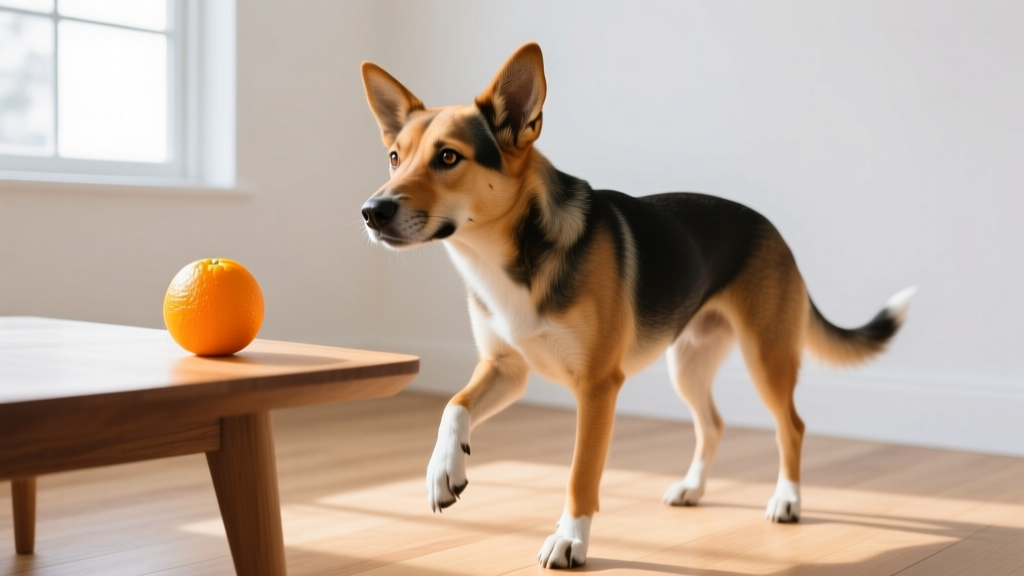
Yes, dogs can eat small amounts of peeled orange flesh safely. However, most dogs instinctively reject citrus due to evolutionary aversion mechanisms tied to their olfactory and taste systems. Orange peels, seeds, and essential oils contain compounds (limonene, linalool, psoralen) that are toxic to dogs. A safe serving is 1–2 segments for a medium-sized dog (30–50 lb / 14–23 kg), no more than 2–3 times per week. Always consult your veterinarian before introducing new foods, especially for dogs with diabetes or gastrointestinal sensitivities.
The Biology of How Dogs Perceive Oranges
When your dog wrinkles their nose at a peeled orange, they're not being picky — they're responding to millions of years of evolutionary programming. Understanding the science behind dogs and oranges requires looking at canine sensory biology at the molecular level.
Taste Receptor Differences: Dogs vs. Humans
Humans possess approximately 9,000 taste buds; dogs have roughly 1,700. But the critical difference lies in receptor types. According to research published in the journal Chemical Senses, dogs have functional TAS2R bitter taste receptors — at least 12 identified variants — that are specifically tuned to detect plant-derived toxins.
Citrus fruits contain limonin and nomilin, intensely bitter triterpenoid compounds concentrated in the white pith and membrane. Your dog's bitter receptors fire strongly when these molecules bind, triggering an innate rejection response. This isn't learned behavior — it's hardwired.
Additionally, dogs lack the sweet-craving drive that humans have. While they do possess TAS1R2/TAS1R3 sweet taste receptors (which is why some dogs enjoy fruit), their reward pathway activation from sugar is significantly lower than ours. A 2024 study in Merck Veterinary Manual confirms that canine taste preferences evolved toward amino acids (meaty/umami flavors) rather than simple carbohydrates.
| Biological Feature | Dogs | Humans |
|---|---|---|
| Taste buds | ~1,700 | ~9,000 |
| Bitter receptor variants (TAS2R) | 12+ | 25 |
| Olfactory receptor genes | ~800 functional | ~400 functional |
| Olfactory epithelium area | ~170 cm² | ~10 cm² |
| Sensitivity to d-limonene | High (aversive) | Moderate (pleasant) |
Why Dogs Avoid Citrus: The Evolutionary Basis
Ancestral Context
Wolves and early canids evolved as primarily carnivorous scavengers across Eurasian grasslands and forests. Their diet consisted of prey animals, with occasional consumption of stomach contents from herbivores (which included pre-digested plant matter). Citrus fruits were not part of the ancestral canid range — wild oranges (Citrus sinensis) originated in Southeast Asia and were not encountered by gray wolves (Canis lupus) during the species' evolutionary development.
More importantly, many wild plants produce bitter-tasting secondary metabolites as chemical defenses against herbivory. Canids that avoided intensely bitter, acidic plant matter had a survival advantage — they were less likely to ingest toxic compounds. This selection pressure is why your dog's TAS2R bitter receptors are so responsive to the specific molecular shapes found in citrus limonoids and essential oil terpenes.
The aversion extends beyond taste. Dogs process volatile aromatic compounds through their vomeronasal organ (Jacobson's organ), which detects pheromones and chemical signals. The d-limonene that makes oranges smell fresh and pleasant to humans registers as a harsh, overwhelming chemical signal to dogs. With olfactory sensitivity estimated at 10,000–100,000 times greater than humans for certain compounds, an unpeeled orange sitting on your counter is the canine equivalent of standing next to a blaring speaker.
Physiological Mechanisms: What Happens When a Dog Eats Orange
When a dog does consume orange flesh, several physiological processes unfold:
Digestive Processing
Orange flesh is approximately 87% water, 9% sugar (fructose, glucose, sucrose), and 2.4% dietary fiber. A dog's digestive tract — optimized for protein and fat digestion with a short transit time of 8–10 hours — handles the simple sugars adequately in small quantities. The fiber (primarily pectin) can have a mild beneficial effect on stool consistency, but excessive amounts cause osmotic diarrhea as unabsorbed sugars draw water into the intestinal lumen.
The Citric Acid Problem
Oranges contain approximately 0.9–1.2% citric acid. While not toxic at these concentrations, citric acid can irritate the canine gastric mucosa, particularly in dogs with pre-existing conditions like acid reflux or inflammatory bowel disease. The stomach's parietal cells respond to additional acid load by temporarily reducing hydrochloric acid secretion, which can slow protein digestion.
Essential Oil Toxicity (Peel and Seeds)
Orange peels contain concentrated essential oils — primarily d-limonene (90–95% of peel oil) and linalool. These compounds are metabolized by the liver via cytochrome P450 enzymes. In dogs, high doses overwhelm hepatic processing capacity, leading to:
- Hepatocellular stress (elevated ALT/AST on bloodwork)
- Central nervous system depression at toxic doses
- Contact dermatitis from direct skin exposure
- Gastrointestinal irritation and vomiting
Seeds contain trace amounts of amygdalin (a cyanogenic glycoside), though the quantity in orange seeds is far lower than in apple or cherry seeds. The primary seed risk is mechanical — intestinal obstruction in small breeds.
Safe Serving Guidelines for Dogs and Oranges
If your dog shows interest in orange (some individuals do, despite the species-wide aversion), here are evidence-based serving parameters:
| Dog Weight | Max Serving | Frequency | Calories (approx.) |
|---|---|---|---|
| Toy breeds (5–15 lb / 2–7 kg) | ½ segment | 1–2x/week | 3–4 kcal |
| Small breeds (15–30 lb / 7–14 kg) | 1 segment | 2x/week | 7–8 kcal |
| Medium breeds (30–60 lb / 14–27 kg) | 1–2 segments | 2–3x/week | 10–15 kcal |
| Large breeds (60–100 lb / 27–45 kg) | 2–3 segments | 2–3x/week | 15–22 kcal |
| Giant breeds (100+ lb / 45+ kg) | 3–4 segments | 2–3x/week | 22–30 kcal |
Practical Preparation Rules
- Remove all peel — including the white pith (highest limonin concentration)
- Remove seeds — mechanical obstruction risk
- Separate into individual segments — remove any connecting membrane
- Serve at room temperature — cold fruit can cause gastric discomfort
- Offer as a training reward, not a meal replacement — treats should constitute no more than 10% of daily caloric intake per AVMA nutritional guidelines
- Monitor for 24 hours after first serving for signs of GI upset (vomiting, diarrhea, decreased appetite)
Common Misconceptions About Dogs and Oranges Debunked
| Myth | Fact |
|---|---|
| "Dogs need vitamin C from oranges like humans do." | Dogs synthesize their own vitamin C (ascorbic acid) in the liver via the glucuronic acid pathway. Unlike humans, who lost the GULO enzyme gene, dogs produce approximately 2–4 grams daily depending on body size and stress levels. Supplementation is rarely needed and can cause oxalate stone formation in predisposed breeds. |
| "Orange juice is fine since it's natural." | Commercial orange juice contains 20–24g sugar per 8 oz serving — roughly 5–6x the sugar concentration of whole orange flesh per equivalent volume. The pasteurization process also concentrates citric acid. Even "no sugar added" varieties pose a significant glycemic load for dogs. |
| "If my dog likes oranges, they need the nutrients." | Individual taste preference doesn't indicate nutritional need. Some dogs develop conditioned taste preferences through positive associations (e.g., receiving orange from a favored person). The nutrients in oranges (vitamin C, potassium, folate) are readily available in complete-and-balanced commercial diets. |
| "Citrus is toxic to all dogs equally." | The flesh of oranges is non-toxic in appropriate quantities. Toxicity is dose-dependent and concentrated in peel, pith, seeds, and essential oils. The ASPCA classifies citrus plants (Citrus spp.) as toxic to dogs specifically due to essential oil and psoralen content — not the fruit flesh itself. |
| "Small amounts of orange peel are harmless." | Orange peel is difficult to digest and can cause gastrointestinal obstruction, particularly in dogs under 20 lb (9 kg). The essential oil concentration (0.5–3% by weight in fresh peel) is sufficient to cause vomiting and CNS depression in small dogs even from a single peel ingestion. |
Breed Variations and Individual Differences in Citrus Response
While the aversion to citrus is broadly conserved across domestic dogs, some breed-level and individual variations exist:
Olfactory Sensitivity Variations
Brachycephalic breeds (Pugs, Bulldogs, Boston Terriers) have compressed nasal passages that can alter odorant processing. While they still possess the same number of olfactory receptor genes, the airflow dynamics through their shortened snouts may reduce the intensity of volatile compound detection. This may partially explain anecdotal reports of brachycephalic dogs showing less avoidance of citrus-scented environments.
Scent hounds (Beagles, Bloodhounds, Coonhounds) and sporting breeds (Labrador Retrievers, Spaniels) have been selectively bred for heightened olfactory acuity. These dogs may show stronger avoidance behaviors around citrus due to more intense sensory input. A Beagle's reaction to a peeled orange — backing away, sneezing, pawing at the nose — reflects their amplified perception of the volatile terpenes.
Genetic Taste Variation
Polymorphisms in the TAS2R gene family create individual variation in bitter sensitivity, similar to how some humans are "supertasters." While breed-specific TAS2R variant frequencies haven't been comprehensively mapped, individual dogs within any breed may show stronger or weaker bitter rejection thresholds. This explains why one Golden Retriever might eagerly eat orange segments while another from the same litter refuses them entirely.
Diabetes-Predisposed Breeds
Breeds with higher diabetes mellitus prevalence — including Samoyeds, Keeshonds, Cairn Terriers, and Australian Terriers — require stricter sugar management. The fructose content in oranges, while modest per segment, adds unnecessary glycemic load. For these breeds, lower-sugar alternatives like cucumber or green beans are superior treat choices.
When Citrus Interest or Aversion Signals a Problem
Changes in your dog's response to food — including novel items like oranges — can carry clinical significance:
Behavioral and Medical Red Flags
- Sudden interest in non-food items (pica): If your dog begins licking orange peels, eating citrus-scented cleaning products, or consuming other unusual items, this may signal nutritional deficiency, diabetes, Cushing's disease, or cognitive dysfunction in senior dogs.
- Loss of appetite across all foods: A dog who previously enjoyed treats but now refuses everything — including high-value items — warrants veterinary evaluation within 24 hours. This can indicate dental disease, oral tumors, nausea from organ dysfunction, or systemic illness.
- Excessive drooling around food: Hypersalivation (ptyalism) when presented with food may indicate oral pain, esophageal disorders, or toxin exposure rather than normal anticipatory salivation.
- Compulsive licking of citrus surfaces: Repetitive licking of countertops where orange juice was spilled, or obsessive interest in citrus-scented items, can be a displacement behavior signaling anxiety or a compulsive disorder.
When to see the vet: Any sudden change in food preferences or eating behavior lasting more than 48 hours, especially when accompanied by weight loss, vomiting, diarrhea, or lethargy, should prompt a veterinary visit. Your veterinarian may recommend a complete blood count (CBC), chemistry panel, and urinalysis (typical cost range: $150–$350 depending on your region) to rule out underlying metabolic conditions.
How Citrus Processing Differs Between Dogs and Humans
The way dogs and humans metabolize citrus compounds reveals fundamental differences in our respective physiologies:
Hepatic Metabolism Pathways
Humans efficiently metabolize d-limonene via CYP2C9 and CYP2C19 liver enzymes, converting it to perillic acid and dihydroperillic acid, which are then excreted renally. Dogs rely more heavily on CYP2D15 and CYP3A12 for terpene metabolism, and these pathways have lower throughput capacity. This means that equivalent doses of citrus essential oils produce higher blood concentrations and longer elimination half-lives in dogs than in humans.
Vitamin C Synthesis
Humans carry a non-functional GULO (gulonolactone oxidase) pseudogene — a mutation that occurred approximately 61 million years ago in our primate ancestors. We must obtain vitamin C exogenously. Dogs retain a functional GULO gene and synthesize ascorbic acid in the liver at rates of approximately 18–36 mg per pound (40–80 mg per kg) of body weight daily. This synthesis upregulates during stress, illness, and inflammation — making dietary vitamin C supplementation via oranges largely redundant for healthy dogs.
Gastric Acid Buffering
The canine stomach maintains a baseline pH of 1–2 (highly acidic) during active digestion, which is lower than the human gastric pH of 1.5–3.5. This means dogs are adapted to handle acidic protein meals but are less equipped to buffer additional organic acid loads (like citric acid) without disrupting the acid-base balance. The practical implication: while a dog's stomach acid is stronger than yours, the addition of citric acid to an already acidic environment increases the risk of gastric mucosal irritation.
Related Canine Sensory Behaviors
Understanding how dogs respond to oranges connects to broader patterns in canine sensory science:
- Aversion to vinegar and ammonia: Like citrus, these volatile acids trigger trigeminal nerve irritation in the nasal mucosa. Many commercial pet deterrent sprays use these compounds for this reason.
- Attraction to fermented/putrid odors: Dogs possess olfactory receptor families (OR51E1, OR51E2) tuned to short-chain fatty acids found in decaying organic matter — an evolutionary adaptation for scavenging.
- Flehmen response: When dogs curl their upper lip after encountering a strong scent, they're directing volatile compounds to the vomeronasal organ for chemical analysis. You may see this when they encounter citrus peels or other pungent substances.
- Taste aversion learning: Dogs form strong single-trial taste aversions. If a dog eats orange and experiences GI upset, they may permanently avoid all citrus-scented items — a survival mechanism shared with wolves to prevent repeated toxin ingestion.
Frequently Asked Questions
Why does my dog run away when I peel an orange?
The volatile oils released during peeling — primarily d-limonene — create an aerosolized burst that your dog's olfactory system processes as overwhelming and potentially threatening. With approximately 800 functional olfactory receptor genes (compared to your 400), your dog is experiencing the equivalent of a chemical fog. The sneezing and avoidance you observe are protective reflexes mediated by the trigeminal nerve, which detects irritants in the nasal cavity.
Can dogs taste sweetness in oranges?
Yes, but differently than you do. Dogs possess the TAS1R2/TAS1R3 heterodimer sweet taste receptor, which responds to sugars and some artificial sweeteners. However, research shows dogs' sweet taste receptor has lower affinity for fructose (the primary sugar in oranges) than for sucrose. Your dog may register the orange as mildly pleasant-sweet, but this signal is typically overridden by the much stronger bitter and sour inputs from limonin and citric acid.
Is it normal for my dog to love oranges?
It's uncommon but not abnormal. Individual variation in taste receptor sensitivity means some dogs have higher bitter thresholds and lower rejection responses. Early-life exposure during the socialization window (3–14 weeks) can also create lasting acceptance. If your dog enjoys oranges, that's fine — just adhere to the serving guidelines above and ensure the peel and seeds are completely removed.
Can dogs eat mandarin oranges, tangerines, or clementines?
Yes, the same guidelines apply to all Citrus reticulata varieties. These are actually slightly lower in citric acid than standard navel oranges (approximately 0.6–0.8% vs. 0.9–1.2%), making them marginally gentler on the stomach. However, they tend to be higher in sugar content (up to 10.5% vs. 9% in standard oranges), so serving sizes should not increase. All peel, pith, and seeds must still be removed.
What should I do if my dog ate a whole orange, peel included?
Monitor closely for 24–48 hours. Signs requiring immediate veterinary attention include: repeated vomiting, diarrhea with blood, abdominal distension, lethargy, loss of appetite, or difficulty defecating (potential peel obstruction). For dogs under 20 lb (9 kg), contact your veterinarian or ASPCA Animal Poison Control at (888) 426-4435 proactively, as the essential oil dose from a full peel may be sufficient to cause toxicity. Do not induce vomiting unless directed by a veterinary professional.
How is citrus used in dog training and behavior management?
Some force-free trainers use citrus-scented cotton balls as environmental deterrents to discourage dogs from accessing specific areas (e.g., garden beds, furniture). This leverages the natural aversion without causing harm. However, this approach is not universally effective — approximately 15–20% of dogs show minimal avoidance response to citrus scents. Never spray citrus essential oils directly on a dog or in their sleeping area, as concentrated d-limonene causes skin irritation and respiratory discomfort.
Sources and Further Reading
- ASPCA: Toxic and Non-Toxic Plants Database
- Merck Veterinary Manual: Essential Oil Toxicity in Animals
- AVMA: Pet Nutrition Guidelines
Marcus Aldridge
All our authors care for dogs every day — read more of their work on the authors page.


