Dogs and Nuts: The Canine Science of Digestion, Toxicity, and Safety
Explore the science behind dogs and nuts — which are safe, which are toxic, how canine digestion handles fats and proteins, and what research reveals.
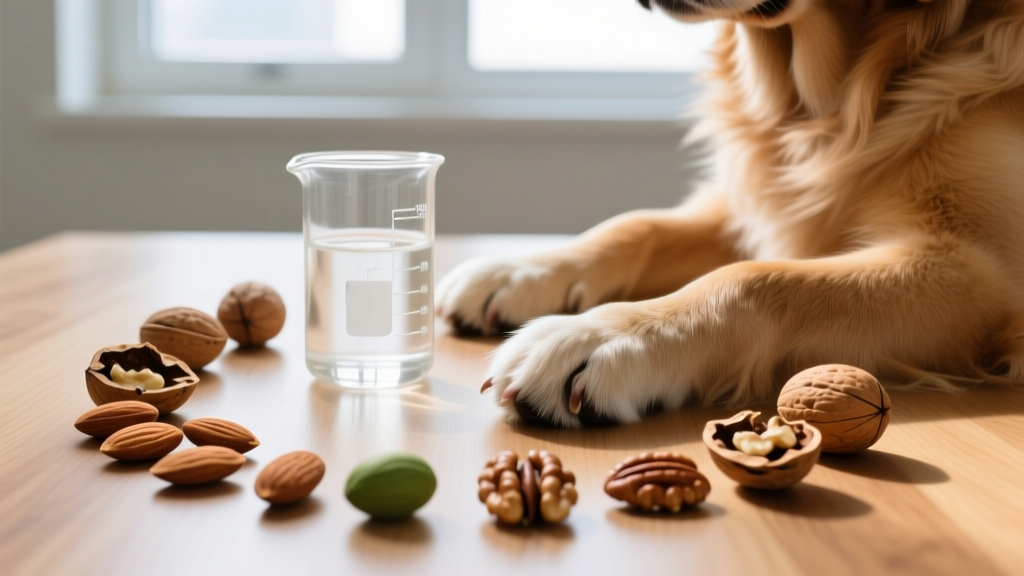
The answer depends entirely on the nut. Macadamia nuts are definitively toxic to dogs, causing tremors, weakness, and hyperthermia at doses as low as 2.4 g/kg of body weight. Black walnuts carry mold-related neurotoxin risks. Most other nuts — peanuts, cashews, almonds — are not toxic but pose significant risks including pancreatitis (from high fat content), intestinal obstruction, and choking. No nut is nutritionally necessary for dogs, and the risk-to-benefit ratio rarely favors feeding them.
The Science of How Dogs Process Nuts
Dogs digest nuts differently than humans do, and understanding the physiology explains why even "safe" nuts carry substantial risk.
Canine Pancreatic Lipase and Fat Processing
When a dog consumes a nut — which is typically 45–75% fat by weight — the pancreas must secrete large volumes of pancreatic lipase to break down those triglycerides into absorbable fatty acids. A dog's pancreas is proportionally smaller relative to body size than a human's, and it evolved to handle the moderate fat content of whole prey (roughly 10–15% fat on a dry-matter basis for wild canids consuming ungulates and small mammals).
A single ounce of macadamia nuts contains approximately 21 grams of fat. For a 20 lb (9 kg) dog, consuming even a small handful represents a fat load roughly equivalent to a human eating an entire stick of butter in one sitting. This acute fat surge triggers the pancreas to overwork, which can inflame the organ — a condition known as acute pancreatitis.
According to the Merck Veterinary Manual, pancreatitis in dogs is strongly associated with high-fat meal ingestion, and certain breeds — Miniature Schnauzers, Cocker Spaniels, and Yorkshire Terriers — carry genetic predispositions that make them especially vulnerable.
Phosphorus and Mineral Imbalance
Most tree nuts contain 300–600 mg of phosphorus per ounce. While phosphorus is essential, excess intake in dogs with any degree of kidney compromise can accelerate renal damage. The calcium-to-phosphorus ratio in most nuts is heavily skewed toward phosphorus (often 1:5 or worse), which is the inverse of what canine nutrition requires (approximately 1.2:1 Ca:P for adult maintenance per AAFCO guidelines).
Evolutionary Context: Why Nuts Were Never Part of the Canine Diet
Ancestral Diet Reality: Gray wolves (Canis lupus), the primary ancestors of domestic dogs, evolved as cursorial predators across the Pleistocene steppe. Isotopic analysis of wolf remains consistently shows diets composed of 85–95% animal tissue, with occasional plant matter coming primarily from the gastrointestinal contents of herbivorous prey.
Nuts, seeds, and hard-shelled plant foods were virtually absent from the ancestral canid diet for several evolutionary reasons:
- Dentition mismatch: Canid teeth are designed for shearing meat and crushing bone — not for cracking hard shells. Unlike rodents and primates, dogs lack the flat molars needed to grind plant matter efficiently.
- Digestive tract length: Dogs have relatively short gastrointestinal tracts (roughly 3.5x body length) compared to omnivorous species (6–10x body length), meaning they have less time and fewer microbial communities for fermenting plant cell walls.
- Amylase limitations: While domestic dogs have evolved more copies of the AMY2B gene than wolves (an adaptation to starch-rich agricultural diets), this primarily aids in digesting cooked grains and tubers — not the complex lipid structures found in nuts.
Which Nuts Are Toxic to Dogs — and the Mechanisms Behind the Danger
| Nut Type | Toxicity Level | Mechanism of Harm | Toxic Dose / Risk Threshold |
|---|---|---|---|
| Macadamia nuts | HIGH — Toxic | Unknown toxin causes skeletal muscle weakness, tremors, hyperthermia, and vomiting. Suspected mechanism involves interference with neuromuscular junction signaling. | Clinical signs reported at 2.4 g/kg body weight (≈1 nut per 5 lb of dog) |
| Black walnuts | HIGH — Toxic (mold) | Juglone compound and tremorgenic mycotoxins from mold growth cause seizures and neurotoxicity. | Variable — depends on mold contamination; any moldy walnut is dangerous |
| English/Persian walnuts | MODERATE | Not inherently toxic, but high fat content (18g/oz) triggers pancreatitis; large pieces cause obstruction in small dogs. | Risk increases with quantity; >1 oz per 20 lb dog is concerning |
| Pecans | MODERATE | Juglone presence (lower than black walnut); high fat (20g/oz); mold-susceptible. Can cause GI upset and pancreatitis. | Same as walnuts — quantity-dependent |
| Pistachios | MODERATE | High fat (13g/oz); shells cause obstruction and dental fractures; aflatoxin contamination risk. | Shells are the primary acute risk |
| Almonds | LOW-MODERATE | Not toxic but poorly digested; high fat (14g/oz); large size creates choking/obstruction hazard. | 1–2 almonds unlikely to harm a large dog; >10 is concerning |
| Cashews | LOW-MODERATE | Lower toxicity risk but high fat (12g/oz); salted varieties risk sodium ion toxicity at large quantities. | Unsalted, small amounts generally tolerated |
| Peanuts (legume, not true nut) | LOW | Generally safe if unsalted, unshelled, and not moldy. Aflatoxin risk in poorly stored peanuts. High fat still a pancreatitis concern. | A few plain peanuts are low-risk for healthy dogs |
| Hazelnuts | LOW-MODERATE | Not toxic but hard texture risks dental fractures and obstruction, especially in dogs under 30 lb. | Size-dependent obstruction risk |
Macadamia Nut Toxicity: What Research Tells Us
Macadamia nut toxicosis is one of the most well-documented food-related poisonings in dogs. A landmark study published in the Journal of Veterinary Emergency and Critical Care documented that dogs ingesting macadamia nuts developed clinical signs within 3 to 12 hours. The syndrome includes:
- Hindlimb weakness and inability to stand (most common sign)
- Muscle tremors, particularly in the rear quarters
- Elevated body temperature (hyperthermia reaching 103.5–105°F / 39.7–40.6°C)
- Vomiting and depression
- Elevated heart rate (tachycardia)
The exact toxic compound in macadamia nuts remains unidentified as of 2026, which is why treatment is supportive rather than targeted. The ASPCA Animal Poison Control Center classifies macadamia nuts as toxic, and if your dog has ingested them — especially in significant quantity — you should call the ASPCA Poison Control hotline at (888) 426-4435 (24/7, consultation fee applies) or the Pet Poison Helpline at (855) 764-7661.
Most dogs recover fully within 24–48 hours with supportive care, but severe cases involving very large ingestions in small dogs may require IV fluids, anti-emetics, and temperature management.
Nut Allergies in Dogs: Separating Fact from Fiction
| Myth | Scientific Reality |
|---|---|
| "Dogs can't be allergic to nuts the way humans can." | Fact: Dogs can develop food allergies to nut proteins, though it's relatively uncommon compared to allergies to beef, dairy, chicken, and wheat. Canine food allergy prevalence is estimated at 1–2% of all dermatological cases, with nuts representing a small fraction of identified allergens. |
| "Peanut butter is always safe for dogs." | Fact: Plain, xylitol-free peanut butter is generally safe in small amounts. However, some peanut butters contain xylitol (a sugar alcohol), which is extremely toxic to dogs — as little as 0.1 g/kg can cause life-threatening hypoglycemia and hepatic necrosis. Always check the ingredient label. |
| "Nuts are a healthy source of omega-3s for dogs." | Fact: While nuts do contain omega fatty acids, the type (primarily ALA — alpha-linolenic acid) is poorly converted by dogs to the EPA and DHA forms they actually utilize. Fish oil supplements provide far superior omega-3 bioavailability at a fraction of the fat load. |
| "If my dog ate nuts before and was fine, they're safe." | Fact: Pancreatitis can develop after a single high-fat exposure even if previous exposures were uneventful. The pancreas doesn't "build tolerance" to fat loads — cumulative stress and individual threshold variation mean a previously tolerated food can trigger a crisis. |
| "Mixed nuts from the snack bowl are fine in small amounts." | Fact: Mixed nuts often contain macadamia nuts, heavily salted varieties, and seasoned coatings (garlic powder, onion powder — both toxic to dogs). A "handful" from a party bowl is a roulette of compounding risks. |
Practical Implications: What This Means for Your Daily Life
If Your Dog Eats Nuts — Decision Framework
Step 1: Identify the nut type.
- Macadamia or black walnut → Call your veterinarian or ASPCA Poison Control immediately, regardless of quantity.
- Any moldy nut → Call your vet. Tremorgenic mycotoxins can cause seizures within hours.
- Peanut, cashew, almond, or walnut (non-moldy, small amount) → Monitor for 24 hours for vomiting, diarrhea, abdominal pain, or lethargy.
Step 2: Estimate the dose.
- For a 20 lb (9 kg) dog: fewer than 5 almonds or cashews is unlikely to cause acute harm (though not recommended).
- For a 20 lb dog: even 2–3 macadamia nuts warrants a vet call.
- For dogs under 10 lb (4.5 kg): any nut ingestion should prompt a veterinary consultation.
Step 3: Watch for red-flag symptoms within 12–24 hours:
- Repeated vomiting or vomiting with blood
- Severe abdominal pain (hunched posture, whining when abdomen is touched)
- Inability to stand or walk normally
- Muscle tremors or seizures
- Fever above 103.5°F (39.7°C)
- Distended or rigid abdomen
Contact your veterinarian or an emergency clinic if your dog shows any of the above red-flag symptoms, or if they have ingested:
- Any quantity of macadamia nuts
- Black walnuts (especially if moldy or fallen from trees)
- Nuts still in shells (obstruction risk)
- Any nut product containing xylitol
- A large quantity of any nut relative to their body size
ASPCA Animal Poison Control: (888) 426-4435 (24/7, consultation fee applies)
Pet Poison Helpline: (855) 764-7661
Breed Variations: Which Dogs Face Higher Nut-Related Risks
Not all dogs process high-fat foods equally. Research published in the American Journal of Veterinary Research and clinical observations have identified breed-level predispositions that affect how individual dogs respond to nut ingestion:
| Breed | Elevated Risk | Why |
|---|---|---|
| Miniature Schnauzers | Pancreatitis (very high predisposition) | Genetic mutation affecting lipid metabolism; even small fat loads can trigger acute episodes |
| Yorkshire Terriers | Pancreatitis + obstruction | Small body size means lower toxic thresholds; breed predisposition to pancreatic inflammation |
| Cocker Spaniels | Pancreatitis | Documented breed predisposition; English Cockers higher risk than American |
| Dachshunds | Obstruction + pancreatitis | Long, narrow GI tract increases obstruction risk from whole nuts; moderate pancreatitis predisposition |
| Labrador Retrievers | Indiscriminate ingestion | Behavioral tendency to consume large quantities rapidly; higher total dose ingested before owner intervenes |
| Brachycephalic breeds (Pugs, Bulldogs, French Bulldogs) | Choking + aspiration | Compromised airway anatomy makes choking on hard, round nuts especially dangerous |
How Dogs' Nut Processing Differs from Humans
Understanding the physiological gap between human and canine nut digestion clarifies why foods marketed as "superfoods" for people can be problematic for pets:
- Chewing mechanics: Humans grind nuts into small particles using flat molars, increasing surface area for enzymatic breakdown. Dogs tear and crush, swallowing nut pieces much larger — reducing digestive efficiency and increasing obstruction risk.
- Bile acid response: Human gallbladders release bile proportionally to fat intake with high precision. Canine bile release is less finely tuned, and in many dogs, a sudden high-fat bolus overwhelms the emulsification capacity, leaving undigested fat to irritate the intestinal lining (steatorrhea — fatty, loose stools).
- Gut microbiome composition: Human gut flora includes substantial populations of bacteria specialized in breaking down plant cell walls and complex lipids. The canine gut microbiome is dominated by protein-fermenting species (Fusobacterium, Clostridium clusters), with fewer cellulolytic organisms.
- Transit time: Food moves through a dog's GI tract in 8–12 hours (vs. 24–72 hours in humans), leaving less time for fat absorption and increasing the likelihood that undigested nut matter reaches the colon, where it ferments and causes gas and diarrhea.
When Nut-Seeking Behavior Signals a Problem
Some dogs show intense interest in nuts, trail mix, or snack bowls — a behavior that can stem from several underlying causes:
Normal Curiosity vs. Problematic Behavior
Dogs explore the world through scent and taste. A dog sniffing a dropped cashew is exhibiting normal investigative behavior. However, if your dog:
- Counter-surfs obsessively for nut-containing foods — this may indicate insufficient caloric intake, boredom, or anxiety-driven scavenging
- Shows resource guarding around dropped nuts or nut-containing foods — this signals a behavioral issue requiring positive reinforcement-based counter-conditioning (never punishment)
- Consumes non-food items including nut shells repeatedly — this may indicate pica, which can be associated with nutritional deficiencies, endocrine disorders (Cushing's disease, diabetes), or anxiety
If your dog exhibits compulsive food-seeking behavior, consult your veterinarian to rule out medical causes (parasites, malabsorption syndromes, endocrine disease) before assuming it's purely behavioral. A veterinary behaviorist or certified positive-reinforcement trainer can help develop a management plan.
Frequently Asked Questions
Can dogs eat peanut butter?
Yes, with important caveats. Choose peanut butter that lists only peanuts (and optionally salt) as ingredients. Avoid any peanut butter containing xylitol (sometimes labeled as "birch sugar"), which causes rapid insulin release, hypoglycemia, and liver failure in dogs. Even safe peanut butter should be limited to approximately 1 teaspoon per 10 lb of body weight per day as an occasional treat, not a dietary staple. The high fat content means daily feeding increases pancreatitis risk over time.
Why do dogs seem to love the taste of nuts?
Dogs are attracted to high-fat, high-calorie foods because their evolutionary history as scavengers and opportunistic feeders selected for preference toward energy-dense food sources. Fat is the most calorically dense macronutrient (9 calories per gram vs. 4 for protein or carbohydrates), so dogs' taste receptors and reward pathways respond strongly to fatty flavors. This doesn't mean the food is safe — it means dogs are hardwired to seek it.
Is it normal for my dog to eat nuts without any problems?
Some dogs tolerate small amounts of non-toxic nuts without visible symptoms, but "no visible problems" does not mean "no internal stress." Subclinical pancreatic inflammation can occur without obvious vomiting or diarrhea, and repeated exposures accumulate risk. Think of it like a human eating fried food daily — they may feel fine for years before a cardiac event occurs. Individual tolerance varies enormously and is unpredictable.
What does it mean when my dog steals nuts off the counter?
This is opportunistic scavenging behavior driven by the high-fat appeal of nuts combined with accessible food. It's normal canine behavior but indicates you need better environmental management — secure food storage, baby gates, and training a reliable "leave it" cue using positive reinforcement. Never punish the behavior after the fact, as dogs cannot connect delayed punishment with the action.
How is a dog's reaction to nuts different from a human's?
Humans have evolved alongside nut consumption for millions of years (archaeological evidence of nut processing dates back 780,000 years). Our dentition, gut length, bile regulation, and microbiome are all adapted to efficiently extract nutrition from nuts. Dogs diverged from a purely carnivorous lineage only roughly 15,000–40,000 years ago, and their adaptations to plant-based foods focused primarily on starches (via AMY2B gene duplication), not complex lipid structures found in nuts.
Can I use nut-based oils as supplements for my dog?
Some nut oils (such as small amounts of coconut oil) are occasionally used in canine nutrition, but fish oil (providing EPA and DHA) remains the evidence-based gold standard for omega-3 supplementation in dogs. If your veterinarian recommends fatty acid supplementation, use a veterinary-formulated product with guaranteed analysis and third-party testing for purity. Nut oils lack the specific fatty acid profile dogs benefit from most and add unnecessary caloric density.
Sources and Further Reading
- Merck Veterinary Manual — Macadamia Nut Toxicosis in Dogs
- ASPCA Animal Poison Control Center — Toxic and Non-Toxic Foods
- FDA — Foods Harmful to Pets
- Klausner, J. et al. "Macadamia nut toxicosis in dogs." Journal of Veterinary Emergency and Critical Care.
- Journal of the American Veterinary Medical Association (JAVMA) — breed predisposition studies on pancreatitis
Always consult your veterinarian before introducing any new food to your dog's diet, especially if your dog has a history of pancreatitis, food allergies, or gastrointestinal sensitivity.
Jonas Cole
All our authors care for dogs every day — read more of their work on the authors page.


