Dogs and Honey: The Canine Science Behind Sweet Taste and Safety
Explore the science of dogs and honey — from sweet taste receptor biology to safe serving sizes, evolutionary context, and when honey signals a health problem.
Can Dogs Eat Honey? The Quick Answer
YES — with important caveats. Raw, pasteurized, and Manuka honey are all safe for healthy adult dogs in small quantities. The safe serving is approximately 1 teaspoon per 20 lb (9 kg) of body weight per day, not exceeding 1 tablespoon daily even for large breeds. Honey should never be given to puppies under 12 months, diabetic dogs, or dogs with compromised immune systems due to the risk of Clostridium botulinum spores. Honey is roughly 80% sugar (fructose and glucose), so it contributes meaningfully to daily caloric intake and must be counted as part of the 10% treat calorie allowance recommended by veterinary nutritionists.
The Science of Sweet Taste in Dogs
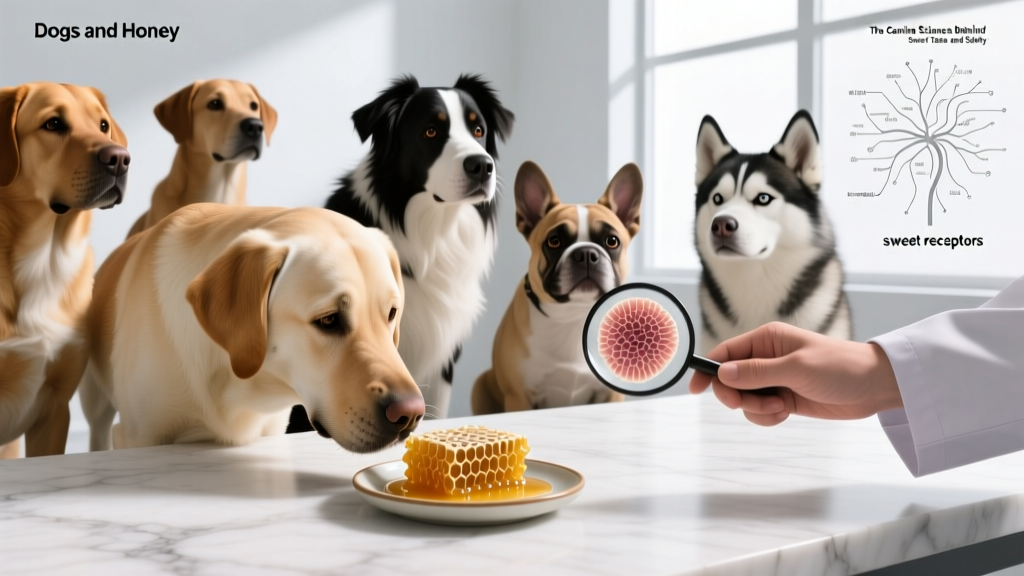
How Do Dogs Taste Sweetness?
Dogs possess approximately 1,700 taste buds — far fewer than the roughly 9,000 found in humans — but they have a dedicated sweet taste receptor that many carnivores lack. This receptor is formed by the TAS1R2/TAS1R3 heterodimer, a protein pair encoded by the TAS1R2 and TAS1R3 genes. Research published in the Proceedings of the National Academy of Sciences confirmed that domestic dogs retain a functional sweet taste receptor, unlike obligate carnivores such as cats, whose TAS1R2 gene is a non-functional pseudogene.
When a dog licks honey, sugar molecules (primarily fructose and glucose) bind to the TAS1R2/TAS1R3 receptor on taste bud cells located mainly on the tip and sides of the tongue. This binding triggers a G-protein signaling cascade that sends a "sweet — palatable" signal via the chorda tympani nerve to the gustatory cortex. The dog's brain registers this as a rewarding sensation, which is why most dogs readily accept and seek out honey.
This is fundamentally different from humans in one key respect: dogs also possess a sweet receptor variant that responds to furaneol, a compound found in meats and tomatoes that humans don't perceive as sweet. So a dog's "sweet" experience is broader than ours — their sweetness detection evolved to identify both plant sugars and certain meat-derived compounds.
Evolutionary Context: Why Dogs Crave Sweet Foods
From Wolf Ancestors to Kitchen Counter
The ancestral gray wolf (Canis lupus) was not a pure hypercarnivore. Isotope analysis of Pleistocene and Holocene wolf remains shows that wolves consumed a varied omnivorous diet that included berries, fruits, and the stomach contents of herbivorous prey — which often contained partially digested plant sugars. The retention of a functional sweet taste receptor gave wolves (and later, domestic dogs) a survival advantage by allowing them to identify energy-dense carbohydrate sources during periods when prey was scarce.
During the roughly 15,000–30,000 years of domestication, dogs co-evolved alongside human agricultural settlements. Dogs that could efficiently digest starches and sugars from human food scraps had a selective advantage. Genomic studies show that dogs carry multiple copies of the AMY2B gene (pancreatic amylase), often 4–30 copies compared to just 2 in wolves, enabling far more efficient starch digestion. This same evolutionary pressure maintained the sweet taste receptor — dogs that could detect and seek out sugars thrived in the human-associated niche.
So when your dog eagerly licks honey off a spoon, you're witnessing an ancient adaptive trait: an omnivorous palate fine-tuned by thousands of years of scavenging alongside humans.
Physiological Mechanism: What Happens When a Dog Eats Honey
Understanding the metabolic pathway of honey in a dog's body helps explain both its benefits and its risks.
Digestion and absorption: Honey is approximately 38% fructose, 31% glucose, 1–2% sucrose, and roughly 17% water, with trace minerals, enzymes, and amino acids. When a dog ingests honey, the glucose is rapidly absorbed through the small intestine via SGLT1 (sodium-glucose linked transporter 1) and enters the bloodstream within 15–30 minutes. Fructose is absorbed more slowly via GLUT5 transporters and is metabolized primarily in the liver.
Glycemic impact: Honey has a glycemic index (GI) of approximately 58–62 in dogs (slightly lower than table sugar's GI of ~65). This means honey causes a moderate but measurable blood glucose spike. In a healthy 50 lb (23 kg) dog, 1 tablespoon of honey (approximately 21 g of sugar) can raise blood glucose by 15–25 mg/dL within 45 minutes. For a diabetic dog, this spike can be dangerous and difficult to manage alongside insulin therapy.
Caloric contribution: One tablespoon of honey contains approximately 64 kcal. For a 30 lb (14 kg) dog with a daily caloric requirement of roughly 700 kcal, a single tablespoon of honey represents about 9% of total daily calories. The American Veterinary Medical Association recommends that treats not exceed 10% of a dog's daily caloric intake, so even a modest honey serving uses up nearly the entire treat allowance.
Botulism risk mechanism: Raw honey can contain dormant spores of Clostridium botulinum. In adult dogs with a mature, acidic gastrointestinal environment and established gut microbiome, these spores typically pass through without germinating. However, in puppies under 12 months, the gut pH is higher and the microbiome is not fully established, creating conditions where spores can germinate, colonize, and produce botulinum toxin — a potent neurotoxin that causes progressive flaccid paralysis. This is the same mechanism that makes honey unsafe for human infants under 1 year of age.
Nutritional Breakdown: Honey by the Numbers
| Metric | Per 1 Teaspoon (7 g) | Per 1 Tablespoon (21 g) |
|---|---|---|
| Calories | 21 kcal | 64 kcal |
| Total Sugars | 5.7 g | 17.1 g |
| Fructose | 2.7 g | 8.0 g |
| Glucose | 2.2 g | 6.5 g |
| Protein | 0.02 g | 0.06 g |
| Sodium | <1 mg | 1 mg |
| Dog Weight | Max Daily Serving | Calories from Honey | Frequency |
|---|---|---|---|
| Under 10 lb (4.5 kg) | ¼ teaspoon | ~5 kcal | 2–3× per week |
| 10–20 lb (4.5–9 kg) | ½ teaspoon | ~10 kcal | 2–3× per week |
| 20–50 lb (9–23 kg) | 1 teaspoon | ~21 kcal | Daily or every other day |
| 50–80 lb (23–36 kg) | 1½ teaspoons | ~32 kcal | Daily or every other day |
| Over 80 lb (36+ kg) | 1 tablespoon | ~64 kcal | Daily or every other day |
Types of Honey: Which Are Safe for Dogs?
| Honey Type | Safe for Adult Dogs? | Notes |
|---|---|---|
| Raw, unfiltered honey | Yes (adults only) | Retains enzymes (glucose oxidase, catalase) and trace pollen. Higher botulism spore risk — never feed to puppies, elderly, or immunocompromised dogs. |
| Pasteurized (commercial) honey | Yes | Heat-treated to reduce spore load. Slightly lower enzyme content but safest option for general use. |
| Manuka honey (UMF 10+) | Yes | Contains methylglyoxal (MGO) with documented antibacterial properties. Used in veterinary wound care. Expensive ($25–$50 per 8 oz jar). Best reserved for topical use or targeted supplementation under vet guidance. |
| Honey with xylitol (sugar-free blends) | TOXIC — NO | Xylitol triggers rapid insulin release in dogs, causing life-threatening hypoglycemia and hepatic necrosis. Always read labels on "sugar-free" or "low-sugar" honey products. |
| Honey-flavored syrup / "honey bear" blends | Caution | Often primarily corn syrup with artificial flavoring. Not toxic but nutritionally worthless and high in empty calories. |
⚠️ Xylitol Poisoning Emergency: If your dog ingests any product containing xylitol, contact the ASPCA Animal Poison Control Center at (888) 426-4435 (24/7, consultation fee applies) or the Pet Poison Helpline at (855) 764-7661 immediately. Symptoms of xylitol toxicity (vomiting, weakness, collapse, seizures) can appear within 30 minutes. This is a true emergency — do not wait for symptoms to develop.
Myths vs. Facts: Common Misconceptions About Dogs and Honey
| Myth | Fact |
|---|---|
| "Honey cures kennel cough." | Honey can soothe an irritated throat due to its demulcent properties (viscous coating effect), but it does not treat the underlying bacterial (Bordetella bronchiseptica) or viral infection. Dogs with kennel cough need veterinary diagnosis and potentially antibiotics. |
| "Local honey prevents seasonal allergies in dogs." | The theory is that trace pollen in local honey acts as oral immunotherapy. However, canine atopic dermatitis is primarily triggered by environmental allergens absorbed through the skin and respiratory tract, not ingested pollen. No peer-reviewed study has demonstrated that feeding local honey reduces allergy symptoms in dogs. The Merck Veterinary Manual recommends targeted allergy management (allergen-specific immunotherapy, oclacitinib, or lokivetmab) instead. |
| "Honey is a healthy sugar alternative — feed freely." | Honey is still 80% sugar. While it contains trace enzymes and antioxidants absent from refined sugar, the metabolic impact on blood glucose and caloric intake is nearly identical. "Natural" does not mean "unlimited." |
| "Dogs can't taste sweet things." | Dogs have functional TAS1R2/TAS1R3 sweet taste receptors and can detect sugars at concentrations as low as 1%. Cats lack this receptor; dogs do not. |
| "Raw honey is dangerous for all dogs." | Raw honey poses a botulism risk primarily to puppies under 12 months and immunocompromised dogs. Healthy adult dogs with mature gut microbiomes handle the spore load without issue in the vast majority of cases. |
Practical Implications: How to Use Honey Safely With Your Dog
When Honey Makes Sense
- High-value training reward: A tiny dab of honey on a lick mat or training spoon works well for dogs who are highly food-motivated by sweetness. Use a pea-sized amount (roughly 2–3 kcal) per repetition during counter-conditioning or desensitization sessions.
- Pill administration: Coating a pill in a thin layer of honey can mask bitter medication tastes. Ask your veterinarian whether the specific medication can be given with food before using this method.
- Topical wound care: Medical-grade Manuka honey (UMF 15+ or MGO 514+) is used in some veterinary practices for minor wound management. Its high osmolarity draws moisture from bacteria, and the enzyme glucose oxidase produces low levels of hydrogen peroxide for antimicrobial action. Always consult your vet before applying honey to any wound — improper use can trap bacteria and worsen infection.
- Hypoglycemia emergency in toy breeds: For small breeds like Chihuahuas or Yorkshire Terriers experiencing a hypoglycemic episode (common in puppies and toy breeds under stress), rubbing a small amount of honey on the gums can provide rapid glucose absorption through the oral mucosa while you transport to the vet.
When to Avoid Honey Entirely
- Puppies under 12 months of age
- Diabetic dogs (any type of diabetes mellitus)
- Dogs with obesity (body condition score 7/9 or above)
- Dogs with known food allergies where honey source pollen is a confirmed trigger
- Dogs on immunosuppressive therapy (chemotherapy, high-dose corticosteroids)
- Any product containing xylitol or other artificial sweeteners
Breed Variations: Sweet Taste Sensitivity Across Breeds
Not all dogs experience sweetness identically. Research into breed-level genomic variation reveals some interesting patterns:
- Omnivorous-adapted breeds (Labrador Retrievers, Beagles, Cocker Spaniels): These breeds tend to have higher AMY2B copy numbers (often 15–30 copies), correlating with more efficient starch and sugar digestion. They are typically highly motivated by sweet foods and are at greater risk of overconsumption and obesity. A study in the journal Cell Reports found that Labradors specifically carry a deletion in the POMC gene that increases food motivation, making sweet treats like honey particularly hard for them to resist.
- Ancient/Arctic breeds (Siberian Huskies, Alaskan Malamutes, Akitas): These breeds often have fewer AMY2B copies (closer to the wolf baseline of 2) and may show less intense interest in sweet foods. Their metabolism is adapted toward fat and protein utilization.
- Brachycephalic breeds (French Bulldogs, Pugs, English Bulldogs): These dogs already face higher obesity risk due to reduced exercise capacity from brachycephalic obstructive airway syndrome (BOAS). Adding calorie-dense honey to their diet requires extra caution — even small caloric surpluses compound quickly when exercise is limited.
- Toy breeds (Chihuahuas, Pomeranians): While honey can be useful for emergency hypoglycemia management in toy breeds, their tiny daily caloric budgets (often 200–350 kcal/day) mean that even ½ teaspoon of honey can represent 5–10% of total daily intake.
When Honey-Seeking Behavior Signals a Problem
An occasional interest in honey is normal canine behavior. However, certain patterns warrant veterinary attention:
Red Flags: When to Consult Your Veterinarian
- Sudden, intense craving for sweets: If your dog suddenly becomes obsessed with honey, sugar, or sweet foods when they previously showed moderate interest, this can signal diabetes mellitus (the body's cells are starved for glucose despite high blood sugar, driving hunger and cravings), Cushing's disease (hyperadrenocorticism), or exocrine pancreatic insufficiency (EPI).
- Pica (eating non-food items alongside sweet seeking): Compulsive licking of surfaces, eating dirt, or seeking out unusual sweet and non-sweet items can indicate nutritional deficiencies, gastrointestinal disease, or cognitive dysfunction in senior dogs.
- Weight gain despite controlled portions: If you're adding honey to your dog's diet and they gain weight despite reducing other food, consult your vet to rule out hypothyroidism or metabolic disorders.
- Increased thirst and urination after honey consumption: Polydipsia (excessive drinking) and polyuria (excessive urination) are hallmark signs of diabetes. If you notice these after feeding honey, stop immediately and schedule a veterinary exam including a fasting blood glucose and urinalysis.
Always consult your veterinarian before introducing honey or any supplement into your dog's diet, especially if your dog has pre-existing health conditions or is on medication.
How Is This Different From Humans?
The human and canine relationship with honey diverges in several scientifically significant ways:
- Taste bud count: Humans have ~9,000 taste buds; dogs have ~1,700. Dogs experience sweetness less intensely than we do, which is why they may prefer honey mixed with other strong flavors (like peanut butter) rather than plain.
- Fructose metabolism: Humans metabolize fructose primarily in the liver via fructokinase. Dogs do the same, but canine livers are less adapted to chronic high-fructose loads. Long-term excessive fructose intake in dogs is more likely to contribute to hepatic lipidosis (fatty liver) than in humans.
- Dental impact: Honey is cariogenic (cavity-promoting) in humans due to oral bacteria like Streptococcus mutans that ferment sugars into enamel-eroding acids. Dogs rarely develop dental caries (fewer than 5% of dogs get cavities) because their oral microbiome is different and their saliva is more alkaline. However, honey's stickiness still promotes plaque accumulation and contributes to periodontal disease — the number one dental problem in dogs.
- Botulism susceptibility: Both human infants and puppies are at risk from honey-borne C. botulinum spores. However, the protective age threshold differs: human infants are at risk up to about 12 months, while puppies are generally considered safe after approximately 6–8 months when gut acidity matures. Most veterinarians conservatively recommend waiting until 12 months to align with the human safety standard.
Frequently Asked Questions
Can dogs eat honey every day?
Healthy adult dogs can have a small amount of honey daily if it fits within their 10% treat calorie allowance. For a 30 lb (14 kg) dog, that means no more than 1 teaspoon (~21 kcal) per day. However, daily feeding increases the risk of weight gain and dental plaque, so every-other-day or 2–3× per week is generally a better frequency.
Is honey good for dogs with allergies?
There is no robust veterinary evidence that oral honey consumption reduces environmental allergies (atopic dermatitis) in dogs. While honey contains trace pollen, the quantities are far too small to function as immunotherapy. For allergy management, consult your veterinarian about proven options like allergen-specific immunotherapy (ASIT), oclacitinib (Apoquel), or lokivetmab (Cytopoint).
Can I put honey in my dog's water?
A small amount (¼ teaspoon in a full bowl) is safe and may encourage a reluctant drinker to hydrate. However, sweetened water can promote bacterial growth in the bowl if not refreshed frequently, and it conditions your dog to prefer sweet water — potentially reducing plain water intake when honey isn't available.
What should I do if my dog eats a large amount of honey?
A one-time large ingestion (e.g., your dog got into a jar) is unlikely to be toxic but can cause gastrointestinal upset — vomiting, diarrhea, and abdominal discomfort due to the osmotic effect of concentrated sugars drawing water into the intestines. Withhold food for 12 hours, offer small amounts of water, and monitor. If vomiting persists beyond 24 hours, if the dog is a puppy, or if you notice lethargy or blood in stool, contact your veterinarian. If the product contained xylitol, call ASPCA Poison Control at (888) 426-4435 immediately.
Is Manuka honey worth the cost for dogs?
For oral supplementation, standard pasteurized honey provides the same caloric and sugar profile at a fraction of the cost ($5–$8 per jar vs. $25–$50 for genuine UMF-rated Manuka). Manuka's unique value lies in its topical antibacterial properties (methylglyoxal content), which are relevant for wound care under veterinary supervision. Unless your vet specifically recommends Manuka for a therapeutic purpose, regular honey is sufficient as an occasional treat.
Can diabetic dogs have honey?
No. Honey should be strictly avoided for any dog diagnosed with diabetes mellitus. Even small amounts cause measurable blood glucose spikes that interfere with insulin regulation. If your diabetic dog needs a palatable carrier for medication, ask your veterinarian about low-glycemic alternatives such as a small amount of canned pumpkin (plain, not pie filling) or a commercial low-sugar pill pocket.
Sources and Further Reading
- Li, X. et al. (2005). "Dietary specialization and the evolution of sweet taste receptors." Proceedings of the National Academy of Sciences. PubMed PMID: 15753505
- Axelsson, E. et al. (2013). "The genomic signature of dog domestication reveals adaptation to a starch-rich diet." Nature, 495(7441). PubMed PMID: 23354050
- Raff, J. et al. (2016). "Labrador retriever POMC gene variant and obesity." Cell Reports. PubMed PMID: 26923344
- ASPCA Animal Poison Control Center — (888) 426-4435
- Merck Veterinary Manual: Botulism in Dogs
Dr. Hannah Wickes
All our authors care for dogs every day — read more of their work on the authors page.


