Why Your Dog Won't Stop Licking Paws: The Science Behind the Behavior
Discover why your dog won't stop licking paws — from evolutionary grooming instincts to allergies, anxiety, and pain.
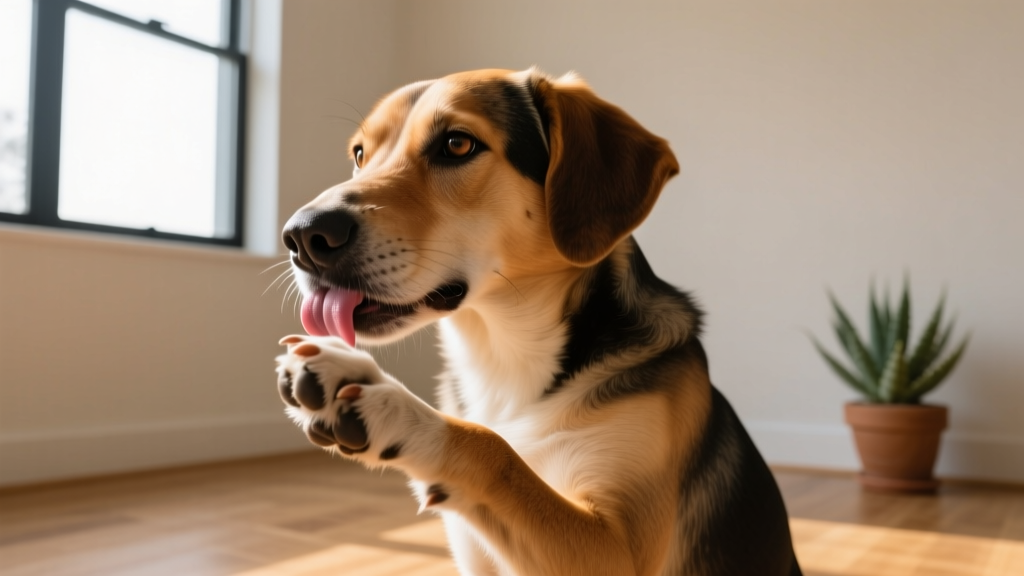
Quick Answer: Why Won't My Dog Stop Licking Their Paws?
If your dog won't stop licking paws, the most likely causes fall into three categories: environmental allergies (atopic dermatitis, affecting up to 10-15% of dogs), behavioral compulsions (anxiety-driven overgrooming), or localized pain (interdigital cysts, foreign bodies, or joint discomfort). Occasional paw licking after walks is normal grooming behavior rooted in ancestral self-care instincts. However, persistent, focused licking that causes redness, hair loss, or saliva staining (rust-colored fur) signals an underlying issue requiring veterinary evaluation.
When to act now: If licking is accompanied by swelling, bleeding, limping, or a yeasty odor, contact your veterinarian within 24 hours. For chronic licking without acute symptoms, schedule a non-urgent appointment to rule out allergies and develop a management plan.
The Evolutionary Basis: Why Dogs Are Hardwired to Lick Their Paws
Ancestral context: Wild canids — wolves, coyotes, and wild dogs — rely on self-grooming as a survival mechanism. Licking serves multiple evolutionary functions that persist in domestic dogs today.
Paw licking in domestic dogs (Canis lupus familiaris) isn't a quirky modern habit — it's an inherited behavior with deep evolutionary roots. Wild canids use their tongues as multi-purpose tools for wound care, debris removal, and thermoregulation. When a wolf steps on a thorn or accumulates mud between its toes, licking is the primary self-care response available without opposable thumbs or access to water sources.
Research published in the Journal of Ethology demonstrates that canid saliva contains nerve growth factor (NGF), epidermal growth factor (EGF), and histatins — proteins that accelerate wound healing and provide mild antimicrobial action. This means ancestral dogs that licked injuries had a measurable survival advantage: wounds healed faster, infection risk decreased, and they could maintain mobility for hunting and territory defense.
The behavior also served a parasite management function. Wild canids traveling through tall grasses accumulate ticks, mites, and plant material between their toes. Systematic paw licking helped remove these irritants before they caused infection or embedded deeply. Modern dogs retain this grooming program even when living in climate-controlled homes with regular parasite prevention.
The Physiological Mechanism: What Happens in Your Dog's Brain and Body
The Licking Feedback Loop
Understanding why your dog won't stop licking paws requires examining the neurochemical cascade that reinforces the behavior:
- Trigger detection: Sensory nerve endings in the paw pads and interdigital spaces detect an irritant — this could be allergens (pollen, mold spores), physical debris, inflammation mediators (histamine, prostaglandins), or even emotional stress signals from the hypothalamic-pituitary-adrenal (HPA) axis.
- Motor response: The brain's somatosensory cortex processes the signal and triggers the grooming motor pattern — a stereotyped sequence involving head lowering, tongue extension, and rhythmic licking motions controlled by brainstem pattern generators.
- Endorphin release: Repetitive licking stimulates the release of beta-endorphins in the brain's nucleus accumbens (the reward center). This creates a mild analgesic and calming effect — essentially, licking makes your dog feel better neurochemically.
- Reinforcement cycle: Because licking produces both physical relief (removing irritants, stimulating blood flow) and neurochemical reward (endorphins), the behavior becomes self-reinforcing. The more your dog licks, the more the brain learns "licking = relief," making it harder to interrupt.
This endorphin-mediated feedback loop explains why paw licking can escalate from a practical grooming response into a compulsive behavior. A 2021 study in Applied Animal Behaviour Science found that approximately 12-15% of dogs presenting with excessive licking met criteria for compulsive disorder — where the behavior persists even after the original trigger has resolved, driven entirely by the neurochemical reinforcement cycle.
The tongue itself is uniquely equipped for this task. A dog's tongue has approximately 1,700 taste buds (compared to humans' 9,000) but features filiform papillae — tiny, backward-facing keratinized projections that act like a brush. These papillae mechanically scrape debris from between toes and paw pads while simultaneously distributing saliva's antimicrobial compounds across the skin surface.
The 6 Most Common Reasons Your Dog Won't Stop Licking Paws
When paw licking crosses from occasional grooming into persistent, focused attention, one of these underlying causes is typically responsible. Here's how they rank by prevalence in veterinary dermatology practice:
| Cause | Estimated Prevalence | Key Identifying Signs | Typical Onset |
|---|---|---|---|
| Atopic Dermatitis (Environmental Allergies) | 40-50% of cases | Seasonal patterns, rust-colored staining, concurrent ear infections, itchy face/armpits | 6 months – 3 years |
| Food Hypersensitivity | 10-15% of cases | Year-round symptoms, GI signs (soft stool, gas), poor response to steroids | Any age, often <1 year |
| Anxiety/Compulsive Behavior | 15-20% of cases | Licking during stressors (thunder, separation), other repetitive behaviors, responds to distraction | Any age, often triggered by routine changes |
| Pain (Orthopedic/Neurologic) | 10-15% of cases | Licking one specific paw/joint, limping, reluctance to exercise, worse after activity | Middle-aged to senior dogs |
| Interdigital Cysts/Foreign Bodies | 5-10% of cases | Sudden onset, single paw affected, visible lump or swelling between toes | Acute (hours to days) |
| Secondary Infection (Bacterial/Yeast) | Often concurrent | Yeasty/sweet odor, greasy skin, thickened dark skin (lichenification), intense itch | Develops after 2-4 weeks of licking |
Atopic Dermatitis: The #1 Culprit
Environmental allergies — reactions to pollen, dust mites, mold spores, and grass proteins — represent the single most common reason a dog won't stop licking paws. Unlike humans who primarily experience respiratory allergy symptoms (sneezing, watery eyes), dogs manifest allergies through their skin, particularly the paws, ears, and ventral abdomen.
The mechanism involves IgE-mediated hypersensitivity. When an allergic dog walks across grass or inhales dust mites, their immune system produces IgE antibodies specific to those allergens. These antibodies bind to mast cells in the skin. Upon re-exposure, the mast cells degranulate, releasing histamine and other inflammatory mediators that trigger intense pruritus (itching). The paws are especially vulnerable because they directly contact environmental allergens and have thin skin between the toes with high concentrations of immune cells.
According to the Merck Veterinary Manual, canine atopic dermatitis typically first appears between 6 months and 3 years of age, with certain breeds showing significantly higher predisposition:
- High-risk breeds: West Highland White Terriers, French Bulldogs, Boxers, Labrador Retrievers, Golden Retrievers, German Shepherds, Shar-Peis, Boston Terriers
- Moderate-risk breeds: Cocker Spaniels, English Bulldogs, Pugs, Miniature Schnauzers
- Lower-risk breeds: Greyhounds, Siberian Huskies, most livestock guardian breeds
When Paw Licking Signals Pain Rather Than Itch
One of the most overlooked causes of persistent paw licking is referred pain. Dogs with osteoarthritis in the carpal (wrist) joint, metacarpal bones, or even spinal nerve root compression may lick the paw on the affected limb. The dog isn't experiencing itch — they're attempting to soothe deep aching pain through the endorphin-releasing mechanism of licking.
Key differentiators between pain-driven and itch-driven licking:
| Feature | Pain-Driven Licking | Itch-Driven Licking |
|---|---|---|
| Paws affected | Usually one (the painful limb) | Often multiple, alternating |
| Response to antihistamines | No improvement | Partial improvement possible |
| Worse at specific times | After exercise, in cold weather, morning stiffness | After outdoor exposure, seasonal peaks |
| Skin appearance | Often normal, minimal staining | Red, stained, possibly infected |
| Age pattern | Middle-aged to senior (5+ years) | Young adult onset (1-3 years) |
Breed Variations: Which Dogs Are Most Prone to Paw Licking?
Genetics significantly influence both the likelihood of developing paw-licking triggers and the intensity of the grooming response. Breed predisposition operates through multiple pathways:
Atopy-prone breeds (Terriers, Bulldogs, Retrievers) have genetic variants in skin barrier proteins (filaggrin, involucrin) that allow allergens to penetrate more easily. A 2019 study in PLoS Genetics identified specific MHC class II gene variants in West Highland White Terriers associated with a 3-4x increased risk of atopic dermatitis.
Brachycephalic breeds (French Bulldogs, English Bulldogs, Pugs) face a double burden: high allergy prevalence combined with skin fold dermatitis around the face that can generalize to paw inflammation. French Bulldogs, now the #1 AKC-registered breed, present with paw licking at rates estimated 2-3x higher than the general dog population.
Anxiety-prone breeds show higher rates of compulsive licking. Border Collies, German Shepherds, and Australian Shepherds — breeds selected for high arousal and vigilance — are overrepresented in compulsive disorder cases. These dogs may develop paw licking as a displacement behavior during stress, similar to how anxious humans bite their nails.
Large and giant breeds (Great Danes, Labrador Retrievers, German Shepherds) are more likely to develop orthopedic conditions (hip dysplasia, cruciate ligament disease, osteoarthritis) that manifest as pain-driven paw licking in middle age. Approximately 20% of dogs over 7 years old show radiographic evidence of osteoarthritis, per the AVMA.
Common Misconceptions About Paw Licking — Debunked
| Myth | Fact |
|---|---|
| "My dog is licking because their paws are dirty — a bath will fix it." | Excessive bathing (more than every 2-4 weeks) actually strips protective skin oils and disrupts the skin microbiome, potentially worsening itching. Unless paws are visibly soiled, a post-walk wipe with a damp cloth is sufficient. |
| "Dog saliva heals wounds — licking is good for them." | While saliva contains minor antimicrobial compounds, a dog's mouth also harbors Pasteurella, Capnocytophaga, and other bacteria. Chronic licking creates a warm, moist environment that promotes Malassezia yeast overgrowth and secondary bacterial pyoderma. The net effect of persistent licking is tissue damage, not healing. |
| "It's just a nervous habit — nothing to worry about." | Compulsive licking can cause acral lick granulomas — thickened, ulcerated plaques that penetrate to underlying bone. These lesions cost $500-$2,000+ to treat and may require months of antibiotic therapy. Early intervention prevents escalation. |
| "Switching to grain-free food will stop the allergies." | True food allergies in dogs are most commonly triggered by proteins (chicken, beef, dairy), not grains. Grain-free diets have been linked by the FDA to dilated cardiomyopathy (DCM). An 8-12 week elimination diet trial using a novel protein (hydrolyzed or single-source like rabbit/venison) is the only reliable diagnostic method. |
| "Apple cider vinegar on the paws will cure it." | Undiluted apple cider vinegar (pH ~2.5-3.0) applied to inflamed, licked-raw skin causes burning and further irritation. While diluted ACV (1:3 with water) has mild antifungal properties, it does not address the underlying cause and should never be applied to broken skin. |
Practical Takeaways: What to Do When Your Dog Won't Stop Licking Paws
Your Step-by-Step Action Plan
Step 1: Document the pattern (Days 1-7)
Before your vet visit, track: which paws are licked, when licking occurs (morning, after walks, during thunderstorms, when left alone), duration of each session, and any visible changes (redness, staining, odor). Photos taken in consistent lighting help track progression.
Step 2: Implement immediate paw care
- Wipe paws with a damp microfiber cloth after every outdoor exposure (removes pollen, mold spores, chemical residues)
- Check between toes daily for foxtails, burrs, cuts, or swelling
- Apply a veterinary-formulated paw balm (look for products containing shea butter, beeswax, and vitamin E — avoid those with essential oils like tea tree, which are toxic to dogs)
- Consider breathable cotton dog socks or booties during high-pollen seasons ($12-$25 for a 4-pack from brands like Muttluks or Ruffwear)
Step 3: Schedule a veterinary workup
Your veterinarian will typically perform:
- Physical exam with paw inspection: Checking for foreign bodies, interdigital cysts, nail bed infections ($50-$85 exam fee)
- Skin cytology: Tape prep or impression smear to identify yeast (Malassezia) or bacteria ($35-$60)
- Allergy testing (if indicated): Intradermal skin testing ($300-$600) or serum IgE testing ($200-$350) to identify specific environmental allergens for immunotherapy formulation
- Elimination diet trial (if food allergy suspected): Prescription hydrolyzed protein diet (Royal Canin Hydrolyzed Protein or Hill's z/d) for 8-12 weeks ($80-$120/month for a 50 lb dog)
Step 4: Break the reinforcement cycle
While treating the underlying cause, you must interrupt the licking-endorphin feedback loop:
- Elizabethan collar or recovery suit: Physical barrier during acute flare-ups ($15-$30 for a cone, $25-$45 for a recovery suit)
- Redirect with incompatible behavior: When you see licking start, cue a behavior that occupies the mouth — "go get your toy," "touch" (hand target), or offer a frozen Kong stuffed with plain pumpkin and peanut butter (xylitol-free)
- Environmental enrichment: Increase mental stimulation through snuffle mats, puzzle feeders, and 15-20 minute daily training sessions to reduce anxiety-driven licking
- Never punish licking: Yelling, spraying water, or using shock collars increases anxiety and can worsen compulsive behaviors. Use positive reinforcement to reward alternative behaviors instead.
Step 5: Long-term management based on diagnosis
- For atopic dermatitis: Options include Apoquel (oclacitinib, $2-$4/day for a 50 lb dog), Cytopoint injections (lokivetmab, $65-$150 per injection every 4-8 weeks), or allergen-specific immunotherapy ($150-$300 for initial formulation, $30-$60/month for maintenance)
- For food allergy: Lifelong novel protein or hydrolyzed diet once the offending ingredient is identified
- For anxiety/compulsive disorder: Combination of behavior modification (counter-conditioning, desensitization protocols with a certified trainer or veterinary behaviorist, $100-$250/session), environmental management, and potentially anti-anxiety medication (fluoxetine, clomipramine — prescribed by your veterinarian)
- For pain-related licking: NSAIDs (carprofen, meloxicam), joint supplements (glucosamine/chondroitin, omega-3 fatty acids at 30-50 mg EPA+DHA per kg body weight daily), physical therapy, or surgical intervention depending on the orthopedic diagnosis
When Paw Licking Signals an Emergency vs. a Routine Visit
Seek Immediate Veterinary Care (Same Day) If:
- Paw is visibly swollen, hot to the touch, or your dog won't bear weight on it
- You see a foreign object embedded between toes (foxtail, glass, thorn) — do NOT attempt removal at home if deeply embedded
- Licking has created an open wound, bleeding, or raw ulcerated area
- Your dog is lethargic, has lost appetite, or shows signs of systemic illness alongside paw licking
- Sudden onset of intense licking in a previously unaffected dog (may indicate acute injury or insect sting)
Schedule a Routine Appointment (Within 1-2 Weeks) If:
- Paw licking has increased gradually over weeks to months
- You notice rust-colored (porphyrin) staining on light-colored fur between toes
- Licking follows a seasonal pattern (spring/fall peaks suggest environmental allergens)
- Concurrent symptoms include ear scratching, face rubbing, or scooting
- Your dog licks primarily during specific situations (when you leave, during storms, when visitors arrive)
How Is Dog Paw Licking Different From Human Behavior?
Humans and dogs share some parallel self-soothing behaviors (nail-biting, skin-picking in anxious humans), but the physiological context differs substantially:
- Skin structure: Dog paw pad epidermis is 5-6x thicker than human palm skin, designed for weight-bearing on rough terrain. However, the interdigital skin (between toes) is thin and hairless — more comparable to human eyelid skin in vulnerability. This thin skin is where most allergy-driven inflammation concentrates.
- Sweat glands: Dogs have merocrine (eccrine) sweat glands only in their paw pads — the sole location on their body where they sweat like humans. This moisture, combined with licking, creates the warm, humid microenvironment where yeast thrives. Humans don't create this same conditions through analogous behaviors.
- Pain expression: Dogs evolved to mask pain as a survival strategy (showing weakness attracts predators). Paw licking may be the only visible sign that your dog is experiencing significant joint pain or discomfort. A human with equivalent arthritis would verbally report pain; a dog simply licks.
- Allergic manifestation: Humans with environmental allergies primarily experience respiratory symptoms (allergic rhinitis — sneezing, congestion, itchy eyes). Dogs with the same allergen exposure primarily experience cutaneous symptoms (pruritus — paw licking, ear infections, body scratching). The same pollen that makes you sneeze makes your dog's paws itch intensely.
Related Behaviors and Cross-References
Paw licking rarely exists in isolation. Understanding related behaviors helps build a complete picture of your dog's health:
- Face rubbing and eye discharge: Often co-occurs with paw licking in atopic dogs — the "atopic triad" of paws, ears, and face
- Ear infections (otitis externa): Up to 80% of dogs with atopic dermatitis develop recurrent ear infections. If your dog licks paws AND shakes their head frequently, allergies are the likely common thread
- Scooting and anal gland issues: Environmental allergies can inflame anal glands, causing scooting — another behavior owners often misattribute to "worms"
- Acral lick granuloma (lick dermatitis): The end-stage complication of chronic paw licking — a firm, raised, hairless plaque typically on the carpus (wrist) or metacarpus that can erode to bone
- Resource guarding and anxiety behaviors: Dogs with compulsive paw licking may also display other stress indicators: lip licking, yawning out of context, whale eye, or avoidance behaviors
Frequently Asked Questions
Why does my dog lick their paws at night specifically?
Nighttime paw licking often has two explanations. First, environmental allergen exposure accumulates throughout the day — pollen loads on paws during walks trigger delayed inflammatory responses that peak hours later. Second, evenings are typically quieter, and dogs with anxiety-driven compulsive licking tend to perform the behavior more during low-stimulation periods when there are fewer distractions to interrupt the endorphin-reinforcement cycle. If nighttime licking is the primary pattern, try wiping paws immediately after your last evening walk and providing a long-lasting chew (bully stick or yak cheese chew) as a competing mouth-occupation activity.
Can dogs develop allergies later in life even if they never had them before?
Yes. While atopic dermatitis most commonly first appears between 6 months and 3 years of age, adult-onset allergies are well-documented. Sensitization to environmental allergens can take 1-3 years of repeated exposure before clinical signs appear. A dog who moved to a new geographic region (different pollen profiles) or a home with new environmental factors (new carpeting, different HVAC system, new plants) may develop paw licking months to years after the change. Additionally, age-related immune system changes and declining skin barrier function can lower the threshold for allergic responses in senior dogs.
Is it normal for my dog to lick their paws after every walk?
Brief paw licking (30-60 seconds per paw) immediately after walks is considered normal grooming behavior — your dog is removing debris, moisture, and environmental contaminants from their paws. This is the ancestral self-care program functioning as designed. The concern arises when licking sessions extend beyond 2-3 minutes per paw, occur at times unrelated to outdoor exposure, or produce visible skin changes (redness, hair loss, staining). Use the 2-minute rule: grooming licks lasting under 2 minutes per paw with no skin changes are likely normal; anything beyond that warrants investigation.
How is paw licking different from chewing or biting the paws?
Licking and chewing/biting represent different severity levels of the same pruritus (itch) response. Licking is the initial, lower-intensity response — the dog's tongue sweeps across the skin surface. When itching intensifies beyond what licking can address, dogs escalate to chewing (using their molars to nibble at the skin between toes) or biting (grabbing skin with incisors/canines). Chewing and biting indicate more intense discomfort and carry higher risk of self-inflicted tissue damage. If your dog has progressed from licking to chewing, the underlying irritation is likely more severe and warrants prompt veterinary evaluation.
Should I use a bitter spray to stop my dog from licking their paws?
Bitter sprays (like Bitter Apple or Bitter Yuck!) can serve as a temporary deterrent but do not address the underlying cause of licking. They work by creating an aversive taste that interrupts the licking cycle. However, for anxiety-driven or pain-driven licking, bitter sprays often fail because the internal motivation (endorphin release or pain relief) outweighs the unpleasant taste. Some dogs simply tolerate the taste or learn to lick around it. If used, apply only to intact skin (never on broken or inflamed tissue) and combine with positive reinforcement training to redirect to appropriate behaviors. Always consult your veterinarian before relying on deterrents — masking the symptom without treating the cause allows the underlying condition to worsen.
What does it mean when my dog licks only one paw?
Single-paw licking is a significant diagnostic clue. It most commonly indicates a localized problem rather than a systemic one: a foreign body (foxtail, splinter, thorn) lodged between toes, an interdigital cyst, a nail bed infection (paronychia), a cut or abrasion on the pad, or localized pain from an underlying joint or bone issue. This contrasts with multi-paw licking, which more often points to systemic causes like environmental allergies or anxiety. Any single-paw licking persisting beyond 24-48 hours warrants a veterinary exam with careful inspection of the affected paw, including the nail beds and spaces between each toe.
Sources and Further Reading
- Merck Veterinary Manual — Canine Atopic Dermatitis
- AVMA — Dog Care Resources
- ASPCA Animal Poison Control — (888) 426-4435 (if your dog ingests any topical products applied to paws)
- Nuttall, T.J., et al. "Canine atopic dermatitis — what have we learned?" Veterinary Record, 2019.
- Moon-Fanelli, A.A., et al. "Characteristics of compulsive tail chasing and associated risk factors in Bull Terriers." Journal of the American Veterinary Medical Association, adapted methodology for compulsive licking assessment.
This article provides educational information based on current veterinary science. It does not replace professional veterinary advice. If your dog won't stop licking paws and you're concerned about their health, consult your veterinarian for a personalized diagnosis and treatment plan. Every dog is an individual — what works for one may not be appropriate for another.
Marcus Aldridge
All our authors care for dogs every day — read more of their work on the authors page.


