The Science Behind a Dog With Curly Hair: Genetics, Evolution & Care
Genetics, evolutionary biology, and practical care science behind a dog with curly hair. Learn which breeds carry the KRT71 gene and what curls mean for
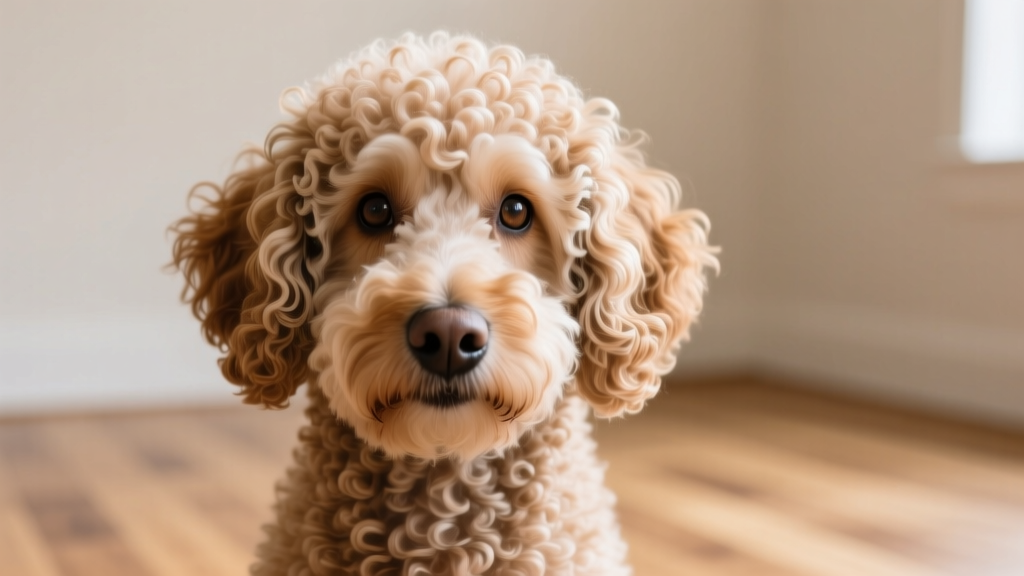
Quick Answer: What Makes a Dog's Hair Curly?
A dog with curly hair carries a variant of the KRT71 gene (keratin-71), which alters the structure of hair follicles so they produce an asymmetrical, curved hair shaft instead of a straight one. This mutation is inherited as an incomplete dominant trait — meaning a dog needs only one copy of the curly allele (Cu) to express curls, though two copies typically produce tighter curl patterns. The curly coat trait evolved independently in several breed lineages through selective breeding, primarily in water-retrieving breeds where dense, textured coats provided insulation and protection in cold water.
If you've ever run your fingers through the corkscrew coat of a Poodle, the loose waves of a Portuguese Water Dog, or the tight ringlets of a Bichon Frise, you've felt the result of a specific genetic mutation that scientists have now mapped in detail. Understanding the science behind curly-coated dogs isn't just academic curiosity — it directly affects grooming routines, skin health management, and even how you budget for professional care.
The Genetics of Curly Coats: KRT71 and Beyond
How the KRT71 Gene Creates Curls
Keratin-71 is a type II keratin protein expressed exclusively in the inner root sheath of hair follicles. In straight-haired dogs, the KRT71 protein helps form a symmetrical, cylindrical follicle that extrudes a straight hair shaft. When a specific missense mutation occurs at position R151W (arginine replaced by tryptophan at amino acid 151), the protein's structure changes. This causes the inner root sheath to develop asymmetrically, which forces the growing hair shaft to curve as it emerges.
Research published in Proceedings of the National Academy of Sciences (PNAS) identified this mutation by comparing the genomes of curly-coated, wire-haired, and straight-haired breeds. The study found that the KRT71 variant was present in virtually all curly-coated breeds examined — including Poodles, Portuguese Water Dogs, Irish Water Spaniels, and Curly-Coated Retrievers — suggesting either a single ancestral mutation event or strong convergent selection pressure.
The inheritance pattern matters for breeders and owners of mixed-breed dogs. Here's how the genetics work in practice:
| Parent 1 Genotype | Parent 2 Genotype | Offspring Outcomes | Curl Expression |
|---|---|---|---|
| Cu/Cu (two curly alleles) | Cu/Cu | 100% Cu/Cu | Tight, uniform curls |
| Cu/cu (one curly allele) | cu/cu (straight) | 50% Cu/cu, 50% cu/cu | Wavy to loose curls (50%), straight (50%) |
| Cu/cu | Cu/cu | 25% Cu/Cu, 50% Cu/cu, 25% cu/cu | Mixed: tight curls, waves, and straight |
| cu/cu (straight) | cu/cu (straight) | 100% cu/cu | Straight coat only |
This is why a Labradoodle (Poodle × Labrador Retriever) litter can produce puppies with dramatically different coat types — some tightly curled, some wavy, and some nearly straight. The Poodle parent may be Cu/Cu or Cu/cu, and the Labrador parent is almost certainly cu/cu. Embark and Wisdom Panel DNA tests can identify the KRT71 variant in mixed-breed dogs, which helps predict adult coat type in puppies whose coats haven't fully developed.
Evolutionary Context: Why Curly Coats Were Selected
Ancestral Purpose of the Curly Coat
Wolves and early domestic dogs all carried straight-coat genetics. The KRT71 mutation likely arose spontaneously, but it was artificially selected by humans for specific working purposes — not because it occurred naturally in wild populations. The evolutionary advantage was functional:
- Water insulation: Tight curls trap a layer of air close to the skin, creating a thermal barrier in cold water. Breeds like the Irish Water Spaniel and Portuguese Water Dog were developed specifically for maritime and marsh work.
- Debris protection: Dense, curly coats resist burrs, thorns, and marsh grasses that would mat straight coats during fieldwork.
- Reduced shedding: The curly follicle structure causes shed hairs to remain caught in the curl pattern rather than falling out — an incidental benefit that modern owners with allergies value highly.
The American Kennel Club recognizes at least a dozen breeds where the curly coat is a defining breed-standard characteristic, each with a distinct working history that drove selection for this trait.
It's worth noting that curly coats carry a thermoregulatory trade-off. While excellent in cold water, dense curls can trap heat in warm, humid environments. This is why curly-coated breeds like the Curly-Coated Retriever historically worked in the marshlands of England rather than tropical climates, and why modern owners in hot regions need to manage coat length carefully during summer months.
Breed Variations: Curly Coats Across the Canine Spectrum
Not all curly coats are created equal. The KRT71 mutation interacts with other coat-modifying genes (particularly FGF5, which controls hair length, and RSPO2, associated with furnishings like eyebrows and moustaches) to produce a wide range of curl patterns. Here's how the major curly-coated breeds compare:
| Breed | Weight Range | Curl Pattern | Grooming Interval | Avg. Annual Grooming Cost |
|---|---|---|---|---|
| Poodle (Standard) | 40–70 lb / 18–32 kg | Tight, dense curls; uniform | Every 4–6 weeks | $720–$1,200 |
| Portuguese Water Dog | 35–60 lb / 16–27 kg | Wavy to curly; two accepted patterns | Every 6–8 weeks | $600–$960 |
| Curly-Coated Retriever | 60–95 lb / 27–43 kg | Tight, crisp curls; lies close to body | Every 8–12 weeks | $400–$700 |
| Irish Water Spaniel | 45–68 lb / 20–31 kg | Tight ringlets; smooth face/tail | Every 6–8 weeks | $540–$840 |
| Bichon Frise | 12–18 lb / 5–8 kg | Loose, springy curls; plush texture | Every 3–5 weeks | $780–$1,300 |
| Bedlington Terrier | 17–23 lb / 8–10 kg | Loose curls mixed with straight hair; linty texture | Every 6–8 weeks | $480–$720 |
The variation in grooming costs is significant. A Standard Poodle in a major metro area can cost $90–$150 per professional grooming session, while a Curly-Coated Retriever — whose coat is designed to be relatively low-maintenance — may only need professional attention a few times per year. Before choosing a curly-coated breed, factor these recurring costs into your annual budget alongside food, preventive medications, and veterinary care.
Physiological Mechanism: What Curly Hair Means for Skin Health
The same follicle asymmetry that creates curls has downstream effects on skin physiology that every curly-coat owner should understand:
Sebum distribution: In straight-haired dogs, sebum (natural skin oil) travels easily down the hair shaft from the sebaceous gland to the coat surface. In curly coats, the curved shaft creates friction points that impede sebum travel. This means curly-coated dogs often have drier coat tips but oilier skin at the follicle level — a combination that predisposes them to sebaceous adenitis, an inflammatory condition where the immune system attacks sebaceous glands. Standard Poodles carry one of the highest breed-specific risks for this condition, with estimated prevalence between 2.7% and 8.4% depending on the breeding line.
Matting mechanics: Shed hairs that would normally fall free in straight-coated breeds become trapped within the curl pattern. If not removed through regular brushing, these trapped hairs intertwine with growing hairs to form mats. Mats are not merely cosmetic — they pull on the skin, restrict air circulation, create moist environments favorable to bacterial and yeast overgrowth, and in severe cases, can cause hematomas (blood vessel rupture under the skin). A severely matted coat can conceal wounds, parasites, and tumors.
Air circulation and thermoregulation: Dense curls create an insulating microenvironment at the skin surface. In cold conditions, this is advantageous. In heat, it can contribute to overheating — particularly in brachycephalic curly-coated breeds or mixes. Never shave a curly-coated dog down to the skin as a cooling measure; the coat actually provides UV protection and helps regulate temperature when properly maintained at an appropriate length.
Common Misconceptions About Curly-Coated Dogs
| Myth | Fact | Verdict |
|---|---|---|
| "Curly-haired dogs are hypoallergenic" | No dog is truly hypoallergenic. Curly coats trap dander and shed hair rather than releasing them into the environment, which reduces airborne allergens — but the dog still produces Can f 1 and Can f 2 proteins in saliva and skin. | MYTH |
| "Curly coats don't need brushing because they don't shed" | Curly-coated dogs do shed — the shed hair just stays trapped in the curl. Without brushing 2–3 times per week with a slicker brush, mats form within 2–4 weeks. | MYTH |
| "Shaving a curly-coated dog ruins the coat permanently" | Shaving does not change the KRT71 genotype, so curls will regrow. However, shaving can cause post-clipping alopecia (delayed regrowth) in some dogs and removes UV protection. It's not permanent damage, but it's not recommended as routine care. | PARTIAL |
| "All doodle mixes will have curly hair" | Only if the Poodle parent passes the Cu allele. F1 Labradoodles from a cu/cu Labrador and a Cu/cu Poodle have roughly a 50% chance of curls. F1B (backcross to Poodle) litters have a higher probability but it's never guaranteed. | MYTH |
| "Curly coats protect against fleas and ticks" | Dense curls can make it harder for you to spot parasites, but they do not prevent attachment. In fact, the warm microenvironment near the skin can be attractive to fleas. Maintain monthly preventive medications regardless of coat type. | MYTH |
Practical Care Framework for Curly-Coated Dogs
Your Curly-Coat Maintenance Checklist
Based on veterinary dermatology recommendations and professional groomer protocols, here's a structured care plan:
Daily (2–5 minutes):
- Run your hands over your dog's entire body to check for tangles behind the ears, in the armpits, and around the collar line
- Use a wide-toothed comb on any small tangles before they tighten into mats
2–3 Times Per Week (15–30 minutes):
- Full-body brush-out using a slicker brush (recommendations: Chris Christensen Big G at ~$72 or Artero Matt Breaker at ~$35 for budget option)
- Line-brushing technique: part the coat into sections and brush from skin outward in layers — this is the only method that reliably reaches the undercoat in dense curls
- Follow with a metal comb to verify no remaining tangles (the comb should glide through without catching)
Every 4–8 Weeks:
- Professional grooming or at-home bath-and-trim
- Use a curl-friendly, moisturizing shampoo (avoid clarifying shampoos that strip sebum — look for products with colloidal oatmeal or aloe)
- Apply a leave-in conditioning spray after bathing to reduce friction between hair shafts
- Trim sanitary areas, paw pads, and around the eyes
Seasonal Adjustments:
- Summer: Request a shorter trim (1–2 inches) but never down to skin. Increase brushing frequency if your dog swims, as chlorine and salt water accelerate matting.
- Winter: Maintain longer coat length for insulation. Watch for ice ball formation between paw pads in freezing conditions — apply Musher's Secret paw wax ($16–$22 for a 2 oz tin) before outdoor walks.
When a Curly Coat Signals a Health Problem
Changes in coat texture, density, or curl pattern can be early indicators of underlying medical conditions. Consult your veterinarian if you notice any of the following:
⚠ Red Flag Symptoms in Curly-Coated Dogs
- Patchy hair loss or thinning curls: May indicate hypothyroidism, Cushing's disease (hyperadrenocorticism), or alopecia X — all of which have higher prevalence in Poodles and Poodle mixes
- Coat becoming straighter or woolier than normal: A change in curl pattern in an adult dog can signal hormonal imbalance; thyroid panel testing typically costs $80–$150
- Excessive scaling, flaking, or greasy patches: Could indicate sebaceous adenitis, seborrhea, or a yeast (Malassezia) overgrowth — skin cytology and biopsy may be needed ($150–$400 depending on tests)
- Redness, hot spots, or foul odor from the coat: Bacterial pyoderma thrives in the warm, moist microenvironment under dense curls; requires veterinary-prescribed antibiotics and medicated shampoos
- Dull, brittle, or easily broken curls: Can signal nutritional deficiency (particularly zinc or essential fatty acids), systemic illness, or a reaction to new medications
Always consult your veterinarian for diagnosis and treatment. Do not attempt to treat skin conditions with over-the-counter products without professional guidance, as incorrect treatment can worsen the underlying condition.
Frequently Asked Questions
Why do some dogs have curly hair while others have straight hair?
The difference comes down to the KRT71 gene. Dogs carrying at least one copy of the curly allele (Cu) produce asymmetrically shaped hair follicles, which extrude curved hair shafts. Dogs with two copies of the straight allele (cu/cu) have symmetrical follicles that produce straight hair. This is a single-gene trait with incomplete dominance, meaning the number of curly alleles influences how tight the curls are.
Can dogs with curly hair be truly hypoallergenic?
No dog breed is completely hypoallergenic. The proteins that trigger human allergic reactions — primarily Can f 1 and Can f 2 — are produced in saliva and sebaceous glands, not in the hair itself. However, curly coats do trap shed hair and dander rather than releasing them into the air, which reduces environmental allergen load. Individual human responses vary significantly; spending time with a specific dog before committing to adoption is the only reliable way to assess your personal reaction.
How do dogs with curly coats regulate body temperature differently from straight-coated dogs?
The dense curl structure creates an insulating air layer at the skin surface — similar to how a wetsuit traps a thin layer of water. In cold conditions, this is highly effective at retaining body heat. In hot conditions, the same insulation can slow heat dissipation. Curly-coated dogs may be more prone to overheating during intense exercise in warm weather (above 80°F / 27°C), so provide shade, water, and rest breaks, and exercise during cooler morning or evening hours.
What does it mean when my dog's curly coat suddenly changes texture?
A sudden change in curl pattern — tighter, looser, straighter, or more brittle — in an adult dog warrants a veterinary evaluation. Hormonal conditions like hypothyroidism (common in Poodles, prevalence estimated at 1 in 150 dogs) and Cushing's disease alter the hair growth cycle and can change coat texture. Puppy coat transitions (typically between 6–14 months of age) are normal and expected, but adult-onset changes are not.
Is it normal for a curly-coated dog to shed less than a straight-coated dog?
Yes — but "shedding less" is somewhat misleading. Curly-coated dogs shed at similar rates at the follicle level; the difference is that shed hairs remain caught in the curl pattern rather than falling to the floor. This is why regular brushing is essential: without it, those shed hairs accumulate and create mats. During professional grooming sessions, you may be surprised by the volume of loose hair that a groomer removes from what appeared to be a non-shedding coat.
How is a curly dog coat different from human curly hair?
While both are caused by asymmetrical follicle shapes, the mechanisms differ. Human curly hair is influenced by multiple genes (including TCHH, EDAR, and FGFR2), while canine curl is primarily controlled by the single KRT71 gene. Canine hair also grows in compound follicles — multiple hairs emerge from a single follicle opening — whereas humans typically have one hair per follicle. This compound structure makes dog curls denser and more prone to matting than human curls.
Sources & Further Reading
- Cadieu, E. et al. (2009). "Coat Variation in the Domestic Dog Is Governed by Variants in Three Genes." Science, 326(5949), 150–153. Available via NIH / PMC.
- American Kennel Club. "Curly-Coated Dog Breeds." akc.org.
- Merck Veterinary Manual — Structure of the Skin in Dogs.
Aaron Whyte
All our authors care for dogs every day — read more of their work on the authors page.


