Dog Vaccines Schedule: The Science of Canine Immunity Explained
Understand the science behind the dog vaccines schedule — how canine immunity works, why timing matters, and what research says about protocols.
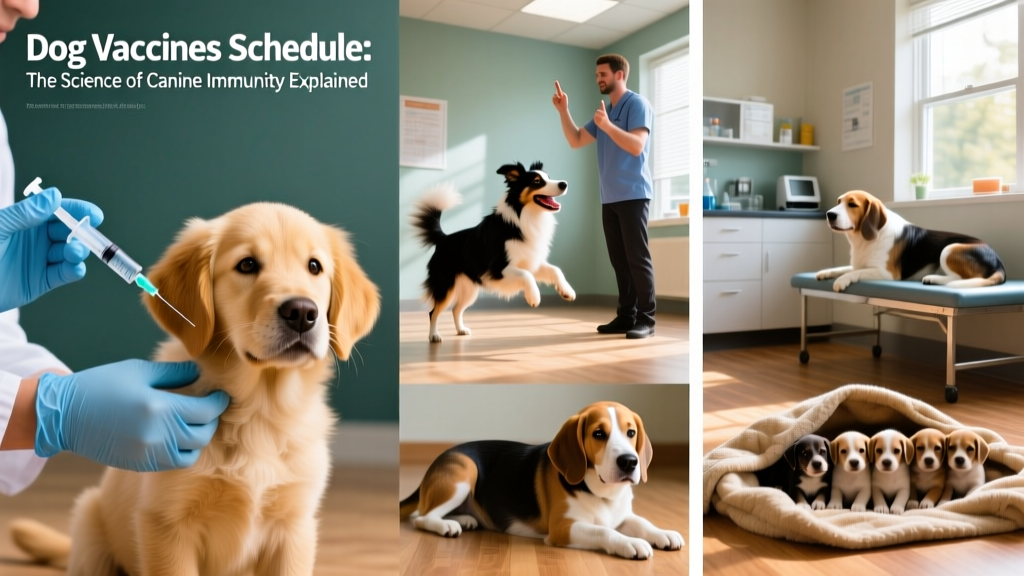
The Core Dog Vaccines Schedule — Quick Answer
Puppies receive their first core vaccine (DHPP — distemper, hepatitis, parvovirus, parainfluenza) at 6–8 weeks of age, followed by boosters every 3–4 weeks until 16–18 weeks. Rabies vaccination is given at 12–16 weeks (timing varies by state law). A one-year booster follows, after which the World Small Animal Veterinary Association (WSAVA) recommends core revaccination every 3 years for most adult dogs, or based on titers testing results. Non-core vaccines (Bordetella, leptospirosis, Lyme, canine influenza) are given based on lifestyle and risk assessment, often annually.
Most dog owners know their pet needs shots. Fewer understand why the timing is so specific, why a 10-week-old puppy isn't fully protected despite having had two rounds, or why a three-year revaccination interval is now considered standard for core vaccines. The answers lie in canine immunology — a field that has undergone significant revision in the past two decades thanks to research on maternal antibody interference, duration of immunity studies, and individual immune response variation.
This article explains the biological mechanisms driving the dog vaccines schedule, grounds the science in evolutionary context, and gives you a practical framework to discuss protocols with your veterinarian.
Why Dogs Need Vaccines: The Immunological Mechanism
How the Canine Immune System Processes Vaccines
When a vaccine enters a dog's body, it triggers a cascade that mirrors — in a controlled, attenuated way — a real infection. Here's the physiological sequence:
- Antigen recognition (0–24 hours): Dendritic cells and macrophages at the injection site engulf the vaccine's antigen (a modified or killed pathogen, or a protein subunit). These antigen-presenting cells (APCs) process the antigen into peptide fragments.
- Antigen presentation (24–72 hours): APCs migrate to regional lymph nodes, where they present processed peptides to naïve T-cells via MHC (major histocompatibility complex) molecules. This activates T-helper cells (CD4+), which coordinate the broader immune response.
- B-cell activation and clonal expansion (days 3–7): B-cells that recognize the antigen receive signals from T-helper cells and begin rapid division. Some differentiate into plasma cells, which produce antibodies (primarily IgM initially, then IgG through class switching).
- Memory cell formation (days 7–21+): A subset of activated B-cells and T-cells become long-lived memory cells — these persist in lymphoid tissue for months to years. They're the reason vaccinated dogs can mount a rapid, robust response if they encounter the real pathogen later.
- Peak antibody titer (typically 2–4 weeks post-vaccination): Serum antibody levels reach their highest point, then gradually decline over months. The critical question in vaccinology is: how long do memory cells persist at protective levels?
This mechanism explains why a single puppy vaccination isn't sufficient. It's not that the vaccine "doesn't work" — it's that maternal antibodies (transferred via colostrum in the first 24–48 hours of life) actively neutralize the vaccine antigen before the puppy's own immune system can mount a full response. This phenomenon is called maternal antibody interference, and it's the primary reason the dog vaccines schedule involves a series of boosters rather than a single dose.
Research published in the Merck Veterinary Manual documents that maternal antibodies in puppies decline at variable rates — some puppies lose them by 6 weeks, others retain them until 14–16 weeks. Because we can't predict exactly when maternal antibodies drop below the interference threshold (approximately a serum titer of 1:80 for canine parvovirus), the serial booster approach ensures that at least one dose in the series will "take" once maternal antibodies clear.
The Evolutionary Basis: Why Puppies Are Born Immunologically Naïve
Ancestral Canid Immune Strategy
In wolves and wild canids, puppies are born with an essentially immature adaptive immune system — a trait shared across most placental mammals. This isn't a design flaw; it's an evolutionary trade-off. Developing a fully mature immune system in utero would require significantly longer gestation, increasing maternal risk and energy demands.
Instead, ancestral canids evolved a two-phase immune strategy:
- Phase 1 — Passive immunity: The mother transfers immunoglobulins (primarily IgG) through colostrum within the first 24–48 hours post-whelping. The puppy's intestinal lining is temporarily permeable to large antibody molecules — this window closes rapidly (gut closure occurs around 24–36 hours in canids). In a wolf den, this passive immunity protects pups during their most vulnerable weeks while their own adaptive immunity matures.
- Phase 2 — Active immunity: As maternal antibodies wane (typically 6–16 weeks), the pup's own immune system encounters environmental pathogens naturally. In the wild, this exposure is gradual and often subclinical — the pup encounters low doses of pathogens in soil, prey, and pack members, allowing immune maturation without overwhelming infection.
Domestic dogs retain this exact same physiology. The problem is that modern environments concentrate pathogens (parvovirus can survive in soil for over a year) and expose puppies to infectious doses far higher than ancestral pups would encounter. Vaccination essentially replicates the natural Phase 2 exposure — but in a controlled, safe manner.
The Evidence-Based Dog Vaccines Schedule: Timing, Doses, and Rationale
The following table synthesizes recommendations from the American Veterinary Medical Association (AVMA), the AAHA (American Animal Hospital Association) Canine Vaccination Guidelines, and WSAVA. Your veterinarian will adjust timing based on local disease prevalence, breed risk factors, and individual health status.
| Age | Core Vaccines | Non-Core (Lifestyle-Based) | Scientific Rationale |
|---|---|---|---|
| 6–8 weeks | DHPP #1 | Bordetella (intranasal, if high-risk environment) | First attempt to immunize; may be blocked by maternal antibodies in ~30% of puppies |
| 9–11 weeks | DHPP #2 | Leptospirosis #1 (if endemic area) | Maternal antibodies declining; ~50% of puppies will seroconvert at this stage |
| 12–14 weeks | DHPP #3 + Rabies #1 | Lyme #1, Canine Influenza #1 | Maternal antibodies low enough in most pups for reliable seroconversion; rabies given per state law |
| 15–18 weeks | DHPP #4 (final puppy dose) | Leptospirosis #2, Lyme #2, Canine Influenza #2 | Ensures immunization even in puppies with prolonged maternal antibody persistence (up to 16 weeks) |
| 1 year | DHPP booster + Rabies booster | All non-core boosters as indicated | Consolidates immune memory; duration of immunity (DOI) studies show this booster extends protection to 3+ years for core antigens |
| Every 3 years | DHPP revaccination OR titers test | Annually (Bordetella, Lepto, Lyme, CIV as needed) | WSAVA and AAHA guidelines: DOI for CDV, CAV, CPV is ≥3 years (often lifelong); non-core vaccines have shorter DOI (6–12 months) |
Cost context (2026 US averages): A full puppy vaccination series (DHPP × 3–4 rounds + rabies) typically costs $75–$200 at a general practice, or $25–$75 at low-cost vaccine clinics. Individual core vaccines run $15–$35 per dose; non-core vaccines $20–$45 per dose. Titers testing (VacciCheck or similar) costs $50–$150 per panel and can replace revaccination where legally accepted.
How Dogs Develop Long-Term Immunity (and How It Differs From Humans)
One question owners frequently ask: "Can dogs develop lifelong immunity from vaccines, the way humans sometimes do?" The answer is nuanced — and it's one of the most important discoveries in modern veterinary vaccinology.
Research led by Dr. Ronald Schultz at the University of Wisconsin School of Veterinary Medicine demonstrated that dogs vaccinated against canine distemper virus (CDV), canine adenovirus (CAV-2), and canine parvovirus (CPV-2) maintain protective antibody titers for a minimum of 5–7 years, and likely for life in many individuals. This is comparable to human immunity after measles or hepatitis B vaccination.
However, there are key physiological differences between canine and human vaccine responses:
- Shorter initial immune maturation window: Dogs reach immunological maturity faster than humans (by ~12–16 weeks vs. ~6–12 months in human infants), which is why the puppy vaccine series is compressed into roughly 10–12 weeks.
- Different IgG subclass distribution: Dogs have four IgG subclasses (IgG1–IgG4), and their vaccine-induced antibody profiles differ from humans. This affects how we measure protective titers — the threshold for "protective" varies by pathogen and assay.
- Breed-related variation in immune response: Certain breeds show measurably different antibody responses. AKC-registered breed health data and independent studies have documented that Greyhounds and some brachycephalic breeds (Pugs, Bulldogs) may produce lower post-vaccination titers, while Rottweilers and Doberman Pinschers are documented as having higher rates of parvovirus vaccine failure — likely due to breed-specific MHC gene variants that affect antigen presentation.
- No universal "herd immunity" calculation: Unlike human public health, where herd immunity thresholds are well-modeled (e.g., ~95% for measles), canine population immunity is harder to quantify due to variable vaccination rates, stray populations, and environmental pathogen persistence (parvovirus in soil).
Common Misconceptions About Dog Vaccines — Debunked by Science
| Myth | → | Fact (Evidence-Based) |
|---|---|---|
| "My puppy had two shots, so they're protected." | → | Two doses before 16 weeks leave a significant percentage of puppies unprotected. Maternal antibodies can neutralize vaccine antigen until as late as 14–16 weeks. The final dose must be given at or after 16 weeks for reliable protection. |
| "Annual vaccines are necessary for all diseases." | → | WSAVA and AAHA guidelines since 2011 recommend 3-year intervals for core vaccines (DHPP) in adult dogs. Annual revaccination for core antigens provides no additional measurable immunity and increases cumulative antigen exposure. Non-core vaccines (Bordetella, leptospirosis) do require annual or even semi-annual boosters due to shorter DOI. |
| "Small dogs should get half-doses." | → | Vaccine doses are not weight-dependent. A Chihuahua and a Great Dane receive the same volume because the immune system requires a minimum antigen threshold to trigger a response. Reducing the dose risks vaccination failure. However, toy breeds do have higher rates of mild adverse reactions (lethargy, facial swelling) — discuss monitoring with your vet. |
| "Indoor dogs don't need vaccines." | → | Parvovirus survives on shoes, clothing, and surfaces for months to over a year. Distemper is aerosol-transmitted. Rabies exposure can occur from bats entering homes. Core vaccines are recommended for all dogs regardless of lifestyle. |
| "Titers testing is unreliable and just a way to avoid vaccines." | → | Quantitative serology (titers testing) for CDV, CAV, and CPV is validated and accepted by WSAVA, AAHA, and many state veterinary boards as an alternative to revaccination. A protective titer (e.g., ≥1:80 for CPV by serum neutralization) correlates with immunity. However, titers are not accepted for rabies in most US jurisdictions — rabies revaccination is legally mandated regardless of titer levels. |
Practical Implications: What This Means for Your Daily Life as a Dog Owner
Actionable Takeaways for Puppy and Adult Dog Owners
1. Protect the "immunity gap" window (6–16 weeks):
- Do not take your puppy to dog parks, pet stores, or group classes until at least 7 days after the final puppy DHPP dose (typically given at 16–18 weeks).
- Socialization during this period should happen in controlled environments — carry your puppy, visit homes of known-vaccinated dogs, use a stroller or sling for outdoor exposure.
- Parvovirus is the highest-risk pathogen during this window. It is extremely environmentally stable — resistant to most household cleaners. Only a 1:30 bleach solution or accelerated hydrogen peroxide products (e.g., Rescue™) reliably inactivate it.
2. Track the schedule precisely:
- Set calendar reminders for each booster. Missing a window by even 2–3 weeks can leave your puppy vulnerable.
- Keep a physical and digital copy of all vaccination records — you'll need these for boarding, grooming, doggy daycare, licensing, and travel.
- If adopting an older puppy or adult dog with unknown history, assume unvaccinated status and start a full series. A single DHPP dose is sufficient for dogs over 16 weeks with unknown history, followed by a booster at 1 year.
3. Discuss lifestyle-based vaccines with your veterinarian:
- Bordetella (kennel cough): Recommended if your dog boards, attends group training, visits groomers, or plays in dog parks. Given intranasally or orally for faster mucosal immunity (onset in 48–72 hours vs. 7–10 days for injectable).
- Leptospirosis: Increasingly recommended even for urban dogs — leptospirosis is zoonotic (transmissible to humans) and is spread through rodent urine in standing water. Now endemic in most US states.
- Lyme disease: Recommended in tick-endemic areas (Northeast, Upper Midwest, Pacific Coast). Must be paired with tick prevention — the vaccine alone is not 100% protective.
- Canine influenza (H3N2, H3N8): Consider for dogs in boarding facilities, shelters, or areas with documented outbreaks.
4. Monitor for adverse reactions:
- Mild (common, self-limiting): Lethargy, mild fever, soreness at injection site, reduced appetite for 24–48 hours.
- Moderate (contact your vet): Facial swelling, hives, persistent vomiting, diarrhea lasting more than 24 hours.
- Severe (emergency — go to nearest emergency vet immediately): Collapse, difficulty breathing, seizures, pale gums. Anaphylaxis occurs in approximately 1–5 per 10,000 vaccinated dogs and typically within 30 minutes of injection.
When Vaccine Response Might Signal a Problem
While most dogs tolerate vaccines without issue, certain patterns warrant deeper investigation:
- Repeated vaccine failure (documented low titers despite full protocol): This can indicate an underlying immunodeficiency. Breeds with documented higher rates include Rottweilers (parvovirus response) and certain lines of German Shepherds. Your vet may recommend a modified-live virus (MLV) vaccine instead of a killed-virus product, or an alternative route of administration.
- Severe reactions to multiple vaccines: If your dog has had facial swelling, hives, or more serious reactions to prior vaccines, your veterinarian may pre-treat with diphenhydramine (Benadryl) at 1–2 mg/kg 30 minutes before vaccination, separate vaccines across multiple visits (2–4 weeks apart), or recommend titers testing in lieu of revaccination where legally permissible.
- Autoimmune disease history: Dogs with immune-mediated hemolytic anemia (IMHA), immune-mediated thrombocytopenia (ITP), or other autoimmune conditions present a complex risk-benefit calculation. The AVMA recommends individualized protocols — often involving titers testing and selective vaccination — developed in consultation with a veterinary internist.
- Post-vaccination injection-site sarcoma (extremely rare in dogs): Unlike cats, where vaccine-associated sarcomas are a documented concern, this is exceedingly rare in dogs. However, any persistent lump at an injection site lasting more than 3 months, growing, or firmer than expected should be evaluated with fine-needle aspiration or biopsy.
Frequently Asked Questions About the Dog Vaccines Schedule
Why do dogs need a series of puppy vaccines instead of just one?
Maternal antibodies — transferred through colostrum in the first 24–48 hours of life — neutralize vaccine antigens, preventing the puppy's immune system from responding. These maternal antibodies decline at variable rates (6–16 weeks). The serial booster approach ensures that at least one dose is administered after maternal antibodies drop below the interference threshold, allowing the puppy's own immune system to generate memory cells and lasting protection.
Can dogs be over-vaccinated?
For core vaccines (DHPP), the evidence is clear: revaccinating more frequently than every 3 years provides no additional measurable immunity in adult dogs with documented prior vaccination. Memory B-cells and T-cells persist for years to decades for these specific antigens. However, non-core vaccines (Bordetella, leptospirosis, Lyme) have genuinely shorter durations of immunity (6–12 months), and dogs with exposure risk do need annual or semi-annual boosters for these. The concept of "over-vaccination" applies when core vaccines are given annually without medical justification — a practice that current AAHA and WSAVA guidelines explicitly advise against.
How do dogs process vaccines differently from humans?
The fundamental immunological mechanism is the same (antigen presentation → B/T cell activation → memory cell formation), but timing, antibody subclass distribution, and breed-specific genetic variation create meaningful differences. Dogs mature immunologically much faster (weeks vs. months), have different IgG subclass profiles, and show breed-linked variation in MHC genes that affects how efficiently their immune systems recognize and respond to vaccine antigens. Additionally, dogs cannot verbally report subjective side effects, making post-vaccination monitoring dependent on observable behavioral changes.
What does it mean when my dog is lethargic after vaccines?
Post-vaccination lethargy is a normal physiological response — the immune system is actively producing cytokines (signaling molecules like interleukin-1 and tumor necrosis factor) that cause mild fever, reduced energy, and increased sleep. This typically resolves within 24–48 hours. It indicates the vaccine is stimulating an immune response, which is the intended outcome. However, lethargy lasting more than 48 hours, accompanied by vomiting, facial swelling, or collapse, is not normal and requires immediate veterinary attention.
Is it normal for a puppy to have a lump after vaccination?
A small, firm lump at the injection site is relatively common and usually resolves within 1–3 weeks. It represents a localized inflammatory response (granuloma) as immune cells accumulate at the antigen depot. Apply a warm compress for 5–10 minutes twice daily to encourage resolution. If the lump persists beyond 3 months, grows larger than 2 cm, or becomes painful, ulcerated, or warm to the touch, have your veterinarian evaluate it with fine-needle aspiration to rule out rare complications.
How is the rabies vaccine schedule different from other dog vaccines?
Rabies vaccination is governed by state and local law rather than purely by immunological guidelines. Most US states require an initial rabies vaccine at 12–16 weeks, a booster at 1 year, then revaccination every 1 or 3 years depending on the product used and local regulations. Even if a dog has a high rabies titer, most jurisdictions do not accept titers testing as a legal substitute for revaccination — this is a significant difference from core DHPP vaccines, where titers are widely accepted. Check your specific state and county requirements.
Important: This article provides educational information about canine immunology and vaccination science. It is not a substitute for professional veterinary advice. Your veterinarian will design a vaccination protocol tailored to your dog's age, breed, health status, lifestyle, and local disease risk. Always consult your veterinarian before making decisions about your dog's vaccination schedule.
Marcus Aldridge
All our authors care for dogs every day — read more of their work on the authors page.


