Dog Sunglasses: The Science of Canine UV Protection & Eye Health
Do dogs need sunglasses? Explore the science of canine UV sensitivity, eye anatomy, and when protective eyewear like Rex Specs or Doggles makes sense.
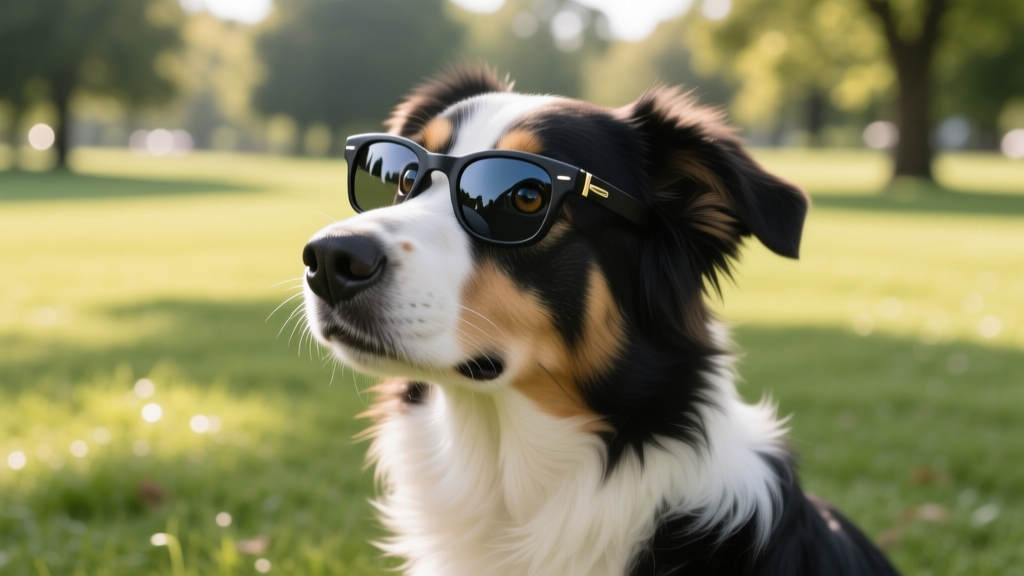
Do Dogs Need Sunglasses? The Quick Answer
Most dogs do not require sunglasses for everyday life. Canine eyes have evolved robust natural protections against moderate UV exposure, including a larger corneal surface, more prominent brow ridges, and a higher density of rod photoreceptors adapted to variable light. However, dog sunglasses (protective canine eyewear) are scientifically justified in specific scenarios: dogs with diagnosed eye conditions like pannus (chronic superficial keratitis), post-surgical recovery, extreme high-altitude or snow environments, and working dogs exposed to debris. Brands like Rex Specs ($79–$92) and Doggles ILS ($25–$40) manufacture shatterproof, UV400-rated lenses designed for canine skull geometry.
Canine Eye Anatomy: How Dogs Process Light Differently Than Humans
To understand whether dog sunglasses serve a biological purpose, we first need to examine how canine eyes handle ultraviolet radiation and intense visible light. The dog eye diverges significantly from the human eye in several structural ways that affect light processing.
The Canine Visual System: Key Differences
Dogs possess a tapetum lucidum — a reflective layer behind the retina that bounces light back through photoreceptors, effectively giving them a second chance to capture photons. This is what causes the characteristic "eye shine" in flash photographs. According to the Merck Veterinary Manual, the tapetum lucidum enhances low-light vision but also means dogs' retinas receive more total light exposure per incident beam than human retinas.
However, dogs compensate through other mechanisms:
- Larger corneas relative to eye size allow more controlled light entry through a wider pupillary range
- Prominent supraorbital ridges (brow bones) create natural shading, especially in dolichocephalic (long-nosed) breeds
- A higher rod-to-cone ratio (approximately 200:1 in dogs vs. 20:1 in humans) means dogs prioritize light detection over color acuity, reducing phototoxic risk to cone-dense central retinal areas
- Absence of a macular lutea — dogs lack the concentrated yellow-pigment zone in humans that filters blue light at the fovea, but they also lack a foveal concentration point that would be vulnerable to focused UV damage
The canine lens also acts as a natural UV filter. Research published in the Journal of Comparative Physiology has shown that the dog lens absorbs a significant portion of UVB radiation (280–315 nm) before it reaches the retina. However, this filtering capacity can degrade with age, and the lens transmits more UVA (315–400 nm) than UVB — meaning older dogs may have reduced natural UV protection.
Evolutionary Context: Why Ancestral Canids Didn't Need Eye Protection
From Wolf to Retriever: 40,000 Years of Eye Adaptation
Gray wolves (Canis lupus) evolved across northern latitudes — environments with intense snow glare, high-altitude UV exposure, and vast open terrain. Their visual systems adapted accordingly:
- Heavy brow ridges and deep-set eyes provided physical shading against overhead sun and reflected snow glare
- Dense periocular fur (the fur surrounding the eye socket) acted as a secondary barrier against particulate matter and peripheral light scatter
- A robust conjunctival immune response helped repair minor UV-induced surface damage rapidly
- Behavioral adaptations — wolves and feral dogs instinctively squint, turn away from direct glare, and seek shade during peak UV hours (10 AM–4 PM)
Modern domestic dogs retain most of these adaptations, but selective breeding has compromised some breeds' natural defenses. Brachycephalic breeds (Pugs, French Bulldogs, Shih Tzus) have been selected for flat faces and prominent, protruding eyes — eliminating the protective brow ridge and deep orbital socket that shielded ancestral canid eyes.
The Physiological Mechanism: How UV Radiation Affects Canine Eyes
Ultraviolet radiation damages ocular tissue through two primary mechanisms: photochemical injury (direct DNA damage to corneal and lens epithelial cells) and oxidative stress (generation of reactive oxygen species that overwhelm the eye's antioxidant defenses).
In dogs, the most clinically relevant UV-related conditions include:
| Condition | UV Link | Breed Predisposition | Prevalence |
|---|---|---|---|
| Pannus (Chronic Superficial Keratitis) | Strongly correlated with UV exposure and altitude; UV light triggers an autoimmune response on the corneal surface | German Shepherds, Belgian Tervuren, Border Collies, Greyhounds | Estimated 5–10% of German Shepherds in high-UV regions |
| Cataracts | UV exposure is a contributing factor (not sole cause); oxidative damage to lens proteins accelerates opacification | Boston Terriers, Cocker Spaniels, Poodles, Siberian Huskies | Varies widely; hereditary cataracts affect 10–20% of predisposed breeds |
| Pigmentary Keratitis | Chronic irritation including UV exposure triggers melanin deposition on the cornea | Pugs, Bulldogs, Shih Tzus, other brachycephalic breeds | Up to 20% of Pugs develop some degree |
| Corneal Degeneration | UV-induced lipid and calcium deposits on the corneal surface | Older dogs generally; no strong breed link | Common in geriatric dogs over 10 years |
The critical insight for dog owners: UV damage to canine eyes is cumulative and dose-dependent, much like in humans. A dog living at 6,000+ feet elevation in Colorado receives roughly 20–25% more UV exposure than a dog at sea level — which is why veterinary ophthalmologists in mountain states see pannus cases at notably higher rates.
When Dog Sunglasses Make Scientific Sense
Based on current veterinary ophthalmology consensus, protective canine eyewear is recommended in these specific scenarios:
Evidence-Based Use Cases for Dog Sunglasses
- Dogs diagnosed with pannus: UV-blocking eyewear is a standard adjunct therapy alongside topical immunosuppressants (cyclosporine or tacrolimus). A study referenced by the American Kennel Club notes that reducing UV exposure can slow pannus progression significantly.
- Post-surgical recovery: After procedures like cataract surgery or corneal grafting, protective eyewear prevents the dog from pawing at the eye and shields healing tissue from UV and debris. Many veterinary ophthalmologists prescribe dog goggles for 2–4 weeks post-op.
- High-altitude hiking and snow sports: Dogs accompanying owners on ski trips, snowshoeing, or above-treeline hikes face intense reflected UV (snow reflects up to 80% of UV radiation vs. ~15% for grass). Snow blindness (photokeratitis) can occur in dogs just as in humans.
- Working and service dogs in debris-heavy environments: Search-and-rescue dogs, police K9s, and hunting dogs working through brush benefit from impact-resistant lenses that protect against branches, thorns, and airborne particulates.
- Dogs riding in open vehicles or motorcycles: Windblast dries the corneal surface and drives particulate matter into the eyes. Goggles provide a physical barrier.
Comparing Leading Dog Sunglasses Brands
| Feature | Rex Specs | Doggles ILS | Rex Specs Junior |
|---|---|---|---|
| Price Range | $79–$92 | $25–$40 | $69–$79 |
| UV Rating | UV400 (blocks 99.9% of UVA/UVB) | UV400 | UV400 |
| Lens Material | Polycarbonate, shatterproof | Polycarbonate | Polycarbonate, shatterproof |
| Interchangeable Lenses | Yes (clear + tinted included) | Limited | Yes |
| Size Options | XS–XL (5 sizes) | XS–L (4 sizes) | Single size (small breeds) |
| Best For | Medical-grade protection, working dogs, high-altitude | Casual use, car rides, budget-conscious owners | Small breeds under 20 lb / 9 kg |
Fitting tip: Measure your dog's head circumference at the widest point behind the ears and across the brow. Rex Specs provides a detailed sizing chart — a medium fits dogs with a 14–18 inch (36–46 cm) head circumference, which covers most Beagles, Cocker Spaniels, and small Border Collies. The goggles should sit flush against the orbital rim without pressing on the eyeball itself.
Common Misconceptions About Dog Sunglasses Debunked
| Myth | Fact |
|---|---|
| "All dogs need sunglasses on sunny days." | The majority of dogs have sufficient natural UV protection for typical outdoor exposure. Only dogs with specific risk factors benefit from eyewear. |
| "Dog sunglasses are just a fashion accessory." | While some owners buy them for photos, veterinary ophthalmologists prescribe protective eyewear for pannus management, post-surgical care, and working-dog protection. The medical use case is well-documented. |
| "Dogs can't see through tinted lenses." | Dogs adapt to tinted lenses quickly. Their rod-dominant retinas function well across a wide range of light intensities. Most dogs acclimate to goggles within 3–5 short training sessions (5–10 minutes each). |
| "Human sunglasses work fine for dogs." | Human frames don't match canine skull geometry. Dogs have wider-set eyes, a more pronounced orbital angle, and no nose bridge to support frames. Canine-specific goggles use foam gaskets and adjustable straps to seal against the skull without pressure points. |
| "Dark lenses equal better UV protection." | Lens tint darkness and UV blocking are independent properties. A clear polycarbonate lens with UV400 coating blocks the same UV radiation as a dark-tinted lens. Tint reduces visible light (glare), not UV. |
Breed Variations: Which Dogs Are Most Vulnerable to UV Damage?
Not all canine eyes carry equal UV risk. Breed-specific skull shape, eye prominence, and genetic predisposition create a spectrum of vulnerability:
Highest Risk — Brachycephalic Breeds
Pugs, French Bulldogs, English Bulldogs, Shih Tzus, Pekingese, and Boston Terriers have exophthalmic (protruding) eyes with minimal orbital protection. Their flat skulls eliminate the brow ridge that shades the eye, and their large palpebral fissures (eyelid openings) expose more corneal surface to direct UV. These breeds are also predisposed to pigmentary keratitis, which UV exposure can worsen. Dog sunglasses or at least limiting midday sun exposure is particularly advisable for these breeds.
Moderate-High Risk — Pannus-Predisposed Breeds
German Shepherds, Belgian Tervuren, Border Collies, Australian Shepherds, and Greyhounds carry genetic susceptibility to chronic superficial keratitis. For these breeds, UV exposure is a known disease trigger — not just a risk factor but an active driver of the autoimmune response. Veterinary ophthalmologists often recommend UV-blocking eyewear as a preventive measure for dogs of these breeds living above 4,000 feet (1,200 m) elevation or in high-UV-index regions (Arizona, New Mexico, Colorado).
Lower Risk — Dolichocephalic and Mesocephalic Breeds
Collies, Greyhounds (aside from pannus risk), Labradors, Golden Retrievers, and most hound breeds have deep-set eyes with prominent brow ridges that provide substantial natural shading. Unless they have a diagnosed eye condition, these breeds rarely need protective eyewear for routine outdoor activity.
When Eye Sensitivity Signals a Deeper Problem
Red Flags: When Squinting Isn't Just Sun Avoidance
If your dog consistently squints, avoids light, or seems bothered by normal indoor lighting, this may indicate an underlying medical condition — not just light sensitivity. Contact your veterinarian promptly if you observe:
- Blepharospasm (persistent squinting or eyelid spasms) lasting more than 24 hours
- Photophobia — your dog actively hides from light or refuses to go outside during the day
- Visible cloudiness or color change on the corneal surface or within the pupil
- Excessive tearing or discharge (especially green or yellow)
- Redness of the sclera (the white of the eye) or third eyelid protrusion
- Pawing at the eye — suggests pain, not just irritation
These symptoms can indicate corneal ulcers, uveitis, glaucoma, or keratoconjunctivitis sicca (dry eye) — all of which require veterinary diagnosis and treatment. Never use dog sunglasses to mask symptoms without a veterinary exam. Early intervention for corneal ulcers, for example, can prevent perforation and vision loss; delayed treatment may require surgical intervention costing $1,500–$5,000.
How to Acclimate Your Dog to Protective Eyewear
Even dogs who need sunglasses for medical reasons won't naturally accept them. Force-free, positive-reinforcement training works reliably for most dogs within 1–3 weeks. Here is a proven protocol:
- Days 1–3: Desensitization. Place the goggles (without straps) near your dog's food bowl and favorite resting spot. Let them sniff and investigate freely. Reward calm interaction with high-value treats (freeze-dried liver, chicken). Do not attempt to put them on.
- Days 4–6: Brief contact. Hold the goggles gently against your dog's face for 1–2 seconds, then immediately reward. Gradually increase contact duration to 5 seconds over multiple short sessions (3–5 sessions per day, 2–3 minutes each).
- Days 7–10: Strap on, lenses up. Secure the goggle strap around your dog's head but leave the lenses flipped up on the forehead. Let your dog move around freely for 5–10 minutes. Reward calm behavior. This builds tolerance for the strap sensation without visual disruption.
- Days 11–14: Lenses down, indoor sessions. Lower the lenses for 1–2 minute indoor sessions. Expect some initial pawing or head-shaking — redirect with treats and engagement. Gradually extend to 10-minute sessions.
- Days 15+: Outdoor transition. Begin wearing goggles outside for short walks. Most dogs adapt fully within this timeframe and stop noticing the goggles within 2–3 outdoor sessions.
Pro tip: Start training on an overcast day when your dog isn't already squinting against bright sun. Dogs associate goggles with comfort faster when the initial experience doesn't involve a dramatic change in perceived brightness.
Related Canine Sensory Abilities
Understanding UV sensitivity connects to broader aspects of canine visual science:
- Night vision: The same tapetum lucidum that amplifies low light also means dogs are more sensitive to sudden bright flashes. This is why dogs often startle at camera flashes — it's not fear of the camera but genuine photic discomfort.
- Color perception: Dogs see primarily in blue-yellow dichromatic vision. They lack red-green cone photoreceptors. This means red-tinted sunglasses don't alter their color perception the way they would for humans — the world already looks different to them.
- Flicker fusion rate: Dogs process visual information at approximately 75 Hz (vs. 60 Hz in humans), meaning they perceive motion more fluidly. This is why dogs track fast-moving objects more easily and why older CRT screens appeared to flicker to dogs but not to humans.
- UV perception: Some research suggests that unlike humans, dogs' lenses transmit a portion of UVA light to the retina. A 2014 study published in the Proceedings of the Royal Society B found evidence that several mammalian species, potentially including dogs, can perceive UV light — meaning UV-blocking lenses may actually change what dogs see, not just protect their eyes.
Frequently Asked Questions
Why do some dogs squint in bright sunlight?
Squinting (blepharospasm) in bright light is a normal protective reflex. The canine pupil constricts in bright light, but dogs with large palpebral fissures or light-colored irises may squint additionally to reduce light entry. Occasional squinting outdoors is normal; persistent squinting or squinting indoors warrants a veterinary exam to rule out corneal injury, uveitis, or glaucoma.
Can dogs get sunburned on their eyes?
Yes. Photokeratitis — essentially a sunburn of the corneal surface — can occur in dogs exposed to intense reflected UV, particularly from snow or water. Symptoms include squinting, tearing, redness, and temporary vision impairment. It typically resolves within 48–72 hours with veterinary-prescribed topical anti-inflammatories, but prevention via protective eyewear is preferable for dogs in high-exposure environments.
How do dogs' eyes process UV light differently from humans?
Human lenses block nearly all UV radiation below 400 nm before it reaches the retina. Canine lenses block UVB (280–315 nm) effectively but transmit more UVA (315–400 nm) to the retina. This means dogs' retinas receive more UVA exposure than human retinas — though the practical impact is debated, as dogs' rod-dominant retinas may be less susceptible to UV-induced phototoxic damage than the cone-dense human macula.
What does it mean when my dog avoids bright rooms or sunny spots?
Light avoidance (photophobia) can indicate eye pain from conditions like corneal ulcers, uveitis, or glaucoma. It can also occur in dogs with pannus or severe dry eye. However, some dogs simply prefer cooler, shaded areas for thermoregulation — especially brachycephalic breeds prone to overheating. If the behavior is new or accompanied by squinting, tearing, or pawing at the eyes, consult your veterinarian.
Is it normal for my dog to tolerate sunglasses without training?
Some dogs accept goggles immediately, particularly breeds with a strong retrieving or working drive who are accustomed to wearing gear (e.g., Labrador Retrievers, German Shepherds). However, most dogs require a gradual acclimation period. Never force goggles onto a resistant dog — this creates negative associations and makes future attempts harder. Use the positive-reinforcement protocol outlined above.
How is canine UV sensitivity different from human UV sensitivity?
Humans have a macular lutea (a yellow-pigmented zone) that filters blue and UV light at the retina's most sensitive point. Dogs lack this structure entirely. However, humans also lack a tapetum lucidum, meaning our retinas don't receive the "double pass" of light that canine retinas do. The net effect is that dogs and humans face different types of UV risk — humans are more prone to macular degeneration from UV, while dogs are more prone to corneal and limbal (corneal edge) conditions like pannus.
Sources & Further Reading
- Merck Veterinary Manual: Structure and Function of the Eye in Animals
- American Kennel Club: Dog Eye Care Tips
- AVMA: Taking Care of Your Pet's Eyes
This article provides educational information and does not replace professional veterinary advice. If your dog shows signs of eye discomfort, vision changes, or persistent squinting, consult your veterinarian or a board-certified veterinary ophthalmologist.
Beth Carrasco
All our authors care for dogs every day — read more of their work on the authors page.


