Dog Spiders: Why Dogs React to Spiders and What Science Says
Why do dogs react to spiders? Explore the canine science behind prey drive, sensory detection, and spider safety for dogs in this evidence-based guide.
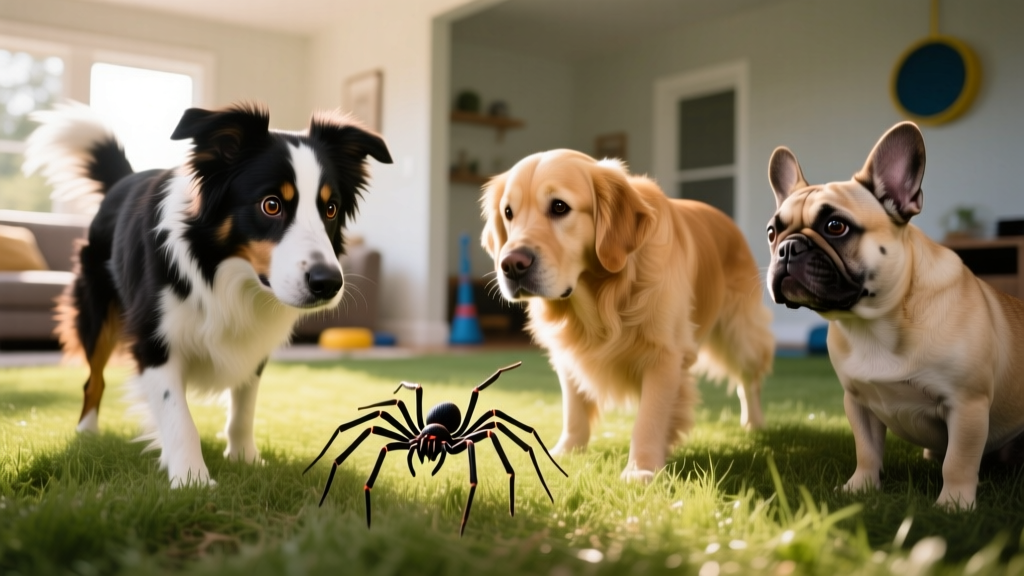
Why Do Dogs Go After Spiders? The Prey Drive Connection
If you have ever watched your dog freeze, tilt their head, and then lunge at a spider crossing the kitchen floor, you witnessed one of the most deeply wired canine behaviors: prey drive. This is not random curiosity. It is a motor pattern sequence — orient, eye, stalk, chase, grab-bite, kill-bite, dissect, consume — that researchers have documented in both wolves and domestic dogs.
According to work published in the Applied Animal Behaviour Science journal, domestic dogs retain the predatory motor patterns of their wolf ancestors, though selective breeding has emphasized or suppressed different parts of the sequence depending on the breed's original function. Terriers, for example, were specifically bred to chase and kill small vermin — which includes spiders, insects, and rodents. A Jack Russell Terrier snapping at a house spider is performing a behavior humans actively selected for over centuries.
Spiders trigger this response because they match the key stimuli that activate prey drive: small size, rapid or erratic movement, and proximity to ground level where dogs operate. The dog's visual system is particularly tuned to detect motion — research from the University of Helsinki's canine cognition group has shown dogs can detect moving objects at distances where they fail to identify stationary ones.
How Dogs Detect Spiders: Sensory Science
Dogs do not experience the world the way humans do. When it comes to spider detection, three sensory systems work in concert:
Vision: Motion Detection Specialists
Dogs have a higher proportion of rod cells to cone cells in their retinas compared to humans, giving them superior motion sensitivity, especially in low light. A study in the Royal Society Open Science journal confirmed that dogs can discriminate moving stimuli at lower thresholds than previously measured. This means your dog likely spotted that spider before you even noticed it was there — particularly at dusk or in dimly lit rooms where spiders are most active.
Hearing: Ultrasonic Range
Dogs hear frequencies up to approximately 45-65 kHz, compared to the human range of about 20 kHz. While most spiders do not produce audible sounds that dogs would detect, the rustling of a spider moving through dry leaves, along a baseboard, or inside a wall can register clearly to canine ears. Some wolf spiders produce low-frequency vibrations through substrate drumming that may fall within a dog's auditory range.
Olfaction and the Vomeronasal Organ
Dogs possess roughly 300 million olfactory receptors (compared to about 6 million in humans) and a functional vomeronasal organ (Jacobson's organ) that detects chemical signals. When a dog sniffs intensely at a spot on the floor or wall, they may be reading chemical traces left by a spider — pheromones, silk proteins, or the residual scent of prey the spider consumed. This is the same system dogs use when investigating urine marks or other animal sign.
| Sensory Dimension | Dog Capability | Human Capability |
|---|---|---|
| Motion detection threshold | ~900 meters (moving object, familiar shape) | ~500 meters under ideal conditions |
| Low-light vision | Tapetum lucidum reflects light; 5x more sensitive | No tapetum; limited scotopic vision |
| Auditory frequency range | Up to 45-65 kHz | Up to ~20 kHz |
| Olfactory receptors | ~300 million | ~6 million |
| Vomeronasal organ | Fully functional | Vestigial/non-functional in adults |
The Evolutionary Basis: Wolves, Spiders, and Survival
Evolutionary context: Gray wolves (Canis lupus) are opportunistic predators and scavengers. While large ungulates form the bulk of their diet in many ecosystems, wolves and wild canids regularly consume insects, arachnids, and other small invertebrates — particularly pups learning to hunt and during seasonal food scarcity. Research on wolf scat analysis in various regions has documented arthropod remains, indicating these small creatures are part of the natural wild canid diet.
Domestic dogs inherited this generalized predatory interest. The behavior of snapping at or eating a spider is not pathological — it is an echo of an ancestral survival strategy where no potential calorie source was ignored.
From an evolutionary fitness perspective, the cost-benefit calculation favored animals that investigated and potentially consumed small moving creatures. Most spiders are harmless and protein-rich. The rare encounter with a venomous species was an acceptable risk compared to the caloric benefit of routinely eating safe arthropods. This calculus, shaped over millions of years of canid evolution, is what you see when your Labrador inhales a daddy longlegs without hesitation.
Are Spider Bites Dangerous to Dogs? Risk Assessment
This is where practical implications matter most. The overwhelming majority of spiders encountered in North American homes are harmless to dogs. House spiders (Parasteatoda tepidariorum), cellar spiders, jumping spiders, and wolf spiders either cannot puncture canine skin with their chelicerae (fangs) or produce venom that causes only mild, localized irritation in dogs.
However, two species warrant serious attention:
Black Widow Spiders (Latrodectus spp.)
Black widow venom contains alpha-latrotoxin, a neurotoxin that affects the nervous system. In dogs, a black widow bite can cause severe pain, muscle rigidity, tremors, vomiting, and in severe cases, respiratory distress. The Merck Veterinary Manual notes that clinical signs typically appear within 30 minutes to several hours post-bite. Treatment may include antivenom (when available), pain management, muscle relaxants, and supportive care. Prognosis is generally good with prompt veterinary treatment, but untreated envenomation can be fatal, particularly in small dogs.
Brown Recluse Spiders (Loxosceles reclusa)
Brown recluse venom is necrotizing — it destroys tissue at the bite site. In dogs, this can produce a slowly expanding ulcer that may take weeks to heal. Systemic reactions (hemolytic anemia, kidney damage) are less common in dogs than in humans but can occur. The bite itself is often painless initially, so owners may not witness the encounter. Look for a developing skin lesion — typically a pale center surrounded by redness — that worsens over 24-72 hours.
- Your dog was bitten and you identified or suspect a black widow or brown recluse
- Muscle tremors, rigidity, or difficulty walking within hours of a suspected bite
- Rapidly spreading swelling at a bite site
- Vomiting, diarrhea, or collapse after a spider encounter
- A skin ulcer developing at a known bite location that expands over 24-72 hours
ASPCA Animal Poison Control: (888) 426-4435 (24/7, consultation fee applies)
Pet Poison Helpline: (855) 764-7661
Estimated Treatment Costs (2026)
| Scenario | Estimated Cost Range | What's Included |
|---|---|---|
| Non-venomous bite, mild reaction | $75–$200 | Exam, antihistamine injection, monitoring |
| Black widow envenomation | $500–$3,000+ | Emergency exam, antivenom (if available), IV fluids, pain management, hospitalization |
| Brown recluse bite with necrosis | $300–$2,500+ | Exam, wound care, antibiotics, possible surgical debridement, follow-up visits |
Breed Variations: Which Dogs Are Most Likely to Chase Spiders?
Not all dogs react to spiders with equal intensity. Breed heritage plays a significant role because humans selectively amplified prey drive components in working lines:
- Terriers (Jack Russell, Rat Terrier, Cairn, West Highland White): Bred specifically to pursue and kill small ground-dwelling creatures. These dogs typically show the strongest spider-chasing behavior and are most likely to snap up and consume spiders without hesitation.
- Hounds (Beagles, Dachshunds): Strong scent-tracking drive means they may investigate spider locations intensely through sniffing, though they are somewhat less likely to snap-bite than terriers.
- Herding breeds (Border Collies, Australian Shepherds): High visual sensitivity to movement means they often notice spiders first and may stalk them, but the herding sequence typically stops at the "eye-stalk" phase rather than progressing to grab-bite.
- Retrievers and Spaniels: Moderate prey drive with emphasis on the "chase-grab" sequence for birds. Spider interest varies individually but is generally moderate.
- Brachycephalic and companion breeds (Pugs, Bulldogs, Shih Tzus): Generally lower prey drive, though individual variation exists. These dogs may watch a spider with interest but are less likely to actively pursue.
A 2022 study in iScience examined genetic correlates of prey drive across dog breeds and found that variation in the MC2R gene and related pathways correlated with predatory behavior intensity — supporting the idea that breed differences in spider-chasing have a measurable genetic basis, not just learned behavior.
Common Misconceptions About Dogs and Spiders
| Myth | Fact |
|---|---|
| "Dogs are afraid of spiders." | Most dogs show prey drive, not fear, toward spiders. Startle responses to sudden spider movement are a reflex, not phobia. True arachnophobia is extremely rare in dogs. |
| "Daddy longlegs are the most venomous spider but their fangs are too small to bite dogs." | Daddy longlegs (harvestmen, order Opiliones) are not spiders at all — they are a separate arachnid order with no venom glands and no fangs. The cellar spider (sometimes also called daddy longlegs) is a true spider with very weak venom that does not harm dogs. |
| "If my dog eats a spider, the venom will poison them internally." | Spider venom is protein-based and designed for injection, not ingestion. Stomach acid denatures venom proteins rapidly. Swallowing a spider — even a venomous one — is extremely unlikely to cause envenomation. The risk is from the bite, not digestion. |
| "All spider bites cause big swollen welts on dogs." | Most spider bites produce minimal visible reaction in dogs due to their thicker skin and fur barrier. Brown recluse bites may initially show no visible mark and develop slowly over days. |
| "My dog will learn to avoid spiders after a bad bite." | Prey drive is an intrinsic motivational system, not a learned behavior easily modified by single negative experiences. Many dogs will continue chasing spiders even after being bitten. Management and redirection are more effective than expecting natural avoidance. |
Practical Takeaways for Dog Owners
Spider-Proofing Your Dog's Environment
- Reduce spider habitat near dog areas: Clear woodpiles, rock stacks, and dense vegetation within 10 feet of dog doors and outdoor kennels. Brown recluses favor undisturbed clutter — eliminate cardboard storage in garages and basements where dogs spend time.
- Shake out outdoor bedding: Before your dog lies down on patio beds or outdoor blankets, give them a vigorous shake. Spiders seek shelter in folds and crevices.
- Seal entry points: Install door sweeps and repair window screens. The average home has 20-40 entry points for arthropods. Weatherstripping gaps wider than 1/16 inch significantly reduces spider traffic.
- Use pet-safe pest management: Avoid permethrin-based sprays around dogs — permethrin is highly toxic to cats and can cause reactions in dogs at high concentrations. Diatomaceous earth (food-grade) applied in cracks and crevices provides mechanical insect control without chemical risk. Essential oil-based repellents (peppermint, cedar) have limited proven efficacy and some oils are toxic to dogs at high doses.
- Train a "leave it" cue: Using positive reinforcement, teach your dog to disengage from spiders on command. Start with low-value items and build up to moving targets. A reliable "leave it" can prevent your dog from eating spiders (and many other hazards) before you can physically intervene. Expect 4-8 weeks of consistent daily practice for reliable response in distracting environments.
What to Do If Your Dog Is Bitten
- Restrain and calm your dog — elevated heart rate can increase venom circulation if envenomation occurred.
- Try to identify the spider — take a photo if safe to do so. Do not attempt to capture a live venomous spider.
- Note the time of the bite and the location on the dog's body.
- Call your veterinarian or emergency clinic before arriving so they can prepare appropriate treatment.
- Do NOT apply ice, tourniquets, or attempt to suck out venom — these first-aid myths can worsen tissue damage.
Related Behaviors: The Bigger Picture of Canine Arthropod Interest
Spider-chasing is one expression of a broader behavioral category that includes snapping at flies, digging for grubs, investigating bee hives, and pursuing lizards. These all share the same underlying prey drive circuitry. Understanding this helps owners recognize patterns:
- Fly snapping: The aerial version of the same motor pattern. Some dogs develop obsessive fly-snapping behavior (sometimes called "fly-biting syndrome"), which in certain cases can indicate neurological issues rather than normal prey drive. If your dog snaps at air where no flies are present, consult your veterinarian.
- Bee and wasp encounters: Unlike spiders, stinging insects pose a more common and significant risk. Facial swelling from a bee sting is a frequent emergency visit. Dogs that chase bees should be redirected more urgently than those chasing spiders, given the higher likelihood of allergic reaction (anaphylaxis occurs in an estimated 1-2% of dogs stung by bees).
- Grass eating and insect consumption: Dogs that eat spiders often also eat grasshoppers, crickets, and other insects. This is generally harmless and may provide trace nutritional benefit. The concern is only with toxic or venomous species.
Frequently Asked Questions
Is it normal for my dog to eat spiders?
Yes. Eating spiders is a normal expression of prey drive and ancestral foraging behavior. Most common house spiders are harmless when ingested. Spider venom is a protein that is broken down by stomach acid, so swallowing a spider does not cause envenomation. The primary risk is a bite to the mouth or tongue before the spider is consumed.
Can dogs sense spiders before seeing them?
Dogs can likely detect spiders through scent and sound before visual contact. Their olfactory system can pick up chemical traces, and their hearing range captures subtle movement sounds. This explains why a dog may become fixated on a seemingly empty corner — they may smell or hear a spider behind a wall or under furniture.
What does it mean when my dog stares at the ceiling?
Ceiling-staring often indicates your dog has detected a spider, insect, or other small creature moving overhead. Dogs' motion-sensitive vision picks up subtle movements that humans miss. However, persistent staring at nothing can occasionally indicate a neurological issue such as focal seizures. If the behavior is frequent and no stimulus is present, discuss it with your veterinarian.
How is a dog's reaction to spiders different from a human's?
Humans typically react to spiders with disgust or fear — an evolved pathogen-avoidance response. Dogs react with prey drive — an evolved predatory response. Where a human recoils, a dog lunges. This fundamental difference means dogs are more likely to make direct physical contact with spiders than humans, which slightly increases bite risk but also means dogs are less likely to develop persistent phobias.
Should I stop my dog from chasing spiders?
In most cases, chasing common house spiders is harmless and provides mental stimulation. Redirect your dog if you identify a potentially venomous species (black widow, brown recluse) or if the chasing becomes obsessive — meaning your dog cannot disengage and ignores other activities. A trained "leave it" cue gives you control without suppressing normal exploratory behavior.
Sources Referenced
- Merck Veterinary Manual — Spider Bites in Small Animals
- ASPCA Animal Poison Control — aspca.org/pet-care/animal-poison-control
- Applied Animal Behaviour Science — Predatory motor patterns in domestic dogs
- iScience (Cell Press) — Genetic correlates of canine predatory behavior
This article is for educational purposes and does not replace professional veterinary advice. If your dog has been bitten by a spider or is showing unusual symptoms, consult your veterinarian promptly.
Robin Maitland
All our authors care for dogs every day — read more of their work on the authors page.


