How to Get Rid of Dog Smell in House: The Science Behind Canine Odor
Learn the science behind why dogs produce odor and how to get rid of dog smell in house using evidence-based cleaning methods, enzyme products.
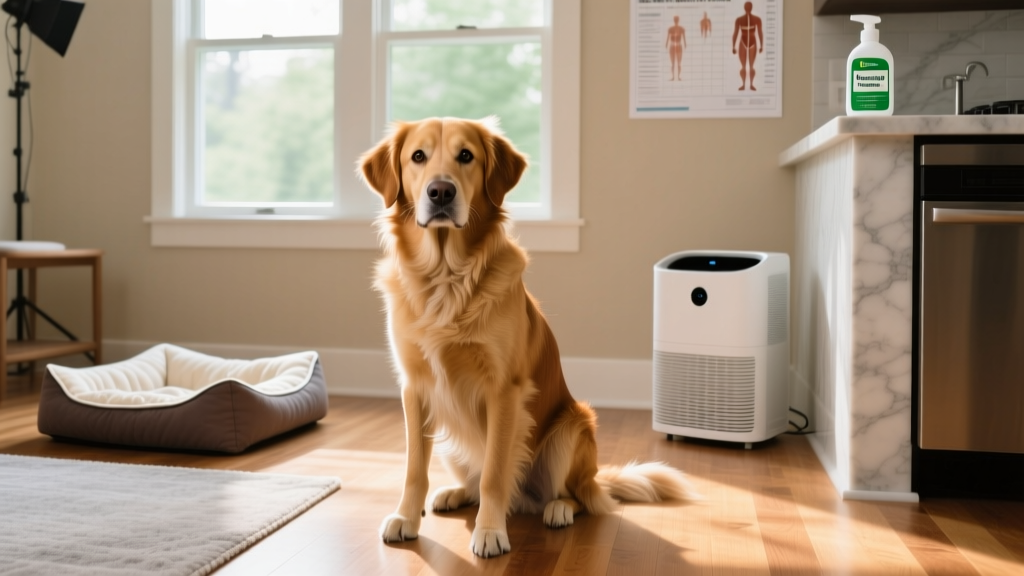
Quick Answer: To permanently get rid of dog smell in your house, you need to attack odor at the molecular level. Dog odor comes from three primary sources: sebaceous gland secretions (skin oils), microbial breakdown of those oils by bacteria and yeast on the skin and in your home's fabrics, and environmental accumulation in porous surfaces. The most effective approach combines enzymatic cleaners that break down odor-causing proteins and lipids, regular grooming to reduce oil and dander production, HEPA air filtration to capture airborne particles, and washing all soft surfaces with hot water (minimum 130°F / 54°C) weekly. Avoid masking scents with air fresheners — they don't eliminate the volatile organic compounds (VOCs) that cause odor and can irritate your dog's sensitive respiratory system.
Why Do Dogs Smell? The Biology of Canine Odor Production
The Three Source Model of Dog Odor
Canine body odor is not a single compound — it's a complex mixture of volatile organic compounds produced through biological processes. Research published in the Journal of Chromatography B identified over 200 distinct volatile compounds in canine scent profiles. Here's what's actually happening:
1. Sebaceous Gland Secretions: Dogs have sebaceous glands distributed across their entire skin surface (unlike humans, who concentrate them primarily on the scalp and face). These glands produce sebum — a mixture of triglycerides, wax esters, and squalene. Sebum serves as a waterproofing agent and skin protectant, but it's also the primary fuel source for odor-producing bacteria.
2. Microbial Metabolism: Commensal bacteria (primarily Staphylococcus species and Micrococcus) and yeast (Malassezia pachydermatis) live on your dog's skin and metabolize sebum into short-chain fatty acids. These fatty acids — particularly isovaleric acid and butyric acid — are the compounds your nose detects as "dog smell." This is the same class of compounds found in human foot odor and certain cheeses.
3. Anal Gland Secretions: Dogs possess paired anal sacs that produce a pungent secretion containing trimethylamine and various sulfur compounds. When these glands express (during defecation or stress), the scent transfers to fur, furniture, and flooring. A single expression can produce odor detectable at concentrations as low as 0.5 parts per billion.
The intensity of your dog's natural odor varies significantly based on breed physiology, diet, health status, and environment. Dogs with skin folds (Bulldogs, Shar-Peis, Pugs) trap moisture and sebum in crevices, creating ideal conditions for microbial overgrowth. Double-coated breeds (Huskies, German Shepherds, Golden Retrievers) have denser fur that holds more dander and environmental debris. Meanwhile, breeds with hair rather than fur (Poodles, Bichon Frises, Portuguese Water Dogs) produce less dander and distribute sebum differently, resulting in noticeably less odor.
The Evolutionary Purpose of Dog Scent
Why Scent Was Essential for Ancestral Canids
Before domestication, scent production was a survival mechanism — not a flaw to be eliminated. Understanding this helps explain why dogs produce odor and why certain "smelly" behaviors persist:
Territory marking: Wild canids (wolves, coyotes, African wild dogs) use scent marking to establish territorial boundaries without direct confrontation, which carries injury risk. Sebaceous secretions, urine, and anal gland fluid all carry individual chemical signatures that communicate identity, sex, reproductive status, and social rank.
Pack recognition: Wolves share a communal scent profile through close physical contact and mutual grooming. This group odor helps pack members identify each other in darkness or dense vegetation and reinforces social bonds.
Camouflage via scent-rolling: Wild canids roll in strong-smelling substances (feces, carrion, plant material) to mask their own scent from prey. This behavior persists in domestic dogs — it's why your dog may roll in something foul-smelling at the park and then bring that odor directly onto your couch.
Thermoregulation: Sebum's waterproofing properties helped ancestral dogs maintain coat insulation in cold, wet environments. The odor is essentially a byproduct of a critical survival adaptation.
Modern domestic dogs no longer need to mask their scent from prey or mark vast territories, but the physiological machinery remains fully intact. When your dog rubs against your sofa, they're engaging in scent-marking behavior that served their ancestors well for millions of years. The challenge for owners is managing this deeply ingrained biology within a modern indoor environment.
How Do Dogs Transfer Odor to Your Home?
Understanding the transfer mechanism is critical for effective odor elimination. Dog odor doesn't just float through the air — it physically embeds into your home's surfaces through several pathways:
Dander Shedding: Dogs shed approximately 15,000 to 50,000 skin cells per minute, depending on breed and coat condition. These microscopic skin flakes (dander) carry sebum and microbial byproducts and settle into carpet fibers, upholstery fabric, HVAC ductwork, and even wall paint. Dander particles range from 2.5 to 10 micrometers — small enough to remain airborne for hours and penetrate deep into porous materials.
Contact Transfer: When your dog lies on fabric surfaces, body heat (normal canine temperature is 101–102.5°F / 38.3–39.2°C) causes sebum to soften and transfer directly into fibers. Over time, this builds up a lipid layer that traps additional dander, environmental debris, and bacteria. This is why dog beds and favorite sofa spots develop persistent odor even after surface cleaning.
Saliva Deposition: Dogs groom themselves by licking, transferring saliva to their coat. Canine saliva contains enzymes, proteins, and bacteria that produce odor as they dry and decompose. When your dog then contacts your furniture or shakes near surfaces, saliva-coated dander disperses throughout the room.
Moisture and Humidity: Dogs pant and drool, increasing local humidity. In poorly ventilated spaces, this moisture promotes microbial growth on surfaces where dander has accumulated. A relative humidity above 60% significantly accelerates bacterial and fungal proliferation on organic matter like skin cells and sebum.
| Surface Material | Odor Retention Level | Cleaning Difficulty | Recommended Treatment |
|---|---|---|---|
| Carpet (synthetic) | High — fibers trap dander and sebum deep in pile | Difficult | Enzymatic cleaner + hot water extraction every 3–6 months |
| Upholstery (fabric) | High — foam padding absorbs oils | Moderate-Difficult | Removable covers washed at 130°F; enzymatic spray on foam |
| Hardwood floors | Low-Moderate — dander settles in grain and gaps | Easy | Damp mop with pH-neutral cleaner; vacuum with hard-floor setting |
| Tile / Laminate | Low — non-porous surface resists absorption | Easy | Regular sweeping + mopping; focus on grout lines |
| Leather furniture | Moderate — oils penetrate untreated leather | Moderate | Leather conditioner monthly; wipe with damp microfiber cloth weekly |
| Drywall / Painted walls | Moderate — dander adheres to flat paint; semi-gloss resists | Easy-Moderate | Wipe with TSP substitute solution; repaint with odor-blocking primer if severe |
Evidence-Based Methods to Eliminate Dog Odor
Now that you understand the biology, here's a systematic approach to eliminating dog smell from your home. Each method targets a specific link in the odor-production chain.
Step 1: Source Reduction — Grooming and Bathing
The most effective way to reduce household dog odor is to reduce the amount of odor-producing material your dog carries into your home.
Bathing frequency: Bathe your dog every 2–4 weeks using a veterinary-formulated, pH-balanced shampoo (canine skin pH is 6.2–7.4, significantly different from human skin at 5.5). Over-bathing strips protective sebum and triggers compensatory overproduction, making odor worse. Use shampoos containing chlorhexidine (2–4%) if your dog has yeast or bacterial overgrowth — these are available over-the-counter or through your veterinarian.
Brushing: Brush your dog 3–5 times per week to remove loose dander and distribute sebum evenly before it accumulates. For double-coated breeds, use an undercoat rake to reach the dense secondary coat where most dander hides. A 2020 study in Veterinary Dermatology found that regular brushing reduced airborne dander counts in homes by approximately 40–60%.
Ear cleaning: Dog ears (especially floppy-eared breeds like Cocker Spaniels, Basset Hounds, and Labrador Retrievers) harbor yeast and bacteria that produce significant odor. Clean ears weekly with a veterinary ear cleaner containing a drying agent like witch hazel or boric acid. If you notice a strong yeasty or foul smell from the ears, consult your veterinarian — this often signals otitis externa requiring prescription treatment.
Dental care: Halitosis from periodontal disease contributes significantly to ambient dog odor, especially in small breeds prone to dental issues (Yorkshire Terriers, Chihuahuas, Dachshunds). Daily tooth brushing with enzymatic dog toothpaste and annual veterinary dental cleanings reduce oral bacteria that produce volatile sulfur compounds.
Step 2: Environmental Treatment — What Actually Works
The Science-Backed Cleaning Protocol
Enzymatic cleaners: These contain protease (breaks down proteins), lipase (breaks down fats/lipids), and amylase (breaks down starches) enzymes that chemically decompose odor molecules rather than masking them. Apply to carpets, upholstery, and dog beds. Look for products specifically formulated for pet odors — general-purpose enzymatic cleaners may lack the lipase concentration needed to break down sebum. Expect to pay $12–$25 for a 32 oz bottle of quality enzymatic cleaner (brands like Nature's Miracle Advanced, Rocco & Roxie Professional Strength, or Simple Solution Extreme).
HEPA air purifiers: True HEPA filters capture 99.97% of particles down to 0.3 micrometers, effectively removing airborne dander and odor-carrying particles. For a 400 sq ft room, look for a unit with a Clean Air Delivery Rate (CADR) of at least 250. Models with activated carbon pre-filters add VOC adsorption for gaseous odor compounds. Budget $150–$400 for a quality unit (Coway AP-1512HH, Levoit Core 400S, or Winix 5500-2 are well-reviewed options). Replace HEPA filters every 6–12 months ($20–$60 per replacement).
Washing protocol: Wash all dog bedding, removable furniture covers, and blankets weekly in water heated to at least 130°F (54°C) — this temperature kills dust mites and dissolves sebum effectively. Add ½ cup of white vinegar to the rinse cycle; vinegar's acetic acid neutralizes alkaline odor compounds. Avoid fabric softeners, which coat fibers with a lipid layer that traps future odors.
Humidity control: Maintain indoor relative humidity between 30–50% using a dehumidifier in damp areas. This range inhibits microbial growth on organic debris. A 50-pint dehumidifier for a 1,000 sq ft space costs approximately $200–$300 (Frigidaire FFAD5033W1 or Midea MAD50C1ZWS).
Step 3: What to Avoid
Many popular odor-control methods are counterproductive or even harmful:
| Common Belief | What Science Actually Shows |
|---|---|
| "Plug-in air fresheners eliminate dog smell" | Air fresheners add volatile organic compounds (VOCs) like limonene and formaldehyde-releasing agents to your air. These react with ozone to produce secondary pollutants. They mask odor temporarily without removing the source and can trigger respiratory irritation in both dogs and humans. Dogs' olfactory epithelium contains approximately 300 million scent receptors (compared to 6 million in humans), making them far more sensitive to chemical irritants. |
| "Baking soda on carpets permanently removes odor" | Baking soda (sodium bicarbonate) is a mild base that can neutralize some acidic odor compounds temporarily, but it does not break down lipids or proteins — the primary components of dog odor. It also doesn't penetrate deep into carpet padding where sebum accumulates. It's a useful adjunct, not a standalone solution. |
| "Dogs should be bathed weekly to prevent smell" | Frequent bathing strips the skin's lipid barrier, causing dryness, irritation, and compensatory sebum overproduction. This often makes odor worse within 3–5 days post-bath. The American Kennel Club recommends bathing most breeds no more than every 2–4 weeks unless medically indicated. |
| "Essential oil diffusers are a safe natural deodorizer" | Many essential oils are toxic to dogs. Tea tree oil, eucalyptus, citrus oils (d-limonene), pine, and wintergreen can cause hepatotoxicity, neurological symptoms, or respiratory distress. The ASPCA Animal Poison Control receives thousands of essential oil exposure calls annually. If you suspect exposure, call (888) 426-4435 immediately (consultation fee applies). |
| "If I can't smell my dog, there's no odor problem" | Olfactory adaptation (nose blindness) causes your brain to filter out constant scents within minutes of exposure. You may genuinely not perceive your dog's odor while visitors notice it immediately. This is a well-documented neurological phenomenon — your olfactory receptor neurons downregulate their response to persistent stimuli. |
When Dog Odor Signals a Health Problem
⚠️ When to Consult Your Veterinarian
While some dog odor is normal, certain smells indicate underlying medical conditions that require professional diagnosis and treatment:
- Strong yeasty or "corn chip" smell from paws/skin: May indicate Malassezia yeast overgrowth or bacterial dermatitis. Often accompanied by redness, itching, and greasy skin.
- Foul, fishy odor from rear: Impacted or infected anal glands. If left untreated, these can abscess and rupture, requiring surgical intervention ($300–$800 for treatment; $1,500–$3,000 for surgical removal).
- Sweet or fruity breath odor: Can signal diabetic ketoacidosis — a medical emergency requiring immediate veterinary attention.
- Ammonia-like urine smell on breath or body: May indicate kidney disease or urinary tract infection.
- Sudden increase in overall body odor without diet or routine changes: Could indicate hypothyroidism, seborrhea, or other metabolic conditions that alter sebum composition.
- Ear odor with head shaking or scratching: Otitis externa — common in floppy-eared breeds and swimmers. Chronic untreated ear infections can lead to permanent hearing damage.
Always consult your veterinarian if you notice a new, persistent, or worsening odor from your dog. Home remedies should never replace professional diagnosis of underlying conditions.
Breed Variations in Odor Production
Not all dogs produce the same level of odor. Breed-specific anatomy, coat type, and genetic predispositions play a significant role:
Higher-odor breeds: Basset Hounds, Bloodhounds, Cocker Spaniels, Bulldogs, Shar-Peis, Saint Bernards, and Newfoundlands tend to produce more noticeable odor. Contributing factors include excessive skin folds that trap moisture and microbes, droopy lips (flews) that collect saliva and food debris, dense double coats that hold dander, and genetic predispositions to seborrhea and yeast overgrowth. Basset Hounds, for example, have been documented to have higher Malassezia populations on their skin compared to other breeds, contributing to their characteristic musky scent.
Lower-odor breeds: Poodles (all sizes), Bichon Frises, Basenjis, Greyhounds, Whippets, and Portuguese Water Dogs generally produce less noticeable odor. These breeds typically have hair-like coats that shed less dander, fewer skin folds, less sebaceous gland density, and in the case of sighthounds (Greyhounds, Whippets), very short coats with minimal oil production. Basenjis are notable for their fastidious self-grooming behavior, which is often compared to cat-like grooming habits.
If you're choosing a dog and odor sensitivity is a major concern, these breed tendencies are worth factoring into your decision — though individual variation within breeds is always possible, and proper care significantly reduces odor regardless of breed.
How Is Canine Odor Perception Different From Humans?
One of the most important concepts for dog owners to understand is the vast difference between canine and human olfactory systems — and how this affects your dog's experience of "clean" versus "smelly" environments.
Receptor count: Dogs possess approximately 300 million olfactory receptors (breed-dependent — Bloodhounds have roughly 300 million, while Dachshunds have about 125 million). Humans have approximately 6 million. This gives dogs a sense of smell estimated to be 10,000 to 100,000 times more sensitive than ours, depending on the specific compound.
Olfactory bulb proportion: A dog's olfactory bulb (the brain region that processes scent) is proportionally about 40 times larger than a human's relative to total brain size. This means scent isn't just a sense for dogs — it's their primary way of understanding the world, analogous to human vision.
What this means for odor management: When you use a strongly scented cleaning product, air freshener, or dryer sheet, you're creating an environment that may be overwhelming or even distressing for your dog. Products that smell "clean" to you may register as an intense chemical assault to your dog's nose. This is why force-free, positive-reinforcement-based training environments recommend using unscented or minimally scented cleaning products in areas where dogs spend significant time.
It also explains why your dog may continue to investigate or roll in a spot you've cleaned — they can still detect residual odor molecules at concentrations far below your threshold of perception. Enzymatic cleaners that break down odor molecules completely (rather than masking them) are particularly important for this reason.
Frequently Asked Questions
Why does my dog smell worse when wet?
When dog fur gets wet, water displaces the volatile organic compounds trapped in sebum and microbial byproducts, releasing them into the air at higher concentrations. Additionally, moisture activates dormant bacteria and yeast on the skin, accelerating the metabolic processes that produce odor compounds. This is why the "wet dog smell" is most intense during the drying process — evaporation carries these compounds into the air. Thoroughly drying your dog with towels and a blow dryer on a cool setting after baths or rain significantly reduces this effect.
Can my diet changes affect how much my dog smells?
Yes. Diet directly influences sebum composition and skin microbiome balance. Diets high in omega-3 fatty acids (EPA and DHA from fish oil) improve skin barrier function and can reduce excessive sebum production. Conversely, food allergies or intolerances (commonly to proteins like chicken, beef, or dairy) cause inflammatory skin responses that increase oil production and microbial overgrowth. If your dog's odor is accompanied by itching, redness, or ear infections, discuss an elimination diet trial with your veterinarian — this typically involves feeding a novel protein or hydrolyzed protein diet for 8–12 weeks.
Is it normal for my dog's breath to smell bad?
Mild "doggy breath" is normal, but strong, foul, or persistent bad breath (halitosis) is not. According to the American Veterinary Medical Association, over 80% of dogs over age 3 have some degree of periodontal disease. Plaque and tartar harbor anaerobic bacteria that produce volatile sulfur compounds (hydrogen sulfide, methyl mercaptan). Daily tooth brushing, dental chews approved by the Veterinary Oral Health Council (VOHC), and professional veterinary dental cleanings under anesthesia are the evidence-based approach to managing canine halitosis.
How often should I clean my home to keep dog odor under control?
For a single-dog household with a low-odor breed, a practical schedule is: vacuum high-traffic areas 2–3 times per week, wash dog bedding weekly at 130°F, mop hard floors weekly, and deep-clean carpets with hot water extraction every 3–6 months. For multi-dog households or high-odor breeds, increase vacuuming to daily in main living areas and consider running a HEPA air purifier continuously in rooms where dogs spend the most time. The key is consistency — odor compounds accumulate gradually, and regular maintenance is far more effective (and less expensive) than periodic deep-cleaning marathons.
Does neutering or spaying affect dog odor?
Yes, modestly. Intact male dogs produce higher levels of sebum due to androgen (testosterone) stimulation of sebaceous glands. Neutering reduces testosterone levels, which can decrease sebum production and associated odor. Intact females may produce stronger odor during estrus (heat cycles) due to hormonal fluctuations and vaginal discharge. However, the effect of spay/neuter on overall body odor is relatively minor compared to breed, diet, grooming, and health factors.
Sources and Further Reading
- Hayward, L.S. et al. — Volatile compound profiling from canine skin and coat, Journal of Chromatography B
- American Kennel Club — How Often Should I Bathe My Dog?
- American Veterinary Medical Association — Canine Dental Care
- ASPCA Animal Poison Control Center — (888) 426-4435
- Merck Veterinary Manual — Seborrhea in Dogs
Dr. Hannah Wickes
All our authors care for dogs every day — read more of their work on the authors page.


