Dog Puzzles and Canine Cognition: The Science Behind Enrichment
Explore the science behind dog puzzles: how enrichment toys stimulate canine cognition, reduce boredom behaviors, and tap into evolutionary foraging instincts.
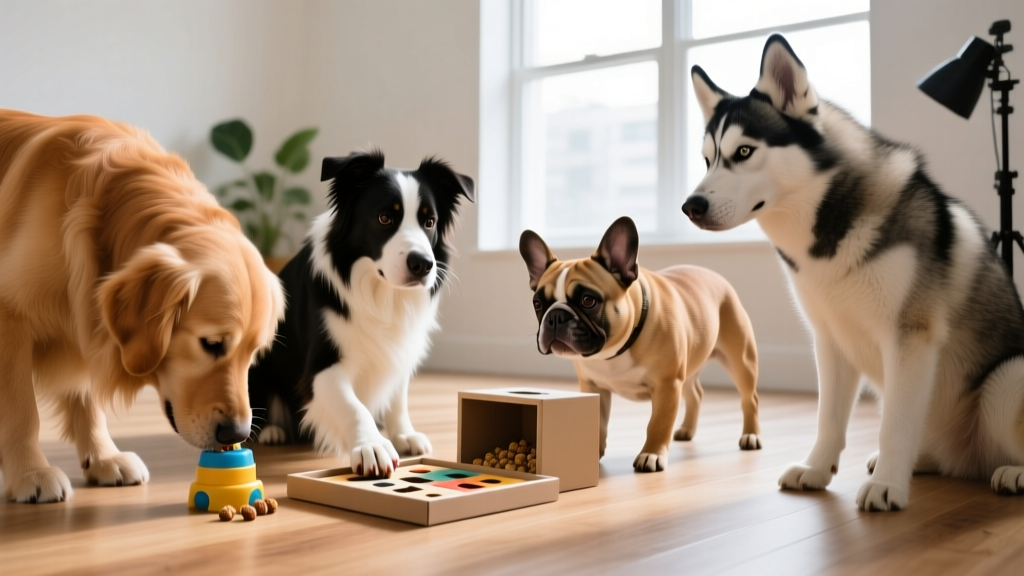
Quick Answer: Dog puzzles work because they tap into hardwired foraging and problem-solving circuits in the canine brain. Research published in Applied Animal Behaviour Science confirms that food-dispensing puzzles reduce inactivity and repetitive behaviors in dogs by 60–80% compared to bowl-fed counterparts. Puzzles satisfy a biological need — not just a preference — for cognitive stimulation rooted in ancestral scavenging behavior.
Why Do Dogs Need Puzzles? The Evolutionary Drive to Work for Food
In the wild, wolves and feral dogs spend an estimated 50–80% of their waking hours searching for, capturing, and processing food. This isn't optional — it's survival. The act of problem-solving to access calories is encoded in the canine brain through the mesolimbic dopamine system, the same reward pathway humans use.
Evolutionary Context: Free-ranging dogs and wolves engage in what ethologists call "contrafreeloading" — they will choose to work for food even when identical food is freely available nearby. This was first documented in rats by Glen Jensen in 1963 and has since been confirmed across dozens of species, including dogs. A 2014 study in Animal Cognition showed that dogs preferred to manipulate a device to earn food rewards rather than accept handouts, suggesting the act of solving the problem is itself rewarding.
When we feed a dog from a bowl in 30 seconds, we collapse 6+ hours of natural foraging behavior into a single, unstimulating event. The dog's brain still expects to work. Without an outlet, that unspent cognitive energy often manifests as destructive chewing, excessive barking, licking, pacing, or hyper-vigilance.
Dog puzzles bridge this gap. A well-designed food puzzle extends mealtime from 30 seconds to 10–25 minutes, engaging the same neural circuits that would fire during natural foraging: scent tracking, paw manipulation, spatial reasoning, and persistence.
How Do Dog Puzzles Stimulate the Canine Brain? The Neuroscience
The Dopamine Feedback Loop: When a dog manipulates a puzzle toy and receives a food reward, the nucleus accumbens — a structure deep in the brain — releases dopamine. This neurotransmitter reinforces the behavior, creating a positive feedback loop: solve → reward → motivation to solve again. Unlike passive bowl feeding, puzzles create variable reinforcement schedules (not every manipulation yields food immediately), which neuroscience shows actually produces stronger and more persistent engagement than predictable rewards.
Prefrontal Cortex Activation: Dogs possess a prefrontal cortex — smaller proportionally than humans, but functionally analogous. This region handles executive functions: planning, impulse control, and working memory. Puzzle tasks like sliding panels, lifting flaps, and rotating compartments engage this region directly. Functional MRI studies conducted at Emory University by Dr. Gregory Berns demonstrated that dogs show measurable prefrontal activation during reward-anticipation tasks, the same type of cognitive demand puzzles create.
Cortisol Reduction: Chronic boredom elevates baseline cortisol (stress hormone) levels in dogs. A 2020 study from the University of Lincoln found that dogs provided with daily cognitive enrichment showed significantly lower salivary cortisol measurements after 4 weeks compared to control dogs receiving standard care. Lower cortisol translates to calmer behavior, better immune function, and improved sleep quality.
Can Dogs Actually Solve Complex Puzzles? What Research Shows
Yes — and their problem-solving strategies reveal sophisticated cognitive abilities that many owners underestimate.
Researchers at the Family Dog Project at Eötvös Loránd University in Budapest have extensively studied canine puzzle-solving. Key findings include:
- Social referencing: When dogs encounter an unsolvable puzzle, they look to their human for help — a behavior wolves do not display. This suggests domestication has wired dogs to use humans as cognitive tools, not just food providers.
- Object permanence: Dogs understand that hidden food still exists. Puzzles that require the dog to remember which compartment holds the treat engage spatial working memory, a skill puppies develop by 8 weeks of age.
- Means-end reasoning: Dogs can learn that pulling a string, sliding a panel, or nosing a lever causes a specific outcome. This isn't simple conditioning — it requires understanding the causal relationship between action and result.
- Inhibitory control: Advanced puzzles require dogs to resist grabbing visible food and instead manipulate a mechanism. This impulse control is linked to the same brain regions involved in self-regulation and is trainable through progressive puzzle difficulty.
What Types of Dog Puzzles Match Different Cognitive Skills?
Not all puzzles target the same neural pathways. Here's how to match puzzle type to cognitive function:
| Puzzle Category | Cognitive Skill Targeted | Example Products | Price Range | Best For |
|---|---|---|---|---|
| Snuffle Mats / Forage Mats | Olfactory discrimination, scent tracking | PAW5 Wooly Snuffle Mat, AWOOF Snuffle Mat | $15–$40 | Beginners, senior dogs, brachycephalic breeds |
| Sliding Compartment Puzzles | Spatial reasoning, paw-eye coordination | Nina Ottosson Dog Brick (Level 2), Outward Hound Hide-A-Squirrel | $15–$35 | Intermediate solvers, medium-energy dogs |
| Multi-Step Sequential Puzzles | Means-end reasoning, working memory | Nina Ottosson Dog Casino (Level 3), Trixie Flip Board | $20–$45 | Advanced solvers, herding breeds, working breeds |
| Food-Dispensing Balls | Persistence, physical manipulation | KONG Classic, West Paw Toppl, Starmark Bob-A-Lot | $8–$25 | Power chewers, high-energy dogs, meal extension |
| Electronic / Interactive Puzzles | Problem-solving under variable conditions | PetSafe Treat & Train, Furbo Dog Camera (toss feature) | $80–$150 | Separation anxiety, alone-time enrichment |
Progression Tip: Start at a level where your dog succeeds 70–80% of the time within 2–3 minutes. If they succeed 100% instantly, it's too easy and won't build cognitive stamina. If they fail repeatedly for 5+ minutes and disengage, it's too hard and will cause frustration — which elevates cortisol, defeating the purpose.
Breed Variations: Which Dogs Excel at Puzzles (and Which Struggle)?
Breed genetics influence puzzle-solving style and persistence. Understanding these tendencies helps you choose appropriate challenges:
High puzzle aptitude breeds: Border Collies, Belgian Malinois, Poodles, German Shepherds, and Australian Shepherds typically solve novel puzzles rapidly due to strong problem-solving drives bred into them for herding and working tasks. These dogs often need Level 3+ puzzles within weeks of introduction and benefit from rotation to prevent habituation.
Scent-dominant breeds: Beagles, Bloodhounds, Basset Hounds, and Coonhounds excel at olfactory puzzles (snuffle mats, hidden-treat games) but may show less interest in mechanical manipulation puzzles. Their brains prioritize scent-processing over spatial reasoning.
Brachycephalic breeds: Bulldogs, Pugs, and Shih Tzus can enjoy puzzles but may struggle with physically demanding mechanisms due to respiratory limitations (brachycephalic obstructive airway syndrome, or BOAS). Choose low-exertion puzzles like snuffle mats or treat-scatter games, and monitor for overheating during sessions.
Independent thinkers: Siberian Huskies, Akitas, and Shiba Inus often solve puzzles quickly but may lose interest if the reward isn't high-value enough. Their independent breeding means they evaluate whether the effort is "worth it" — use freeze-dried liver or real meat rather than kibble for motivation.
Common Misconceptions About Dog Puzzles — Debunked
| Myth | Fact |
|---|---|
| "Puzzles will make my dog smarter over time." | Puzzles maintain cognitive function and provide stimulation, but there's no evidence they permanently raise a dog's problem-solving ceiling. They prevent decline and boredom, not genius-level leaps. |
| "My dog is too old for puzzles." | Senior dogs benefit enormously. A 2019 study in Scientific Reports found that lifelong cognitive enrichment delayed onset of canine cognitive dysfunction (dog dementia) symptoms by an average of 1.5–2 years. Start with easy puzzles and high-value treats. |
| "Puzzles can replace physical exercise." | They complement it. Mental fatigue from 15 minutes of puzzle work can equal 30–45 minutes of physical exercise in terms of caloric expenditure and satisfaction — but dogs still need cardiovascular activity, joint mobility work, and outdoor sensory exposure. |
| "If my dog destroys a puzzle, it means they're frustrated." | Not necessarily. Destruction often signals the puzzle is too easy and the dog has learned the fastest route to food is breaking it open. Upgrade to a more durable material (rubber over plastic) or increase difficulty level. |
| "Only food-motivated dogs can use puzzles." | Any dog can be food-motivated if you find the right reward. Try freeze-dried salmon, small cheese cubes, or a smear of xylitol-free peanut butter. For truly low-food-drive dogs, use puzzle toys that dispense access to a favorite toy instead. |
Practical Guide: Building a Daily Puzzle Routine
Meal Replacement Strategy: Replace one of your dog's two daily meals with puzzle-dispensed food. A 30-lb (13.6-kg) dog eating 1.5 cups of kibble daily can have 0.75 cups loaded across 2–3 different puzzle types at dinner. This extends feeding from 30 seconds to 15–20 minutes.
Rotation Schedule: Dogs habituate to the same puzzle within 5–7 days of repeated use. Maintain a rotation of at least 4–6 different puzzle types and swap them every 2–3 days. Store unused puzzles out of sight to maintain novelty.
Difficulty Progression Framework:
- Week 1–2: Open/easy puzzles (treat visible, minimal manipulation). Goal: build confidence and engagement.
- Week 3–4: Single-step puzzles (one slide, one flip to reveal treat). Goal: teach cause-and-effect.
- Week 5–8: Multi-step puzzles (must slide panel AND remove peg). Goal: working memory and sequencing.
- Week 9+: Combination challenges (two puzzles presented simultaneously, or puzzle hidden in another location). Goal: sustained cognitive stamina.
Supervision Requirements: Always supervise your dog with new puzzles until you confirm they won't ingest non-food parts. Plastic puzzle pieces smaller than 1 inch (2.5 cm) are a choking and intestinal obstruction risk. For aggressive chewers, stick to solid rubber options like the KONG Classic or West Paw Toppl — both rated for power chewers and priced between $8–$22 depending on size.
When Puzzle Behavior Signals a Problem
While puzzle engagement is overwhelmingly positive, certain patterns warrant attention:
Obsessive puzzle fixation: If your dog cannot disengage from a puzzle even when empty, paces between puzzle locations, or shows agitation when puzzles are put away, this may indicate compulsive disorder — a condition analogous to OCD in humans. The Merck Veterinary Manual notes that compulsive behaviors often emerge from frustration in high-drive dogs. Consult a veterinary behaviorist if you observe this pattern.
Sudden disinterest in previously enjoyed puzzles: A dog who abruptly stops engaging with puzzles they formerly loved may be experiencing dental pain (tooth fracture, oral tumor), cognitive decline (in dogs over 8 years), or depression secondary to environmental changes. Schedule a veterinary exam to rule out medical causes before assuming behavioral disinterest.
Aggressive resource guarding around puzzles: If your dog growls, snaps, or stiffens when you approach them during puzzle time, this is resource guarding — a treatable behavioral issue. Do not punish this behavior. Instead, work with a certified force-free trainer using counter-conditioning and desensitization protocols. The ASPCA offers guidance on identifying and managing resource guarding safely.
Frequently Asked Questions
How long should a dog spend on a puzzle each day?
Aim for 15–30 minutes of total puzzle time daily, split across 2–3 sessions. This aligns with research showing optimal cognitive benefit without frustration. Puppies under 6 months should start with 5-minute sessions to avoid overstimulation.
Can I make DIY dog puzzles at home?
Yes. A muffin tin with tennis balls over each cup (treats hidden underneath) costs under $5 to assemble and provides an effective Level 1 puzzle. You can also freeze kibble in a KONG with low-sodium chicken broth for a 20–30 minute challenge. Always ensure homemade puzzles have no small detachable parts your dog could swallow.
Are electronic dog puzzles worth the investment?
For dogs with separation anxiety or owners who work 8+ hour days, devices like the PetSafe Treat & Train ($100–$130) or Furbo Dog Camera ($130–$170) provide timed or remote-activated enrichment that reduces destructive alone-time behaviors by an estimated 40–60% based on owner surveys. For dogs without anxiety issues, manual puzzles at $10–$40 each offer equivalent cognitive benefit at lower cost.
Is it normal for my dog to give up on a puzzle quickly?
Yes — especially at first. Dogs unfamiliar with puzzles haven't yet learned that persistence pays off. Start with puzzles where the reward is immediately visible and accessible, then gradually increase difficulty over 2–4 weeks. If your dog consistently disengages after 30 seconds across multiple puzzle types, try higher-value treats or consult a positive-reinforcement trainer for shaping techniques.
How is puzzle-solving in dogs different from human problem-solving?
Dogs rely heavily on associative learning and trial-and-error rather than abstract reasoning. A human might look at a puzzle and mentally simulate a solution before acting; a dog will physically test actions and remember which ones produced rewards. This isn't inferior cognition — it's a different cognitive strategy optimized for a species that evolved to exploit varied and unpredictable food sources through rapid behavioral experimentation.
Beth Carrasco
All our authors care for dogs every day — read more of their work on the authors page.


