Your Dog on Vacation: The Science of How Travel Affects...
The science behind how your dog on vacation processes new environments, travel stress, and routine disruption — plus evidence-based tips for a calmer trip.
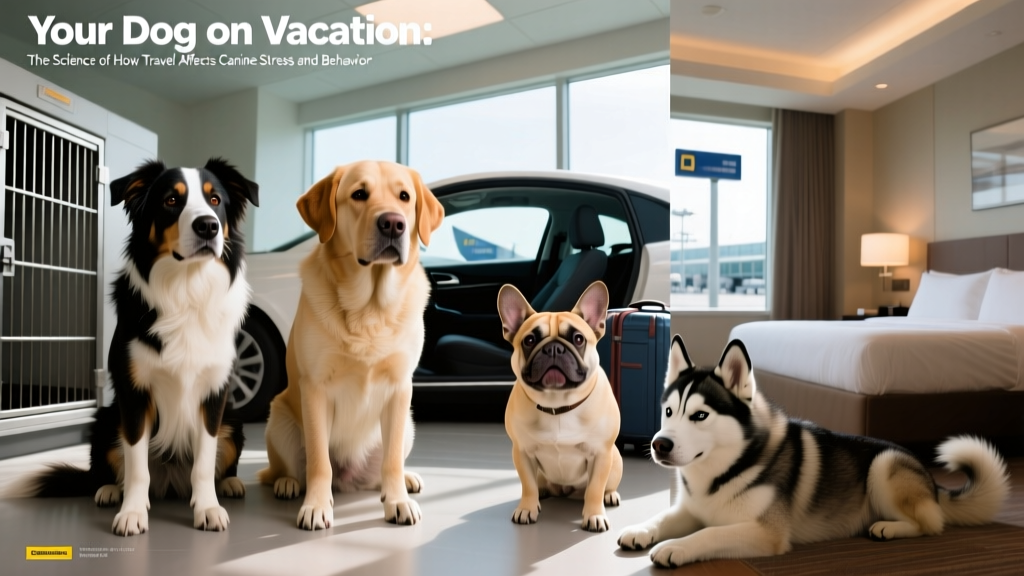
Quick Answer: How Does Vacation Affect Your Dog?
Taking your dog on vacation triggers a measurable stress response involving cortisol elevation, heightened sympathetic nervous system activation, and disrupted circadian rhythms. Research published in the Journal of Veterinary Behavior shows that dogs in novel environments exhibit increased panting, pacing, and vocalization for the first 24–72 hours as their brains process unfamiliar sensory input. However, dogs with secure attachment to their owners and prior positive exposure to travel adapt significantly faster — often within 12–18 hours. The key variables are predictability, familiar scent markers, and maintained feeding/walking schedules.
Every year, millions of dog owners pack up their vehicles and head out with their dogs in tow — or wrestle with the guilt of leaving them behind. Whether you're booking a pet-friendly cabin in the Smokies or flying cross-country to visit family, understanding what happens inside your dog's body and brain during travel transforms guesswork into informed decision-making. This isn't about whether dogs "like" vacations. It's about the neurobiology, endocrinology, and evolutionary wiring that determine how your individual dog experiences a change in environment.
The Physiology of Travel Stress in Dogs
What Happens Inside Your Dog's Body During Travel
When you load your dog into a car or carrier, their hypothalamic-pituitary-adrenal (HPA) axis activates. Here's the cascade:
- Hypothalamus detects environmental change (motion, confinement, novel sounds) and releases corticotropin-releasing hormone (CRH).
- Pituitary gland responds by secreting adrenocorticotropic hormone (ACTH) into the bloodstream.
- Adrenal glands release cortisol and epinephrine, elevating heart rate, blood glucose, and alertness.
- Behavioral output manifests as panting, drooling, trembling, whining, or — in some dogs — shutdown and immobility.
A 2020 study in Physiology & Behavior measured salivary cortisol in dogs during car transport and found peak levels at approximately 30–45 minutes into the journey, with return to baseline taking 60–90 minutes after arrival for habituated dogs and up to 4 hours for dogs with limited travel exposure.
The autonomic nervous system plays a parallel role. Your dog's sympathetic branch (fight-or-flight) dominates during novel or perceived-threatening situations — the rumble of an airplane engine, the vibration of a highway, the unfamiliar smell of a hotel corridor. The parasympathetic branch (rest-and-digest) can only re-engage once the dog's brain registers safety cues: your calm presence, familiar bedding, and predictable routine.
| Marker | Home Baseline | First 24h on Vacation | Day 3–5 on Vacation |
|---|---|---|---|
| Resting heart rate | 60–100 bpm (breed-dependent) | 90–140 bpm | 65–110 bpm |
| Salivary cortisol | 0.1–0.3 µg/dL | 0.4–0.8 µg/dL | 0.15–0.35 µg/dL |
| Sleep duration | 12–14 hours/day | 8–10 hours/day (fragmented) | 11–13 hours/day |
| Appetite | Normal | Reduced 20–40% | Near-normal |
| GI symptoms | None | Soft stool, occasional vomiting | Resolved (usually) |
Note: Values are generalized ranges compiled from veterinary behavioral literature. Individual dogs vary significantly based on breed, age, health status, and prior travel conditioning. If your dog shows persistent vomiting, diarrhea lasting more than 48 hours, or refusal to eat for more than 24 hours, consult your veterinarian.
The Evolutionary Basis: Why Novel Environments Trigger Vigilance
From Wolf Ancestors to Hotel Rooms
Canis lupus — the gray wolf — survived by maintaining acute environmental awareness. Wolves that failed to detect novel threats in unfamiliar territory did not pass on their genes. This vigilance system is hardwired into your dog's amygdala and brainstem reticular formation, structures that have changed remarkably little across 15,000–30,000 years of domestication.
When your dog arrives at a vacation rental and immediately begins systematic sniffing of every corner, baseboard, and door threshold, they are performing an ancestral security sweep. Wolves entering a new area within their territory (or at territory edges) engage in the same mapping behavior — cataloging scent signatures of other predators, prey, and pack members. Your dog is building a cognitive map that their brain needs to classify the space as "safe" or "requires monitoring."
Domestication has softened the intensity of this response but has not eliminated it. A 2018 review in Frontiers in Psychology confirmed that domestic dogs retain neophobic tendencies (wariness of novel stimuli) that vary by breed and individual temperament but remain a species-level trait inherited from wild ancestors.
How Dogs Process New Sensory Environments on Vacation
Your dog's vacation experience is dominated by olfactory processing — not visual, as it is for humans. Understanding this sensory hierarchy explains many behaviors that owners misinterpret.
Olfactory Overload
A dog's olfactory epithelium contains approximately 300 million receptor cells (compared to roughly 6 million in humans), and the olfactory bulb occupies proportionally 40 times more brain space relative to total brain volume. When your dog arrives at a beach house, mountain cabin, or urban hotel, they are hit with a wall of chemical information: previous animal occupants, cleaning products, local wildlife, neighboring pets, food residues, and microbial signatures unique to that geography.
This processing is metabolically expensive. Research from Johns Hopkins University demonstrated that intense olfactory work increases cerebral blood flow and glucose consumption in the canine olfactory cortex. This is one reason your dog may seem unusually tired after the first day of vacation — their brain has been running a marathon of scent analysis.
Auditory Mapping
Dogs can hear frequencies up to 45–65 kHz (humans top out around 20 kHz) and can localize sounds by detecting time differences as small as 12.5 microseconds between ears. A vacation environment introduces unfamiliar soundscapes: ocean waves, mountain wind, urban traffic patterns, neighboring guests, HVAC systems with different acoustic signatures. Your dog's startle reflex may fire more frequently until their auditory cortex habituates to the new baseline — typically 36–72 hours for most dogs.
Spatial and Proprioceptive Adjustment
Dogs navigate familiar spaces using a combination of visual landmarks, scent trails, and proprioceptive memory (body-position awareness). A new floor surface — slippery tile instead of home carpeting, or sand instead of grass — requires recalibration. This is why some dogs appear hesitant or clumsy in new environments. Their cerebellum is literally updating motor programs for surfaces it hasn't encountered before.
Myths vs. Science: Common Misconceptions About Dogs and Travel
| Myth | What the Science Shows |
|---|---|
| "My dog loves new places — they're always excited when we arrive." | What looks like excitement is often arousal driven by sympathetic nervous system activation. Tail wagging, jumping, and rapid exploration can indicate heightened alertness rather than positive emotion. True relaxation is characterized by slow blinking, lateral ear position, loose body posture, and willingness to lie down and sleep. |
| "If I bring their favorite toy, they'll feel right at home anywhere." | Familiar objects provide scent anchors that modestly reduce cortisol, but a single toy cannot override the cumulative novelty of an entirely new environment. Research suggests that multiple familiar scent sources (bedding, worn clothing, home-washed blankets) are significantly more effective than a single item. |
| "Dogs that sleep a lot on vacation are perfectly relaxed." | Excessive sleep (beyond the normal 12–14 hours) can indicate behavioral shutdown — a freeze response where the dog disengages rather than processes the environment. Watch for accompanying signs: tucked tail, flattened ears, avoidance of eye contact, and reluctance to eat treats. |
| "My dog is fine on vacation because they don't show obvious stress signs." | Subtle stress signals — lip licking, yawning, whale eye (showing whites of eyes), paw lifting, and increased shedding — are frequently missed by owners. A 2019 study found that 73% of dog owners could not accurately identify more than 3 of 10 common canine stress indicators. |
| "All dogs should be brought on vacation — leaving them behind is worse." | For dogs with high neophobia, noise sensitivity, or medical conditions, a stable home environment with a trusted sitter produces measurably lower cortisol than forced travel. Individual temperament assessment, not owner guilt, should drive this decision. |
Breed Variations in Travel Adaptation
Not all dogs process environmental change identically. Breed-level genetic predispositions influence how quickly a dog habituates to new settings, though individual variation within breeds is substantial.
| Breed Category | Examples | Typical Vacation Response | Adaptation Timeline |
|---|---|---|---|
| Companion/Toy breeds | Cavalier King Charles, Bichon Frisé, Havanese | Strong owner-attachment; adapt quickly IF owner is present. May struggle with boarding/daycare at destination. | 12–24 hours |
| Working/Guardian breeds | German Shepherd, Rottweiler, Great Pyrenees | Heightened territorial vigilance in new spaces. May patrol, bark at unfamiliar sounds, and show disrupted sleep for longer periods. | 48–96 hours |
| Sporting/Retrieving breeds | Labrador, Golden Retriever, Brittany | Generally high adaptability. Novel environments often trigger exploratory enthusiasm rather than anxiety. Watch for overstimulation. | 6–18 hours |
| Herding breeds | Border Collie, Australian Shepherd, Shetland Sheepdog | Sound sensitivity and environmental monitoring can make busy vacation settings overwhelming. May benefit from quiet, structured environments. | 24–72 hours |
| Sighthounds | Greyhound, Whippet, Saluki | Often adaptable to new sleeping locations but sensitive to temperature changes and surface textures. May refuse to walk on unfamiliar flooring. | 12–36 hours |
| Brachycephalic breeds | French Bulldog, Pug, Bulldog | Travel stress compounds respiratory challenges. Heat, humidity, and exertion at vacation destinations require careful monitoring. AKC notes that BOAS dogs need climate-controlled environments. | Varies; climate-dependent |
Practical Takeaways: Reducing Vacation Stress for Your Dog
Evidence-Based Strategies That Actually Work
1. Pre-trip scent preparation (start 5–7 days before departure)
Place a clean t-shirt you've worn (unwashed, 1–2 days of body scent) into your dog's crate or bed. Pack this item and deploy it at your destination as an olfactory anchor. Research on attachment-related scent recognition confirms that familiar human odor reduces canine cortisol by 15–25% in novel environments.
2. Maintain feeding schedule within ±30 minutes of home routine
Your dog's circadian rhythm is entrained to feeding time as much as light cycles. Shifting meals by hours disrupts ghrelin and melatonin production, compounding environmental stress. If crossing time zones, adjust by no more than 1 hour per day.
3. Create a "safe zone" at your destination before introducing the full space
Set up one room or corner with familiar bedding, water, and a long-lasting chew (e.g., a Kong Classic filled with frozen peanut butter — $12–$16 at most retailers). Let your dog decompress in this zone for 30–60 minutes before allowing full exploration. This mirrors the den-seeking behavior observed in stressed canids.
4. Front-load exercise before travel, not after arrival
A 30–45 minute aerobic session (running, fetch, swimming) 2–3 hours before departure depletes glycogen stores and promotes sleep during transit. Avoid vigorous exercise immediately upon arrival — your dog needs to cognitively process the new environment, and physical exhaustion can impair this necessary orientation phase.
5. Use Adaptil (DAP) pheromone products for measurable support
Synthetic dog-appeasing pheromone (DAP) diffusers and collars mimic the intermammary pheromones produced by nursing mothers. A controlled study in the Journal of Veterinary Behavior found that DAP reduced stress-associated behaviors in novel environments by approximately 30%. The Adaptil Travel Spray ($18–$24) can be applied to car crates and hotel bedding 15 minutes before your dog enters the space.
6. Limit novel stimuli on Day 1
Resist the urge to take your dog to a busy tourist area, dog beach, or crowded restaurant patio on the first day. Allow 24–48 hours of low-stimulation acclimation (quiet walks, time in the rental, rest) before introducing high-arousal activities. This follows the principle of systematic desensitization used in veterinary behavior modification protocols.
When Vacation Behavior Signals a Problem
Some stress responses during travel are normal adaptation. Others indicate that your dog has exceeded their coping threshold and needs intervention — either immediate management or professional behavioral support after returning home.
Red Flags: When to Contact a Veterinarian During Your Trip
- Complete food refusal lasting more than 24 hours (especially in small breeds under 20 lb / 9 kg — risk of hypoglycemia)
- Vomiting or diarrhea persisting beyond 48 hours — travel stress can unmask underlying GI conditions like inflammatory bowel disease
- Excessive panting at rest in cool environments (below 75°F / 24°C) — may indicate pain, heat illness, or cardiac distress
- Inability to settle or sleep for more than 18 hours after arrival — sustained sympathetic arousal can suppress immune function
- New-onset aggression toward people or other animals that is not part of your dog's established behavioral pattern
- Compulsive behaviors: repetitive pacing, flank sucking, tail chasing that lasts more than 10–15 minutes without interruption
- House-soiling in a previously reliably house-trained dog — can signal urinary tract infection triggered by stress, not just behavioral regression
If you observe any of these signs, contact a local veterinarian or veterinary telehealth service. Many pet-friendly vacation areas have emergency veterinary clinics — research the nearest one before you travel.
Is It Normal for My Dog to Act Differently on Vacation?
Yes — behavioral changes during the first 1–3 days of a trip are expected and documented across canine behavioral research. Common normal adjustments include:
- Increased clinginess or following behavior: Your dog is using you as a secure base (attachment theory applies to dogs, as confirmed by research at Oregon State University's Human-Animal Interaction lab).
- Reluctance to eat the first meal at a new location: Appetite suppression from sympathetic nervous system activation typically resolves within 12–18 hours.
- Excessive sniffing and patrol-walking: The cognitive mapping process described earlier. Allow it — preventing this exploration prolongs the habituation period.
- Restlessness at night: Dogs in new environments show lighter, more fragmented sleep with more frequent arousals, similar to the "first-night effect" documented in human sleep research.
- Increased vocalization: Whining, barking at unfamiliar sounds, or howling are communication behaviors as your dog processes and responds to novel auditory input.
What differentiates normal adaptation from problematic stress is the trajectory. If behaviors decrease in intensity over 48–72 hours, your dog is habituating normally. If they intensify or remain unchanged after 5 days, the environment may be fundamentally unsuitable for your dog's temperament, or an underlying medical issue may be present.
How Is This Different From Humans?
Humans and dogs both experience stress in novel environments, but the mechanisms and timelines differ in important ways:
- Cognitive framing: Humans can rationalize travel as temporary and positive ("we'll be home Sunday, this is fun"). Dogs lack this temporal abstraction — they cannot anticipate return to baseline, which means novel environments carry a fundamentally different psychological weight.
- Sensory dominance: Humans primarily assess safety visually. Dogs assess safety olfactorily. A hotel room that looks clean and pleasant to you may smell overwhelmingly of chemical cleaners, previous pets, and strangers to your dog.
- Control perception: Stress research consistently shows that perceived control over one's environment is a primary buffer against cortisol elevation. Humans on vacation choose activities, read menus, and navigate with maps. Dogs are almost entirely dependent on owner decisions, making owner emotional state a critical variable. If you're stressed about the trip, your dog detects this through changes in your scent (cortisol and adrenaline are volatile organic compounds detectable by canine olfaction) and body language.
- Habituation speed: Humans typically adjust to new sleeping environments within 1 night (the first-night effect). Dogs require 2–4 nights on average, with some individuals needing 5–7 days for full physiological baseline recovery.
Frequently Asked Questions
Why does my dog pant so much in the car on the way to our vacation?
Panting in the absence of heat is a primary canine stress signal driven by sympathetic nervous system activation. The car represents confinement, unpredictable motion, and (for many dogs) a predictor of unpleasant destinations like the vet. Counter-conditioning — pairing car rides with high-value treats and short, positive trips — can reduce this response over 6–8 weeks of consistent training. Never use sedation without veterinary guidance, as some over-the-counter options (like diphenhydramine at 1–2 mg/lb) can paradoxically increase agitation in certain dogs.
Can dogs get motion sickness the way humans do?
Yes. Canine motion sickness stems from vestibular system conflict — the inner ear detects motion while the eyes (especially in a crate or backseat) may perceive stillness. Puppies are more susceptible because their vestibular-cerebellar connections are still maturing; many dogs outgrow motion sickness by 12–18 months. For persistent cases, your veterinarian may prescribe maropitant (Cerenia), an NK-1 receptor antagonist effective for both motion sickness and anxiety-related nausea in dogs. The typical dose is 8 mg/kg given 2 hours before travel.
Is it better to board my dog or bring them on vacation?
This depends on three variables: your dog's temperament (neophobia level), the trip characteristics (duration, travel mode, destination environment), and the quality of boarding available. Dogs with low neophobia and positive travel history generally do well on trips of 3+ days. Dogs with high anxiety, noise sensitivity, or medical conditions often fare better with a trusted in-home pet sitter who maintains their routine. A 2021 study found that dogs in familiar home environments with a sitter showed 40% less cortisol elevation than dogs in kennel-style boarding facilities.
What does it mean when my dog won't eat treats on vacation?
Refusal of normally high-value treats is one of the most reliable indicators that a dog is above their stress threshold. The neurobiology is straightforward: when the sympathetic nervous system dominates, digestive processes are suppressed and food motivation drops. This is not stubbornness — it's physiology. Reduce environmental stimulation, return to your safe zone, and try again in 2–3 hours. If treat refusal persists beyond 24 hours alongside other stress signs, consider whether the environment is appropriate for your dog.
How do I help my dog sleep in a new place?
Replicate as many home sleep cues as possible: same bedding, same white noise or fan sound, same pre-bed walk duration, and same sleeping proximity to you. Melatonin supplementation (3 mg for dogs 26–100 lb / 12–45 kg, given 30 minutes before bedtime) can support sleep onset in novel environments, but consult your veterinarian before use, especially if your dog takes other medications. Avoid introducing new sleeping arrangements on vacation — this is not the time to transition your dog from your bed to a floor mat.
Can I give my dog something to calm them during travel?
Several options exist, ranging from supplements to prescription medications. L-theanine (found in products like Virbac Anxitane, $25–$35) at 2–4 mg/kg can promote relaxation without sedation. Trazodone (prescription, typically 2–5 mg/kg) is commonly used for travel anxiety under veterinary supervision. CBD products remain controversial — while some studies show modest anxiolytic effects, the FDA has not approved any CBD product for veterinary use, and product quality varies enormously. Always consult your veterinarian before administering any calming supplement or medication, as interactions with existing conditions and medications must be evaluated.
Sources & Further Reading
- Dreschel, N.A. (2010). "The behavior and physiology of stress in dogs." Applied Animal Behaviour Science.
- Gácsi, M. et al. (2013). "Companion dogs are able to use human ostensive cues in a novel environment." Current Biology.
- Merck Veterinary Manual — Behavior of Dogs
- AVMA Animal Health and Welfare Resources
- Siniscalchi, M. et al. (2019). "Stress in dogs: evaluation of behavioral and physiological indicators." Journal of Veterinary Behavior.
Disclaimer: This article provides educational information based on current canine behavioral science. It does not replace professional veterinary advice. If your dog exhibits concerning behavioral or physical symptoms during travel, consult your veterinarian or a board-certified veterinary behaviorist (DACVB).
Anouk Beaumont
All our authors care for dogs every day — read more of their work on the authors page.


