The Science of Dog Nicknames: How Canines Process Multiple Names
Explore the science behind dog nicknames and how canines process multiple names, nicknames, and verbal cues through auditory cognition research.
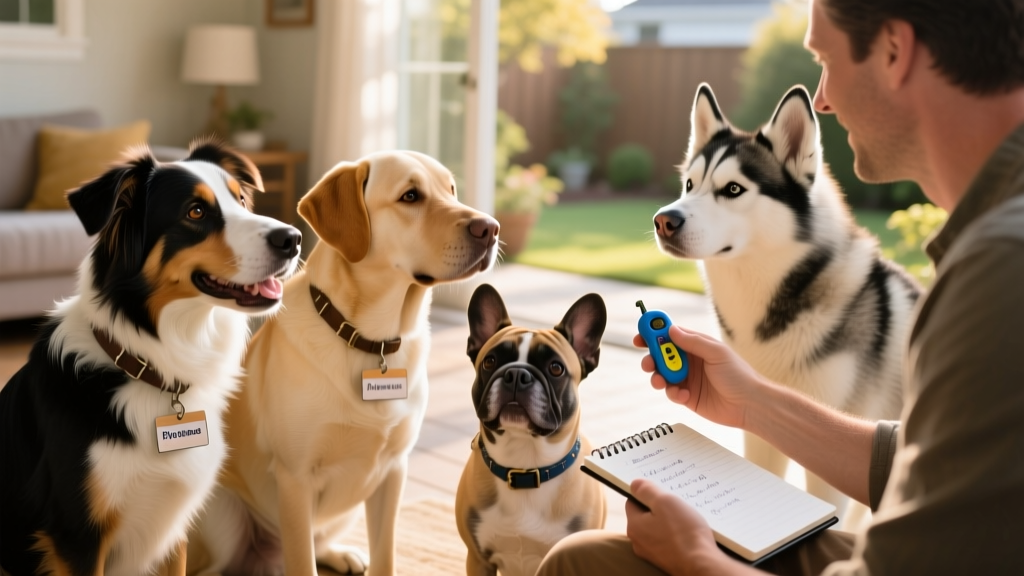
Can dogs understand multiple names and nicknames? Yes. Dogs process verbal labels through associative learning and acoustic pattern recognition, not language comprehension. Research from Behavioural Processes and cognitive studies at institutions like the Family Dog Project at Eötvös Loránd University show that dogs can reliably respond to 2–5 distinct verbal labels (formal name, nicknames, diminutives) provided each has been consistently paired with positive outcomes. The key is phonetic consistency and reinforcement history, not the word itself.
If you call your Labrador "Cooper" on walks, "Coop" at dinner, and "Big Boy" when he's curled up on the couch, you might wonder whether he actually knows you're talking about him — or just responding to your tone. The answer lies in canine auditory cognition, a field that has expanded dramatically since the early 2010s. Dogs don't understand names the way humans do, but they absolutely learn to recognize specific sound patterns as meaningful cues. Here's what the science tells us about how your dog processes the parade of pet names you've given him.
How Dogs Process Spoken Names: The Neurological Mechanism
Dogs process human speech using a combination of acoustic pattern recognition and prosodic analysis — meaning they attend to both the specific sound sequence and the emotional tone of delivery.
A 2016 study published in Science by Andics et al., using functional MRI (fMRI) on awake, unrestrained dogs, demonstrated that canine brains process speech in a manner structurally similar to humans: the left hemisphere processes word identity (the phonetic content), while the right auditory region processes intonation (prosody). Dogs showed activation in neural reward centers only when praising words were delivered in a praising tone — suggesting they integrate both what is said and how it is said.
For name recognition specifically, this means your dog is tracking:
- Phonetic envelope: The first syllable or two of the sound pattern ("Coo-" in Cooper or Coop)
- Vowel quality and consonant onset: Hard consonants (K, T, B, D) are more salient to canine hearing than soft fricatives
- Tonal contour: The pitch pattern and emotional valence you attach to the sound
- Contextual predictability: Whether the sound reliably precedes something meaningful (food, leash, attention)
The physiological pathway is straightforward: sound waves enter the ear canal, vibrate the tympanic membrane, and are transduced by hair cells in the cochlea into neural signals. These travel via the auditory nerve to the brainstem, then to the auditory cortex. Dogs have approximately twice as many auditory muscle fibers controlling ear orientation as humans, allowing them to physically "aim" their ears toward sound sources with remarkable precision — up to 18 independent muscles per ear, depending on breed (floppy-eared breeds have fewer functional muscles).
What makes dog nicknames work is that the brain doesn't require an exact match to a stored "name template." Instead, canine auditory processing uses what researchers call prototype-based categorization. If "Cooper," "Coop," and "Coopie" all share the initial /kuː/ phoneme cluster and are consistently followed by positive outcomes, the dog's brain categorizes them as functionally equivalent signals.
Evolutionary Basis: Why Dogs Are Wired to Learn Human Labels
Ancestral context: The domestic dog (Canis lupus familiaris) diverged from a shared ancestor with gray wolves approximately 20,000–40,000 years ago. During domestication, selection pressure favored individuals who could attend to human communicative cues — including gaze direction, pointing gestures, and vocalizations.
Wolves can learn to respond to human-given names with training, but they do not spontaneously attend to human speech the way dogs do. A 2013 comparative study by Gácsi et al. showed that even extensively socialized wolves did not spontaneously follow human pointing gestures or attend to human vocal cues with the same readiness as 8-week-old puppies. This suggests that sensitivity to human vocal labels — including names and nicknames — is partly an evolved trait selected during domestication, not solely a product of individual training.
In wolf packs, individuals do not use "names" for each other. Social recognition is primarily olfactory and visual. However, wolves do recognize individual vocalizations — pack members can distinguish the howl of a specific individual from others. This vocal individual-recognition capacity likely provided the neurocognitive substrate that, under domestication, was co-opted for processing human speech sounds, including personal labels like names.
The domestication hypothesis, supported by the fMRI research by Andics et al., suggests that dogs evolved a neural sensitivity to human speech that makes them predisposed to learn verbal labels. This is why even dogs with minimal formal training often learn their names within days of adoption, while teaching a parrot or horse to respond to a name typically requires more structured repetition.
How Many Dog Nicknames Can a Dog Actually Learn?
The short answer: more than you'd expect, but with diminishing returns.
Studies on canine vocabulary have established some remarkable benchmarks. The Border Collie named Chaser, documented by psychologist John Pilley, learned to retrieve over 1,022 objects by name — each with a unique verbal label. A more recent study from the Family Dog Project (2023) identified "gifted" dogs across multiple breeds that learned 12 or more toy names and retained them for months.
However, these are exceptional cases involving intensive daily training. For typical pet dogs, the practical limits are more modest:
| Label Category | Typical Capacity | Learning Timeframe | Key Requirement |
|---|---|---|---|
| Primary name | 1 (always) | 3–14 days | Consistent use + positive pairing |
| Nicknames/diminutives | 2–5 | 1–3 weeks each | Shared phonetic root with primary name |
| Unrelated verbal cues | 15–50 (average pet dog) | Varies widely | Distinct phonetic patterns, reinforcement |
| "Gifted" word learners | 100+ object labels | Months–years of daily training | Rare cognitive phenotype, breed-influenced |
For nicknames specifically, the phonetic overlap matters enormously. "Max" and "Maxie" share enough acoustic structure that most dogs will generalize easily. "Maximilian" and "Buddy" share nothing, and your dog will process them as two entirely separate cues — which is fine, but requires independent learning for each.
Breed Variations in Name and Nickname Recognition
Not all dogs are equally attuned to verbal labels. Breed selection history has shaped auditory attentiveness in measurable ways:
Highly responsive breeds (bred to work closely with human handlers at a distance):
- Border Collies, Australian Shepherds, and other herding breeds — selected for responsiveness to verbal and whistled commands across large fields
- German Shepherds, Belgian Malinois — selected for rapid acquisition of complex verbal cue repertoires
- Golden Retrievers, Labrador Retrievers — selected for biddability and handler-focus in hunting contexts
- Poodles (all sizes) — historically performing dogs with high trainability scores
Moderately responsive breeds (bred for independent decision-making):
- Siberian Huskies, Alaskan Malamutes — sled dogs that must follow commands but also make independent route decisions; often selectively "deaf" to cues they find uninteresting
- Terriers (Jack Russell, Airedale, Scottish Terrier) — bred to work independently underground; tend to respond better to high-pitched, excited vocalizations
- Shiba Inu, Akita — spitz-type breeds with strong independent streaks; will learn names but may not always comply visibly
Lower apparent responsiveness (not necessarily lower intelligence — different selection priorities):
- Sighthounds (Greyhounds, Whippets, Afghan Hounds) — bred for visual pursuit; auditory processing may be secondary to visual stimuli, making them appear to "ignore" their names when something is moving in their field of vision
- Scent hounds (Beagles, Bloodhounds, Coonhounds) — bred to follow olfactory trails with single-minded focus; when "on scent," auditory processing is neurologically suppressed as attention resources are allocated to olfaction
- Livestock guardian breeds (Great Pyrenees, Anatolian Shepherd) — bred to make independent protection decisions; less selection pressure for rapid response to human vocal cues
According to AKC training guidance, even breeds with lower apparent verbal responsiveness will learn their primary name reliably — the difference is in speed of acquisition and consistency of behavioral response, not whether the dog actually "knows" the label.
Common Misconceptions About Dog Nicknames — Debunked
| Myth | Fact (Supported by Research) |
|---|---|
| "Dogs only learn one name and get confused by nicknames." | Dogs easily learn 2–5 nickname variants, especially when they share phonetic elements with the primary name. Confusion arises only when nicknames are used inconsistently during the initial learning phase (first 1–3 weeks). |
| "Short names are always better because dogs can't process long words." | Dogs attend primarily to the first 1–2 syllables. A long name like "Bartholomew" works fine if you consistently use "Bart" as the functional cue. The total word length is irrelevant if the onset is clear. |
| "My dog knows his name means 'who he is.'" | Dogs do not have a self-concept tied to a name the way humans do. A name is a conditioned cue meaning roughly "orient toward the speaker because something relevant may follow." This is functional, not identity-based. |
| "Using a nickname in a scolding tone teaches the dog that nickname means 'bad.'" | Partially true. Dogs do associate tonal valence with specific sound patterns. If "Coopie" is only ever used in an angry tone, the dog will associate that specific variant with negative outcomes. This is classical conditioning, not semantic understanding. |
| "Changing a rescue dog's name is confusing and cruel." | Most rescue dogs learn a new name within 2–4 weeks with consistent positive pairing. The old name has no sentimental value to the dog. If the old name was associated with abuse, changing it may actually reduce anxiety. |
Practical Implications: How to Use Dog Nicknames Effectively
Teaching a Primary Name (Foundation)
- Week 1: Use only the full primary name. Say it once, clearly, in a bright tone. When your dog orients toward you (even a glance), immediately mark with "yes!" or a clicker and deliver a high-value treat (real chicken, cheese, freeze-dried liver — not kibble for this exercise).
- Frequency: 5–10 repetitions per session, 3–4 sessions per day. Total: 15–40 pairings daily.
- Timeline: Most dogs show reliable name recognition (head turn within 1–2 seconds) by day 5–14.
- Cost of treats: Budget roughly $15–$25/month for high-value training treats during the initial name-learning phase.
Adding Nicknames (After Primary Name Is Solid)
- Wait until the primary name is 90%+ reliable (dog responds in 9 out of 10 trials across different environments).
- Introduce one nickname at a time. Use it exactly as you used the primary name — bright tone, single utterance, immediate positive reinforcement for orientation.
- Phonetic overlap helps: If the primary name is "Penelope," try "Penny" or "Nell" before trying something unrelated like "Bear."
- Mix usage after learning: Once a nickname is established, alternate between the primary name and nickname randomly to maintain both associations.
Nicknames to Avoid
- Anything that sounds like a common command: "Kit" (too close to "sit"), "Ray" (too close to "stay"), "Bo" (too close to "no")
- Nicknames that rhyme with other household members' names or other pets' names — this creates acoustic ambiguity
- Nicknames used exclusively in negative contexts (scolding, vet visits, bath time) — these will develop negative conditioned emotional responses
When Name Recognition Problems Signal a Bigger Issue
A dog who suddenly stops responding to their name — or any familiar nickname — when they previously responded reliably may be signaling a medical or behavioral problem:
Medical causes to rule out with your veterinarian:
- Progressive hearing loss: Common in senior dogs (typically onset after age 8–10). Often affects high-frequency sounds first, meaning your dog may still respond to low-pitched nicknames but not higher-pitched ones. A Brainstem Auditory Evoked Response (BAER) test ($150–$300 at most veterinary neurology clinics) can objectively measure hearing thresholds.
- Ear infections (otitis externa/media): Painful ears may cause a dog to avoid turning their head toward sound. Look for head shaking, ear scratching, or odor.
- Cognitive dysfunction syndrome (CDS): The canine equivalent of dementia. Affects approximately 28% of dogs aged 11–12 and 68% of dogs aged 15–16 (data from the Merck Veterinary Manual). Signs include apparent "forgetting" of name, disorientation, altered sleep-wake cycles.
- Pain or systemic illness: A dog in pain may deprioritize social responsiveness. If name-response drops alongside reduced activity, appetite changes, or altered posture, a veterinary exam is warranted.
Behavioral causes:
- Learned irrelevance: If a name has been repeated dozens of times without consequence (calling your dog's name 15 times while they ignore you in the dog park), the dog learns the sound predicts nothing. This is the most common cause of apparent "name deafness" in healthy dogs and is entirely reversible with re-conditioning.
- Competing stimuli: Prey drive, social drive, or fear can override name recognition. This is normal canine neurobiology — the dog's attentional resources are fully allocated to the salient stimulus, and auditory processing is temporarily suppressed. This is not disobedience; it is neurologically driven selective attention.
When to consult your veterinarian: If your dog's name responsiveness drops suddenly (over days to weeks) without an obvious environmental explanation, or if the decline is accompanied by other behavioral changes (disorientation, sleep changes, house-training regression), schedule a veterinary exam. Sudden behavioral changes in dogs are medical until proven otherwise.
How Dog Name Processing Differs From Humans
Understanding this difference is key to using nicknames wisely:
Humans process their own name through a complex self-referential network involving the medial prefrontal cortex. Hearing our name activates not just auditory recognition but identity, autobiographical memory, and social self-concept. This is why the "cocktail party effect" works — we can pick our name out of a noisy room because it is tagged with deep self-relevance.
Dogs process their name as a discriminative stimulus — a signal that predicts outcomes. There is no evidence that dogs experience names as identity markers. When your dog responds to "Cooper," he is not thinking "that's me" — he is responding to a well-conditioned cue that means "pay attention, something relevant is about to happen."
This is actually liberating for nickname use. Because dogs don't have ego-investment in a specific label, they don't experience "identity confusion" when you call them seven different things. As long as each variant has been positively conditioned, they respond to all of them with equal readiness.
Frequently Asked Questions
Why do dogs respond to some nicknames but not others?
This typically comes down to reinforcement history. The nicknames your dog responds to are the ones that have been consistently followed by something meaningful — attention, food, play, or leash walks. Nicknames used rarely or only in neutral contexts (like when you're talking about your dog to someone else) develop weaker associative strength and produce less reliable responses.
Can dogs tell the difference between their name and similar-sounding words?
Yes, but with limits. Dogs distinguish sounds based on consonant onsets and vowel quality. "Cooper" and "Kibble" are easily distinguished (different initial consonant clusters and vowel patterns). "Cooper" and "Cougar" may cause momentary confusion because they share the /kuː/ onset. In practice, dogs use context to disambiguate — if you're standing by the food bowl holding a bag, "Kibble" wins even if it sounds somewhat like their name.
Is it normal for my dog to respond to completely unrelated nicknames?
Yes, entirely normal. If you've consistently said "Big Boy" in a happy tone before giving treats or belly rubs, your dog has learned that sound pattern as a positive predictor. Dogs don't care about semantic meaning — "Big Boy," "Muffin," and "Sir Reginald" are all equally learnable as labels, provided each has been positively conditioned.
What does it mean when my dog ignores their nickname at the park but responds at home?
This is context-dependent attentional competition, not selective hearing in the human sense. At home, environmental stimuli are low and your voice is the most salient sound. At the park, there are competing smells, sounds, and sights that are neurologically more compelling than a verbal cue. This is normal canine neurobiology. Training a reliable name response in high-distraction environments requires systematic proofing — gradually increasing distraction levels while maintaining high reinforcement rates ($0.10–$0.25 per successful response in high-value treats).
How is dog name recognition different from how humans recognize their own names?
Humans process names through self-referential cognitive networks tied to identity and autobiographical memory. Dogs process names as conditioned discriminative stimuli — learned signals that predict outcomes. Dogs have no evidence of self-concept tied to a specific label. This means dogs are more flexible with multiple names but also more dependent on consistent reinforcement to maintain responsiveness.
Can I rename a rescue dog without causing stress?
Yes. Most rescue dogs adapt to a new name within 2–4 weeks. Use the new name exclusively during this period, pair it with high-value reinforcement (real meat treats, not kibble), and avoid using the old name. If the previous name was associated with negative experiences, changing it may actually reduce anxiety. There is no scientific evidence that dogs experience grief or confusion over losing a previous name.
Beth Carrasco
All our authors care for dogs every day — read more of their work on the authors page.


