Dog Neutering Aftercare: The Science of Recovery & Healing
Evidence-based dog neutering aftercare guide covering wound healing physiology, pain management, activity restriction timelines, and common recovery misconceptions.
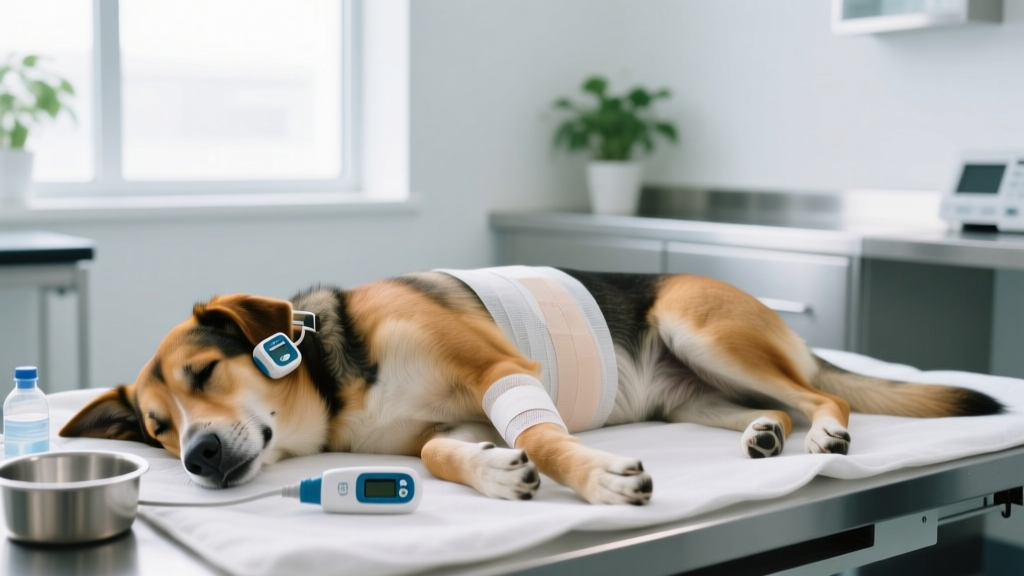
Quick Answer: What Does Dog Neutering Aftercare Involve?
Dog neutering aftercare requires 10–14 days of restricted activity, incision monitoring twice daily for redness, swelling, or discharge, pain medication as prescribed (typically NSAIDs like carprofen for 3–7 days), and preventing licking via an Elizabethan collar or recovery suit. Most dogs resume normal activity by day 14, but full internal tissue remodeling takes 6–8 weeks. Contact your veterinarian immediately if you see wound opening, pus, persistent lethargy beyond 48 hours, or refusal to eat for more than 24 hours post-surgery.
The Physiology of Post-Neutering Wound Healing
Understanding dog neutering aftercare starts with understanding what your dog's body is actually doing at the cellular level after surgery. Whether your dog underwent an orchiectomy (male neuter — removal of testicles) or an ovariohysterectomy (female spay — removal of ovaries and uterus), the body initiates a predictable cascade of healing phases that dictate your aftercare timeline.
The Four Phases of Surgical Wound Healing
Phase 1 — Hemostasis (0–4 hours post-op): Blood vessels constrict and platelets aggregate at the incision site. Fibrin clots form a temporary scaffold. This is why your vet uses absorbable sutures beneath the skin — they provide structural support while this fragile clot matrix establishes.
Phase 2 — Inflammation (hours 4–72): Neutrophils and macrophages flood the wound site, clearing bacteria and dead tissue. This phase produces the mild swelling and warmth you may notice around the incision. According to the Merck Veterinary Manual, this inflammatory response peaks around 24–48 hours and is essential — suppressing it entirely with excessive anti-inflammatory medication can actually delay healing.
Phase 3 — Proliferation (days 3–21): Fibroblasts produce collagen, new blood vessels form (angiogenesis), and the wound gains tensile strength. At day 7, the incision has roughly 20% of its final strength. By day 14, it reaches approximately 50% — which is why vets typically clear dogs for normal activity around this mark, even though full strength won't return for weeks.
Phase 4 — Remodeling (weeks 3–52): Collagen fibers reorganize along lines of mechanical stress. The scar tissue matures from pink and raised to flat and pale. This phase is why even after your dog is "cleared," rough play or trauma to the area can still cause complications weeks later.
For male dogs, the scrotal incision is relatively small (typically 1–2 cm per side), and healing is straightforward because the area has excellent blood supply. For female dogs, the spay involves an abdominal incision through multiple tissue layers — skin, subcutaneous fat, the linea alba (connective tissue along the midline), and the peritoneum. This multi-layer closure means more internal sutures, more inflammatory response, and a genuinely longer recovery period. Studies published in the Journal of Small Animal Practice have documented that spay incisions carry a 5–8% complication rate compared to 1–3% for male neuters, primarily due to the deeper tissue involvement.
Evolutionary Context: Why Recovery Behavior Looks the Way It Does
Ancestral Wound-Care Instincts
Wolves and wild canids lack access to surgical suites and antibiotics, so natural selection favored individuals that exhibited specific post-injury behaviors. Licking wounds serves an evolutionary purpose — canine saliva contains lysozyme, lactoferrin, and peroxidase enzymes with documented bactericidal properties against common skin pathogens like Staphylococcus and Streptococcus. In the wild, this licking behavior reduces infection risk from contaminated wounds.
However, this ancestral adaptation becomes counterproductive after sterile surgical closure. The mechanical action of a dog's tongue — which generates 2–5 Newtons of force per lick — can disrupt sutures, introduce oral bacteria (Pasteurella, Capnocytophaga) into a clean wound, and create moisture that promotes bacterial overgrowth. Research from the University of Illinois College of Veterinary Medicine has shown that dogs allowed to lick surgical incisions have 2–3 times higher rates of wound dehiscence (opening) compared to those with effective barrier protection.
Similarly, the instinct to hide pain and appear normal after surgery is a holdover from pack dynamics where injured individuals risked being targeted or left behind. This is why your dog may seem "fine" even when experiencing significant discomfort — and why relying on behavioral cues alone to assess pain is unreliable.
Practical Dog Neutering Aftercare: A Day-by-Day Framework
Rather than vague "take it easy" advice, here is a structured aftercare protocol based on wound healing physiology and clinical recovery data. Always follow your specific veterinarian's instructions, as individual protocols vary based on surgical technique, your dog's size, and any comorbidities.
| Timeframe | Activity Level | Incision Care | Medication | What to Expect |
|---|---|---|---|---|
| Day 0 (Surgery Day) | Strict crate rest; leash-only for bathroom breaks | Do not touch; check for active bleeding every 2 hours | Administer first dose of prescribed pain medication within 2 hours of arriving home | Grogginess, mild disorientation, possible nausea; offer small amount of water, withhold food for 2–4 hours |
| Days 1–3 | 5-minute leash walks for bathroom only; no stairs, no jumping | Visual inspection 2× daily; photograph incision for baseline comparison | Continue NSAID (e.g., carprofen 2 mg/kg every 12 hours) and any prescribed opioids (e.g., trazodone 2–5 mg/kg for anxiety/pain) | Peak inflammation; mild swelling normal; appetite should return by 24 hours |
| Days 4–7 | 10–15 minute leash walks; still no off-leash activity, no dog parks | Continue 2× daily checks; swelling should decrease; incision edges should appear sealed | Taper NSAID per vet instructions; discontinue opioids if prescribed | Energy returning — this is the highest-risk period for owner-caused complications because the dog "seems fine" |
| Days 8–10 | 20-minute leash walks; controlled, calm activity only | Incision should look clean, dry, with minimal redness; sutures (if external) intact | Most dogs are off all medication by this point | Behavioral normalcy; continued E-collar use is still critical |
| Days 11–14 | Gradual return to normal walks; still avoid rough play and high-impact activity | Suture removal appointment (if non-absorbable external sutures used); E-collar may be removed after vet clearance | None typically needed | Functional recovery complete; internal remodeling continues for weeks |
Barrier Protection: E-Collars vs. Recovery Suits
The single most important aftercare tool is a physical barrier preventing your dog from reaching the incision. You have two primary options:
Elizabethan Collar (E-Collar/Cone)
Pros:
- Highest effectiveness — prevents access to any body area
- Low cost ($8–$25 for standard plastic; $20–$45 for soft/flexible versions)
- Allows visual monitoring of incision without removal
- Does not trap heat or moisture against wound
Recovery Suit (Onesie)
Cons:
- Can trap moisture against incision if not changed daily — increases infection risk
- Dogs with flexible spines (dachshunds, corgis) can sometimes reach incision through fabric
- Requires removal for bathroom breaks — creates licking opportunity windows
- Higher cost ($25–$55 for quality surgical suits)
- Must be washed and dried between uses — buy 2 for rotation
A 2023 study in the Journal of the American Veterinary Medical Association found that rigid E-collars prevented wound interference in 94% of cases, while inflatable collar alternatives failed in 31% of dogs — particularly brachycephalic breeds (bulldogs, pugs) whose body proportions allow them to reach abdominal incisions despite the collar. For female spays, a rigid E-collar sized to extend 2–3 inches beyond the nose is the most reliable option.
Pain Management: What the Science Says About Canine Post-Surgical Pain
One of the most persistent misconceptions in dog neutering aftercare is that dogs don't experience significant pain after this procedure, or that they "tolerate it well." Modern veterinary pain science tells a different story.
Dogs possess the same nociceptive pathways as humans — A-delta and C nerve fibers transmit pain signals from surgical sites through the spinal cord to the somatosensory cortex. The difference is not in pain experience but in pain expression. Canine pain behaviors are subtle: decreased activity, altered posture (hunched back, tucked abdomen), reduced appetite, panting at rest, and avoidance of being touched near the surgical site.
The American Veterinary Medical Association (AVMA) recommends multimodal analgesia for spay/neuter procedures, combining:
- NSAIDs (carprofen, meloxicam, or robenacoxib): Reduce prostaglandin-mediated inflammation at the surgical site. Typical cost: $1–$3 per dose for a 50 lb / 23 kg dog.
- Opioids (buprenorphine, tramadol, or hydromorphone — administered pre- and intra-operatively by your vet): Bind to mu-opioid receptors in the central nervous system to block pain signal processing.
- Local anesthetics (bupivacaine or lidocaine injected at the incision site during surgery): Provide 6–12 hours of localized pain blockade.
- Adjunctive medications (gabapentin 10–20 mg/kg every 8 hours, or trazodone 2–5 mg/kg): Address neuropathic pain components and anxiety-related pain amplification.
⚠️ Never give human pain medications to your dog. Ibuprofen (Advil/Motrin) is nephrotoxic to dogs at doses as low as 50 mg/kg and can cause gastric ulceration and acute kidney failure. Acetaminophen (Tylenol) causes hepatic necrosis and methemoglobinemia. If you are unsure about a medication, contact your veterinarian or the ASPCA Animal Poison Control Center at (888) 426-4435 (24/7, consultation fee applies).
Common Dog Neutering Aftercare Misconceptions Debunked
| Myth | Evidence-Based Fact |
|---|---|
| "My dog isn't crying, so they're not in pain." | Dogs evolved to mask pain as a survival strategy. Vocalization is a late-stage pain indicator. Use the Colorado State University Canine Chronic Pain Scale or the Glasgow Composite Measure Pain Scale to assess pain through posture, facial expression, and behavior — not vocalization alone. |
| "A little licking is fine — it helps clean the wound." | While saliva has mild antibacterial properties, the mechanical force of licking disrupts sutures and introduces oral bacteria. A 2021 study found that even brief, intermittent licking increased surgical site infection rates by 40% compared to dogs with consistent barrier protection. |
| "Male neutering is so minor, they don't need real aftercare." | While male neuters carry lower complication rates, scrotal hematomas (blood accumulation in the scrotal sac) occur in 2–5% of cases — especially in larger breeds and dogs that are too active too soon. Activity restriction is still essential for 7–10 days. |
| "I should clean the incision with hydrogen peroxide or alcohol." | Hydrogen peroxide (H₂O₂) is cytotoxic to fibroblasts — the cells responsible for building new tissue. Alcohol destroys newly formed epithelial cells. Unless your vet specifically prescribes a cleaning solution (typically dilute chlorhexidine 0.05%), leave the incision alone. A dry, clean incision heals fastest. |
| "My dog can go back to normal after the E-collar comes off." | E-collar removal (typically day 10–14) does not mean full healing. Internal tissue remodeling continues for 6–8 weeks. While normal walks and play are fine, avoid high-impact activities (agility, dock diving, rough wrestling with other dogs) until your vet confirms full healing at a follow-up exam. |
Breed and Size Variations in Recovery
Not all dogs recover at the same pace. Body size, breed conformation, and age significantly influence the aftercare timeline and complication risk.
Giant breeds (Great Danes, Mastiffs, Saint Bernards — over 100 lb / 45 kg): These dogs face higher scrotal hematoma risk after neutering due to larger vascular structures and greater gravitational pull on the scrotal tissue. Many veterinarians recommend a scrotal support wrap or compression garment for the first 48–72 hours. Recovery may extend to 14–21 days for full activity clearance due to the additional mechanical stress their body weight places on healing tissues.
Brachycephalic breeds (Bulldogs, Pugs, Boston Terriers): Their shortened airways mean anesthesia recovery takes longer — expect 24–48 hours of grogginess versus 12–24 hours for mesocephalic breeds. Standard E-collars may not provide adequate protection due to their barrel-chested conformation; custom-fitted recovery suits or extra-large cones are often necessary.
Sighthounds (Greyhounds, Whippets, Italian Greyhounds): These breeds have documented differences in drug metabolism. Their low body fat percentage means they process certain anesthetic agents (particularly thiobarbiturates) more slowly. They also tend to have lower baseline body temperatures during recovery, so supplemental warming during the first 12 hours post-op is often recommended. Pain sensitivity appears higher in sighthounds based on clinical pain scoring data, so multimodal analgesia is especially important.
Senior dogs (over 7–8 years): Healing is slower due to decreased cellular turnover and reduced collagen synthesis rates. Expect a 14–21 day recovery timeline rather than 10–14 days. Pre-surgical blood work (CBC, chemistry panel, typically $120–$250) is essential to screen for kidney or liver dysfunction that would affect pain medication metabolism.
When to Call the Vet: Red Flags vs. Normal Recovery Signs
🚨 Contact Your Veterinarian Immediately If You Observe:
- Incision opening (dehiscence): Any visible gap in the wound edges, exposed tissue, or protruding suture material
- Purulent discharge: Thick yellow, green, or brown fluid — distinguish from normal serous drainage (thin, clear, or pale pink fluid in small amounts during the first 48 hours)
- Foul odor from incision: A healthy healing wound should not smell; odor indicates bacterial colonization
- Persistent vomiting: More than 2 episodes in 24 hours (could indicate pain medication reaction or underlying illness)
- No appetite for 24+ hours: Post-anesthetic nausea should resolve within 12–18 hours
- Difficulty breathing or pale gums: These are emergency signs requiring immediate veterinary attention — could indicate internal bleeding, pulmonary complication, or adverse drug reaction
- Swelling that increases after day 3: Swelling should peak at 48 hours and steadily decrease; increasing swelling after day 3 suggests seroma, hematoma, or infection
- Straining to urinate or no urination for 24 hours: Particularly relevant for male dogs — could indicate urethral swelling or obstruction
✅ Normal Recovery Signs (No Action Needed):
- Mild swelling and bruising around the incision for the first 3–5 days
- Slight pink tinge on bandage or bedding from serous drainage in the first 24–48 hours
- Reduced appetite on the first day, returning to normal by day 2
- Sleeping more than usual for 2–3 days
- Mild stiffness or reluctance to jump for 5–7 days
- Small, firm lump under the incision at 2–4 weeks — this is normal scar tissue (suture reaction granuloma) and typically resolves on its own within 4–8 weeks
Frequently Asked Questions About Dog Neutering Aftercare
Why do dogs try to lick their incision after neutering?
This is an evolutionarily conserved grooming behavior. In wild canids, licking wounds removes debris and applies antibacterial saliva enzymes. The behavior is mediated by the somatosensory cortex — the itching and tingling sensations produced during the inflammation phase of healing stimulate a grooming reflex. Unfortunately, this adaptive behavior becomes maladaptive in the context of a surgically closed wound, which is why barrier protection is non-negotiable during the first 10–14 days.
Can dogs feel pain differently based on breed?
Yes, partially. While all dogs possess the same nociceptive anatomy, breed-level differences in pain expression and drug metabolism are documented. Sighthounds show higher pain sensitivity scores in clinical studies, likely related to differences in opioid receptor density and drug pharmacokinetics. Herding breeds (Australian Shepherds, Collies) may carry the MDR1 gene mutation, which affects how certain drugs cross the blood-brain barrier — your vet should screen for this before prescribing certain pain medications. These differences are physiological, not just behavioral.
How do dogs process pain signals after surgery compared to humans?
The peripheral pain pathway is nearly identical: tissue damage activates nociceptors, signals travel via A-delta fibers (sharp, acute pain) and C fibers (dull, aching pain) through the dorsal horn of the spinal cord to the thalamus and somatosensory cortex. The key difference lies in the descending modulatory system — dogs have a more robust endogenous opioid system that can partially suppress pain signals during high-stress situations (a survival adaptation). This means your dog may appear comfortable at the clinic but experience increased pain once home in a relaxed state, when the stress-mediated analgesia wears off. This is why consistent medication scheduling at home matters more than how your dog "looks" at pickup.
What does it mean when my dog seems totally fine the day after surgery?
This typically means one of two things: either your dog received effective multimodal pain management (ideal scenario) or your dog is exhibiting stoic pain-masking behavior (common and potentially misleading). Dogs descended from pack animals where visible weakness attracted predation or social displacement. Use objective measures — the Colorado State University Canine Acute Pain Scale scores posture, vocalization, mental status, and movement to give a more accurate pain assessment than owner impression alone.
Is it normal for the scrotum to swell after male neutering?
Mild scrotal swelling is normal for 3–5 days post-op and is caused by post-surgical inflammation and minor bleeding into the empty scrotal sac. However, significant swelling that creates a taut, grapefruit-sized scrotum (in large breeds) may indicate a scrotal hematoma — a collection of blood that sometimes requires drainage. This complication occurs in approximately 2–5% of male neuters, with higher rates in dogs over 50 lb / 23 kg and those that are excessively active in the first 72 hours. Applying a cold compress (wrapped in a towel, 10 minutes on, 20 minutes off) during the first 24 hours can reduce hematoma risk.
How is post-surgical healing in dogs different from humans?
Dogs heal skin wounds approximately 30–40% faster than humans due to higher fibroblast proliferation rates and greater growth factor concentration in their wound fluid. However, dogs also have a higher risk of self-inflicted wound trauma (licking, scratching) and cannot understand activity restriction instructions. Additionally, canine skin has a thinner epidermis (5–7 cell layers vs. 10–20 in humans) but a thicker dermis relative to body size, meaning external closures heal quickly while deeper tissue layers may still be vulnerable. This is why the 10–14 day clearance timeline exists — it accounts for the slower-heeling deep tissue layers even when the skin surface appears fully closed.
What related behaviors should I watch for during recovery?
Monitor for signs that extend beyond the incision itself. Resource guarding of the recovery area can develop if your dog associates their crate or bed with pain and vulnerability — use positive reinforcement (treats, calm praise) to maintain positive associations. Separation anxiety may increase because your dog is confined and dependent on you during recovery. Leash reactivity can temporarily worsen due to frustration from restricted movement — keep walks short and in low-stimulation environments. These behavioral shifts are typically temporary and resolve within 1–2 weeks after returning to normal activity, but persistent changes beyond 3 weeks warrant a veterinary behaviorist consultation.
Key Takeaways for Dog Neutering Aftercare
- Barrier protection for the full 10–14 days is non-negotiable — even one unsupervised licking session can undo days of healing.
- Administer pain medication on schedule, not "as needed" — maintaining consistent blood levels of analgesics prevents pain from escalating and reduces total medication needed.
- Days 4–7 are the highest-risk window for owner-caused complications because your dog appears recovered but internal healing is only 20–30% complete.
- Photograph the incision daily — comparing images helps you detect subtle changes (increasing redness, spreading bruising) that day-to-day observation misses.
- Budget for the full recovery: E-collar ($8–$45), pain medication ($20–$60), follow-up visit ($50–$120), and potential complication treatment ($200–$800 for wound infection or dehiscence repair).
- Consult your veterinarian before making any changes to the prescribed aftercare protocol — individual dogs may require modified timelines based on breed, age, and surgical specifics.
Priya Sutaria
All our authors care for dogs every day — read more of their work on the authors page.


