Dog Losing Hair in Patches and Scabs: Causes, Science & Treatment
Is your dog losing hair in patches and scabs? Learn the science behind focal alopecia, common causes from mites to allergies, and when to see your vet.
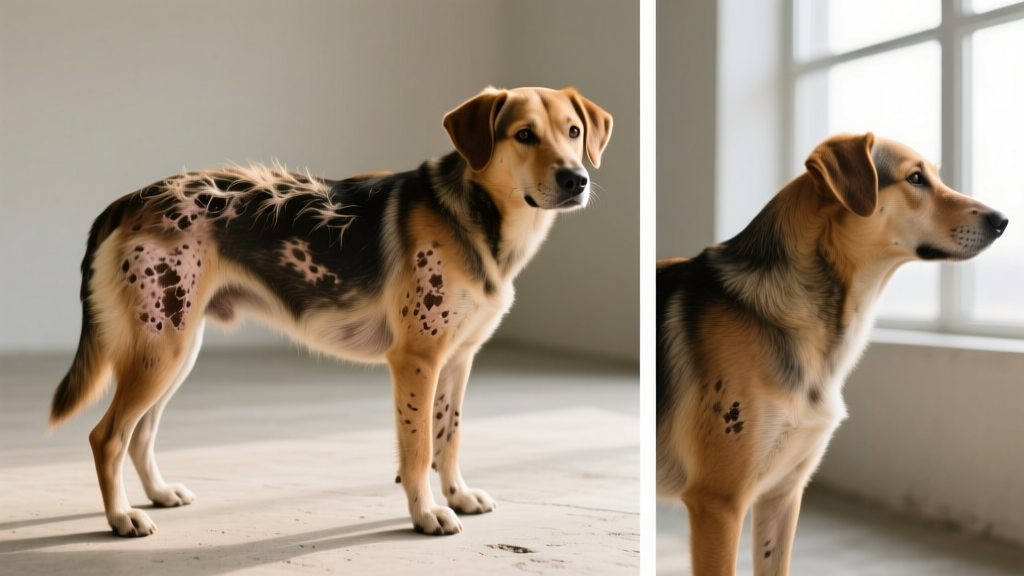
Quick Answer: Why Is My Dog Losing Hair in Patches with Scabs?
A dog losing hair in patches and scabs is most commonly caused by one of four conditions: sarcoptic mange (mites), bacterial folliculitis, ringworm (dermatophytosis), or allergic dermatitis with secondary self-trauma. The scabs form when your dog scratches, licks, or bites inflamed skin — creating open lesions that crust over as they heal. Patchy hair loss (focal alopecia) occurs because the underlying inflammation damages hair follicles, pushing them into the resting phase (telogen) prematurely.
This is not a wait-and-see situation. Several of these causes are contagious to other pets and, in some cases, to humans. Schedule a veterinary dermatology exam within 48–72 hours of noticing the patches.
Watching your dog develop bald, scabby spots is alarming. The good news is that most causes of focal alopecia with crusting are diagnosable and treatable — but the treatment varies enormously depending on the root cause. A $15 antifungal shampoo won't help a dog with demodectic mange, and a medicated steroid cream will make ringworm worse. Understanding the science behind why these patches form is the first step toward getting your dog relief.
The Physiology of Patchy Hair Loss and Scab Formation
How Hair Follicles Fail
Each canine hair follicle cycles through three phases: anagen (active growth), catagen (transition), and telogen (resting/shedding). In healthy skin, roughly 85–90% of follicles are in anagen at any given time. When inflammation, infection, or parasitic invasion disrupts the follicle's microenvironment, cytokines like TNF-alpha and IL-1β signal follicles to prematurely enter catagen and telogen. The result: a defined patch where hair stops growing and sheds out.
Scabs (crusts, in veterinary dermatology) form through a separate but overlapping mechanism. When the epidermal barrier is breached — by mite burrows, bacterial enzymes, fungal hyphae, or the dog's own scratching — the body's inflammatory cascade activates. Serum, blood cells, and fibrin leak to the surface and dry into the yellowish-brown crusts you see. The color and texture of the scab can actually help your vet narrow the diagnosis:
| Scab Appearance | Likely Mechanism | Common Causes |
|---|---|---|
| Yellow/honey-colored, moist | Serous exudate from bacterial infection | Bacterial folliculitis, impetigo, hot spots |
| Dark brown/black, dry, adherent | Dried blood from deep scratching | Sarcoptic mange, flea allergy dermatitis |
| Gray/white, flaky, circular borders | Fungal hyphae disrupting keratin | Ringworm (Microsporum canis) |
| Red-rimmed with central crust | Follicular pustule that ruptured | Demodectic mange with secondary pyoderma |
| Silvery scale with hair stubs | Autoimmune attack on follicular basement membrane | Pemphigus foliaceus (rare, autoimmune) |
The Five Most Common Causes (and the Science Behind Each)
1. Sarcoptic Mange (Sarcoptes scabiei Mites)
Sarcoptic mange mites burrow into the upper epidermis to lay eggs. The female mite tunnels at roughly 2–3 mm per day, creating microscopic channels that trigger an intense Type IV hypersensitivity reaction. This is why the itching is so disproportionate to the visible damage — a single mite can provoke a whole-body immune response. The mites prefer sparsely haired areas: ear margins, elbows, hocks, and the ventral abdomen. Patches here with thick, yellow-gray crusts are a hallmark.
Diagnostic detail: Skin scrapings only detect mites in about 30–50% of cases because the mite burden is often very low (5–15 mites total on the entire dog). Your vet may run a Sarcoptes ELISA blood test or simply treat empirically based on the "pinnal-pedal reflex" — scratching the ear flap triggers a hind-leg scratch response in roughly 80% of affected dogs.
2. Demodectic Mange (Demodex canis)
Unlike sarcoptic mange, Demodex mites are commensal organisms — they live in the hair follicles of nearly all dogs without causing problems. Focal demodicosis (1–4 small patches, typically on the face or forelegs) develops when a localized immune imbalance allows the mite population to explode within individual follicles. The mites physically crowd the follicle, and their waste products trigger folliculitis. The resulting patches are often well-circumscribed, oval, and not particularly itchy — a key differentiator from sarcoptic mange.
According to the Merck Veterinary Manual, approximately 90% of focal demodicosis cases in puppies resolve spontaneously within 6–8 weeks as the immune system matures. Generalized demodicosis (more than 4 patches or entire body regions) is a more serious condition often linked to underlying immunosuppression and requires aggressive veterinary treatment.
3. Bacterial Folliculitis and Pyoderma
Staphylococcus pseudintermedius is a normal resident of canine skin. When the skin barrier is compromised — by allergies, moisture, friction, or minor trauma — these bacteria invade hair follicles. The immune system responds with neutrophils, forming small pustules around hair shafts. These pustules rupture easily (dogs scratch them, or they burst from pressure), releasing pus and bacteria that spread to adjacent follicles. The result is expanding patches of hair loss with a rim of crusted exudate.
Cost context: A typical bacterial pyoderma workup runs $120–$280 (cytology, culture if resistant strains are suspected) plus $30–$80 for a 2–4 week course of cephalexin or amoxicillin-clavulanate. Methicillin-resistant S. pseudintermedius (MRSP) is an increasing concern, with prevalence estimated at 15–30% of canine staph infections in North American veterinary teaching hospitals.
4. Dermatophytosis (Ringworm)
Despite the name, ringworm is a fungal infection, not a parasitic one. Microsporum canis accounts for roughly 70% of canine cases. The fungal spores land on the skin, germinate, and send hyphae down into hair shafts. The fungus digests keratin, weakening the hair until it breaks off at the skin surface — producing the classic circular bald patch. The body's inflammatory response creates the raised, scaly, crusted border that gives "ringworm" its name.
Ringworm is zoonotic — meaning it can spread from your dog to you and other household members. If you notice circular, scaly patches on your own skin after your dog is diagnosed, consult your physician. Environmental decontamination is critical: M. canis spores can survive in carpeting, bedding, and HVAC systems for up to 18 months.
5. Allergic Dermatitis with Self-Trauma
Environmental allergies (atopic dermatitis), food allergies, and flea bite hypersensitivity all produce intense pruritus (itching). The dog scratches, licks, and chews at affected areas, physically ripping out hair and abrading the epidermis. The resulting patches are less geometric than ringworm or demodex — they tend to be irregular, bilateral (mirroring on both sides of the body), and concentrated where the dog can reach: flanks, inner thighs, paws, and the base of the tail.
A 2023 study published in Veterinary Dermatology found that approximately 30–40% of dogs presenting with focal alopecia and crusting had underlying allergic dermatitis as the primary driver, with secondary bacterial infection complicating 60–80% of those cases. This is why your vet may treat both the allergy and the infection simultaneously.
Evolutionary Context: Why Dogs Are Prone to These Skin Conditions
Wild canids — wolves, coyotes, foxes — carry their own species-specific Demodex mites and Sarcoptes variants without typically developing clinical mange. The difference lies in population density and genetic bottlenecking. Wolves live in small, dispersed packs with low contact rates, limiting mite transmission. Domestication compressed thousands of dogs into shared environments (kennels, shelters, urban households), dramatically increasing parasitic transmission rates.
Additionally, selective breeding for coat types — double coats, wire coats, hairless varieties — altered the follicular architecture that wild canids rely on for natural parasite resistance. Brachycephalic breeds with deep skin folds (Bulldogs, Shar-Peis) created warm, humid microenvironments where bacteria and yeast thrive in ways that simply don't exist in a wolf's coat. The immune system hasn't fully adapted to these artificially-created conditions, which is why skin disease is the single most common reason dogs visit veterinary clinics.
How Is This Different from Humans?
Human and canine skin share the same basic architecture — epidermis, dermis, follicles — but differ in critical ways that affect how these conditions present:
| Feature | Canine Skin | Human Skin |
|---|---|---|
| Epidermal thickness | 0.07–0.15 mm (much thinner) | 0.1–0.5 mm |
| Surface pH | 6.2–7.4 (near neutral) | 4.5–5.5 (acidic) |
| Follicle density | Compound follicles (3–15 hairs per opening) | Simple follicles (1 hair per opening) |
| Sweat glands | Apocrine only (not for thermoregulation) | Eccrine + apocrine |
| Bacterial flora | S. pseudintermedius dominant | S. epidermidis dominant |
The near-neutral pH of dog skin is a major factor. Human skin's acidic "acid mantle" inhibits bacterial and fungal overgrowth. Dogs lack this robust chemical barrier, which is why they're inherently more susceptible to pyoderma and dermatophytosis. The compound follicle structure also means a single infected follicle can affect 10+ hairs simultaneously, making patches appear larger and more dramatic than a comparable human infection.
Breed Variations in Susceptibility
Not all dogs are equally likely to develop patchy hair loss with scabs. Breed genetics influence immune function, coat structure, and skin barrier integrity:
- Shar-Peis, Bulldogs, Pugs: Deep skin folds create anaerobic environments ideal for bacterial overgrowth. Fold dermatitis (intertrigo) is nearly universal without daily cleaning.
- German Shepherds, Collies, Shetland Sheepdogs: Higher rates of immune-mediated skin conditions including pemphigus foliaceus and discoid lupus erythematosus, both of which cause crusted facial patches.
- Boxers, Boston Terriers, Pit Bull-type breeds: Predisposed to both demodectic mange and environmental allergies. Short coats also make patches more visually obvious.
- Yorkshire Terriers, Silky Terriers, Airedales: Higher incidence of primary follicular dysplasia — a genetic condition where follicles develop abnormally, leading to patchy alopecia without infection or parasites.
- Dachshunds (especially miniature, long-haired): Predisposed to acanthosis nigricans in the axillae, which can present as darkened, thickened, hairless patches that may develop secondary crusting.
If you own a breed with known predispositions, mention this to your veterinarian during the exam — it can help prioritize diagnostic testing and reduce time to correct treatment.
Practical Takeaways: What to Do Right Now
- Photograph the patches in good lighting with a ruler or coin for scale. Note the date. This helps your vet track progression and response to treatment.
- Prevent self-trauma immediately. Fit an Elizabethan collar (cone) or an inflatable recovery collar ($12–$25 at most pet retailers). Every minute your dog spends licking the patches delays healing and spreads infection.
- Do NOT apply human products. Hydrocortisone cream, Neosporin, tea tree oil, and hydrogen peroxide can all worsen canine skin conditions or cause toxicity if licked. Tea tree oil (melaleuca) is toxic to dogs at concentrations above 1–2% — even diluted applications can cause tremors and ataxia.
- Isolate from other pets until ringworm and sarcoptic mange are ruled out. Both are highly contagious between dogs, cats, and in ringworm's case, humans.
- Bring a sample. If a scab falls off, place it in a clean zip-top bag and bring it to your appointment. Your vet can submit it for fungal culture or cytology.
⚠️ When to See Your Vet Immediately
Call your vet or visit an emergency clinic today if you notice any of the following alongside the hair loss and scabs:
- Patches are spreading rapidly (new areas appearing within 24–48 hours)
- Your dog is lethargic, has a fever (normal canine temperature: 101.0–102.5°F / 38.3–39.2°C), or has lost appetite
- The scabs are oozing pus, have a foul odor, or the surrounding skin is hot and swollen
- Other pets or humans in the household are developing skin lesions
- The patches are near the eyes, inside the ears, or on the genitals
- Your dog is a puppy under 6 months (immune system is still developing)
Consult your veterinarian for any persistent skin changes — this article provides educational context, not a diagnosis.
What Your Vet Will Do: Diagnostic Process and Costs
A thorough dermatological workup typically follows a stepwise approach, starting with the least invasive tests:
| Diagnostic Test | What It Detects | Typical Cost Range | Turnaround |
|---|---|---|---|
| Skin scraping (deep & superficial) | Demodex, Sarcoptes mites | $35–$65 | Same visit |
| Cytology (tape prep or impression smear) | Bacteria, yeast, inflammatory cells | $40–$75 | Same visit |
| Wood's lamp examination | Ringworm (fluoresces in ~50% of M. canis cases) | $20–$40 | Same visit |
| Fungal culture (DTM) | Confirms dermatophyte species | $45–$90 | 10–21 days |
| Bacterial culture & sensitivity | Identifies resistant bacteria, guides antibiotic choice | $80–$160 | 3–5 days |
| Skin biopsy (punch) | Autoimmune disease, neoplasia, atypical infections | $150–$350 (incl. pathology) | 7–14 days |
| Allergy testing (serum IgE) | Environmental allergen sensitization | $250–$450 | 2–3 weeks |
Most initial visits for patchy hair loss with scabs involve the first three tests (scraping, cytology, Wood's lamp), totaling roughly $150–$280 before the exam fee ($55–$95 depending on your region). This combination diagnoses approximately 70–80% of cases in a single visit.
Common Misconceptions Debunked
| Myth | Fact |
|---|---|
| "It's just dry skin — I'll add coconut oil." | Dry skin rarely causes scabs. Scabs indicate inflammation, infection, or parasites. Coconut oil has no proven efficacy against any of these and may feed Malassezia yeast overgrowth. |
| "My dog can't have mange — he's an indoor dog." | Sarcoptes mites are transmitted through brief contact (dog parks, grooming salons, veterinary waiting rooms). Demodex mites are already present on virtually every dog from maternal transfer during nursing. |
| "It must be ringworm — the patch is circular." | Circular patches are more commonly caused by demodectic mange or bacterial folliculitis than ringworm. Only 15–25% of circular alopecia cases in dogs are actually dermatophytosis. |
| "I'll just bathe him with my anti-dandruff shampoo." | Human shampoos are formulated for pH 4.5–5.5. Dog skin at pH 6.2–7.4 requires different formulations. Human shampoos strip the already-thin canine lipid barrier and can worsen inflammation. |
| "If it were serious, my dog would seem sick." | Dogs with sarcoptic mange, early pyoderma, or ringworm often appear completely normal in behavior and appetite. Skin disease can progress significantly before systemic signs appear. |
Related Conditions and Cross-References
Patchy hair loss with scabs can overlap with or progress to several related conditions:
- Hot spots (acute moist dermatitis): Rapidly developing, intensely itchy, oozing lesions that can form within hours. Often triggered by the same underlying allergies that cause focal alopecia.
- Seborrhea: Excessive scaling and oil production that can accompany chronic folliculitis. Primary seborrhea is genetic (Cocker Spaniels, West Highland White Terriers); secondary seborrhea resolves when the underlying cause is treated.
- Color dilution alopecia: A genetic follicular dysplasia affecting dogs with diluted coat colors (blue, fawn, Isabella). Presents as patchy hair loss on the trunk without significant crusting — but secondary infections can add scabs.
- Endocrine alopecia (hypothyroidism, Cushing's disease): Typically causes symmetrical, bilateral hair loss without scabs. If your dog's patches are mirror-image on both sides and non-itchy, your vet will likely run a thyroid panel and ACTH stimulation test.
Frequently Asked Questions
Is my dog losing hair in patches and scabs a sign of something serious?
In most cases, the underlying cause is treatable and not life-threatening. However, some causes — like sarcoptic mange — spread rapidly and cause severe suffering if untreated. Autoimmune conditions like pemphigus foliaceus are less common but require long-term immunosuppressive therapy. The only way to determine seriousness is through veterinary diagnosis. Early intervention typically means shorter treatment duration and lower costs.
Can my dog's patchy hair loss spread to me or my family?
Yes, if the cause is ringworm (dermatophytosis) or, less commonly, sarcoptic mange. Ringworm is the most common zoonotic skin disease in dogs. Sarcoptes scabiei var. canis can cause transient, self-limiting itchy bumps on humans but cannot complete its life cycle on human skin. If anyone in your household develops circular, scaly, itchy patches after your dog's symptoms appear, see a physician and mention your dog's diagnosis.
How long does it take for a dog's hair to grow back after treatment?
Once the underlying cause is resolved, hair regrowth typically begins within 3–4 weeks. Full coat recovery takes 2–4 months depending on the breed, coat type, and extent of follicular damage. If the follicles were destroyed (as in deep pyoderma or some autoimmune conditions), regrowth may be partial or the hair may return with a different texture or color. Your vet can assess follicular viability during follow-up visits.
Can I treat my dog's scabs at home without a vet visit?
Home treatment without diagnosis is risky because the wrong treatment can worsen the condition. For example, applying a steroid cream to ringworm suppresses local immunity and allows the fungus to spread. Using a flea product on a dog with demodectic mange wastes time while the mite population grows. If cost is a barrier, many veterinary clinics offer payment plans, and organizations like the ASPCA maintain lists of low-cost veterinary resources by region.
What does it mean when my dog's scabs keep coming back after healing?
Recurring scabs in the same areas suggest the underlying cause has not been fully resolved. Common reasons include incomplete antibiotic courses (stopping treatment when the skin looks better but before the bacterial population is fully eliminated), unresolved allergies driving continuous self-trauma, or an undiagnosed endocrine disorder weakening the skin's immune defenses. Recurrent pyoderma warrants a bacterial culture and sensitivity test to rule out resistant organisms.
Is patchy hair loss with scabs normal in puppies?
Focal demodicosis is relatively common in puppies aged 3–18 months and often presents as one to four small, non-itchy bald patches on the face or front legs. While usually self-limiting, it should still be evaluated by a vet to confirm it hasn't progressed to generalized demodicosis. Puppies with patchy hair loss AND scabs, crusting, or itching need prompt evaluation, as their immature immune systems make them more vulnerable to secondary infections.
Sources & Further Reading
Disclaimer: This article is for educational purposes only and does not replace professional veterinary advice. If your dog is losing hair in patches with scabs, consult your veterinarian for a proper diagnosis and treatment plan. For toxic ingestion concerns, contact the ASPCA Animal Poison Control Center at (888) 426-4435 (24/7, consultation fee applies).
Aaron Whyte
All our authors care for dogs every day — read more of their work on the authors page.


