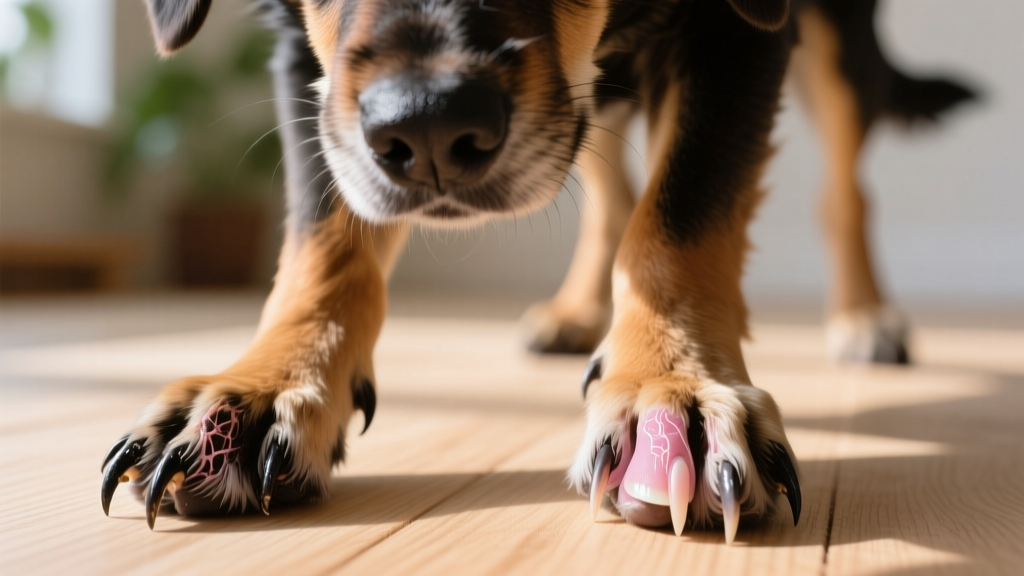
Why Is My Dog Licking Feet? The Canine Science Behind the Behavior
Discover why dog licking feet happens through canine science — from vomeronasal organ function to evolutionary pack behavior, plus when to be concerned.

If you've ever had a dog settle at your end of the couch and begin methodically licking your feet, you're not alone — and your dog isn't being strange. Foot-licking is one of the most commonly reported canine behaviors, yet it's also one of the most misunderstood. Rather than dismissing it as "just a weird dog thing," veterinary behaviorists recognize it as a multi-layered behavior driven by sensory biology, evolutionary history, and social communication.
This article breaks down the science of why dogs lick feet, what the behavior means from a neurological and evolutionary standpoint, and how to distinguish harmless grooming from a sign that something's wrong.
The Sensory Science: How Dogs Process Foot Odors and Tastes
Science Explainer: The Vomeronasal Organ Connection
Dogs possess a secondary olfactory system called the vomeronasal organ (also known as Jacobson's organ), located in the roof of the mouth between the nasal cavity and oral cavity. When a dog licks a surface — including human feet — chemical compounds travel to this organ, which specializes in detecting pheromones and complex organic molecules that the primary olfactory system may not fully process.
Research published in the National Institutes of Health confirms that the canine vomeronasal organ contains receptor neurons specifically tuned to non-volatile compounds — the exact type found in human sweat residue on skin surfaces. Feet, with their high density of eccrine and apocrine sweat glands, produce a concentrated cocktail of urea, lactic acid, fatty acids, and mineral salts that activate both taste buds and this secondary scent pathway simultaneously.
The physiology works like this: a dog's tongue makes contact with the skin surface, dissolving dried sweat compounds in saliva. These compounds are then drawn into the incisive papilla (a small opening behind the upper incisors) and routed to the vomeronasal organ. The brain receives a dual signal — taste information from the tongue's approximately 1,700 taste buds (compared to roughly 9,000 in humans) and chemosensory data from the Jacobson's organ. This creates a richer sensory experience than either sniffing or tasting alone.
Human feet produce roughly half a pint (approximately 237 mL) of sweat per day under normal conditions, according to dermatological research. That moisture carries:
- Sodium chloride — dogs seek salt; commercial canine sweat does not serve thermoregulatory purposes, so dogs don't lose salt through skin the way humans do, creating an innate drive to acquire it from external sources
- Lactic acid — a byproduct of anaerobic metabolism in muscles, abundant in feet after walking or exercise
- Urea and ammonia — nitrogenous waste products that dogs can detect at extremely low concentrations
- Isovaleric acid — the compound responsible for characteristic foot odor, produced by skin bacteria metabolizing sweat; structurally similar to compounds found in certain cheeses that dogs find appealing
The Evolutionary Basis: What Wolves Taught Domestic Dogs About Licking
Evolutionary Context: Pack Grooming and Submissive Signaling
In wild canid populations — wolves, African wild dogs, and dingoes — mutual grooming (allogrooming) serves three documented functions: parasite removal, social bond reinforcement, and hierarchy signaling. Lower-ranking pack members frequently groom higher-ranking individuals, particularly around the face and extremities.
Foot-licking in domestic dogs maps onto this ancestral behavior. When your dog licks your feet, they are engaging in a modified allogrooming ritual. You are the highest-ranking member of their social group, and grooming your extremities is both a bonding mechanism and a deference display. A 2018 study in Behavioural Processes found that dogs directed significantly more licking behavior toward their primary caregiver than toward strangers, supporting the social-bonding hypothesis over simple taste attraction.
Additionally, wolf pups lick the mouths and faces of adult pack members to solicit regurgitation — a behavior that domestic dogs retain in modified form. The licking impulse is deeply hardwired and appears as early as 3 weeks of age in puppies, before they've had any opportunity to learn it through observation.
What Does It Mean When My Dog Licks My Feet? Decoding the Behavior
Not all foot-licking means the same thing. The context, intensity, and accompanying body language determine what your dog is communicating. Here's a practical framework for interpreting the behavior:
| Licking Pattern | Accompanying Signals | Likely Meaning |
|---|---|---|
| Brief, casual licking when you remove shoes | Relaxed body, soft eyes, wagging tail | Salt/taste interest — exploratory behavior |
| Sustained, gentle licking while resting near you | Leaning against you, half-closed eyes, sighing | Social bonding / allogrooming behavior |
| Frantic, persistent licking that's hard to interrupt | Tense body, whale eye, lip licking, panting | Anxiety displacement behavior — self-soothing |
| Licking feet then immediately licking own paws or flanks | Repetitive pattern, seems "stuck" in the behavior | Possible compulsive disorder — veterinary evaluation recommended |
| Licking that started suddenly after a diet or environment change | Also licking floors, furniture, or unusual surfaces | Pica or nutritional deficiency — consult your veterinarian |
Is Dog Licking Feet Normal? Separating Myth From Fact
Foot-licking generates more than its share of folk explanations. Here's what the science actually says:
| Claim | Verdict | Evidence |
|---|---|---|
| "Dogs lick feet because they love the taste of sweat" | Partially True | Sweat compounds attract dogs, but taste is only one of several motivators — social bonding and sensory exploration are equally significant |
| "A dog licking your feet means they're trying to 'heal' you" | Myth | While dog saliva contains minor antibacterial enzymes (lysozyme, lactoferrin), these are not present in therapeutic concentrations. This belief stems from observing dogs licking their own wounds — a behavior that actually introduces bacteria and delays healing |
| "Dogs can smell diseases on your feet" | Plausible but Unproven for Feet Specifically | Dogs can detect certain cancers, diabetic episodes, and infections via scent (per Merck Veterinary Manual behavioral references), but no peer-reviewed study has isolated foot-licking as a diagnostic behavior |
| "Only submissive dogs lick feet" | Myth | Dominant and confident dogs also engage in allogrooming. The outdated "dominance hierarchy" model has been replaced by relationship-based behavioral models in modern veterinary behavior science |
| "Foot-licking is harmless" | Usually True | Generally harmless for both dog and human, but can transmit zoonotic bacteria (Capnocytophaga, Pasteurella) if the human has open wounds or is immunocompromised |
Breed Variations: Which Dogs Lick More — and Why?
While any dog can develop a foot-licking habit, certain breed groups show higher rates of licking behaviors due to genetic predispositions:
- Retrievers and Spaniels (Sporting Group) — Bred for oral engagement with objects (carrying game), these breeds tend to mouth, lick, and carry items more than average. Labrador Retrievers and Golden Retrievers are frequently cited in veterinary behavioral literature as over-represented in compulsive licking cases.
- Herding Breeds — Border Collies, Australian Shepherds, and German Shepherds are prone to repetitive behaviors when under-stimulated. Foot-licking can become a displacement activity when these high-drive breeds don't receive adequate mental and physical exercise (minimum 60–90 minutes of structured activity daily).
- Companion/Toy Breeds — Cavalier King Charles Spaniels, Bichon Frises, and similar breeds often display more affiliative licking due to selective breeding for close physical contact with humans. Their licking is more likely to be social bonding than anxiety-driven.
- Scent Hounds — Beagles and Basset Hounds have up to 300 million olfactory receptors (compared to roughly 220 million in most breeds), making them more likely to investigate and lick strongly-scented body parts like feet.
When Dog Licking Feet Signals a Problem
When to See the Vet: Red Flags for Excessive Licking
- Sudden onset in a dog that never previously licked feet — especially if the dog is over 7 years old
- Duration exceeding 10–15 minutes per session, multiple times daily
- Accompanying symptoms: vomiting, diarrhea, weight loss, increased thirst, or changes in appetite (possible metabolic causes including Cushing's disease, diabetes, or liver dysfunction)
- Self-directed licking that follows — the dog licks your feet, then obsessively licks their own paws, flanks, or tail base
- Skin damage on your feet or the dog's tongue/mouth from friction
- Licking non-food surfaces (floors, walls, furniture) in addition to feet — a pattern called pica that may indicate GI disease, anemia, or mineral deficiency
Diagnostic workup typically includes a CBC (complete blood count, $80–$150), chemistry panel ($100–$200), and possibly a bile acids test if liver involvement is suspected ($120–$250). Total initial workup: approximately $250–$600 depending on your region and clinic.
Compulsive licking disorder (canine acral lick syndrome and generalized compulsive licking) affects an estimated 1–3% of the general dog population, though rates are higher in certain breeds. Treatment typically combines environmental enrichment, increased exercise, and in moderate-to-severe cases, SSRIs such as fluoxetine (Reconcile®) prescribed at 1–2 mg/kg once daily. Behavioral modification using positive reinforcement — rewarding the dog for alternative behaviors like settling on a mat — is more effective than punishment-based approaches, which can worsen anxiety-driven licking.
Practical Implications: Managing Foot-Licking in Daily Life
Practical Takeaways for Dog Owners
- Assess the context first. Is your dog licking casually after you remove your shoes (taste exploration), or are they seeking you out specifically for prolonged licking sessions (social bonding or anxiety)? The intervention depends on the motivation.
- Redirect, don't punish. If you find the behavior unpleasant, teach an incompatible behavior. "Go to your mat" or "bring me a toy" gives the dog an alternative that earns reinforcement. Force-free training methods supported by the American Veterinary Society of Animal Behavior show better long-term compliance than scolding or physical corrections.
- Wash feet after exercise. If your dog is primarily attracted to sweat residue, a quick rinse removes the salt and lactic acid that trigger the behavior. This is especially relevant if you apply topical medications, sunscreen, or insect repellent to your feet — many of these contain ingredients toxic to dogs if ingested.
- Increase mental stimulation. Dogs that lick compulsively are often under-stimulated. Puzzle feeders (Kong Classic, $12–$18; Outward Hound Nina Ottosson puzzles, $15–$30), scent work sessions, and 15-minute training blocks can reduce displacement licking by 40–60% within 2–3 weeks based on owner-reported outcomes in behavioral case studies.
- Check for environmental triggers. New household members, schedule changes, construction noise, or even a change in your laundry detergent can trigger anxiety-related licking in sensitive dogs.
How Is Dog Licking Different From Human Touch?
Humans primarily use their hands for tactile exploration and social bonding. Dogs, lacking opposable thumbs and manual dexterity, use their mouths. A dog's tongue is not just a tasting organ — it's a multi-purpose tool for environmental investigation, social communication, thermoregulation (panting), and wound management.
Where a human might reach out and hold someone's hand for comfort, a dog licks. Where a human might pick up an object to examine it, a dog mouths and licks it. The oral sensory cortex in dogs occupies a proportionally larger area of the brain compared to humans, reflecting the evolutionary importance of oral investigation in canine cognition.
This also explains why dogs lick surfaces humans would never consider touching with their mouths — feet, floors, other dogs' faces, and objects carrying strong biological odors. The dog is not being "gross" by human standards; they are gathering sensory data through the primary channel available to them.
Related Behaviors and Cross-References
Foot-licking rarely exists in isolation. Dogs that lick feet often also display:
- Face-licking — a more direct affiliative behavior, often directed at the caregiver's face upon reunion (originating from puppy food-solicitation behavior)
- Air-licking — licking the air without contacting a surface, often a calming signal or sign of nausea (gastrointestinal evaluation recommended if persistent)
- Lip-licking — a stress signal in canine body language; if your dog lip-licks frequently during interactions, they may be uncomfortable
- Blanket or fabric sucking — a self-soothing behavior common in dogs separated from littermates early (before 8 weeks); often co-occurs with foot-licking
- Ground-scratching after elimination — another scent-marking behavior that involves the feet and may attract foot-licking investigation from other dogs in the household
Frequently Asked Questions
Why does my dog lick my feet but not my hands?
Feet produce significantly more sweat than hands (feet have approximately 600 sweat glands per square centimeter versus 120 on the palms), creating a more intense flavor and scent profile. Feet also carry environmental odors from the ground — soil bacteria, grass compounds, and other dogs' scent marks — that make them information-rich targets for canine investigation.
Can dogs detect health problems by licking my feet?
Dogs can detect volatile organic compounds associated with certain diseases through scent, and some diabetic alert dogs are trained to identify blood sugar changes. However, no peer-reviewed research has established that spontaneous foot-licking indicates a dog has detected a specific health condition. If your dog suddenly begins obsessively licking one area of your body, it warrants a medical checkup — but don't assume the dog is "diagnosing" you.
Is it unhygienic to let my dog lick my feet?
For healthy adults with intact skin, the risk is minimal. However, dog mouths harbor bacteria including Capnocytophaga canimorsus, Pasteurella multocida, and various Staphylococcus species. If you have cuts, blisters, surgical wounds, diabetes-related neuropathy, or a compromised immune system, avoid allowing dogs to lick your feet. Wash the area with soap and water after contact.
My dog only licks my feet when I'm about to leave — what does that mean?
This pattern strongly suggests separation anxiety-related displacement behavior. The dog associates pre-departure cues (putting on shoes, picking up keys) with your absence and engages in licking as a self-soothing mechanism. Treatment involves desensitization to departure cues and counter-conditioning — pairing your pre-departure routine with high-value treats (freeze-dried liver, $8–$12 for a 3 oz bag) to change the emotional association. A certified veterinary behaviorist (DACVB) or fear-free certified trainer can develop a structured protocol; sessions typically run $100–$200 per hour.
Should I stop my dog from licking feet entirely?
Not necessarily. If the behavior is brief, relaxed, and doesn't bother you, there's no medical or behavioral reason to eliminate it. If it's compulsive, anxiety-driven, or simply unpleasant for you, redirect to an alternative behavior and address any underlying stressors. Consult your veterinarian to rule out medical causes before pursuing behavioral modification alone.
- National Institutes of Health — Canine vomeronasal organ receptor research
- Merck Veterinary Manual — Normal Behavior of Dogs
- AVSAB Humane Training Position Statement
This article provides educational information and does not replace professional veterinary advice. If your dog's licking behavior is sudden, excessive, or accompanied by other symptoms, consult your veterinarian for a thorough evaluation.
Tom Renshaw
All our authors care for dogs every day — read more of their work on the authors page.