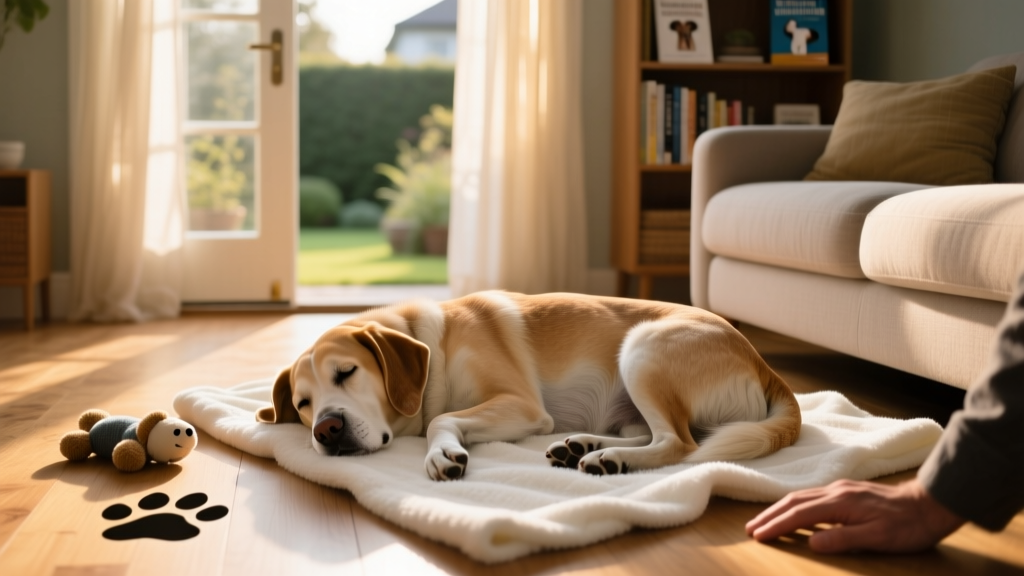
Dog Keeps Urinating in the House: Canine Science Behind the Behavior
Why your dog keeps urinating in the house explained through canine science — covering physiology, evolutionary roots, medical causes, and proven solutions.

Quick Answer: Why Your Dog Keeps Urinating in the House
If your dog keeps urinating in the house, the cause falls into one of three categories: medical (UTI, diabetes, kidney disease, cognitive decline), behavioral (anxiety, territorial marking, submission), or training-related (incomplete housebreaking, inconsistent schedules). Sudden-onset indoor urination in a previously house-trained dog is a veterinary red flag — schedule a vet visit within 48 hours to rule out medical causes before addressing behavioral factors. Never punish the dog; instead, identify the trigger and apply targeted management.
Few things frustrate a dog owner more than coming home to puddles on the carpet — especially when your dog was reliably house-trained. But before you assume defiance or spite, it helps to understand what's actually happening inside your dog's body and brain. The science of canine elimination behavior reveals a complex interplay of physiology, evolutionary programming, and environmental cues that most owners never consider.
In this guide, we break down the canine science behind why dogs urinate indoors, what their bodies and brains are doing when it happens, and what you can practically do about it.
The Physiology of Canine Urination: How the Body Controls Elimination
How Dogs Process and Control Urine
Urination in dogs is governed by the micturition reflex, a coordinated process involving the bladder, urethra, spinal cord, and brain. Here's how it works step-by-step:
- Filling phase: The kidneys continuously filter blood and produce urine, which collects in the urinary bladder. As the bladder fills, stretch receptors in the bladder wall send signals via the pelvic nerve to the sacral spinal cord (segments S1–S3).
- Threshold signal: When bladder volume reaches a critical threshold (typically 20–40 mL/kg in adult dogs, according to the Merck Veterinary Manual), afferent signals travel to the pontine micturition center in the brainstem.
- Voluntary override: In a house-trained adult dog, the cerebral cortex exerts inhibitory control over the micturition reflex. The dog consciously contracts the external urethral sphincter (a skeletal muscle under voluntary control) to prevent voiding until they reach an appropriate location.
- Voiding phase: When the dog decides to urinate (or when cortical control is overwhelmed), the parasympathetic nervous system triggers detrusor muscle contraction, the internal sphincter relaxes, and urine flows.
This means that indoor urination can fail at any stage: overproduction of urine (kidneys), reduced bladder capacity (inflammation, masses), disrupted nerve signaling (spinal cord disease), or failed cortical override (cognitive decline, extreme anxiety).
How Is This Different From Humans?
Humans typically develop full cortical bladder control by age 3–5 and maintain it throughout life barring neurological disease. Dogs reach reliable voluntary control between 4–6 months of age, but this timeline varies significantly by breed size. Small breeds (Chihuahuas, Yorkshire Terriers) may not achieve full bladder control until 8–12 months because their bladders are physically smaller and fill faster. A 5 lb (2.3 kg) dog's bladder holds roughly 50–75 mL of urine, while a 70 lb (32 kg) Labrador's bladder holds 700–1,000 mL. This is why small-breed owners report more frequent indoor accidents even in trained dogs.
Evolutionary Context: What Wolves Tell Us About Elimination Behavior
Why Wolves Never Soil the Den
In wild wolf packs, elimination behavior serves two critical survival functions: sanitation and territorial communication. Wolves maintain strict den hygiene — they never urinate or defecate near sleeping or pup-rearing areas. This instinct is the evolutionary foundation that makes house-training possible in domestic dogs: your home is their "den," and healthy dogs are biologically motivated to keep it clean.
Simultaneously, wolves use urine marking at territory boundaries, trail intersections, and elevated objects to communicate pack presence, reproductive status, and social hierarchy to rival packs. A single wolf may deposit 3–5 mL of urine at dozens of marking sites per day, covering territories of 50–1,000+ square miles.
The domestic dog inherited both drives: the den-sanitation instinct (which supports house-training) and the territorial-marking impulse (which can undermine it). When your dog keeps urinating in the house, you're seeing one of these two evolutionary programs in action — or a breakdown of the physiological system that supports them.
Research published in Applied Animal Behaviour Science has shown that intact male dogs mark indoors significantly more than neutered males, and that the presence of novel scents (visitor belongings, new furniture) triggers marking behavior even in well-trained dogs. This is evolutionary programming, not misbehavior.
Medical Causes: When Your Dog's Body Is the Problem
Before addressing behavioral causes, you must rule out medical conditions. According to the American Veterinary Medical Association, sudden-onset house soiling in a previously trained dog warrants a veterinary examination within 48 hours. Here are the most common medical culprits:
| Condition | Mechanism | Key Symptoms | Estimated Diagnostic Cost |
|---|---|---|---|
| Urinary Tract Infection (UTI) | Bacterial inflammation reduces bladder capacity and causes urgency | Frequent small voids, straining, blood in urine, licking genitals | $75–$200 (urinalysis + culture) |
| Diabetes Mellitus | Excess blood glucose spills into urine, pulling water with it (osmotic diuresis) | Excessive thirst (polydipsia), weight loss, increased appetite, large urine volumes | $150–$350 (blood panel + glucose curve) |
| Chronic Kidney Disease | Kidneys lose concentrating ability, producing dilute urine in large volumes | Increased thirst, vomiting, lethargy, ammonia-smelling breath | $200–$500 (SDMA, BUN, creatinine, urinalysis) |
| Cushing's Disease | Excess cortisol causes increased thirst and urination | Pot-bellied appearance, hair loss, panting, muscle wasting | $300–$700 (ACTH stimulation test) |
| Canine Cognitive Dysfunction | Age-related brain changes impair learned house-training behavior | Disorientation, staring at walls, altered sleep cycles, seeming to "forget" the door | $150–$400 (neurological exam + MRI if indicated) |
| Urinary Incontinence (USMI) | Weakened urethral sphincter, common in spayed females | Leaking while asleep or resting, damp bedding, no awareness of dripping | $100–$250 (urinalysis to rule out UTI first) |
Behavioral Causes: What Your Dog's Brain Is Doing
Once medical causes are ruled out by your veterinarian, behavioral science provides the framework for understanding why a healthy dog keeps urinating in the house.
Can Dogs Urinate Out of Spite?
No. This is one of the most persistent myths in dog ownership, and it has no basis in canine cognition research. Dogs lack the cognitive capacity for revenge-motivated behavior, which requires understanding of future consequences and theory of mind — abilities that develop in human children around age 4–5 but are absent in dogs.
Myth vs. Fact: Common Misconceptions About Indoor Urination
| Myth | Scientific Fact |
|---|---|
| "My dog pees on my bed when I'm away to get back at me" | Your bed smells most like you. Anxious dogs seek comfort by surrounding themselves with your scent. The urination is a byproduct of separation anxiety, not retaliation. |
| "He knows he did wrong — he looks guilty" | The "guilty look" (lowered head, averted eyes, tucked tail) is an appeasement display triggered by your angry body language — not evidence of moral understanding. A 2009 study by Dr. Alexandra Horowitz at Barnard College confirmed dogs show "guilty" behavior when scolded, regardless of whether they actually committed the act. |
| "Rubbing his nose in it teaches him not to do it again" | Punishment after the fact cannot be associated with the act. Dogs associate consequences with what they're doing in that exact moment (within 1–2 seconds). Nose-rubbing teaches your dog to fear you and to hide when they need to eliminate — making the problem worse. |
| "If I just let him out more, he'll stop" | Frequency helps for puppies and medical cases, but marking behavior is driven by scent communication, not bladder fullness. A dog who marks will do so even with a recently emptied bladder. |
| "Crate training is cruel" | Dogs are den animals by evolutionary design. A properly introduced crate (never used as punishment, appropriately sized) leverages the den-sanitation instinct and is endorsed by the American Kennel Club as a house-training tool. |
Separation Anxiety and Elimination
Separation anxiety is one of the most common behavioral causes of indoor urination in adult dogs. When a dog with separation anxiety is left alone, their cortisol levels spike, triggering a stress response that can override voluntary bladder control. The dog isn't choosing to urinate — their autonomic nervous system is overwhelming their cortical inhibition.
Key indicators that indoor urination is anxiety-driven:
- Only occurs when the dog is left alone or separated from the owner
- Accompanied by destructive behavior near exit points (doors, windows)
- Vocalization (howling, whining) reported by neighbors or captured on camera
- Urine found on owner's belongings (bed, clothing, shoes) — scent-seeking behavior
- Panting, drooling, or pacing observed before departure
Territorial Marking vs. Full-Bladder Emptying
Understanding whether your dog is marking or voiding is critical for choosing the right intervention:
- Marking: Small amounts (5–20 mL) deposited on vertical surfaces or novel objects. The dog sniffs first, then lifts a leg (typically males, but some females also mark). Driven by olfactory triggers — new scents, visitor belongings, other animals' scent marks.
- Full voiding: Large volume (100+ mL) deposited on horizontal surfaces. The dog squats and empties the bladder. Driven by bladder fullness, medical urgency, or lack of access to outdoors.
What Does It Mean When My Dog Keeps Urinating in the House? A Decision Framework
Use this diagnostic flowchart to identify the most likely cause and next steps:
Step-by-Step Diagnostic Approach
- Is this new behavior in a previously trained dog?
- YES → Schedule veterinary exam within 48 hours. Request urinalysis, blood chemistry panel, and urine culture. Cost: $150–$400 depending on tests.
- NO (never fully house-trained) → Go to step 3.
- Did the vet rule out medical causes?
- YES → Proceed to behavioral assessment (step 3).
- NO → Follow veterinary treatment plan. Re-evaluate behavior after medical resolution.
- Does it happen only when you're gone?
- YES → Likely separation anxiety. Set up a camera (Wyze Cam v3, ~$35) to record behavior during absences. Consult a certified behaviorist (IAABC or CAAB credentialed, $150–$300/session).
- NO → Go to step 4.
- Is it small amounts on vertical surfaces or new objects?
- YES → Marking behavior. Neuter if intact (reduces marking in 50–60% of male dogs per AVMA data). Use enzymatic cleaners (Nature's Miracle, ~$12–$18/bottle) to eliminate residual scent triggers. Manage environment by restricting access to marked areas.
- NO (full voids on floors) → Likely incomplete house-training. Implement structured schedule below.
- Is your dog a senior (8+ years)?
- YES → Ask your vet about Canine Cognitive Dysfunction screening. Supplements like SAMe (Novifit, $25–$40/month) and prescription diets (Hill's b/d) may help. Increase outdoor trip frequency to every 3–4 hours.
Practical Solutions: Evidence-Based Management for Daily Life
The Structured Elimination Schedule
For dogs with incomplete house-training or puppies, a rigid schedule leverages the predictable physiology of the canine digestive and urinary systems:
| Dog Category | Maximum Time Between Outdoor Trips | Key Timing Triggers |
|---|---|---|
| Puppies 8–12 weeks | Every 1–2 hours | Immediately after waking, eating, drinking, playing |
| Puppies 3–6 months | Every 2–3 hours | After meals, naps, crate time, intense play |
| Adult dogs (retraining) | Every 3–4 hours initially | Morning, midday, evening, before bed — then gradually extend |
| Senior dogs (8+) | Every 3–4 hours | More frequent if on diuretics, Cushing's medication, or showing CCD signs |
Positive Reinforcement Protocol
When your dog eliminates outdoors, deliver a high-value treat (real chicken, cheese, freeze-dried liver — not just kibble) within 1–2 seconds of completion. Pair with a verbal marker ("yes!" or a clicker). This creates a positive association with outdoor elimination that is measurably more effective than any punishment-based approach.
Never use aversive methods. Shock collars, prong collars, alpha rolls, and yelling are not only ineffective for house-training — they increase anxiety and can create a dog who is afraid to eliminate in front of you, leading to hiding behavior and worse accidents.
Enzymatic Cleaning: The Non-Negotiable Step
Dogs have approximately 300 million olfactory receptors (compared to humans' 6 million). Even after you clean a spot with standard household cleaners, residual urine proteins remain detectable to your dog's nose and act as a "re-mark here" signal. Enzymatic cleaners (Nature's Miracle, Rocco & Roxie, Simple Solution) contain protease and urease enzymes that break down uric acid crystals at the molecular level.
Application protocol: Blot fresh urine with paper towels. Saturate the area with enzymatic cleaner at a ratio of roughly 1:1 (cleaner to estimated urine volume). Allow to air-dry completely — do not blot dry, as the enzymes need contact time (typically 10–15 minutes minimum, 24 hours for old stains). For carpet, inject cleaner into the pad beneath using a syringe or the product's nozzle attachment.
Breed Variations in House-Training Difficulty
Not all dogs learn house-training at the same rate, and breed plays a measurable role. While individual variation always applies, these patterns are well-documented among trainers and veterinary behaviorists:
| Category | Breeds | Why It's Harder | Typical Full Training Timeline |
|---|---|---|---|
| Small/Toy Breeds | Chihuahua, Dachshund, Pomeranian, Yorkshire Terrier | Tiny bladder capacity (fills 3–4x faster per body weight), often paper-trained inadvertently by owners who accept indoor pads | 6–12 months |
| Scent Hounds | Beagle, Basset Hound, Bloodhound | High distractibility outdoors — dog forgets purpose of trip, becomes engrossed in scent trails | 4–8 months |
| Independent/Primitive Breeds | Shiba Inu, Afghan Hound, Basenji | Lower compliance motivation — less driven by owner approval, require higher-value reinforcement | 4–8 months |
| Highly Marking Breeds | Intact males of any territorial breed (Rottweiler, Doberman, German Shepherd) | Strong marking drive, especially in multi-dog households or when novel scents are present | Varies; neutering often reduces marking significantly |
Related Behaviors and Cross-References
Understanding indoor urination connects to several other canine behaviors and topics worth exploring:
- Submissive urination: Common in puppies and timid adult dogs — small amounts leaked during greetings or when approached. This is an involuntary appeasement response, not a training failure. Manage by ignoring the dog for the first 3–5 minutes of greetings and avoiding direct eye contact or leaning over.
- Excitement urination: Similar mechanism to submissive urination but triggered by high arousal (owner arriving home, visitors). More common in puppies under 12 months and typically resolves with maturity.
- Counter-surfing and resource guarding: These are separate behavioral categories but share the same root — dogs acting on evolutionary drives (scavenging, resource protection) in a domestic environment where those drives conflict with human expectations.
- Coprophagia (feces eating): Another behavior with evolutionary roots (den sanitation, nutrient recovery) that owners find distressing but which is typically normal canine behavior.
Frequently Asked Questions
Is it normal for a puppy to still have accidents at 6 months old?
Yes. Most puppies achieve reliable house-training between 4–6 months, but small breeds and some individuals may take 8–12 months. At 6 months, occasional accidents (1–2 per week) are still within normal range, especially if the puppy has been in a new home for less than 3 months. Consistency in schedule and positive reinforcement will accelerate progress. If accidents are daily or increasing, consult your veterinarian to rule out a UTI or congenital urinary abnormality.
Why does my dog keep urinating in the house even after going outside?
This usually indicates one of three scenarios: (1) your dog is marking indoors rather than fully voiding, so the outdoor trip emptied the bladder but didn't satisfy the marking drive; (2) a medical condition like a UTI is causing such extreme urgency that the bladder refills rapidly; or (3) your dog is not actually eliminating fully outdoors — some dogs hold it outside because they're distracted, anxious, or uncomfortable on the surface (wet grass, snow, concrete) and then empty their bladder once back on familiar indoor flooring.
Can dogs sense when they're about to have an accident?
Adult dogs with intact neurological function can sense bladder fullness via stretch receptors. However, the urgency signal may not be strong enough to override other motivations (play, anxiety, scent investigation) until the last few seconds — which is why dogs sometimes appear to "suddenly" squat without warning. Puppies under 4 months have immature neural pathways and genuinely may not sense fullness until voiding has already begun.
Does neutering stop a dog from urinating in the house?
Neutering reduces marking behavior in approximately 50–60% of male dogs and is most effective when performed before the behavior becomes a learned habit (ideally before 12–18 months). However, neutering does not address full-void accidents caused by incomplete training, medical conditions, or anxiety. It is one tool among many, not a standalone solution.
How do dogs process scent in relation to urination sites?
When a dog sniffs a urine mark, the scent molecules travel through the main nasal cavity and also through the vomeronasal organ (Jacobson's organ), located above the roof of the mouth. This dual-pathway system allows dogs to extract information about the marker's sex, reproductive status, health, stress level, and approximate time of deposit. This is why dogs spend 5–30 seconds investigating a single spot — they're processing a complex chemical data set that has no human equivalent.
What products help manage indoor urination?
Beyond enzymatic cleaners, these tools are commonly recommended by veterinary behaviorists:
- Indoor grass patches (Fresh Patch, DoggieLawn — $30–$50/month): Useful for apartment dwellers and as a transitional tool
- Belly bands for male dogs (Top Paws, Pet Parents — $15–$25 for a 3-pack): Absorbent wraps that catch marking attempts without punishment
- Washable dog diapers (Pet Parents, Paw Inspired — $20–$35 for a 3-pack): For incontinent senior dogs or females in heat
- Smart pet cameras (Wyze Cam v3, ~$35; Furbo, ~$170): Allow you to monitor and identify timing/triggers of indoor elimination
Veterinary Disclaimer: This article provides educational information about canine behavior and physiology. If your dog keeps urinating in the house and the behavior is new, worsening, or accompanied by other symptoms (increased thirst, lethargy, blood in urine, straining), consult your veterinarian before attempting behavioral interventions. Medical causes must be ruled out first.
References
- Horowitz, A. (2009). "Disambiguating the 'guilty look': Salient prompts to a familiar dog behaviour." Behavioural Processes, 81(3), 447–452.
- Merck Veterinary Manual — Urinary System: merckvetmanual.com/urinary-system
- American Kennel Club — House-Training Guidelines: akc.org/expert-advice/training
- American Veterinary Medical Association — Spay/Neuter and Behavioral Effects: avma.org
- Landsberg, G., Hunthausen, W., & Ackerman, L. (2013). Behavior Problems of the Dog and Cat (3rd ed.). Elsevier.
Tom Renshaw
All our authors care for dogs every day — read more of their work on the authors page.