Dog Coughing Up White Foam: Causes, Science & When to Worry
Is your dog coughing up white foam? Learn the science behind this symptom, common causes from kennel cough to bloat, and when to call your vet immediately.
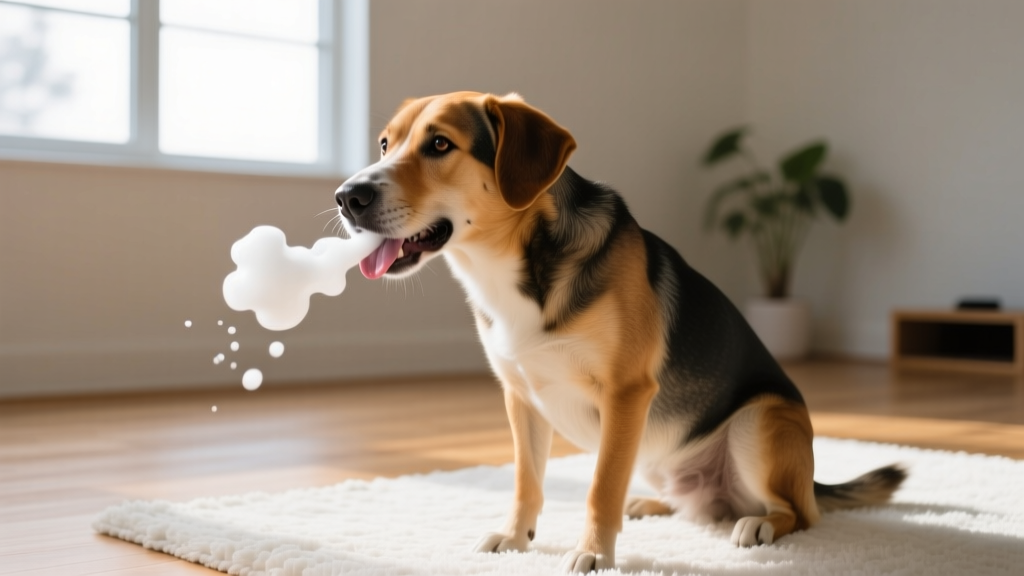
Quick Answer: A dog coughing up white foam is typically regurgitating a mixture of saliva, air, and gastric mucus. The most common causes are kennel cough (infectious tracheobronchitis), acid reflux, eating too fast, or mild gastrointestinal upset. However, white foam can also signal life-threatening emergencies like gastric dilatation-volvulus (bloat) or heart disease. If the coughing persists beyond 24 hours, is accompanied by lethargy, or your dog appears to be retching without producing anything, contact your veterinarian immediately.
Watching your dog hack up a puddle of white, frothy foam is unsettling. Unlike the chunky, yellow-tinged vomit you might see after a dietary indiscretion, white foam looks almost like beaten egg whites or shaving cream — and that distinct appearance tells a specific story about what's happening inside your dog's body.
This guide breaks down the physiology, evolutionary context, and clinical significance behind white foam coughing in dogs, so you can tell the difference between a minor stomach upset and a genuine emergency.
What Exactly Is the White Foam? A Physiological Breakdown
The Science: The white foam your dog produces is a mechanical mixture of three components:
- Saliva — Dogs produce 0.5–1.5 liters of saliva daily (depending on breed size). Saliva contains mucins, large glycoproteins that create a slippery, viscous texture.
- Gastric mucus — The stomach lining secretes a bicarbonate-rich mucus barrier to protect itself from hydrochloric acid (pH 1.5–3.5). When the stomach is empty, this mucus accumulates.
- Air — During forceful coughing or retching, air is whipped into the saliva-mucus mixture, creating the characteristic frothy, white appearance — the same physics that turns egg whites into meringue.
When your dog's stomach is empty — typically early morning or late at night, 8–12 hours after the last meal — there's no food to buffer the gastric acid. The stomach contracts, pushing that accumulated mucus and saliva upward through the esophagus. The result: a small puddle of white, bubbly foam on your kitchen floor.
This is physiologically different from true vomiting (which involves forceful abdominal contractions expelling stomach contents), regurgitation (passive expulsion of undigested food from the esophagus), and productive coughing (expelling material from the respiratory tract). White foam can result from any of these mechanisms, which is why context matters enormously for diagnosis.
Why Do Dogs Cough Up White Foam? The Evolutionary and Biological Context
Evolutionary Origin: Wild canids — wolves, coyotes, and African wild dogs — evolved as feast-or-famine hunters. A wolf pack might consume 15–20% of their body weight in a single kill, then go 3–5 days without food (NCBI — Canid Feeding Ecology). Their digestive systems adapted to handle long fasting periods, including robust gastric acid production and a protective mucus barrier that could occasionally be expelled without harm.
Domestic dogs inherited this same digestive architecture, but modern feeding schedules (2 meals/day, consistent kibble) mean their stomachs are rarely adapted to the 12+ hour empty periods that trigger bile and mucus accumulation. The mismatch between ancestral physiology and modern feeding routines is a primary driver of white foam episodes in pet dogs.
In the wild, occasional regurgitation also serves a social function. Adult wolves regurgitate partially digested food for pups and pack members who stayed behind — a behavior documented extensively in Canis lupus field studies. While your Golden Retriever isn't feeding the neighborhood puppies, the underlying neuromuscular pathway — the vagus nerve triggering reverse peristalsis — is the same one that produces white foam when their stomach is irritated or empty.
The 7 Most Common Causes of White Foam in Dogs
Not all white foam is created equal. Here's a clinical breakdown of the most frequent causes, organized by how urgently they require veterinary attention.
| Cause | Mechanism | Typical Signs | Urgency Level |
|---|---|---|---|
| Bilious Vomiting Syndrome | Empty stomach → acid irritates lining → mucus expulsion | Morning foam, otherwise healthy, normal appetite | Low — dietary adjustment |
| Kennel Cough (Bordetella) | Bacterial/viral infection inflames trachea → productive cough with foamy sputum | Honking cough, recent boarding/grooming, mild lethargy | Moderate — vet visit within 48 hrs |
| Acid Reflux / GERD | Lower esophageal sphincter weakness → stomach acid enters esophagus | Foam after meals, lip licking, grass eating | Moderate — vet evaluation |
| Eating Too Fast / Aerophagia | Swallowed air distends stomach → reflexive foam expulsion | Foam shortly after rapid eating, no other symptoms | Low — slow-feeder bowl |
| Gastric Dilatation-Volvulus (Bloat) | Stomach fills with gas, may twist → unproductive retching with white foam | Distended abdomen, restlessness, drooling, pale gums | CRITICAL — ER vet NOW |
| Heart Disease (CHF) | Fluid backs up into lungs → pulmonary edema → foamy cough | Nighttime coughing, exercise intolerance, rapid breathing at rest (>30 breaths/min) | High — vet within 24 hrs |
| Toxin Ingestion | Irritant substance triggers hypersalivation and vomiting reflex | Sudden onset, possible tremors, known access to chemicals/plants | CRITICAL — Poison Control + ER |
Breed-Specific Risk Factors
Not all dogs face equal risk. Certain breeds carry anatomical or genetic predispositions that make white foam episodes more likely or more dangerous:
- Brachycephalic breeds (French Bulldogs, Pugs, English Bulldogs, Boston Terriers): Their compressed airways and elongated soft palates make them prone to both respiratory coughing and aerophagia. Brachycephalic Obstructive Airway Syndrome (BOAS) means even mild inflammation can produce significant foamy discharge.
- Deep-chested breeds (Great Danes, Standard Poodles, German Shepherds, Irish Setters): These breeds have a 1 in 5 lifetime risk of GDV (bloat). White foam with unproductive retching in these breeds is always an emergency (JAVMA — GDV Risk Factors Study).
- Small breeds (Chihuahuas, Yorkshire Terriers, Miniature Poodles): Higher rates of tracheal collapse, where the cartilage rings supporting the windpipe weaken, causing a characteristic "goose honk" cough that can produce white foam.
- Senior Cavalier King Charles Spaniels and Dachshunds: Elevated rates of mitral valve disease, where congestive heart failure can present as a foamy, productive cough — especially at night.
Common Misconceptions About White Foam in Dogs
| Myth | Fact |
|---|---|
| "White foam always means rabies." | Rabies causes hypersalivation and neurological signs, but white foam alone — especially in a vaccinated dog — is overwhelmingly more likely to be GI or respiratory in origin. Rabies cases in US dogs average fewer than 100 per year (CDC data). |
| "If my dog is still eating, the foam isn't serious." | Dogs with early heart disease, chronic kennel cough, or even partial bloat may continue eating. Appetite is not a reliable severity indicator. Behavioral changes, resting respiratory rate, and gum color are more clinically informative. |
| "Giving Pepto-Bismol will fix it." | Bismuth subsalicylate can be toxic to dogs at incorrect doses and contains salicylates related to aspirin. Never administer without explicit veterinary dosing guidance. Your vet may recommend famotidine (Pepcid) at 0.5 mg/kg instead — but only after diagnosis. |
| "White foam means my dog has worms." | While heavy roundworm or hookworm burdens can cause vomiting, the vomit typically contains visible worms or has a different appearance. White foam specifically points to an empty-stomach mechanism. Fecal flotation testing at your vet ($35–$65) is the correct diagnostic, not visual guesswork. |
| "It's just hairballs, like cats." | Dogs don't produce hairballs the way cats do. While dogs ingest hair during grooming, it typically passes through the GI tract. Repeated retching with foam in a dog warrants investigation, not dismissal. |
How Is This Different From Humans?
Humans and dogs share similar upper GI anatomy, but several key differences explain why dogs produce white foam far more frequently:
- Esophageal structure: A dog's esophagus is entirely composed of skeletal (voluntary) muscle, whereas the human lower third is smooth muscle. This means dogs can regurgitate more easily — and more forcefully — than humans.
- Stomach pH: Dog gastric acid is more concentrated (pH 1–2 during digestion) compared to humans (pH 1.5–3.5). This higher acidity means the protective mucus barrier is thicker, producing more visible foam when expelled.
- Feeding posture: Dogs eat in a horizontal position, which reduces the gravitational assistance humans get in keeping stomach contents down. This is why elevated feeders are sometimes recommended for dogs prone to reflux (though note: elevated feeders are contraindicated for bloat-prone breeds — research from Purdue University found elevated feeding actually increased GDV risk in large breeds).
- Vomiting center sensitivity: The canine chemoreceptor trigger zone (CTZ) in the brainstem is more responsive to circulating toxins and metabolic changes, which is why dogs vomit as a first-line defense mechanism far more readily than humans.
Practical Takeaways: What to Do When Your Dog Coughs Up White Foam
Immediate Action Checklist
- Assess the context. Was it a single episode at 5 AM on an empty stomach? Or is your dog repeatedly hacking after a trip to the dog park?
- Check gum color. Healthy gums are bubblegum pink. Pale, white, blue, or brick-red gums indicate a systemic problem — call your vet or emergency clinic now.
- Count resting respiratory rate. While your dog is sleeping, count chest rises for 15 seconds and multiply by 4. Normal: 15–30 breaths/minute. Over 30 at rest warrants a vet visit within 24 hours.
- Monitor for 24 hours. A single episode of white foam in an otherwise alert, eating, drinking dog can be observed at home. Multiple episodes, progressive lethargy, or any abdominal distension = vet visit.
- Do NOT induce vomiting unless explicitly instructed by a veterinarian or poison control professional. In cases of bloat or toxin ingestion involving caustic substances, induced vomiting can cause more damage.
Prevention Strategies That Actually Work
For bilious vomiting syndrome (empty-stomach foam):
- Add a small bedtime snack — approximately 1/4 of the dog's daily caloric intake as a complex carbohydrate (e.g., a tablespoon of plain canned pumpkin or a few pieces of kibble) right before bed. This buffers overnight acid production.
- Split meals into 3 smaller feedings rather than 2 large ones, reducing the maximum fasting window to 6–8 hours.
- Ask your vet about famotidine (0.5 mg/kg PO twice daily) or omeprazole (0.5–1 mg/kg once daily) for chronic cases. These are prescription-level decisions — do not self-dose.
For aerophagia (fast-eating foam):
- Use a slow-feeder bowl (brands like Outward Hound Fun Feeder, $8–$15, or JASGOOD, $12–$18) — these reduce eating speed by 35–60% based on independent testing.
- Scatter-feed kibble on a snuffle mat or across a clean floor area to encourage foraging behavior and slow intake.
- Avoid vigorous exercise for 30–60 minutes before and after meals, especially in deep-chested breeds.
For kennel cough prevention:
- Ensure the Bordetella vaccine is current — most boarding facilities and groomers require it every 6–12 months. The intranasal vaccine (e.g., Nobivac Intra-Trac) provides faster local immunity (72 hours) compared to injectable versions (5–7 days).
- The Bordetella vaccine covers 2–4 of the 8+ organisms that cause infectious tracheobronchitis, so breakthrough infections can still occur. The canine influenza (H3N2) vaccine may also be recommended depending on your region.
🚨 When to Call the Vet Immediately
Contact your veterinarian or an emergency clinic right now if white foam is accompanied by any of these red flags:
- Unproductive retching (trying to vomit but nothing comes out) — possible bloat
- Distended or tight abdomen
- Pale, blue, or brick-red gums
- Resting respiratory rate over 40 breaths/minute
- Known ingestion of a toxic substance (chocolate, xylitol, rodenticide, lilies, grapes/raisins)
- Seizures, tremors, or collapse
- Blood in the foam (pink-tinged or red-tinged)
ASPCA Animal Poison Control: (888) 426-4435 (24/7, consultation fee applies)
Pet Poison Helpline: (855) 764-7661
What Your Vet Will Do: Diagnostic Process and Costs
Understanding what to expect at the clinic helps you prepare and budget. Here's a typical diagnostic pathway for a dog presenting with white foam:
| Diagnostic Step | What It Reveals | Typical Cost Range (2026) |
|---|---|---|
| Physical exam + history | Hydration status, heart/lung auscultation, abdominal palpation, temperature | $55–$95 |
| Chest radiographs (X-rays) | Heart size, lung fluid, tracheal diameter, foreign body, megaesophagus | $180–$400 |
| CBC + chemistry panel | Infection markers, organ function, electrolyte imbalances | $120–$250 |
| Fecal flotation | Parasite eggs (roundworm, hookworm, giardia) | $35–$65 |
| Heartworm antigen test | Adult heartworm infection (can cause cough with foam) | $35–$75 |
| Echocardiogram (if heart disease suspected) | Valve function, chamber size, contractility | $350–$650 |
| Endoscopy / bronchoscopy (referral) | Direct visualization of airway or GI lining, tissue biopsy | $800–$2,000 |
Total diagnostic cost for a straightforward case: $200–$500. For complex cases requiring advanced imaging or specialist referral: $1,500–$4,000+. This is where having pet insurance (average $35–$70/month for accident-and-illness plans) or an emergency fund of at least $2,000 becomes critical.
Related Behaviors and Cross-References
Understanding white foam in context means recognizing related symptoms and behaviors that often co-occur:
- Yellow/green vomit (bilious vomiting): Indicates bile from the duodenum has refluxed into the stomach — a related but distinct mechanism from white foam. Often seen in the same dogs with bilious vomiting syndrome.
- Grass eating: 68% of dog owners report their dog eats grass regularly (University of California, Davis study). While not definitively proven to induce vomiting, grass may mechanically irritate the esophageal lining, triggering foam production.
- Reverse sneezing: A rapid inhalation through the nose that sounds like snorting — often confused with coughing. Common in small and brachycephalic breeds. Harmless but can produce small amounts of foam if prolonged.
- Tracheal collapse cough: The "goose honk" cough of tracheal collapse often ends with a small amount of white foam. This is a chronic, progressive condition managed with weight control, harness-use (never neck collars), and medications like hydrocodone or tramadol prescribed by your vet.
Frequently Asked Questions
Is my dog coughing up white foam normal?
An occasional single episode — particularly first thing in the morning after a long overnight fast — is relatively common and usually not a cause for alarm. However, "normal" depends on frequency and context. More than 2–3 episodes per week, any episode accompanied by other symptoms, or any occurrence in a breed predisposed to bloat should be evaluated by your veterinarian.
Can dogs get kennel cough even if they're vaccinated?
Yes. The Bordetella vaccine protects against specific strains, but kennel cough is caused by a complex of organisms including Bordetella bronchiseptica, canine parainfluenza virus, canine adenovirus-2, and Mycoplasma species. The vaccine reduces severity and duration but doesn't provide complete sterilizing immunity. Vaccinated dogs typically experience milder symptoms and recover in 5–10 days versus 2–3 weeks for unvaccinated dogs.
How do dogs process nausea differently from humans?
Dogs have a more sensitive chemoreceptor trigger zone (CTZ) in the brainstem, which monitors blood-borne toxins. This evolutionary adaptation — useful for a scavenger species that encounters diverse food sources — means dogs experience nausea and vomiting at lower toxin thresholds than humans. Their vomiting reflex is also more forceful relative to body size, driven by powerful diaphragmatic and abdominal contractions.
What does it mean when my dog coughs up white foam after drinking water?
This typically indicates rapid water intake causing aerophagia (swallowed air), or water hitting an already-irritated esophageal or gastric lining. Try offering smaller amounts of water more frequently — approximately 1/2 cup per 10 lb of body weight per hour rather than free-access gulping. If this happens consistently, it warrants a veterinary exam to rule out esophageal motility disorders or megaesophagus.
Should I feed my dog after they cough up white foam?
If it's a single episode and your dog seems otherwise normal (alert, tail wagging, interested in food), offering a small bland meal — boiled chicken breast and white rice in a 1:2 ratio, approximately 1/4 cup per 10 lb of body weight — is appropriate. If vomiting recurs after eating, withhold food for 12 hours (but continue offering small amounts of water) and contact your vet. Never withhold water for more than a few hours.
Can stress or anxiety cause a dog to cough up white foam?
Yes, indirectly. Stress activates the sympathetic nervous system, which can increase gastric acid secretion and alter gut motility. Dogs with separation anxiety or noise phobias may drool excessively (hypersalivation) and swallow air, leading to foam production. Addressing the root anxiety through counter-conditioning, desensitization protocols, and — in some cases — veterinary-prescribed anti-anxiety medication (e.g., fluoxetine, trazodone) can reduce these episodes.
Disclaimer: This article is for educational purposes only and does not replace professional veterinary advice. Always consult your veterinarian for diagnosis and treatment of your dog's specific condition. If you suspect toxin ingestion, contact the ASPCA Animal Poison Control Center at (888) 426-4435 immediately.
Tom Renshaw
All our authors care for dogs every day — read more of their work on the authors page.


