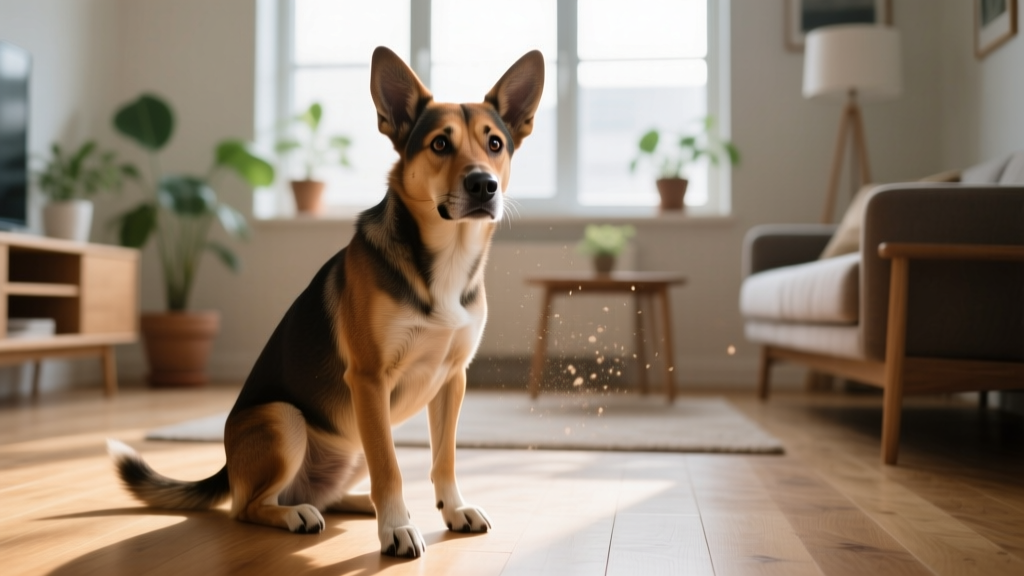
Why Is My Dog Constantly Licking Their Butt? Science-Backed
Is your dog constantly licking their butt? Learn the science behind this behavior, from anal gland issues to allergies, plus when to see a vet.

Watching your dog spin in circles trying to reach their backside is both comical and concerning. While a few quick licks during routine grooming are perfectly normal, a dog constantly licking their butt often signals an underlying medical or behavioral issue that deserves attention. The perianal region is packed with nerve endings, scent glands, and delicate tissue — making it a hotspot for irritation, infection, and discomfort.
This guide breaks down the veterinary science, evolutionary biology, and practical steps behind this common canine behavior, so you can figure out what's really going on and how to help.
The Science of Why Dogs Lick Their Perianal Region
Physiological Mechanism: The Perianal Nerve Network
The perianal region in dogs contains a dense concentration of sacral and caudal nerve endings, particularly branches of the pudendal nerve. This makes the area hypersensitive to irritation, pressure changes, and temperature shifts. When inflammation, impaction, or infection occurs in the anal sacs — two small glands located at the 4 o'clock and 8 o'clock positions inside the anus — these nerves send continuous discomfort signals to the brain.
Licking activates the endogenous opioid system. A 2018 study published in Applied Animal Behaviour Science confirmed that repetitive licking in dogs triggers the release of beta-endorphins, which produce a mild analgesic and calming effect. In other words, licking literally makes your dog feel better temporarily — which creates a self-reinforcing cycle. The more irritated the area, the more they lick; the more they lick, the more endorphins release; and the cycle continues.
Additionally, canine saliva contains epidermal growth factor (EGF) and mild antibacterial enzymes like lysozyme. From a physiological standpoint, licking is the body's built-in wound-care response. However, excessive licking introduces moisture that can break down the skin barrier and lead to secondary bacterial or yeast infections — defeating the purpose entirely.
The Evolutionary Basis: What Ancestral Dogs Tell Us
Why This Behavior Is Hardwired
Wolves and wild canids engage in perianal grooming as part of their daily maintenance routine. In the wild, this behavior serves several survival functions:
- Anal sac expression assistance: Wild canids manually stimulate their anal glands through licking and ground-scooting, which helps mark territory and maintain gland health. Domestic dogs often lack the natural triggers (fibrous prey diets, high-activity lifestyles) that promote automatic gland expression during defecation.
- Parasite removal: Perianal grooming helps wild canids remove external parasites, fecal matter, and debris that could attract predators or cause infection.
- Social signaling: In wolf packs, mutual grooming (allogrooming) of hard-to-reach areas, including the perianal region, reinforces social bonds. Puppies lick the dam's perianal area to stimulate regurgitation — a behavior that occasionally persists into adulthood as a submissive gesture.
According to Merck Veterinary Manual's overview of normal canine behavior, grooming behaviors are deeply conserved across canid species. The domestic dog's perianal licking is a modern expression of ancestral self-maintenance instincts — but our dogs' sedentary lifestyles and processed diets have disrupted the natural mechanisms that keep this behavior in check.
The 7 Most Common Medical Causes of Constant Butt Licking
Before assuming your dog is just being quirky, rule out these well-documented medical conditions. Here's what veterinary dermatologists and general practitioners see most frequently:
| Condition | Prevalence | Key Symptoms | Vet Visit Cost (USD) |
|---|---|---|---|
| Anal gland impaction | ~12-15% of dogs; higher in small breeds | Scooting, fishy odor, swelling at 4/8 o'clock positions | $50-$150 (expression); $200-$500 (abscess treatment) |
| Flea allergy dermatitis (FAD) | Most common skin allergy in dogs | Intense itching at tail base, hot spots, hair loss | $75-$200 + ongoing flea prevention ($15-$60/month) |
| Perianal fistula | Common in German Shepherds (est. 43% of cases in the breed) | Ulcerated tracts, foul discharge, pain during defecation | $300-$800 (diagnosis + medical management) |
| Tapeworms (Dipylidium caninum) | Common in dogs with flea exposure | Rice-like segments near anus, scooting, weight loss | $40-$100 (dewormer + fecal exam) |
| Food/environmental allergies | ~10-15% of dogs with allergic skin disease | Generalized itching, ear infections, paw licking + perianal irritation | $150-$500 (elimination diet trial); $250-$1,000 (allergy testing) |
| Perianal tumors (adenoma/adenocarcinoma) | Most common in intact males over 7 years | Firm masses near anus, bleeding, difficulty defecating | $200-$600 (biopsy); $1,000-$3,500 (surgical removal) |
| Yeast/bacterial skin infection | Common secondary to allergies or moisture | Red, greasy skin; musty odor; darkened skin patches | $75-$200 (cytology + medicated shampoo/ointments) |
Is It Normal? How to Tell the Difference
Not every instance of butt licking is cause for alarm. Here's how to distinguish routine grooming from a problem:
| ✅ Normal Behavior | ⚠️ Problematic Behavior |
|---|---|
| Brief licking (5-15 seconds) after defecation | Licking sessions lasting minutes at a time |
| Occurs 1-3 times per day | Obsessive licking throughout the day and night |
| Skin looks clean and normal | Redness, swelling, discharge, or hair loss around anus |
| Dog can be easily distracted from licking | Dog resists interruption, seems anxious or fixated |
| No scooting, odor, or changes in stool | Scooting on carpet, fishy smell, diarrhea, or straining |
What does it mean when my dog is constantly licking their butt? If the behavior falls into the right column above, it typically means your dog is experiencing localized discomfort. The perianal area is a convergence point for multiple body systems — digestive, dermatological, endocrine (anal glands), and neurological — so the cause could originate from any of these.
How Dogs Process Perianal Sensation vs. Humans
The canine perianal experience is fundamentally different from the human one, and understanding this helps explain why dogs fixate on this area:
- Anal sac function: Humans have no equivalent structure. Dogs possess two pea-to-marble-sized glands that secrete a pungent, individualized fluid used for scent communication. When these glands fail to empty naturally during bowel movements — often due to soft stools, obesity, or anatomical variation — pressure builds and causes significant discomfort. This is a uniquely canine (and feline) problem with no human parallel.
- Jacobson's organ (vomeronasal organ): Dogs have a functional vomeronasal organ on the roof of the mouth that processes pheromones and chemical signals. Perianal secretions contain a wealth of social information — identity, reproductive status, stress levels — that dogs actively investigate. Humans have a vestigial vomeronasal organ with no proven function.
- Olfactory processing: A dog's olfactory bulb is approximately 40 times larger than a human's relative to brain size, with roughly 300 million olfactory receptors (compared to our ~6 million). The perianal region is one of the most information-dense areas on a dog's body. When they lick or sniff there, they are processing complex chemical data — not just "cleaning."
- Flexibility and reach: The canine spine, particularly in breeds with longer, more flexible backs, allows them to reach areas humans simply cannot access for self-grooming. This physical capability means licking is their primary self-care tool for the posterior region.
Breed Variations: Which Dogs Are More Prone?
Not all dogs are equally likely to develop perianal problems that trigger constant licking. Breed predispositions are well-documented in veterinary literature:
- Small and toy breeds (Chihuahuas, Toy Poodles, Shih Tzus, Yorkshire Terriers): Higher rates of anal gland impaction due to smaller duct openings and softer stools common in small-breed diets. A study in the American Journal of Veterinary Research found small breeds overrepresented in anal sacculitis cases.
- German Shepherds: Dramatically predisposed to perianal fistulas (also called anal furunculosis), an immune-mediated condition causing painful ulcerated tracts around the anus. Estimated to affect up to 43% of German Shepherds in some clinical populations. This condition almost always requires long-term immunosuppressive therapy (cyclosporine at 3-5 mg/kg/day, costing $80-$250/month).
- English Bulldogs, French Bulldogs, and other brachycephalic breeds: Skin folds around the tail base (especially in screw-tailed breeds) trap moisture and bacteria, leading to fold dermatitis and secondary infections.
- Labrador Retrievers and Golden Retrievers: High allergy prevalence makes these breeds prone to perianal irritation secondary to atopic dermatitis. Labs also have a higher incidence of perianal adenomas in intact males.
- Spaniel breeds (Cocker Spaniels, Springer Spaniels): Predisposed to both allergies and anal gland issues, creating a double risk for perianal discomfort.
Myth vs. Fact: Common Misconceptions About Butt Licking
| Myth | Fact |
|---|---|
| "Dogs lick their butt just to be gross — it doesn't mean anything." | Persistent licking is a clinical sign that often indicates anal gland disease, allergies, parasites, or infection. It should be evaluated, not dismissed. |
| "Dog saliva cleans wounds — licking is good for them." | While saliva contains mild antibacterial compounds, excessive licking causes maceration (skin breakdown from moisture), introduces oral bacteria to irritated skin, and often worsens infections. The AVMA recommends preventing compulsive licking with protective devices. |
| "Only dirty dogs get anal gland problems." | Anal gland impaction is related to diet consistency, anatomy, and breed — not hygiene. Perfectly clean, well-groomed dogs develop impacted anal sacs regularly. |
| "If my dog is licking their butt, they must have worms." | Tapeworms are one possible cause, but they're far less common than anal gland issues or allergies. A fecal flotation test at the vet ($35-$75) will confirm or rule out parasites. |
| "I can express my dog's anal glands myself at home." | External expression without proper training can rupture the anal sac, push infected material deeper, or cause severe pain. Veterinary professionals use internal expression techniques and can identify complications you may miss. Cost is typically $25-$50 per visit. |
Practical Steps: What to Do When Your Dog Won't Stop Licking
Step-by-Step Action Plan
- Inspect the area (Day 1): Gently lift your dog's tail and examine the perianal skin. Look for redness, swelling, discharge, visible parasites (rice-like segments), lumps, or matted feces. Note any odor — a strong fishy smell points to anal glands.
- Check for fleas (Day 1): Use a fine-toothed flea comb near the tail base. Even one flea bite can trigger FAD in sensitized dogs. If you find flea dirt (black specks that turn red on a wet paper towel), start a veterinarian-recommended flea preventive like Simparica Trio ($25-$65/month depending on weight) or Bravecto ($50-$75 per 12-week dose).
- Prevent further licking (Days 1-2): Fit an Elizabethan collar (E-collar) or a recovery suit to break the licking cycle. Soft inflatable collars ($15-$30) are more comfortable than rigid plastic cones for most dogs. For dogs who refuse E-collars, consider a pair of dog underwear/britches ($20-$40) as a temporary barrier.
- Assess stool consistency (Days 1-3): Firm, well-formed stools naturally express anal glands during defecation. If your dog's stool is soft or loose, consider adding a fiber supplement like plain canned pumpkin (1-4 tablespoons per meal based on body weight: 1 Tbsp per 10 lb of body weight) or a psyllium-based supplement like ProZinc Fiber ($18-$25 for a 60-day supply for a medium dog).
- Schedule a vet visit (within 48-72 hours if licking persists): Your veterinarian will perform a physical exam including digital anal gland palpation, skin cytology if infection is suspected, and a fecal flotation test. Total cost for a standard workup typically ranges from $80 to $250 depending on diagnostics needed.
- Address allergies if indicated (ongoing): If your vet suspects atopic dermatitis, an elimination diet trial using a novel protein (e.g., rabbit, venison, or hydrolyzed protein diets like Royal Canin Hydrolyzed Protein HP, ~$75-$95 for a 17.6 lb bag) for 8-12 weeks is the gold standard for diagnosing food allergies. Environmental allergy management may include Apoquel (oclacitinib, ~$2-$4 per tablet) or Cytopoint injections (~$65-$150 per injection, lasting 4-8 weeks).
- Visible blood or pus around the anus
- A ruptured anal gland abscess (open, draining wound near the anus)
- Your dog is straining to defecate or crying during bowel movements
- Lethargy, vomiting, or loss of appetite alongside the licking
- A visible mass or tumor near the anal area
- Signs of severe pain (whimpering, reluctance to sit, trembling)
These symptoms may indicate emergencies like an anal gland abscess, perianal hernia, or obstructive tumor that require same-day veterinary attention.
Related Behaviors: Scooting, Chasing the Tail, and More
Constant butt licking rarely occurs in isolation. Understanding related behaviors gives you a more complete diagnostic picture:
- Scooting (dragging the rear on the ground): Almost always indicates anal gland discomfort or perianal irritation. Despite the popular belief that scooting means worms, a Merck Veterinary Manual review of anal sac disease confirms that gland impaction is the leading cause.
- Tail chasing: When combined with perianal licking, compulsive tail chasing may indicate a behavioral component — particularly in breeds like Bull Terriers and German Shepherds, where compulsive disorder has a genetic basis. Fluoxetine (Prozac) at 1-2 mg/kg/day is sometimes prescribed for canine compulsive disorder ($10-$30/month for generic formulations).
- Excessive paw licking: Dogs with atopic dermatitis typically lick their paws AND perianal area simultaneously, because allergic inflammation is systemic. If you notice both behaviors, allergies move to the top of the differential list.
- Mounting behavior: Sometimes confused with perianal discomfort. Mounting can be arousal-related, stress-related, or dominance-related — but if it's accompanied by butt licking, a medical cause should be ruled out first.
Frequently Asked Questions
Why do dogs lick their butt so much compared to other body parts?
The perianal region contains anal glands, high nerve density, and skin folds that trap moisture and debris. Unlike other body parts that stay relatively clean and dry, the perianal area is a convergence point for digestive output, scent gland secretions, and environmental contaminants — making it disproportionately prone to irritation.
Can dogs actually clean themselves effectively by licking?
Partially. Dogs can remove surface debris and apply saliva's mild antimicrobial enzymes through licking. However, they cannot effectively express their own anal glands, treat infections, or remove embedded parasites through licking alone. When licking becomes constant, it has exceeded the self-cleaning function and entered the compulsive-soothing territory.
Is my dog licking their butt because of anxiety?
Possibly. Compulsive licking — called acral lick dermatitis when it affects the legs, or psychogenic licking when generalized — can be triggered by anxiety, boredom, or stress. However, behavioral causes should only be diagnosed after medical causes are ruled out. If your vet clears all physical conditions, a veterinary behaviorist can assess for anxiety-related licking. Environmental enrichment (puzzle feeders, sniffaris, structured exercise of 30-60 minutes/day) and positive reinforcement training are first-line behavioral interventions.
How often should anal glands be expressed?
There is no universal schedule. Some dogs never need manual expression; others require it every 3-4 weeks. The general veterinary recommendation is to express only when clinically indicated (signs of impaction), not on a prophylactic schedule, as over-expression can weaken the gland's natural emptying mechanism. Average cost per expression visit: $25-$50.
Should I be worried about zoonotic diseases from my dog licking their butt and then licking me?
The risk is low but not zero. Dogs can carry Capnocytophaga canimorsus, Pasteurella, and various fecal bacteria in their mouths after perianal licking. Immunocompromised individuals, young children, and elderly people should avoid face-licking from dogs who engage in frequent perianal grooming. Regular dental care for your dog (daily brushing with enzymatic toothpaste, professional cleanings every 1-2 years at $200-$500) reduces oral bacterial load.
This article is for informational purposes only and does not replace professional veterinary advice. If your dog is constantly licking their butt and showing signs of discomfort, consult your veterinarian for a proper diagnosis and treatment plan.
Jonas Cole
All our authors care for dogs every day — read more of their work on the authors page.